


Introduction
Bruche is a suburb in the east of the town, close to Poulton-with-Fearnhead, Padgate and Woolston. See the British History Online website for more details.
In the 13th century the area was known as “del Bruch” and on the Saxon map of Lancashire in 1577 it is shown as “Bryche”. According to Ekwall in his “Place names of Lancashire” the name comes from the Old English “bryce” and means “breaking” in the sense “broken up ground, new-cultivated land”.
William Beamont in his Bruche: A Monograph: the History of Bruche Hall Near Warrington tells us the district owes its name to the way in which the name of the birch tree was pronounced by the common people in olden times. This tree loves a healthy soil and within living memory it grew in large numbers in the hamlet of Bruche.
There is mention of a Richard del Birches who succeeded Henry del Bruche in the 1300 during the reign of Edward III.
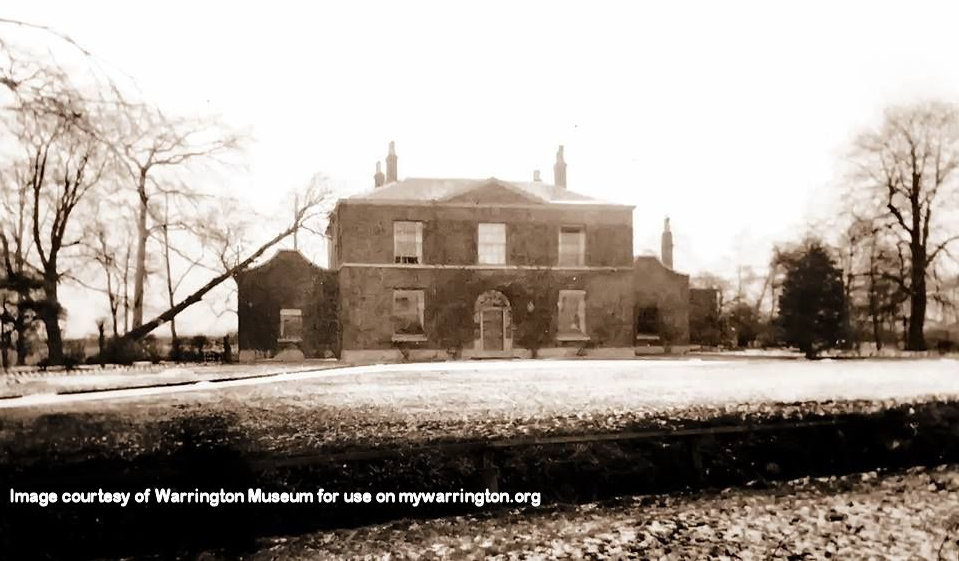
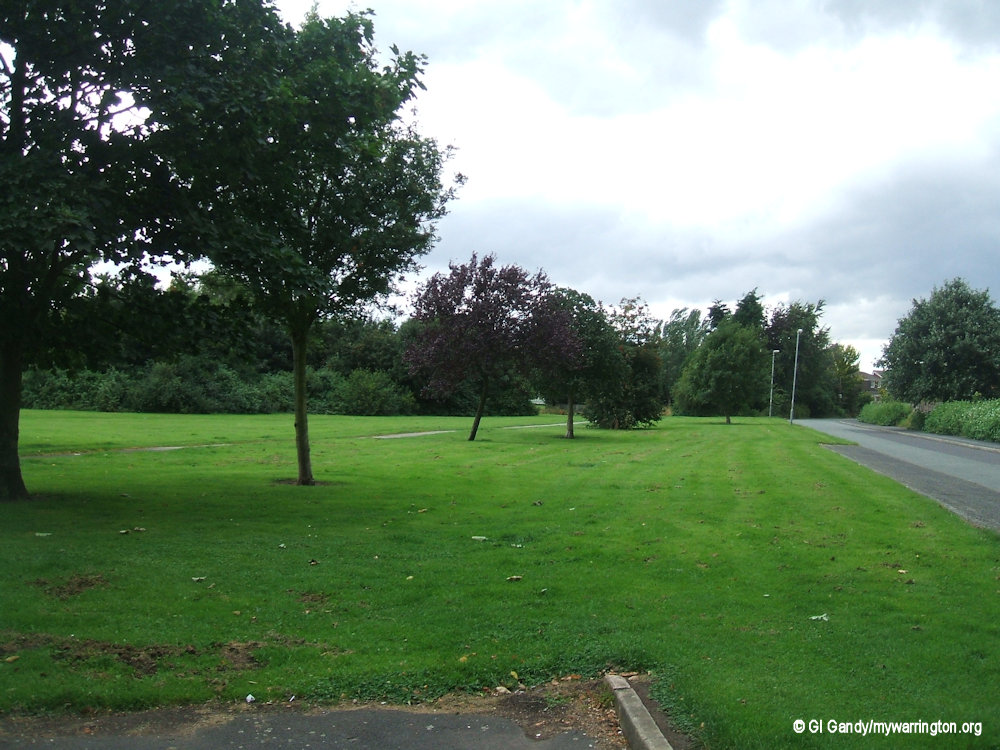
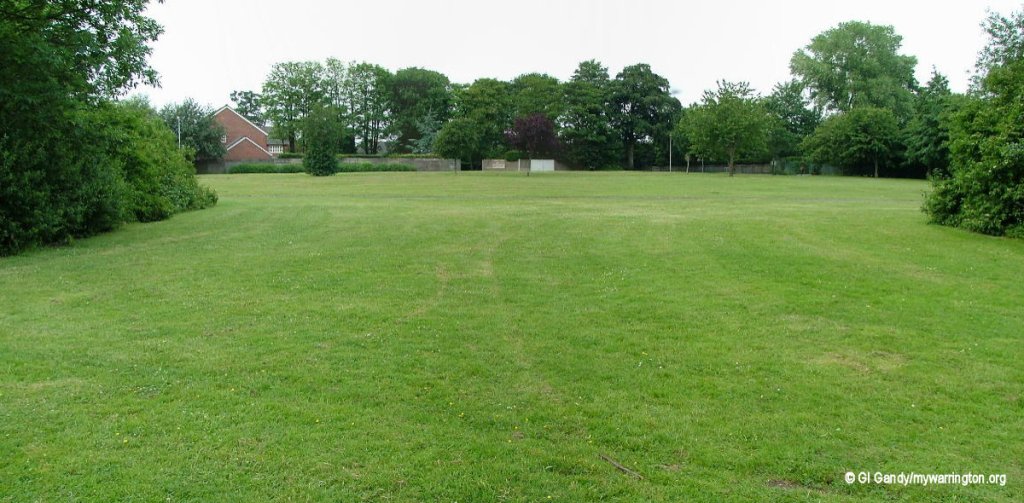
The area of Bruche is described as a hamlet in the township of Poulton in the Lyme manuscript of 1465. Bruche Park now occupies the grounds of the former hall.

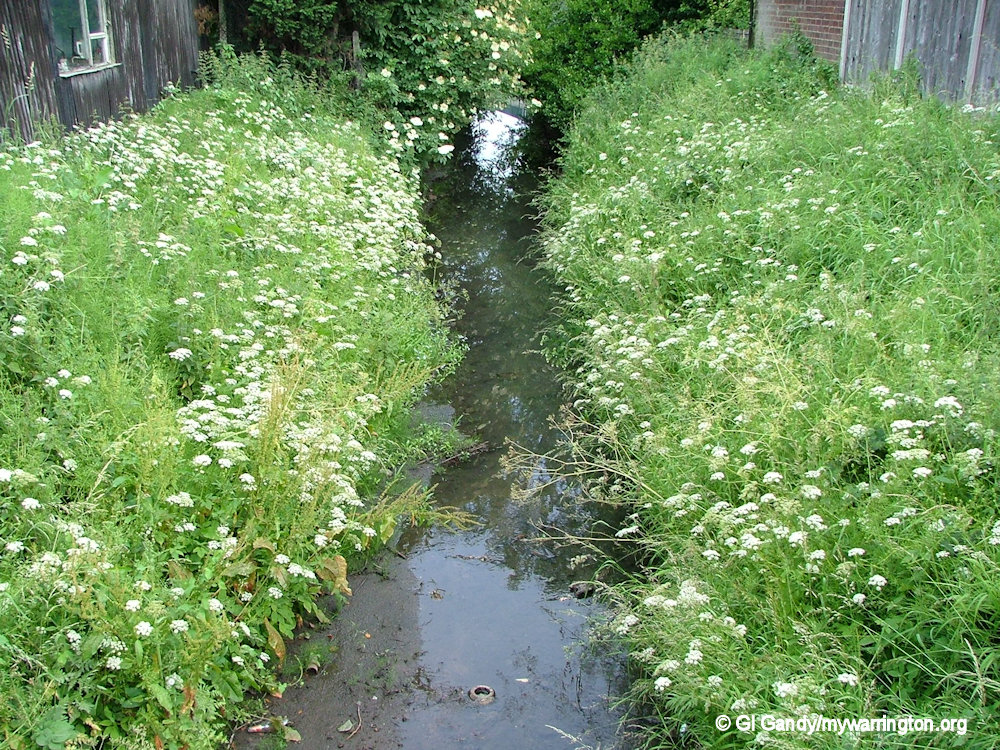
The manor of Bruche…lies and is situated on the south side of a certain heath called le Bruche Heath, and extends from thence towards a certain lane leading from the town of Warrington, as far as the town of Wulston, and so from the said lane as far as the water of Mersee, which same manor and all its members and demesne lands with their appurtenances lie in breadth between a certain brook called Le Bruche brook on the west and another brook called the Wulston brook on the east.
William Beamont
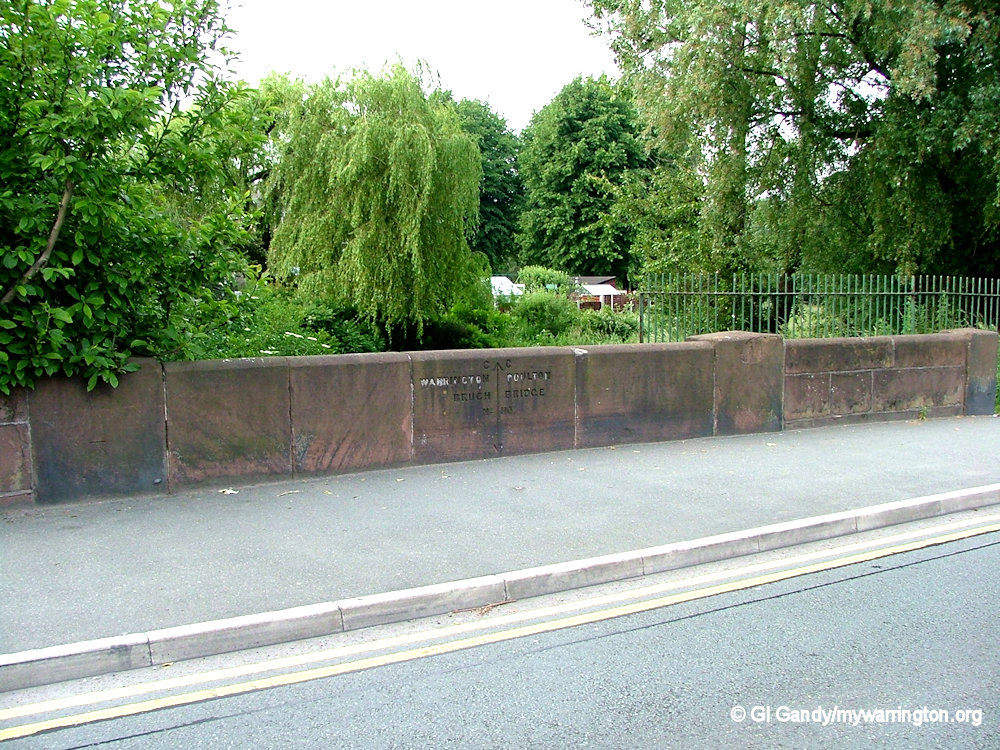
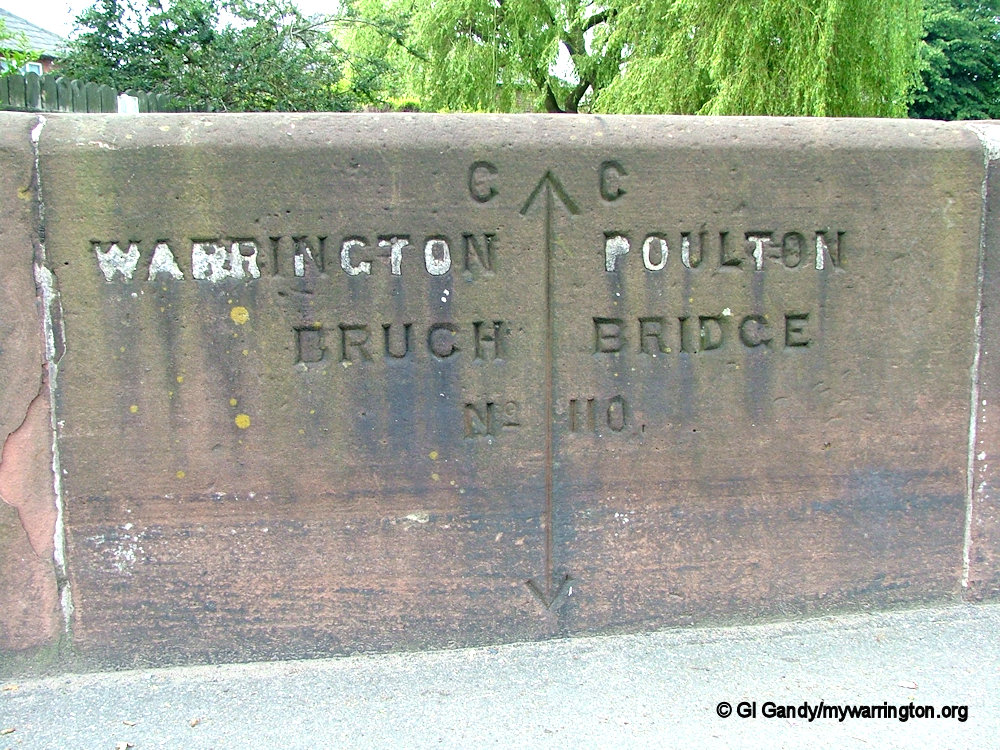
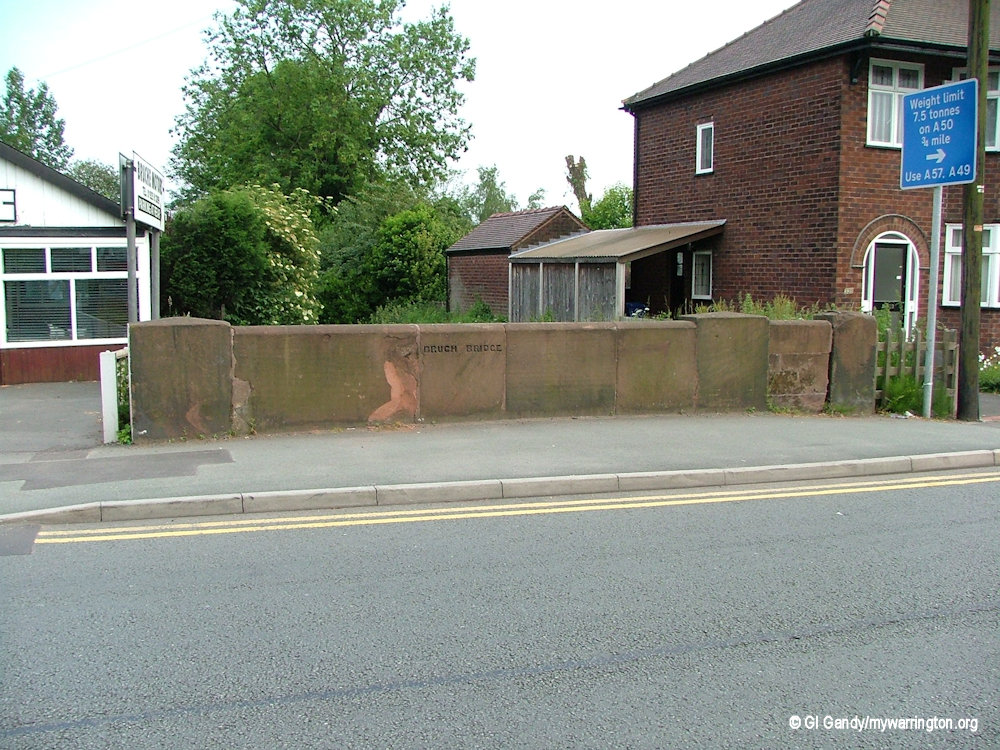
Bruche Hall
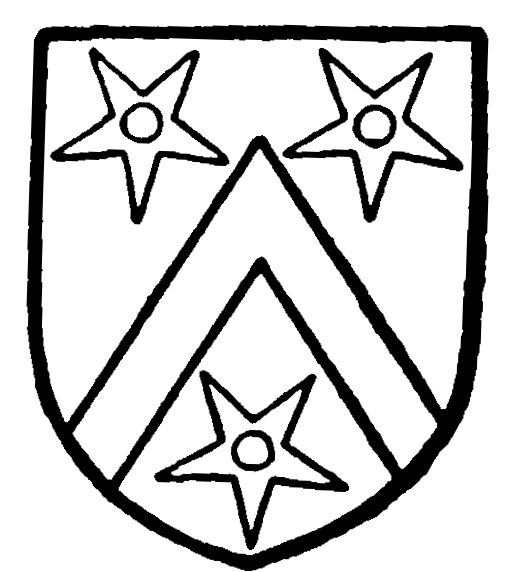
The manor of Bruche was one of many such properties which were owned by proprietors who bore coat armour. Beamont says they wrote themselves gentlemen “in any bill, warrant, quittance or obligation,” and formed a class of small squirearchy which were once as valuable as they were numerous in the community. They were of that class which King James said were the happiest in England, for they were below a justice of the peace and above a parish constable. Bruche had its proprietor who took his name from the place long before 1465, bore for his arms argent a Chevron sable between three mullets of the same (see image at top of the page).
Over the centuries there were four successive families who owned Bruche Hall. However, before anybody with the name Bruche took residence in the area of Poulton, the area was occupied by the Boteler family.
The records tell us that in 1288 Richard de Samlesbury recovered, against Richard de la Bruche and Margaret his wife and others, his seisin [possession] of common of pasture belonging to his free tenement in Warrington. During the reign of Richard II (1367-1400) there is mention of Gilbert del Bruche who Beamont says was the head of the household at that time.
The second family who held Bruche, from 1457 onwards, was the Leghs. I am jumping forward to 1602 when Sir Peter Legh took ownership of Bruche Hall and Beamont tells us he rebuilt parts of the hall. He was already the owner of the ancient house at Lyme and wasted no time in putting his mark on Bruche Hall. One of his rooms was later converted into a library and filled with books. The house had two gables and an open rafted roof, the beams of which were not sawn or planed, but merely chipped into shape by an axe or an adze. Peter Legh lived at the house on occasions, which was convenient for his meetings and other business at Warrington. After his death at Lyme on 28 March 1622 his youngest son, also Peter, took ownership of the estate and later became a member of parliament for the borough of Newton.
The Bankes Family
After generations of the Leghs occupied the hall, Frances Legh, the last surviving member of the family, married William Bankes.
The Bankes family came from Craven in North Yorkshire and had family members who moved into Lancashire during the reign of Henry VIII.
William was an ancestor of naturalist Sir Joseph Bankes. The Bankes lived at Bruche Hall in the 17th and 18th centuries.
Jonathan Jackson
Jonathan Jackson was engaged in the sailcloth trade – half of the sailcloth used by the British navy at the time of the American War of Independence was manufactured in Warrington. Jackson invested his wealth in the purchase of Bruche Hall and lived there after retirement. During his time he leased or sold part of the Bruche estate to Mr Robert Hatton who built Paddington soap works, which opened in 1820. A year later Jackson joined him in a partnership when money was tight for Hatton. The business thrived over the next few years, but suspicion was raised from other soap manufacturers, including Crosfields at Bank Quay, who informed Excise that something was wrong.
At that time a high rate of duty was paid to the government on soap, and the amounts paid from time to time by Messrs. Jackson and Hatton, though they were large, were known also to other manufacturers, who could easily compare them with their own.
Someone made a statement to the government that the make of soap and the price at which the Paddington makers sold it were irreconcilable if all the dues were fairly paid. The Excise kept an eye on the Paddington works and on an unannounced visit to the factory an official noticed a trap door in the office floor and insisted it be opened.
On descending through the trap door he found a large vaulted chamber, where contraband soap had been recently made, but with no entry of such a room having ever been made in the Excise books.
Jackson and Hatton were brought before the authorities and a sum of £6,340 was recovered against them. They were made bankrupt and the business was sold at auction on 12 July 1821. On the 10 December of the same year the Bruche estate was sold for £19,200 and Jackson’s time there came to an end. The new owner of the estate was Mr Parr of Parr’s at the Old bank in Winwick Street Warrington. The NatWest bank of today has its origins in Parr’s Bank.
Bruche Hall was demolished in 1972.
Bruche Police Training Centre
The centre, which housed up to 480 students, was operated by CENTREX, the ‘Central Police Training and Development Authority’. Police forces from the northern part of England and Wales sent new recruits to the centre for the main part of their basic training, which consisted mainly of law training and officer safety tactics.
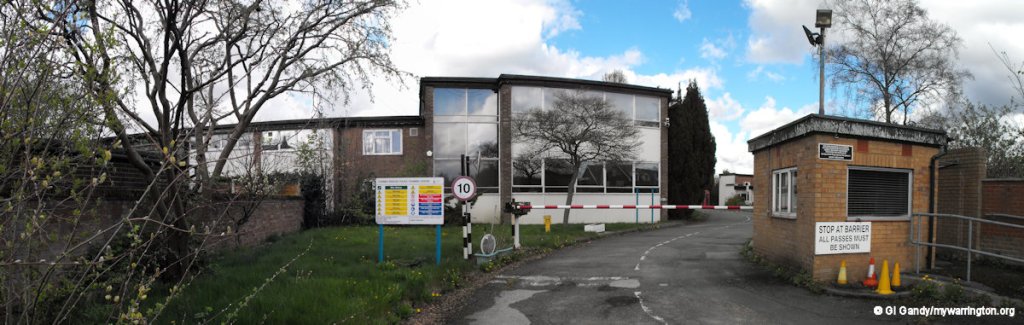
Training also included several role-play scenarios at the Sandford mock-up village. Newly recruited probationary officers would spend a solid 15 weeks at Bruche before ever stepping onto the street, having also spent time at their own force’s regional training centre(s).
Probationary officers resided on the site in dormitory blocks and experienced on-site training.
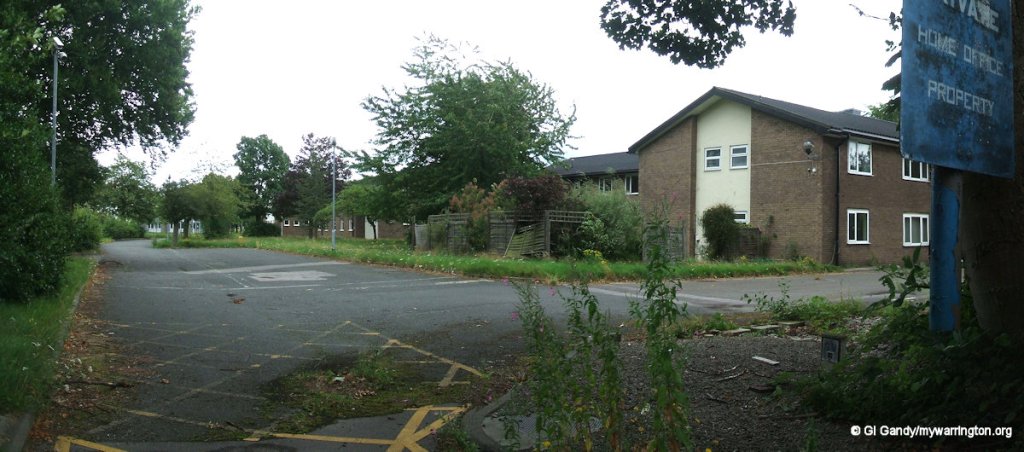
The training complex closed on 26 May 2006. Since its closure, various suggestions were put forward for the future use of the Bruche centre. Theatre 4 Warrington asked in June 2007 if the building could be used to stage plays and shows. In October 2007, the borough council announced that the buildings could be converted into affordable housing. However, in 2008 the site was transferred to English Partnerships who later released a sales brochure inviting developers to make use of the site.
On 7 September 2010 the centre site was used as the base for an emergency services training exercise to test how they would respond to a biological or chemical attack.
The whole site was later demolished and in 2013 Warrington Borough Council gave permission for 220 houses to be built on the site. Street names reflecting the former use as the police training centre include Commissioner Square, Constable Square, Inspector Avenue and Sergeant Drive. I wonder why they didn’t call one of them Letsby Avenue? Thanks for that, Albert.
From Wikipedia.
My favourite story from Bruche was from 14 April 2010 when a herd of 12 cows was on the loose. The cows were first spotted at 8.18pm near Princess Avenue by a resident who said the animals were heading towards Kingsway. The cows were later seen in Latchford and three of them were spotted at the Riverside Retail Park near McDonald’s. At 11pm all the cows had been rounded up. The cattle were kept at a farm in Leigh while police make enquiries within the farming community to find out where they escaped from.
 mywarrington