

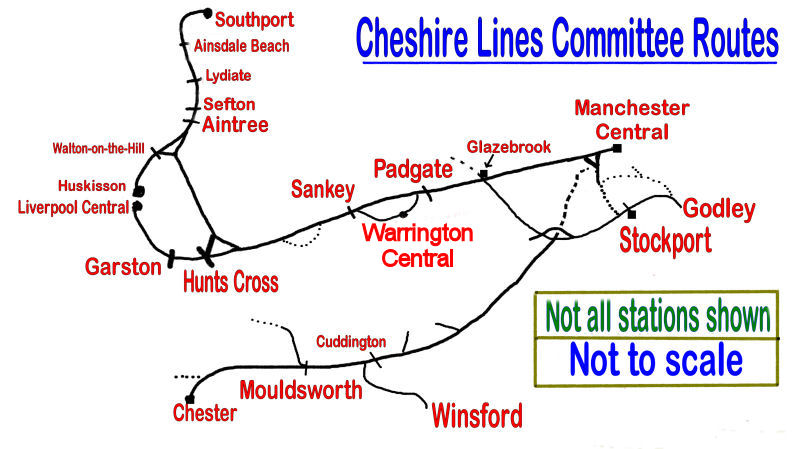
The Cheshire Lines Committee (CLC) was the second largest joint-railway in Great Britain. Despite its name 143 route miles were in Lancashire. Initially, the Cheshire Lines group had been formed by a joint committee of the Great Northern Railway (GNR) and the Manchester, Sheffield and Lincolnshire Railway (MS&LR) in1862 to regulate traffic on four proposed lines in Cheshire (listed below). This was made official by the Great Northern (Cheshire Lines) Act of 1863.
Background
The Midland Railway became an equal partner under the Cheshire Lines Transfer Act of 1865. Under the Cheshire Lines Act of 1867, it became a wholly independent company, although its management consisted of three directors of the three companies. Its purpose was to gain control of lines in Lancashire and Cheshire, an area which was dominated by the LNWR.
It was granted the powers to build a line to Liverpool, which opened in 1873, from a temporary station in Manchester, and totalled 34 miles (54.7 km) in length. The section from Liverpool was on the Garston and Liverpool Railway. The line ran from the St Helens and Runcorn Gap Railway line at Garston Docks to Brunswick railway station. It opened on 1 June 1864, and was absorbed into the CLC on 5 July 1865. From 1874, the CLC was headquartered at Liverpool Central Station, having been at Alexandra Buildings, James Street, Liverpool previously.
It was necessary to bring the various operations into a single terminus. The Midland and the MS&LR were using London Road station (now Piccadilly), which the latter shared with the LNWR. Accordingly, Manchester Central was built in 1880.
In 1923, the Midland Railway, along with the LNWR, was grouped into the London, Midland and Scottish Railway, while the MS&LR (by then the Great Central Railway) became part of the London and North Eastern Railway.
On nationalisation in 1948, both parent companies became part of British Railways.
Like other joint railways, the CLC was not grouped among the Big Four in 1923, remaining until nationalisation on 1 January 1948.
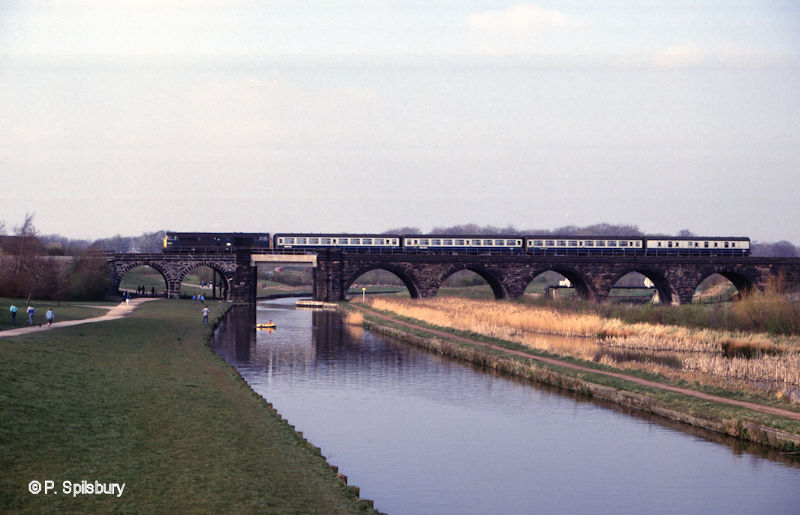
31420 passes over the Sankey/St Helens Canal and Sankey Brook in Sankey Valley Park between Bewsey and Old Hall in Warrington on the former Cheshire Lines route on 6 Apr 1984. Photo © Peter Spilsbury.
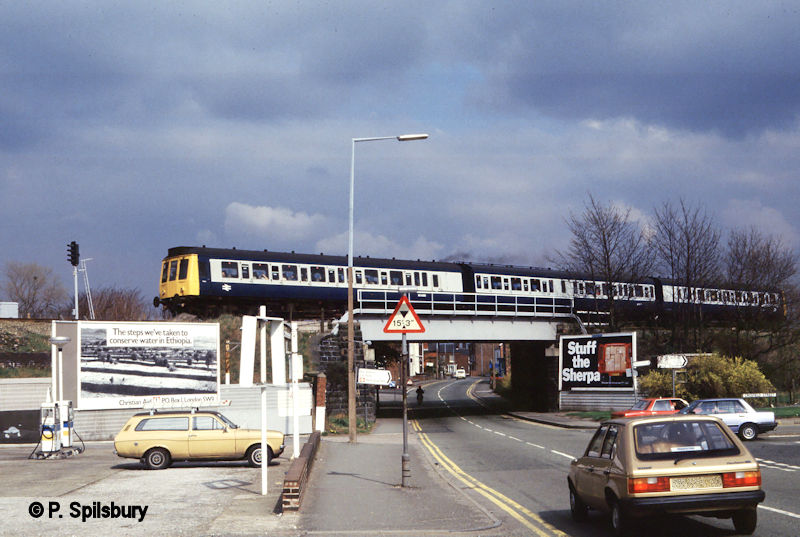
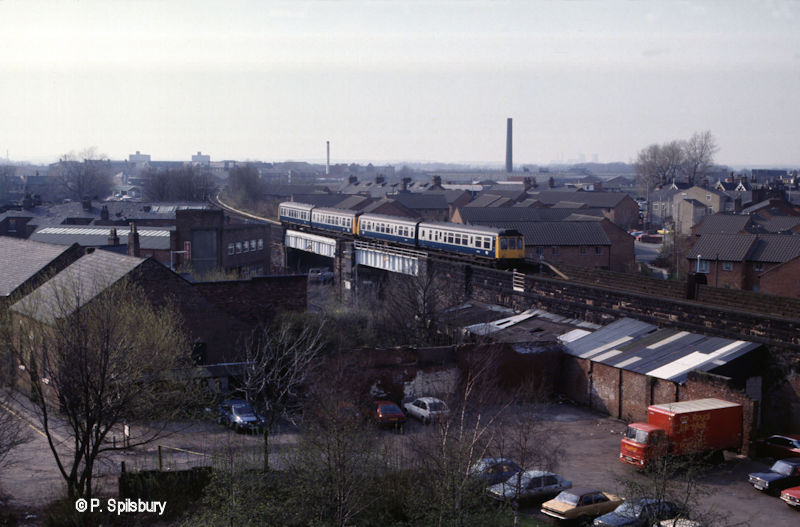
Here we see two DMU’s (diesel multiple units) in Warrington. On the left we view a train crossing Froghall Lane bridge on 17 April 1985. On the right is a train approaching Warrington Central station from Liverpool on 12 April 1988. Both photos © P. Spilsbury.
The Four Original Lines
The Cheshire Midland Railway (incorporated by an Act of 14 June 1860) ran from the Manchester, South Junction & Altrincham (M.S.J. & A.R) terminus at Altrincham to Northwich (12 miles 65 chains). It opened from Altrincham to Knutsford on 12 May 1862, and from Knutsford to Northwich on 1 January 1863.
Source: The Cheshire Lines Railway by R. Prys Griffiths, Oakwood Press 1947 http://www.oakwoodpress.co.uk
The two-mile Stockport and Woodley Junction Railway (incorporated by an Act of 15 May 1860) opened on 12 January 1863, and was transferred to the Manchester, Sheffield and Lincolnshire Railway, and Great Northern Railway companies under the Cheshire Lines Transfer Act on 5 July 1865. The barrow and spade used in cutting the first sod are preserved in the Vernon Park Museum, Stockport.
Source: Wikipedia.
The West Cheshire Railway (incorporated by an Act of 11 July 1861) ran from Northwich on the Cheshire Midland to Helsby (14 miles 50 chains), forming a junction there with the Birkenhead Railway branch from Hooton, already authorised and opened on 1 July 1863.
Source: The Cheshire Lines Railway by R. Prys Griffiths, Oakwood Press 1947 http://www.oakwoodpress.co.uk
The Stockport Timperley and Altrincham Junction Railway (incorporated by an Act of 22 July 1861). The line linked the Stockport & Woodley Junction Railway with the LNWR at Broadheath (opened 1 Feb 1866) and with the M.S.J. & A.R. at Timperley Junction (opened 1 Dec, 1879) and at Altrincham (Deansgate Junction – opened 1 Dec 1865).
Source: The Cheshire Lines Railway by R. Prys Griffiths, Oakwood Press 1947 http://www.oakwoodpress.co.uk
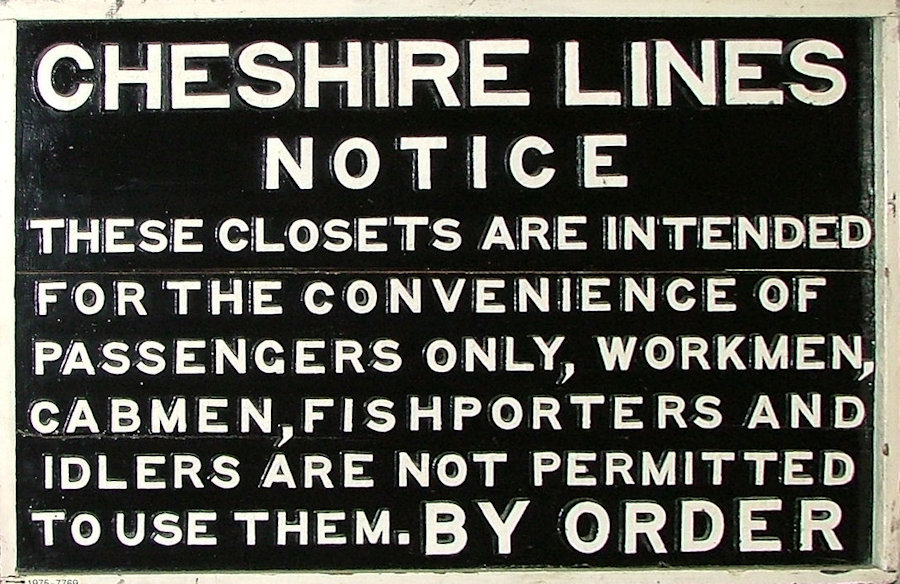
Noticeboard From the National Railway Museum collection.
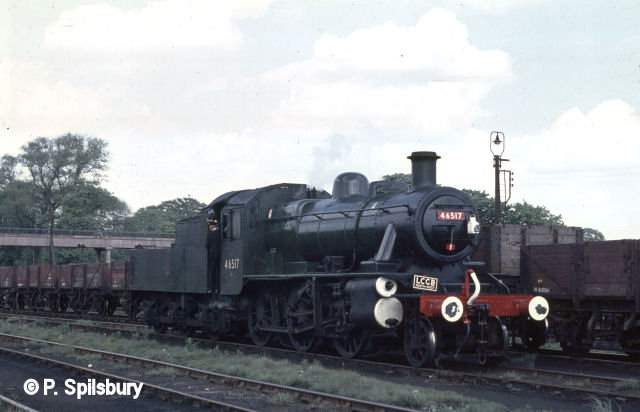
46517 ICI Winnington near Northwich on 14 May 1966. Photo © Peter Spilsbury.
Other sections Built by the CLC: The Skelton Junction to Cressington Junction line as part of Liverpool to Manchester line (CLC) railway, the North Liverpool Extension Line and Southport & Cheshire Lines Extension Railway
Warrington Stations on the CLC Line (from West to East)
As part of my study I will include information on two stations on the modern line which were not part of the original CLC in Warrington and brief notes on two others which no longer exist, one on the CLC and the other close by, both of which were essential to the Royal Ordnance Factory at Risley during World War Two.
The original planned route through the town is the section known as the “straight line” on my map. A station was planned at the junction of Winwick Road and Kerfoot Street at the point where my green and blue lines cross, but was never built. This was because the locals protested and insisted on a station in the town centre instead. Warrington Central became that station and was built in 1873. The “straight line” opened ten years later, mainly to transport goods, and also for express passenger trains not stopping at Warrington Central.
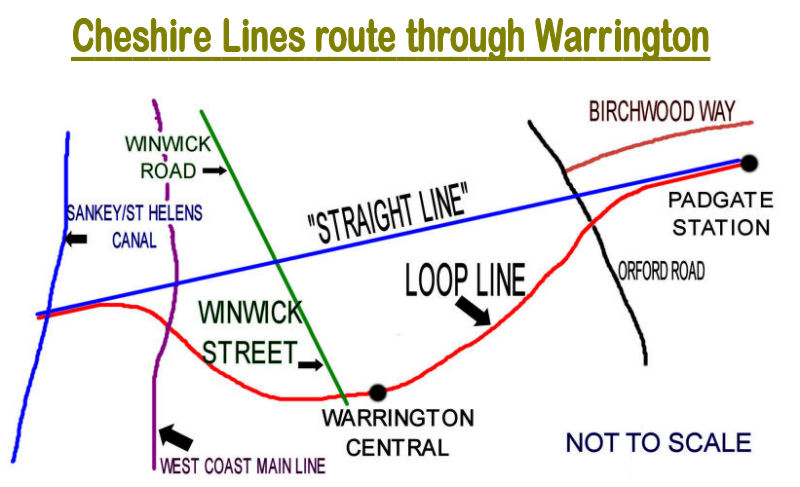
Map © GI Gandy, mywarrington 2006.
Sankey for Penketh Railway Station
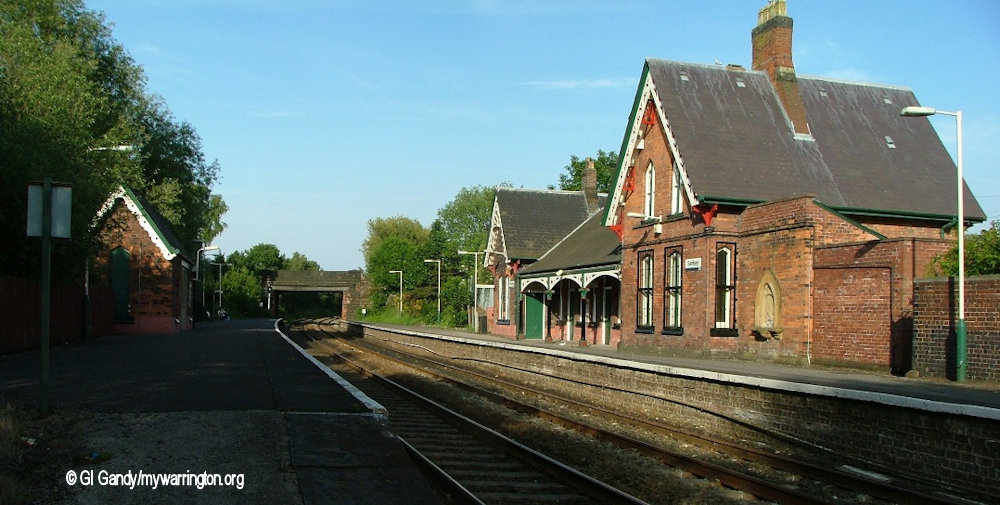
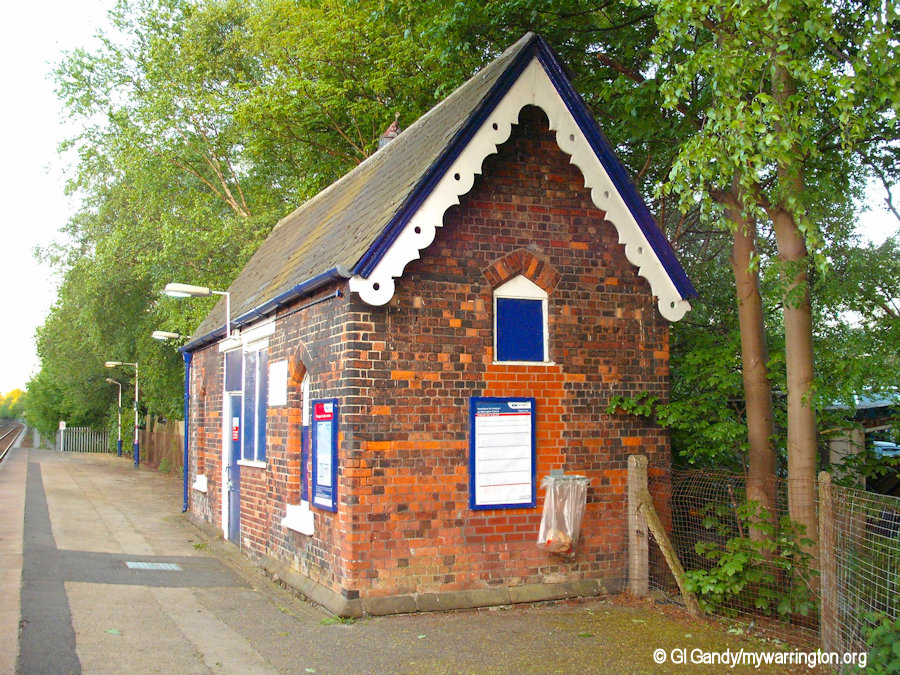
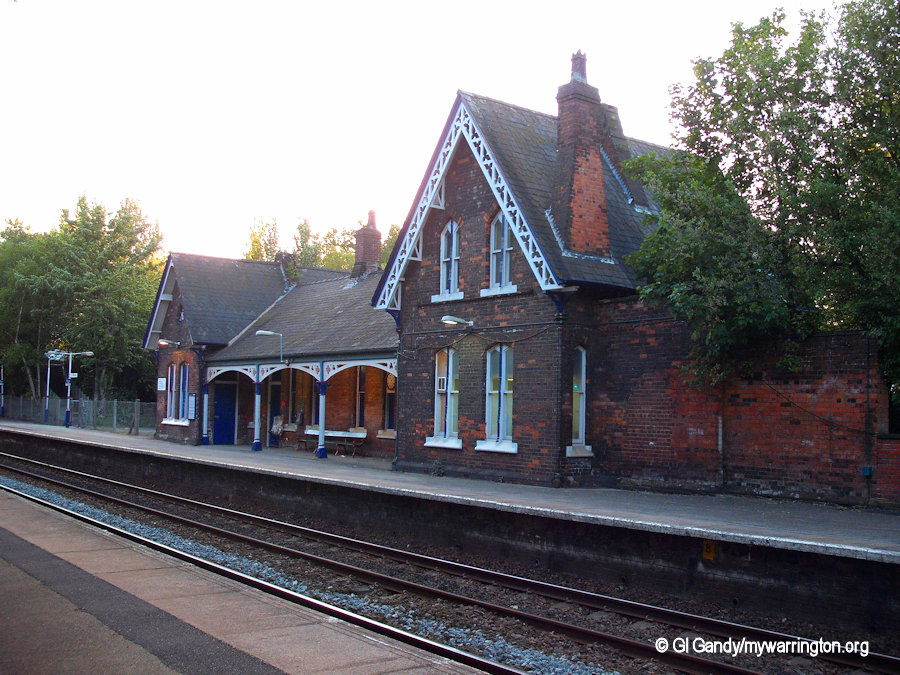
Sankey for Penketh railway station, also known as just Sankey, serves the Great Sankey, Penketh and Whittle Hall areas of the town. It is designated by English Heritage as a Grade II listed building.
The line through the station opened for freight on 1 March 1873 and for passengers on 1 August 1873 when the CLC opened the line between Glazebrook and Cressington & Grassendale.
The station was opened as Sankey for passengers and goods on 1 May 1874.
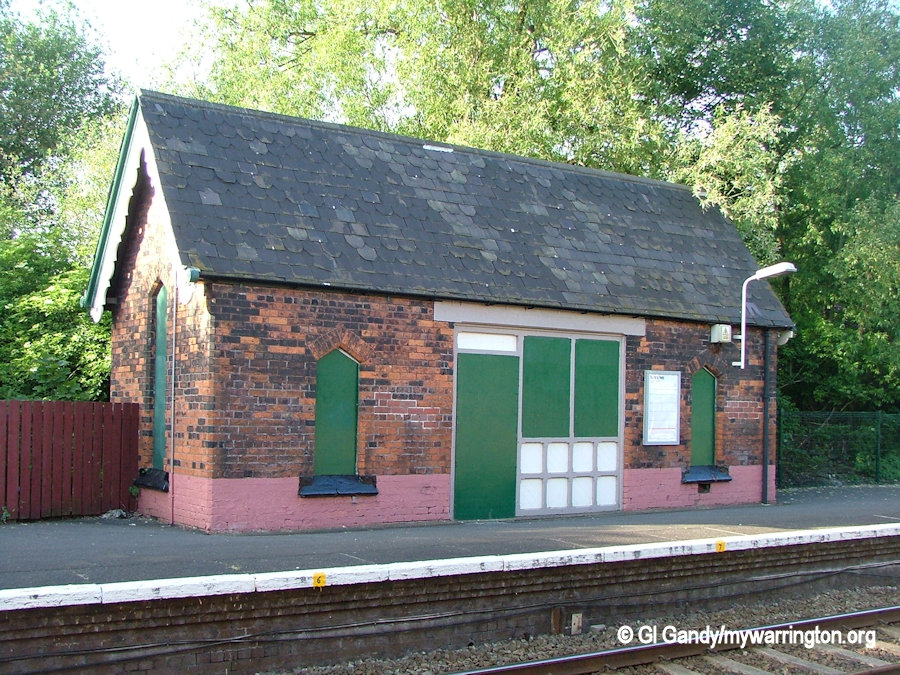
The main station building is the original (dating from the opening of the line in 1874), and in a standard style used by the CLC. It is used as a booking office and waiting room, though part of the building is a house and another part disused.
The station is located in a cutting where the line is bridged by what is now Station Road. The main station building is of the “common twin-pavilion type adopted by the CLC” with a larger, two-storey, projecting pavilion forming a house and a smaller single-storey one. Linking them is an entrance hall, ticket office and three-bay iron-arcaded waiting shelter. The building is decorated with elaborately fretted bargeboards. The station was equipped with a carved stone drinking fountain (seen here).
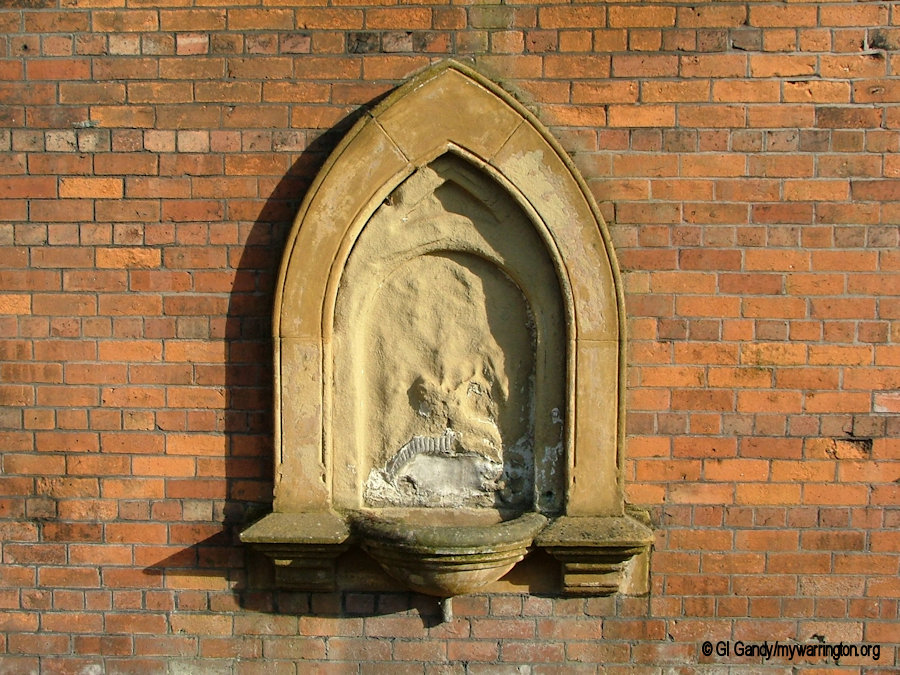
The following sign is still on display by the road bridge over the railway:
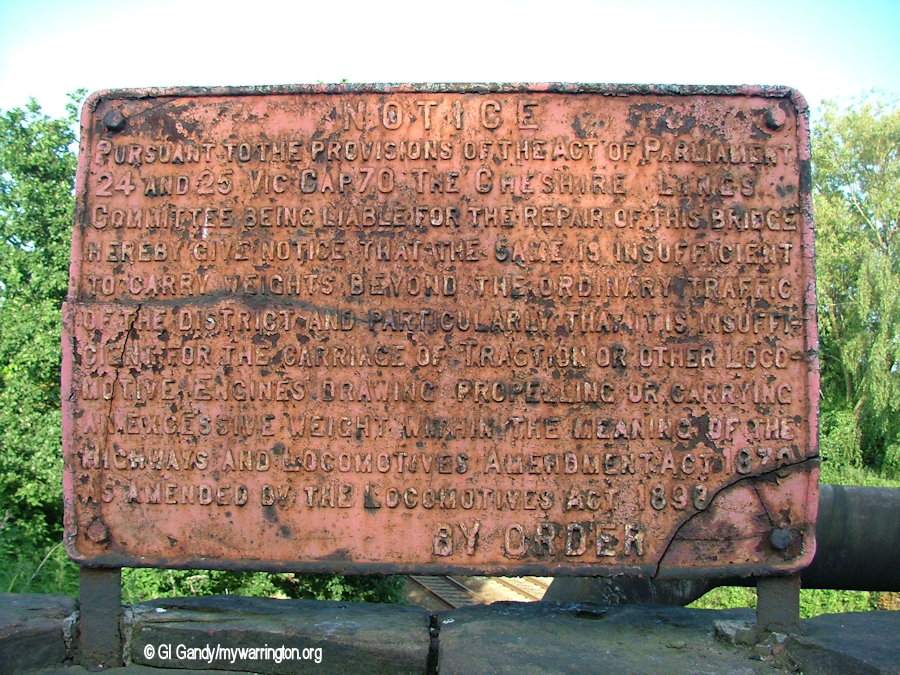
Notice
Pursuant to the provisions of the Act of Parliament 24 and 25 Vic Cap 70 the Cheshire Lines Committee being liable for the repair of this bridge hereby give notice that the same is insufficient to carry weights beyond the ordinary traffic of the district and particularly that it is insufficient for the carriage of traction or other locomotive engines drawing propelling or carrying an excessive weight within the meaning of the Highways and Locomotives Amendment Act 1878 as amended by the Locomotives Act 1898.
By Order
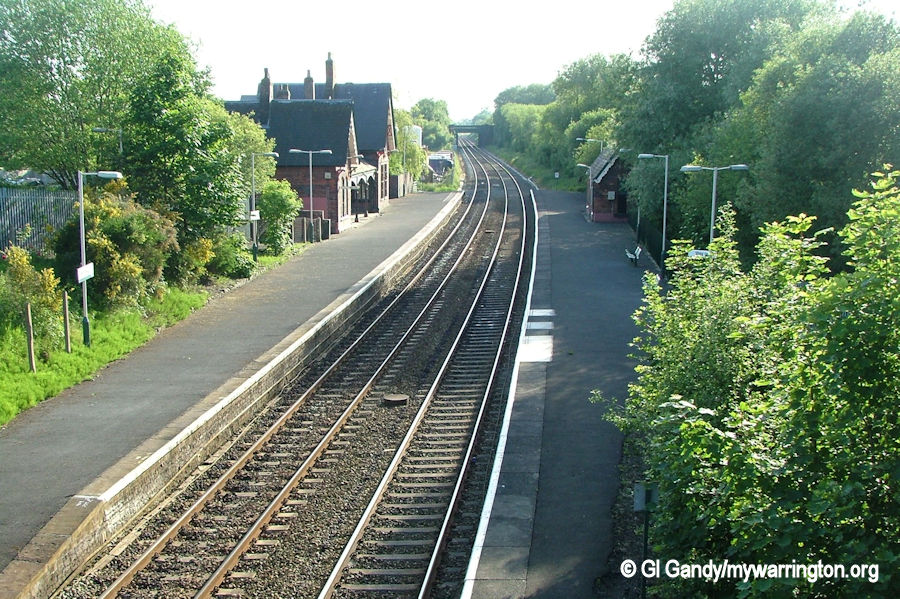
The station has two platforms, both accessed by steps down from the road overbridge, the Liverpool bound platform could also be accessed from the road access to the station building. There was a goods yard to the south of the lines and west of the station. The goods yard was able to accommodate most types of goods including several cattle pens for livestock. It was equipped with a five-ton crane.
During 1904 the station was renamed Sankey for Penketh.
The station closed to goods traffic on 5 November 1962, except for a private siding, which has subsequently also closed.
Some information from Wikipedia.
Warrington West Railway Station
Warrington West is a station for the 21st century. It was built on land adjacent to Chapelford village on the site of the former RAF Burtonwood air base. I have included it here because it occupies space along the original route of the CLC railway through Warrington.
Warrington Borough Council applied for funding from the Government’s New Stations Fund but the bid failed.
However, the council secured part of the funding through other sources and a planning application was approved in 2015, and it was hoped that construction could begin in 2016, until Network Rail increased the estimated cost by £4 million. The final cost was £19 million.
A fresh bid to the New Stations Fund was successful, and the station opened on 16 December 2019.
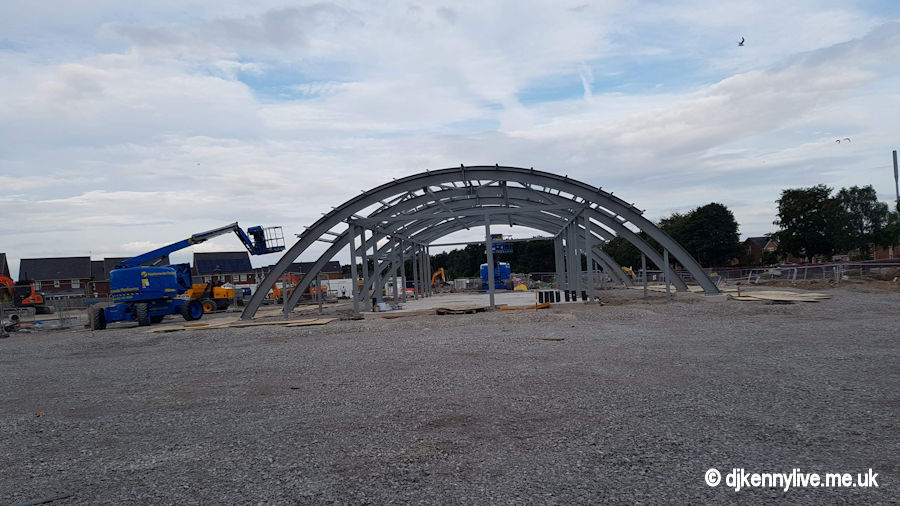
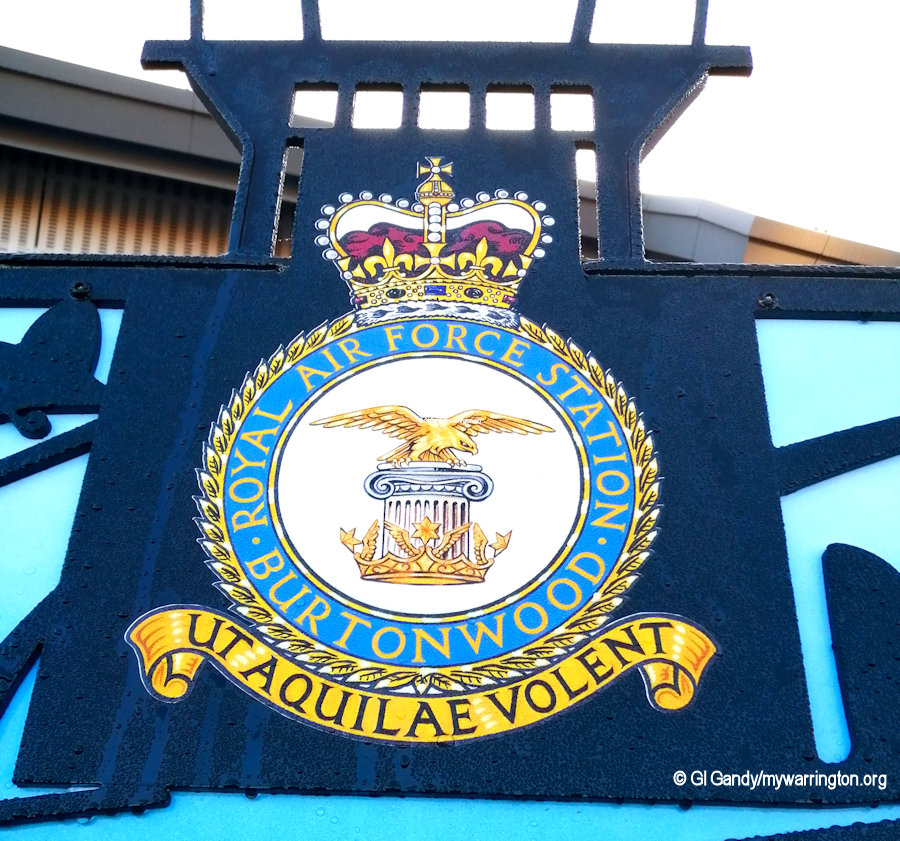
The station building is in the shape of an aircraft hangar. This is in memory of RAF Burtonwood air base that occupied the site from 1940 until 1993. A commemorative bench outside the entrance to the station features a crest dedicated to the RAF Station Burtonwood Association with the Latin phrase ut aquilae volent which translates into English as ‘that eagles may fly’.
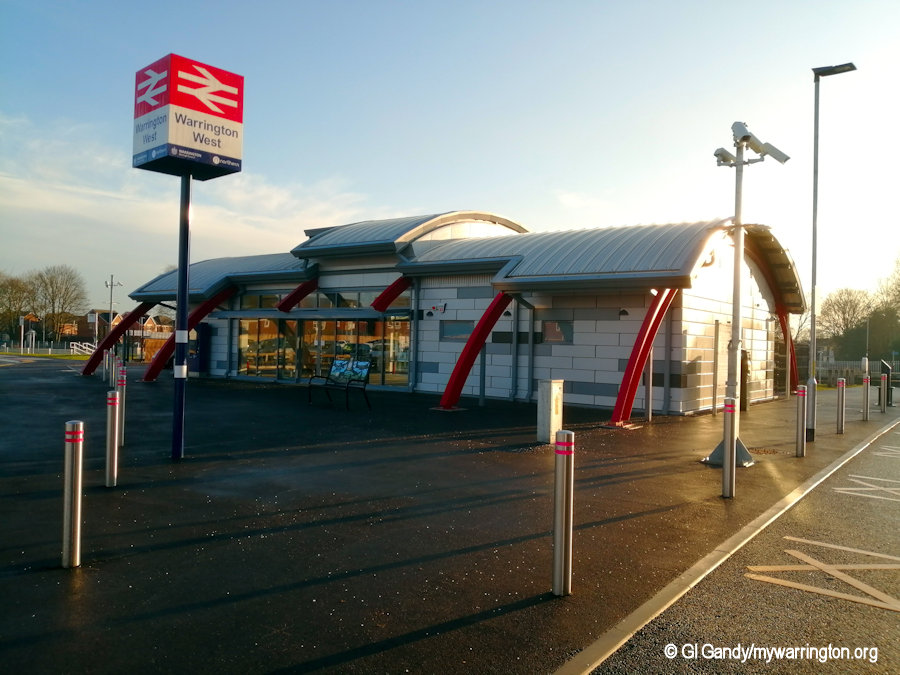
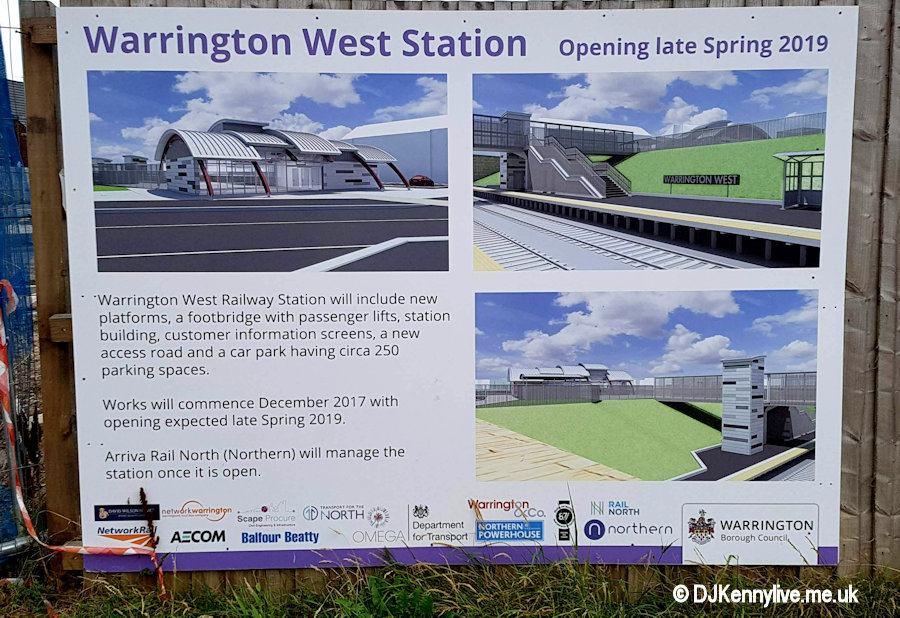
My photos were taken the day after the opening of the station on 17 December 2019. The three supplied by djkennylive.me.uk were taken on 1 August 2018 during construction.
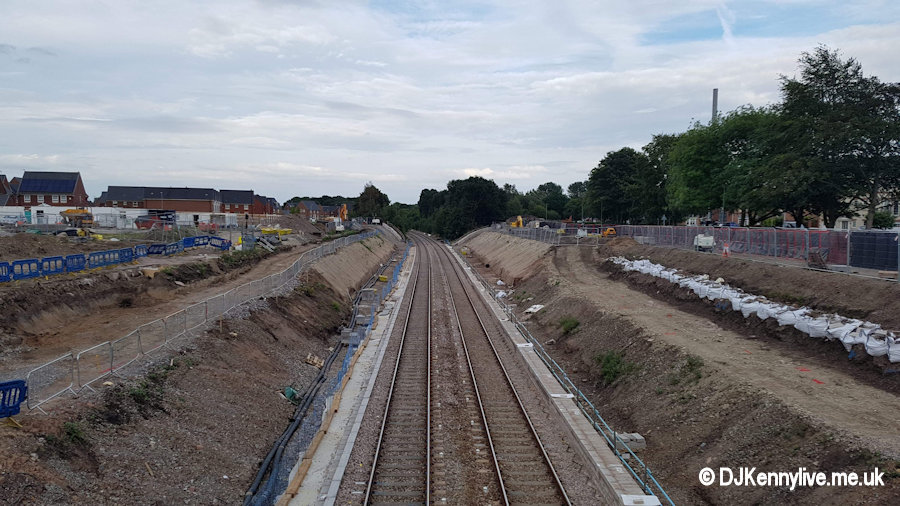
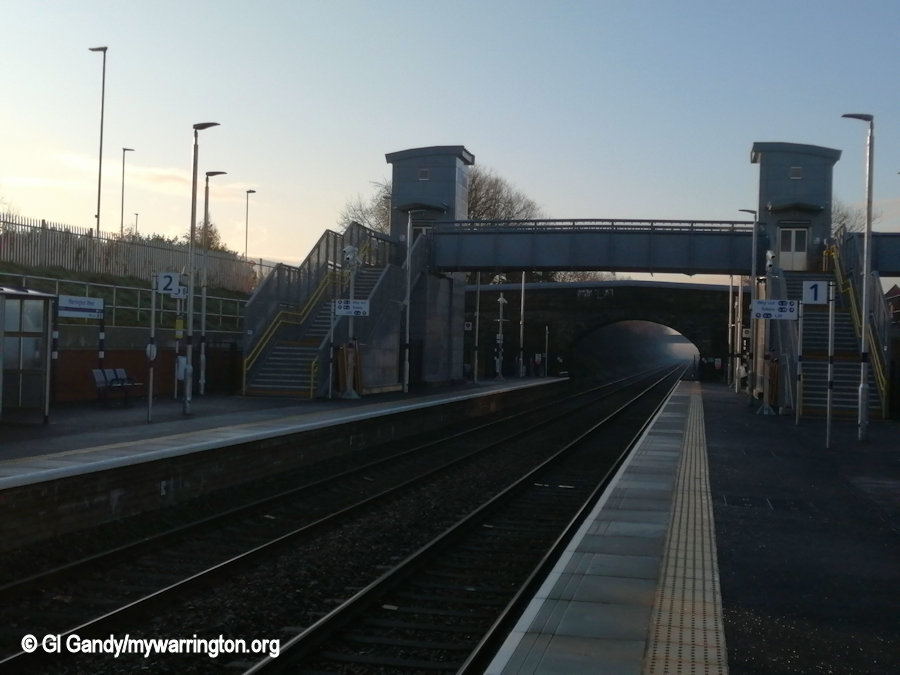
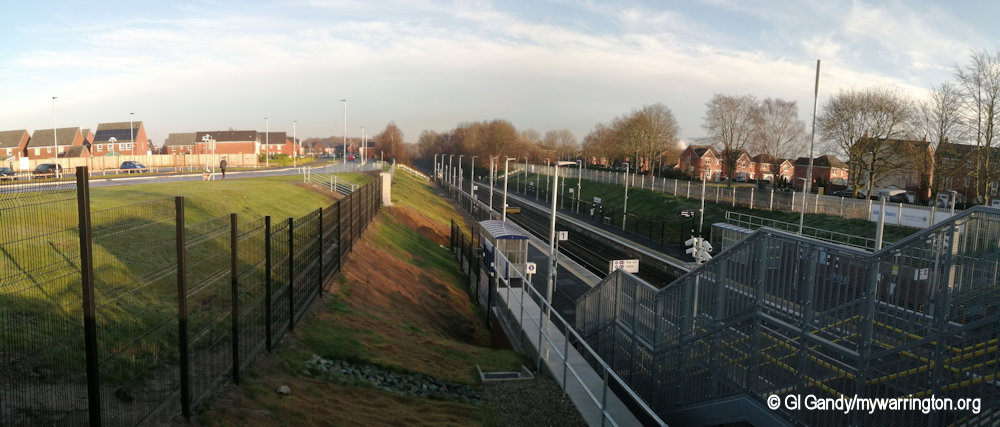
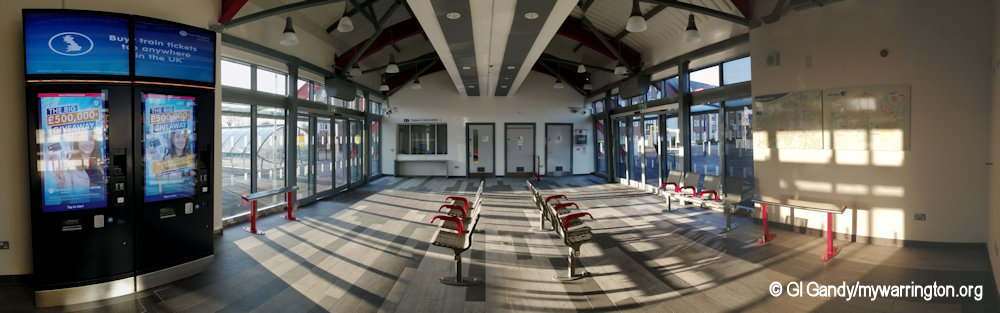
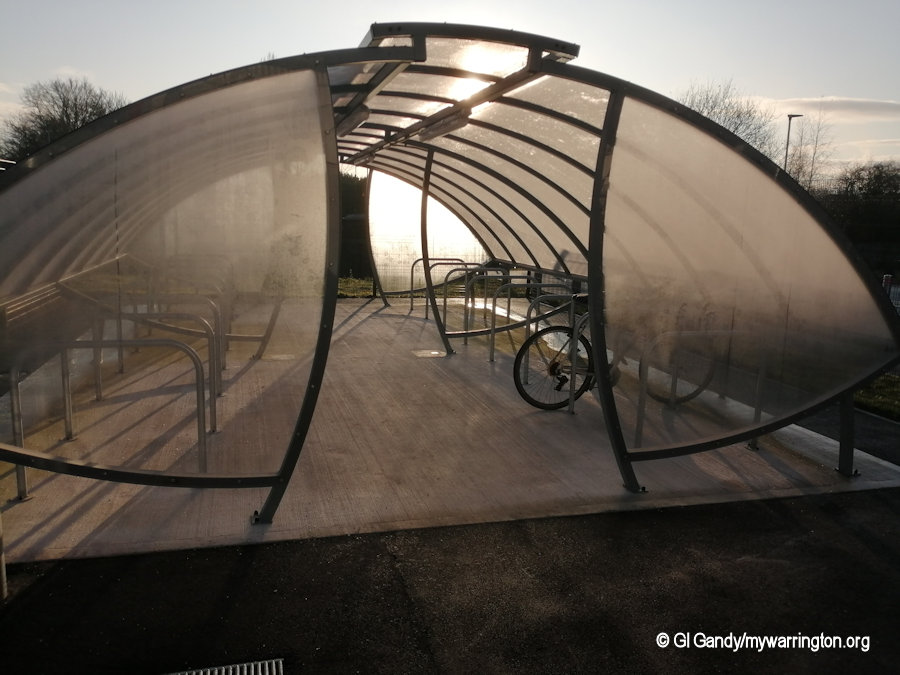
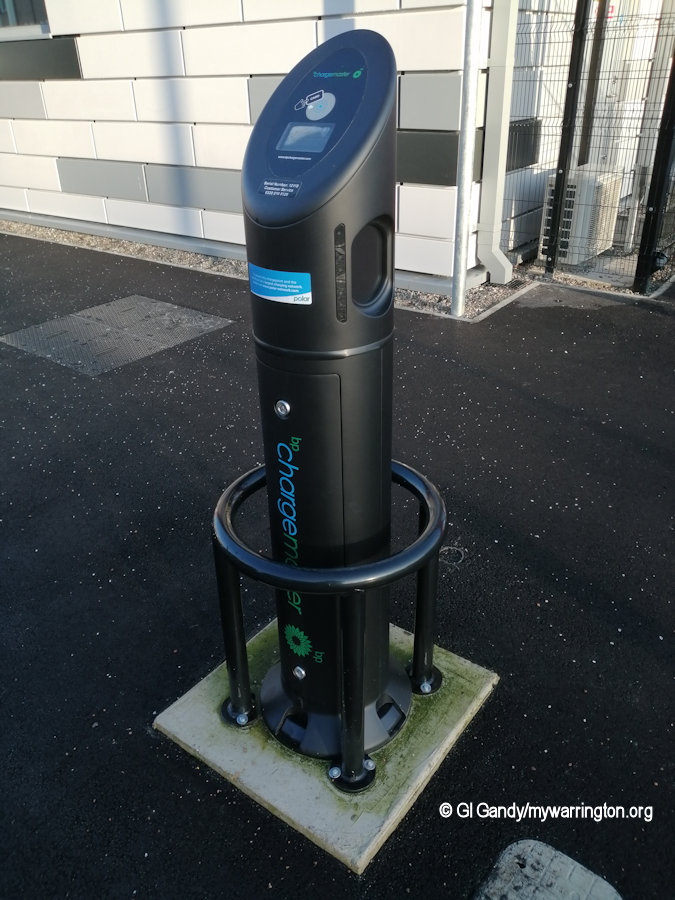
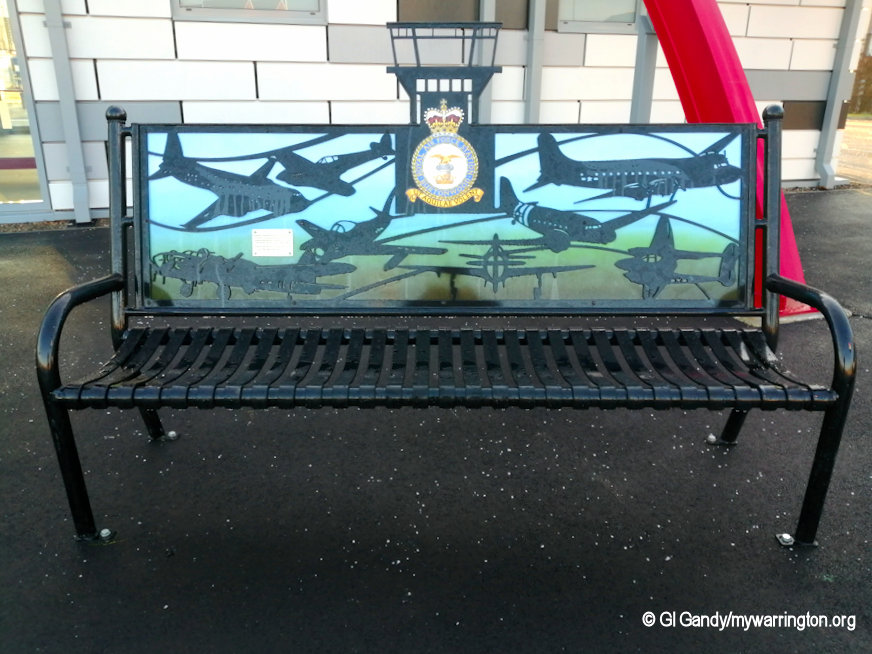
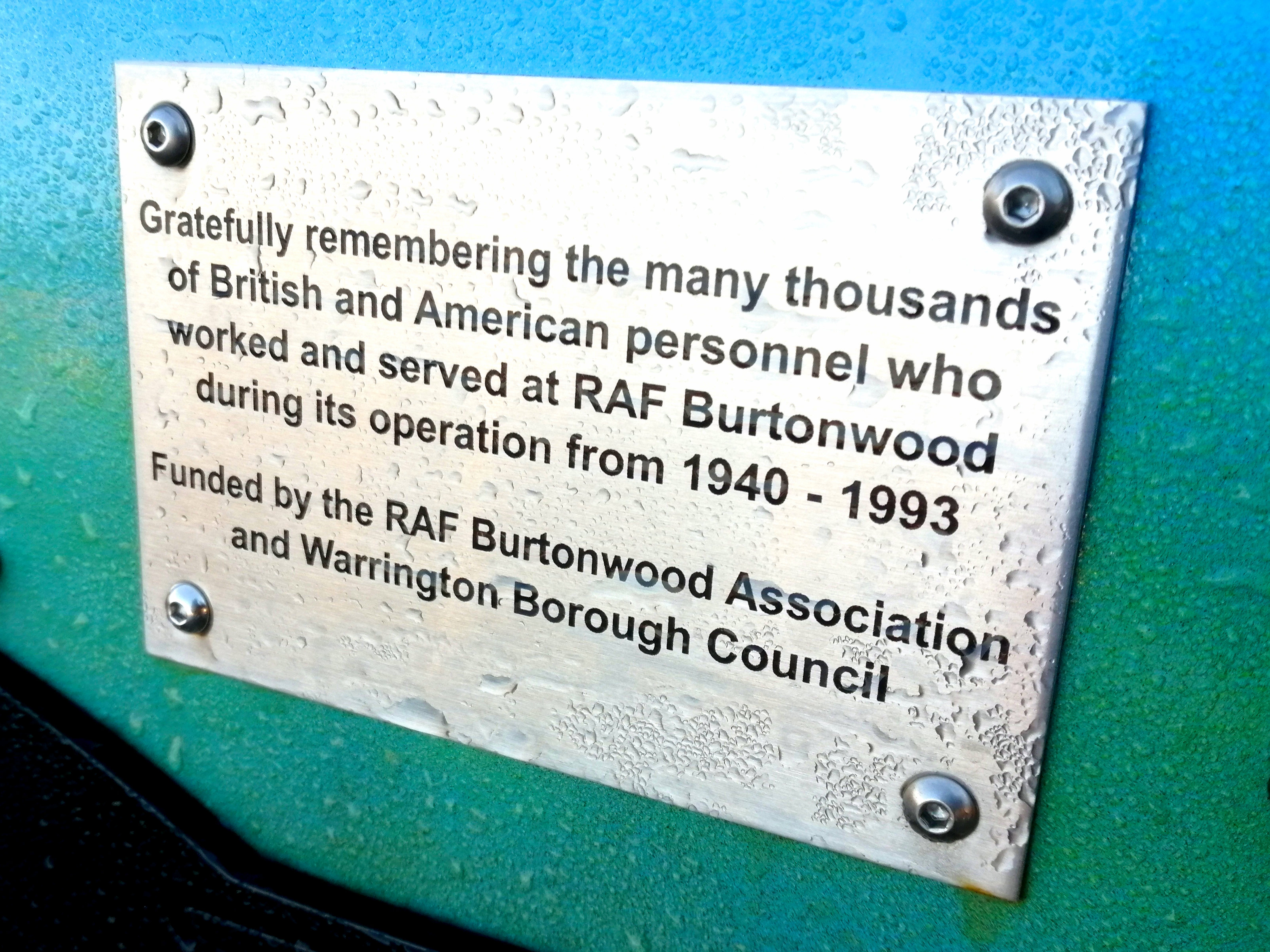
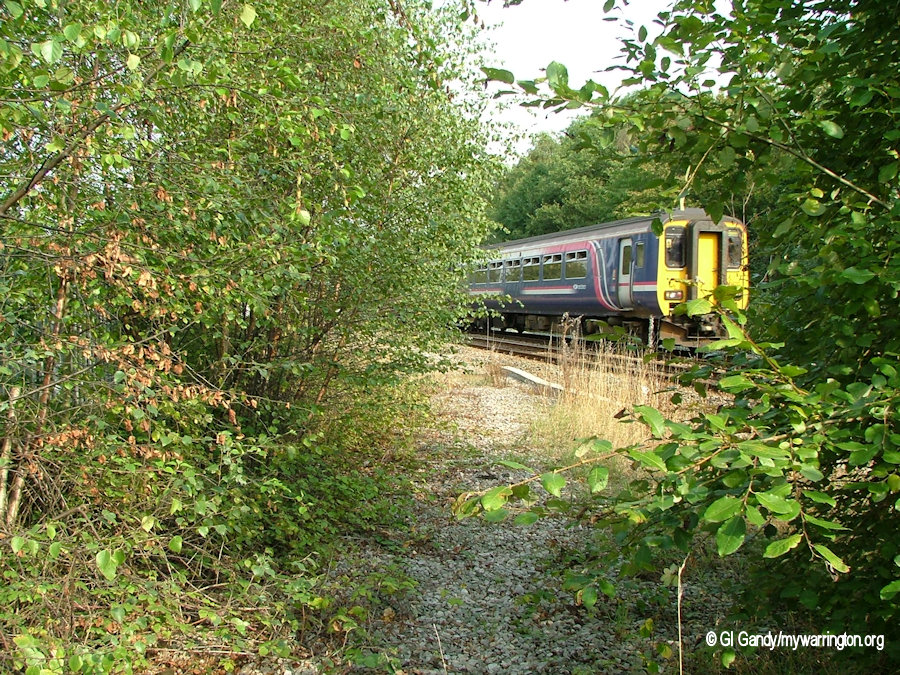
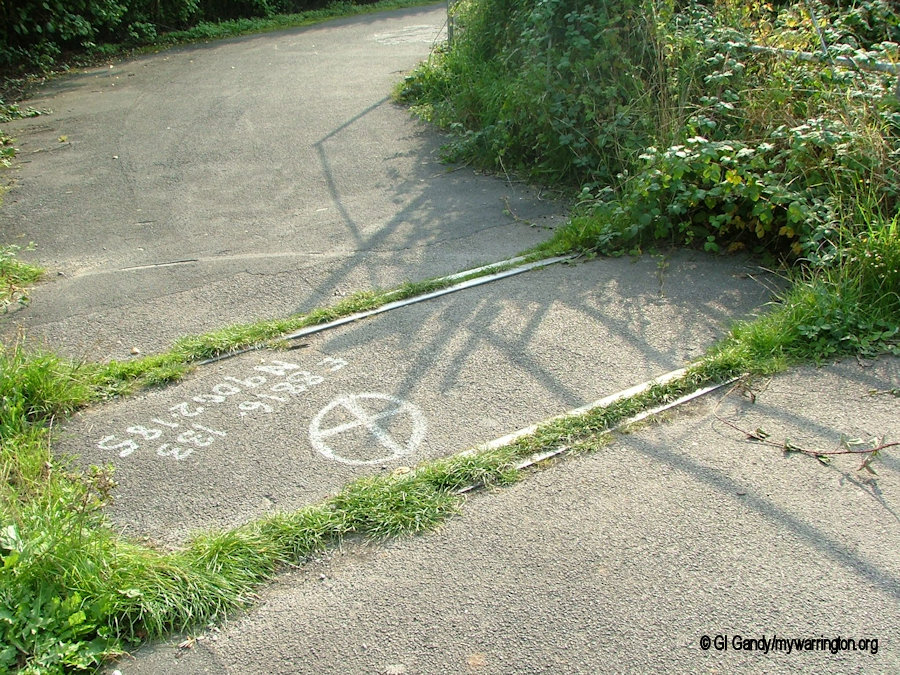
The following images show the CLC line near the modern-day Old Hall estate. The branch line ran into RAF Burtonwood.
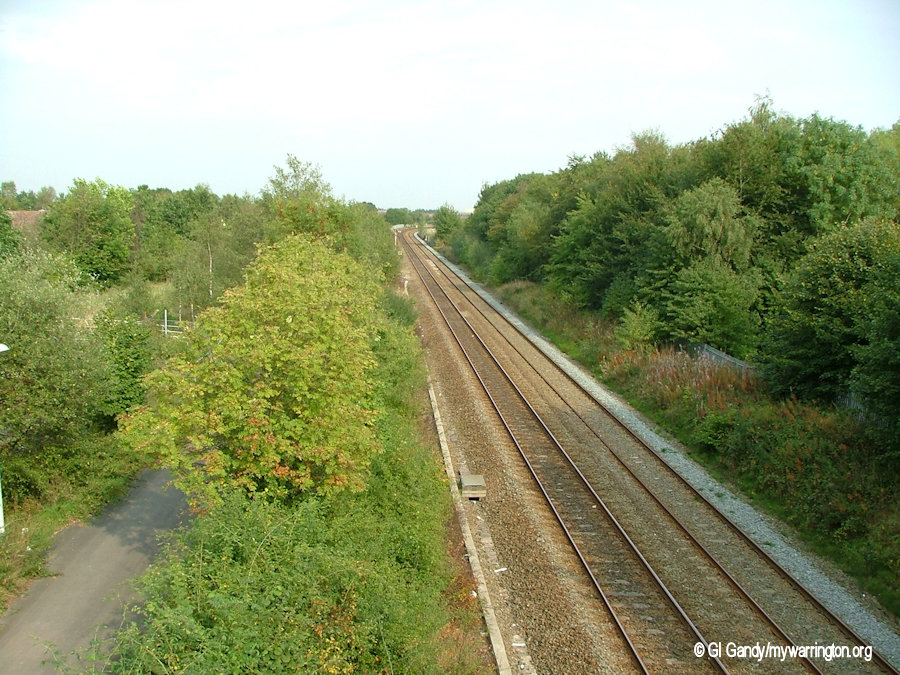
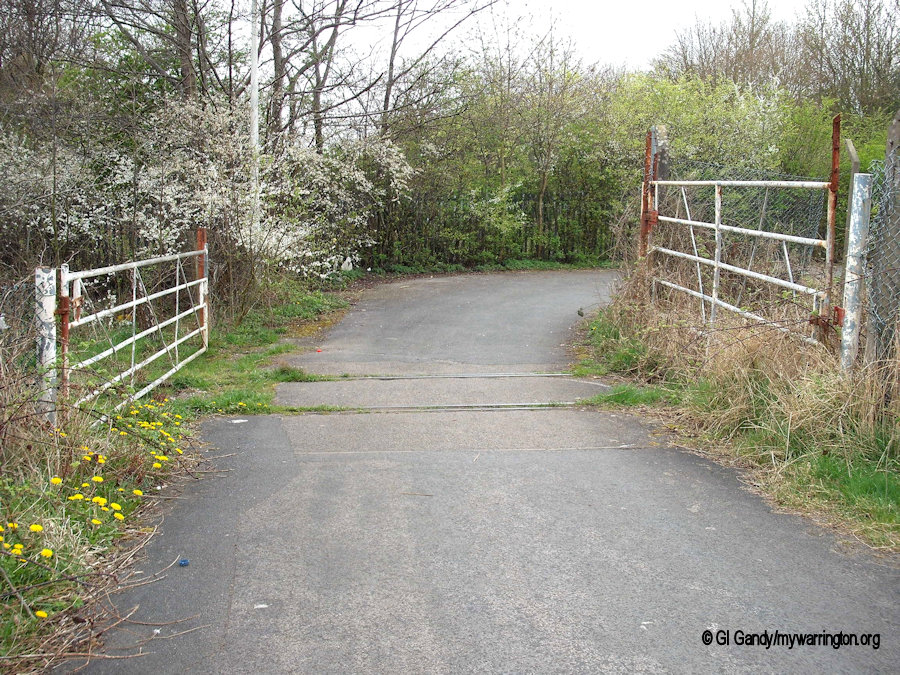
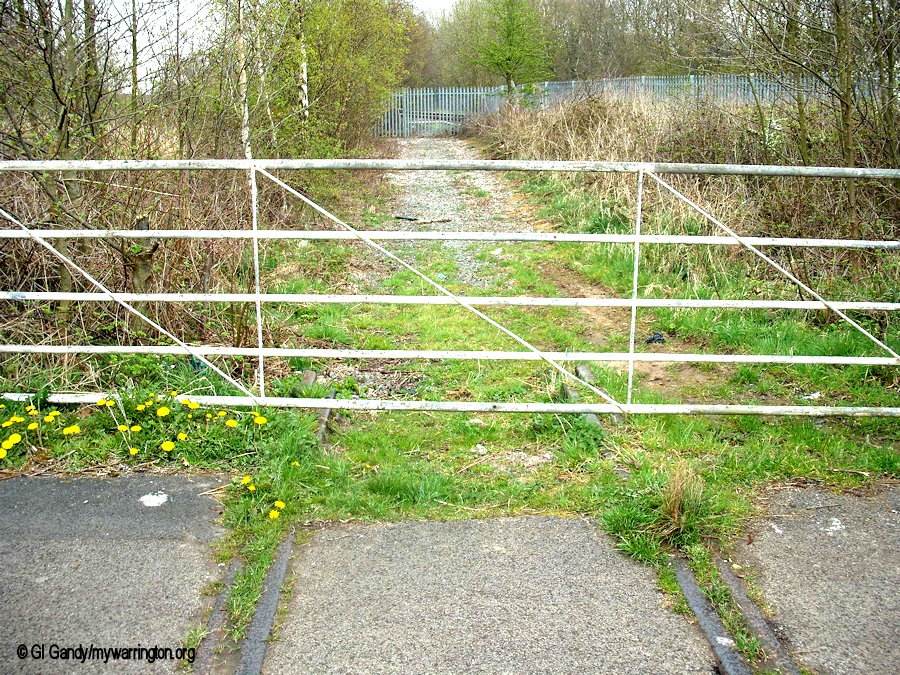
More on the straight line section later.
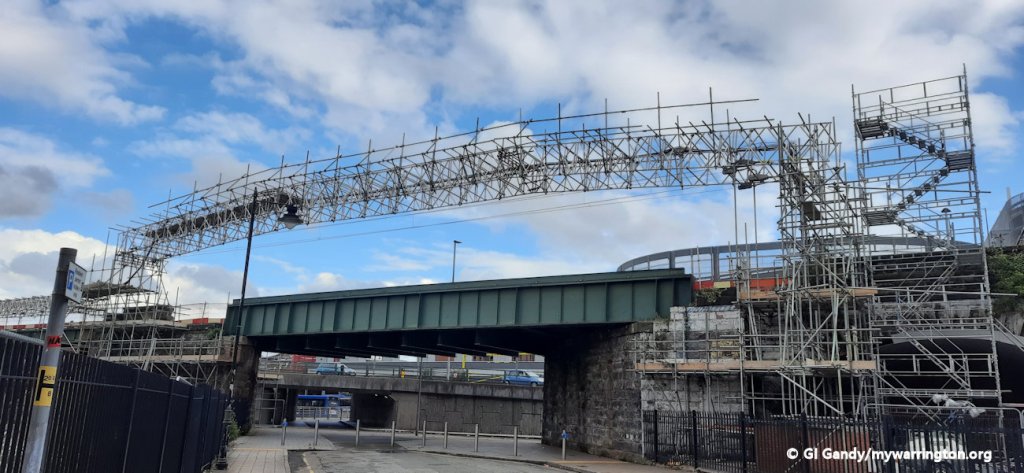
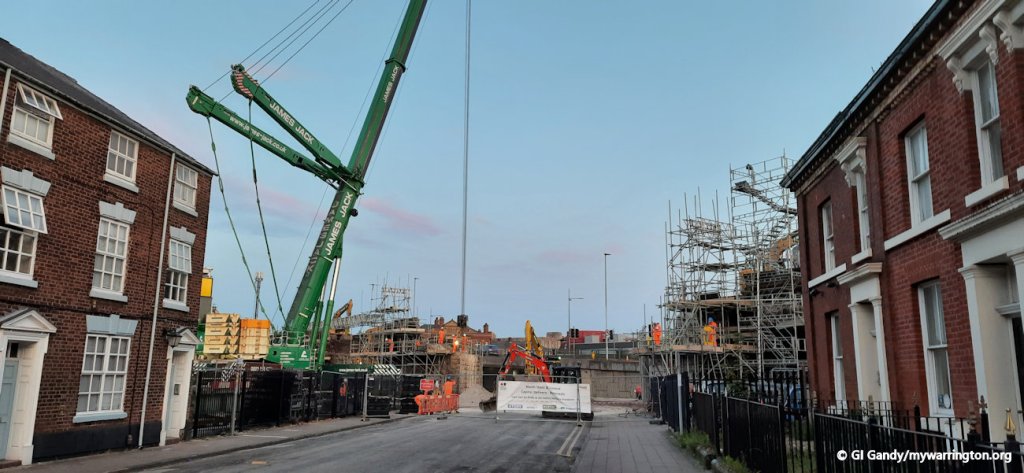
Bridge Replacement at Bewsey
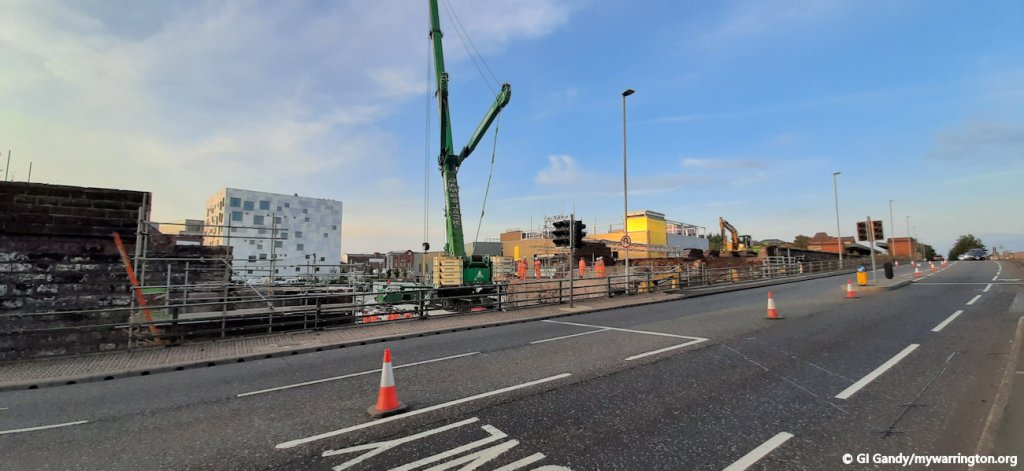
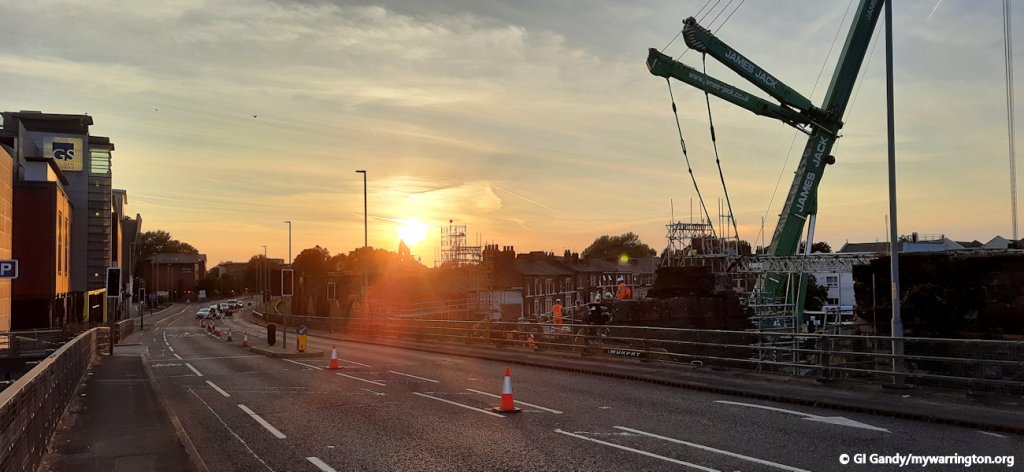
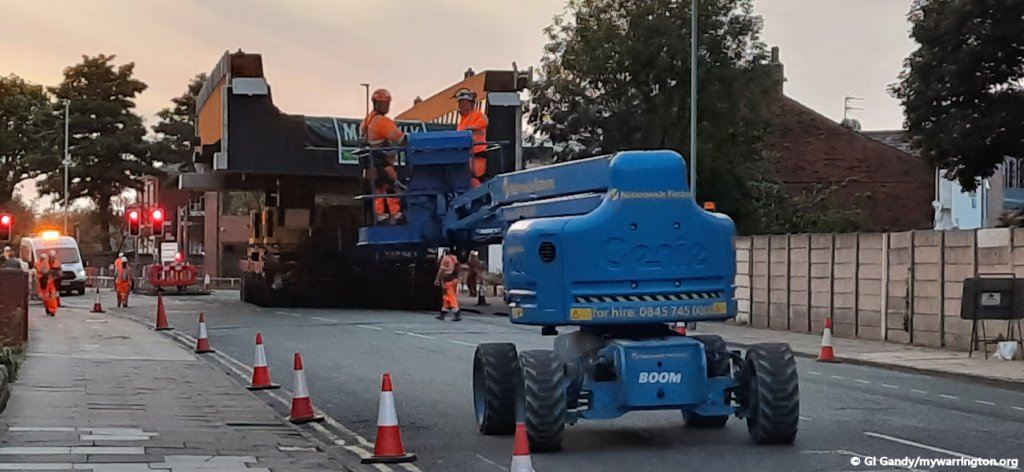
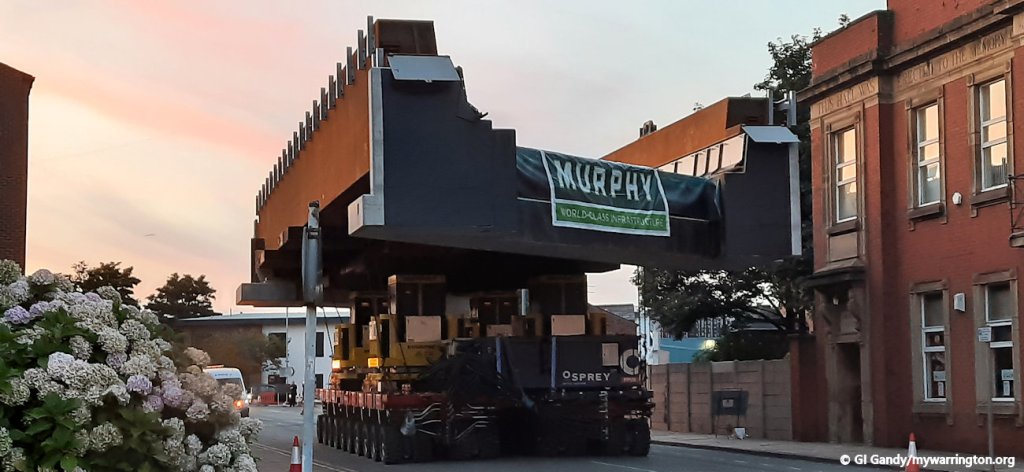
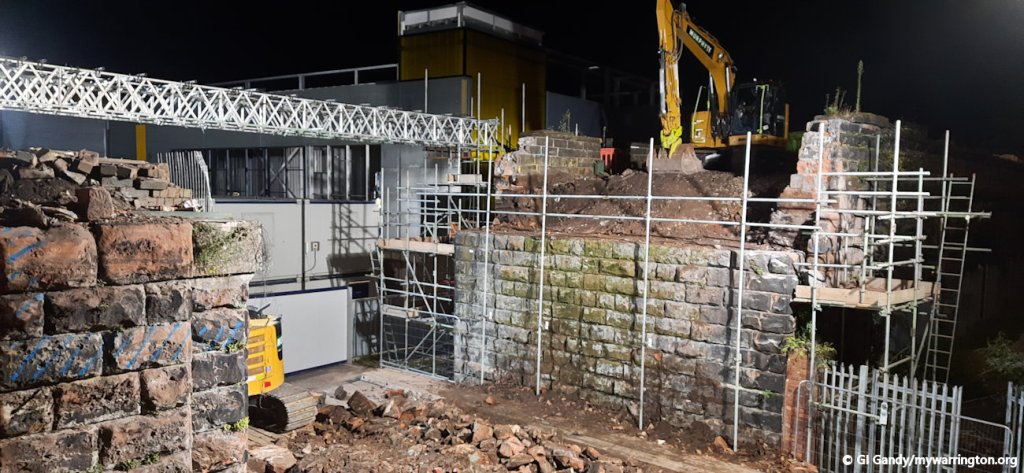
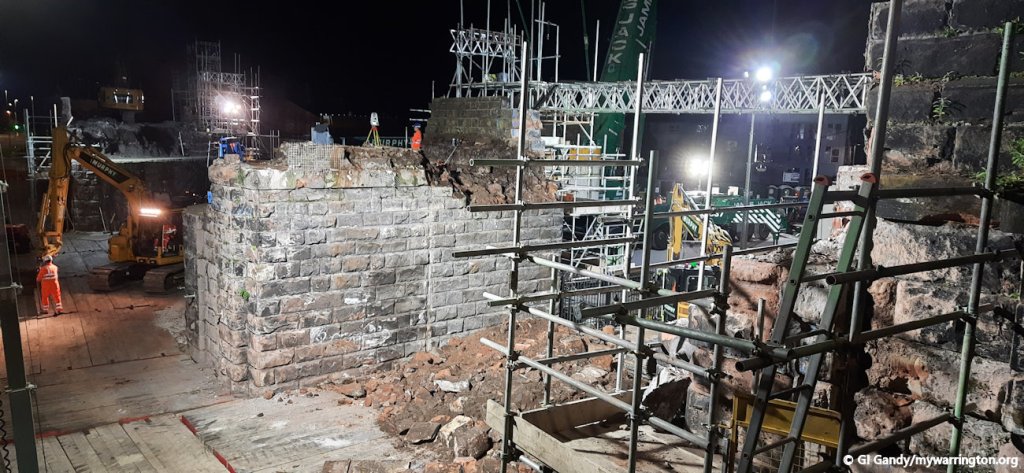
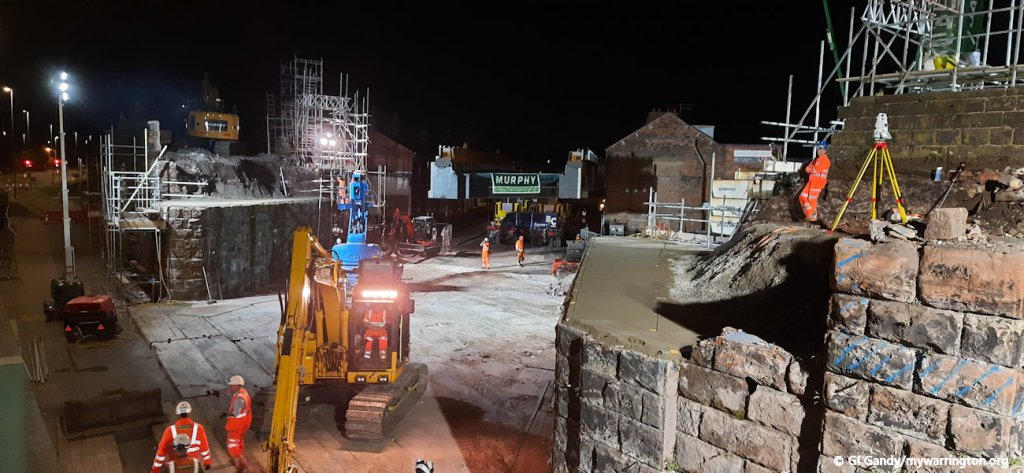
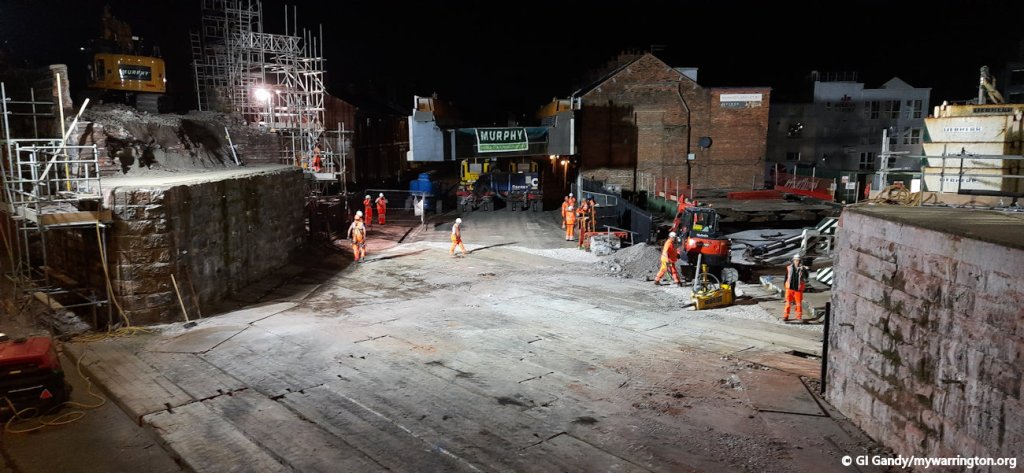
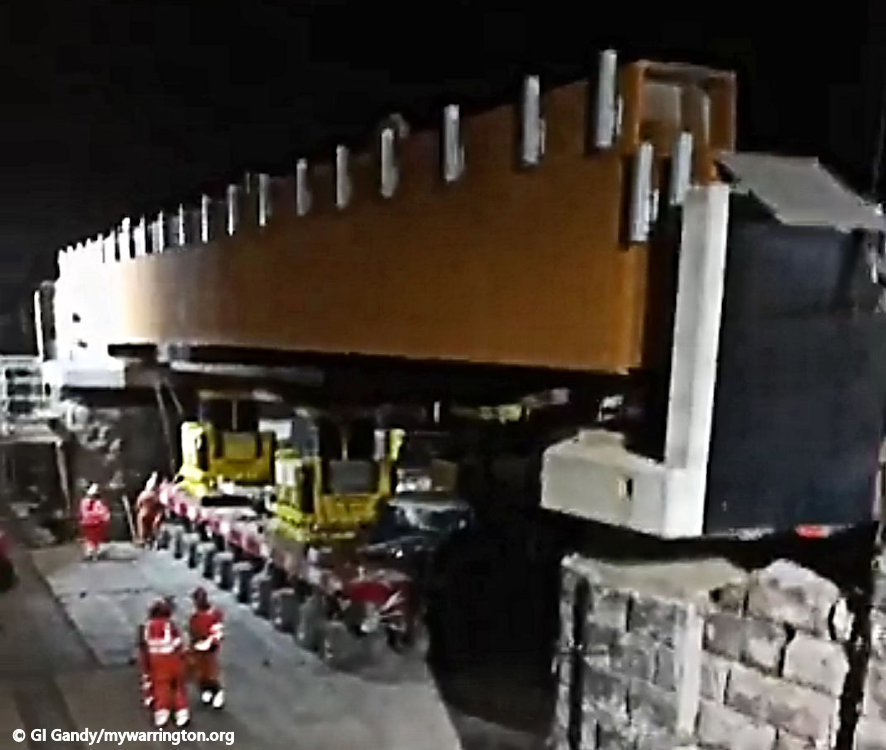
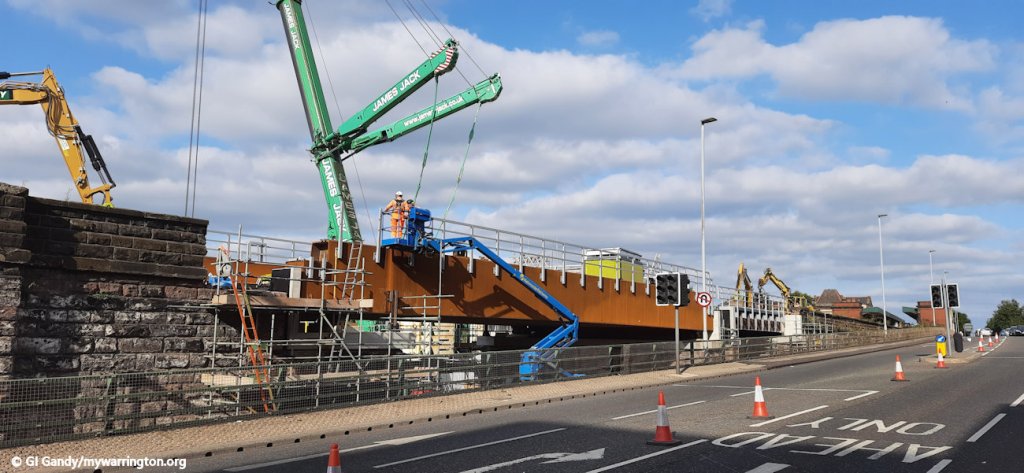
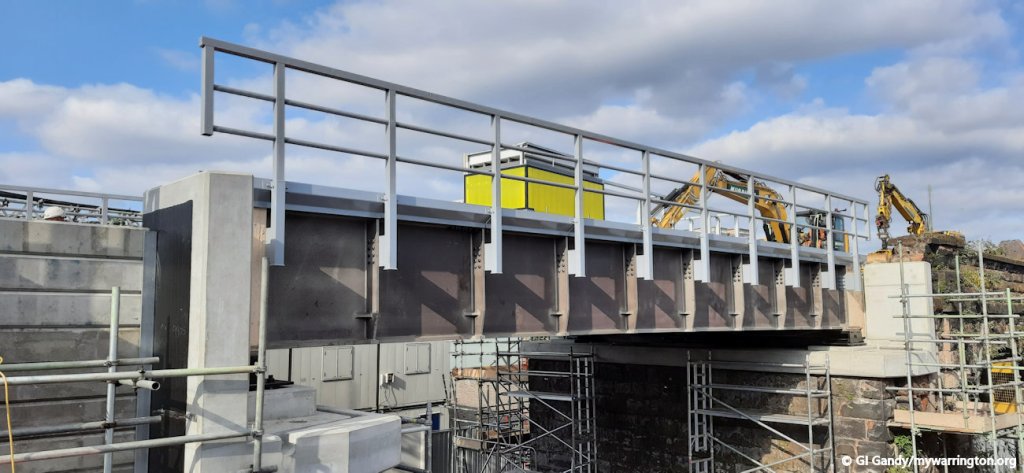
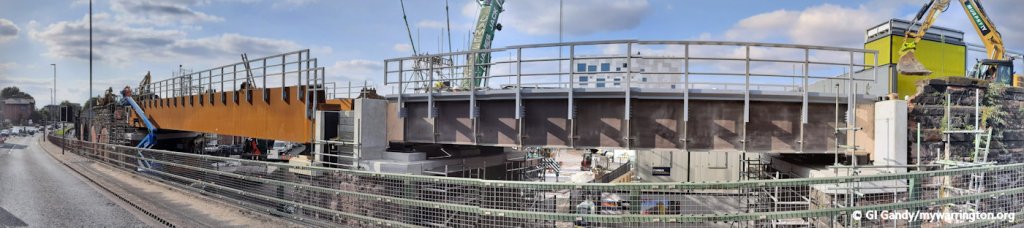
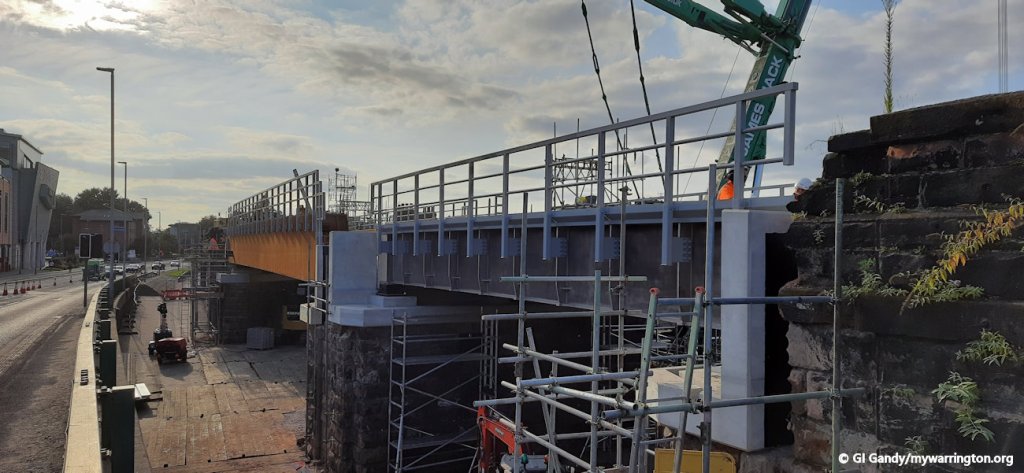
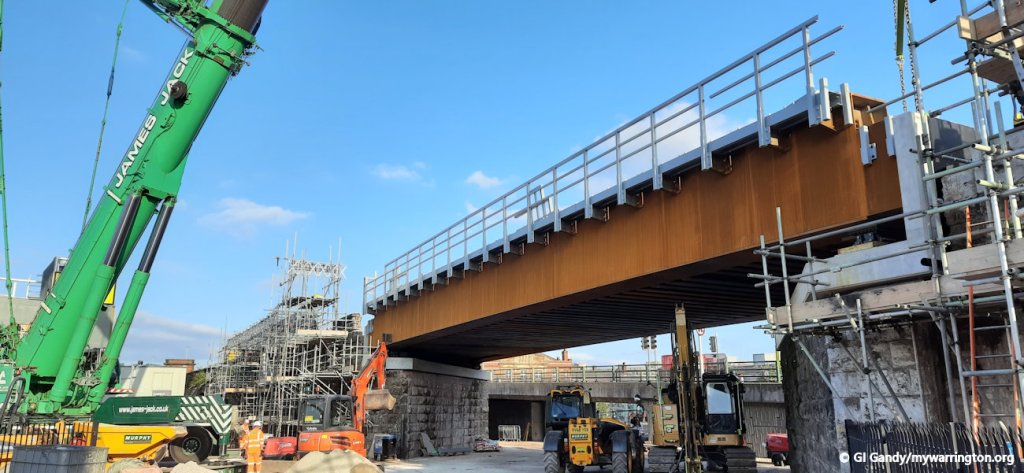
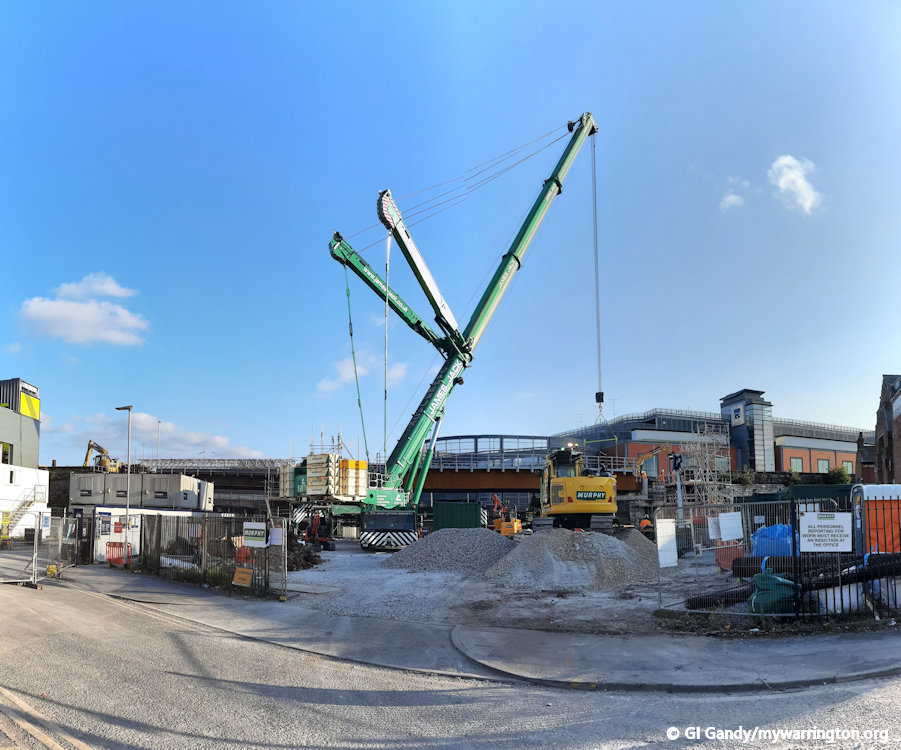
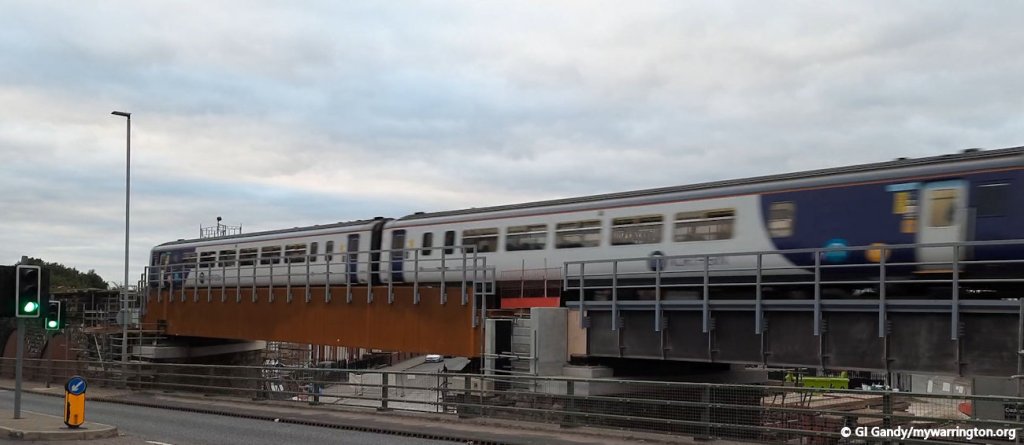
Meanwhile, let’s see some photos of the bridge replacement programme at Bewsey Street and Foundry Street west of Warrington Central station over the Summer Bank Holiday in August 2021. To set the scene, they used two types of lifting gear: a hydraulic low loader truck with independent steering on each set of wheels and four jacks to support the 340 ton weight of the bridge over Bewsey Street, which was pre-cast and delivered to the site. The other piece of lifting equipment was a £9 million crane for the smaller of the bridges over Foundry Street.
Warrington Central Station
As mentioned earlier, Warrington Central only came into being due to public pressure for a railway station in the town centre. The loop and station opened in 1873; the direct route, otherwise known as the Warrington avoiding line (or ‘straight line’) , was not opened until 1883. During the days of the CLC between 1865 and 1948, it was possible to get a direct train from Warrington Central to Aintree station for the Grand National race meetings. You could also get a direct train to London from here which saved the trek across town to Warrington Bank Quay.
The following image shows the construction of the current station building on 27 May 1982. Copyright unknown.
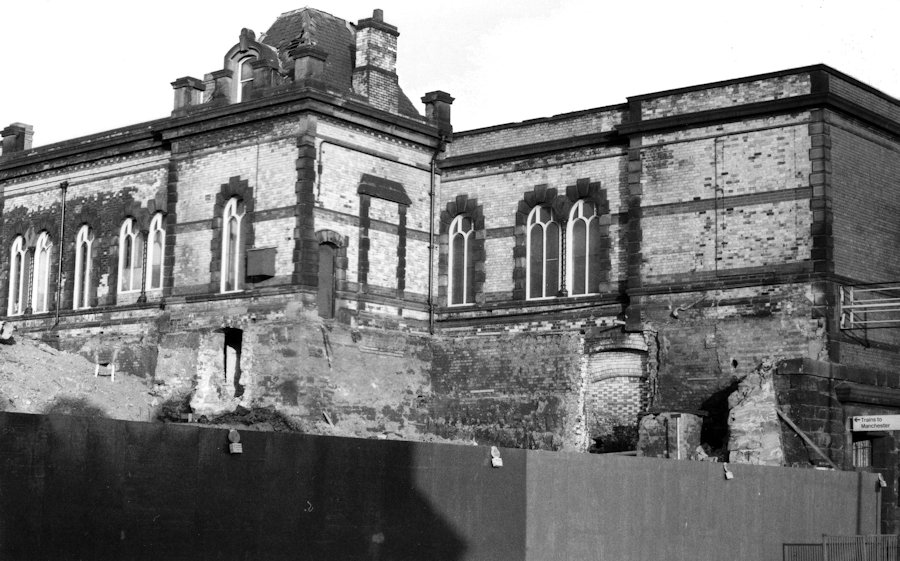
The station is located on a raised embankment on the eastern side of where the line crosses Winwick Street, on the northern edge of the town centre.
The original station building, which faces away from the town and is not easily seen by passengers, is an impressively long one-storey fine Italianate building of twenty bays in yellow brick with decorative stonework, numerous rusticated round-headed windows, a projecting central block with balustrades. The western end has a pavilion with a pyramidal roof.
It has two platforms on either side of two running lines with a subway between them at the Winwick Street end. This subway was later opened out to provide access direct from Winwick Street to each platform. Although the train timetable has often included passenger train services terminating at Warrington Central, there have never been any bay platforms. Terminating services use one of the two through platforms and usually proceed afterwards, as empty coaching stock, into the sidings to the east of the station.
The station was upgraded in 1983 with a street-level entrance facing on to Winwick Street. Lifts to both platforms were installed in June 2008 and built in the space once occupied by the two stairways leading up to the platforms. The station was refurbished in 2011 with improvements to “customer facilities”, which included a new ticket office.
There was a goods yard and shed to the north of the lines and east of the station.
The original goods shed was adjacent to the main running lines. It had one line running through it, with a further goods platform to its north. The goods yard was able to accommodate most types of goods including live stock and was equipped with a five ton crane.
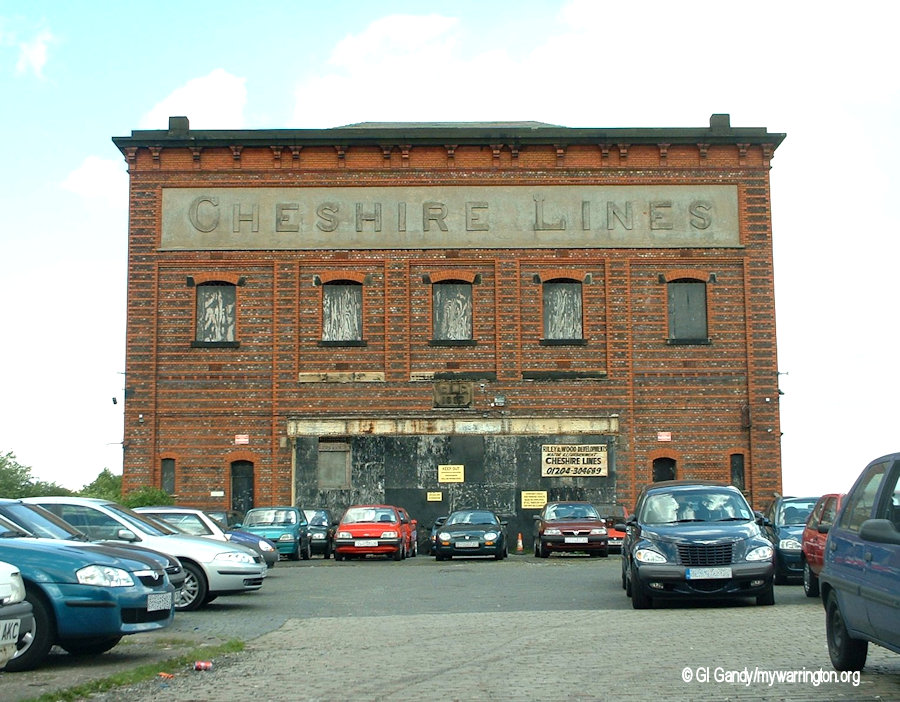
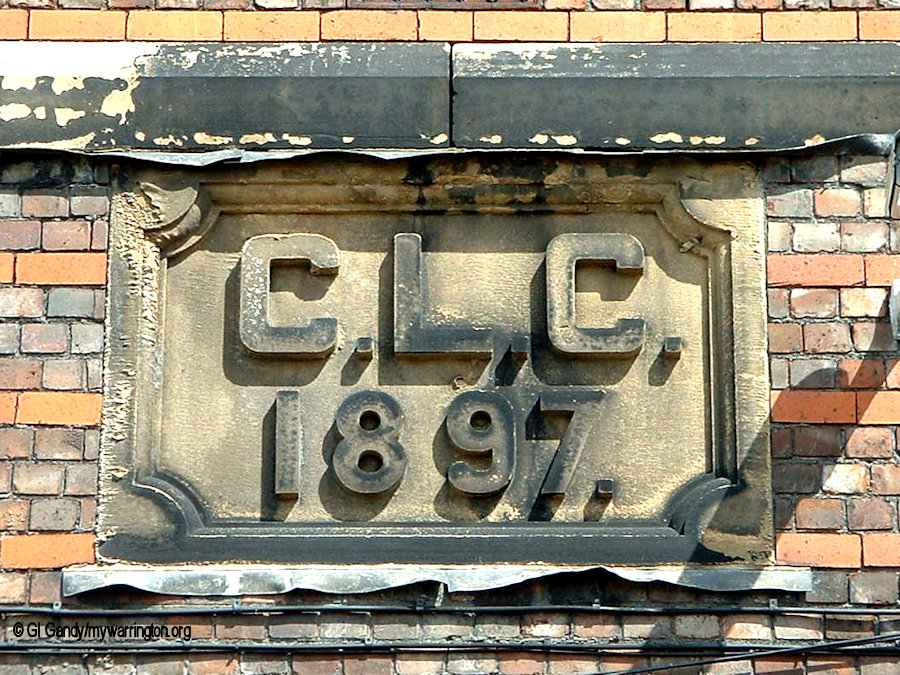
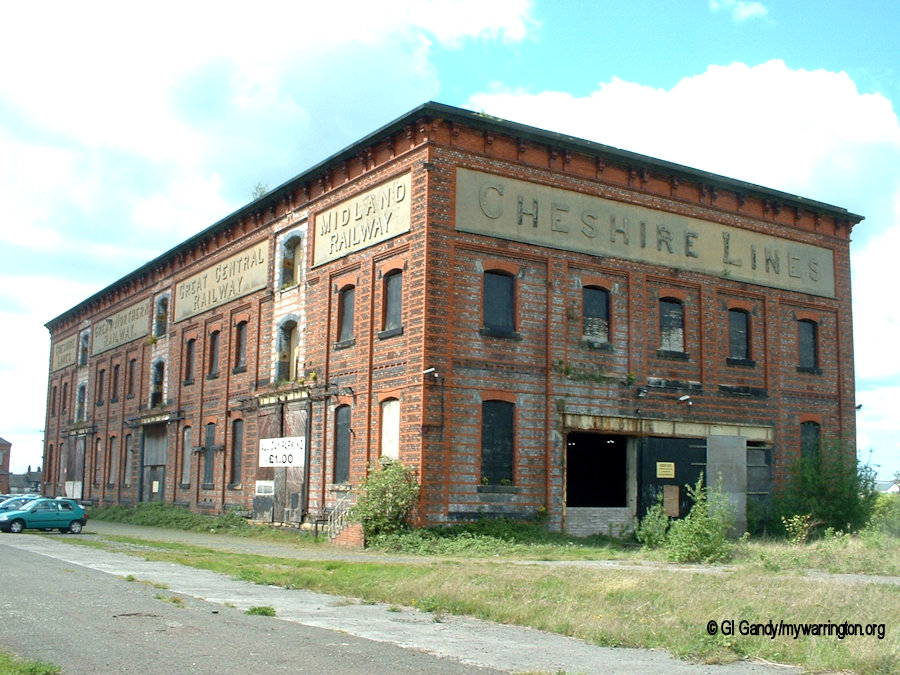
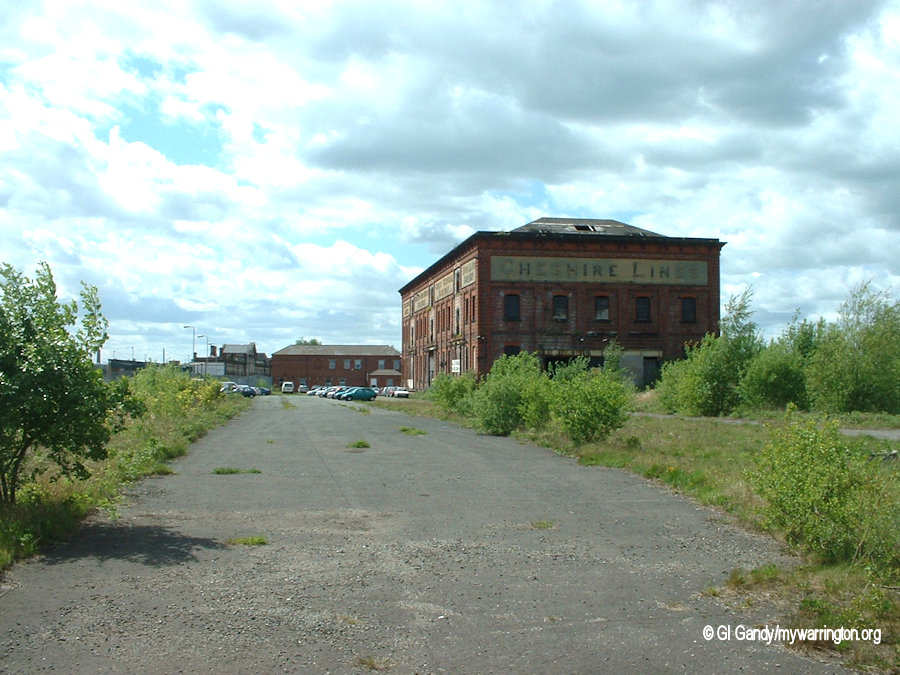
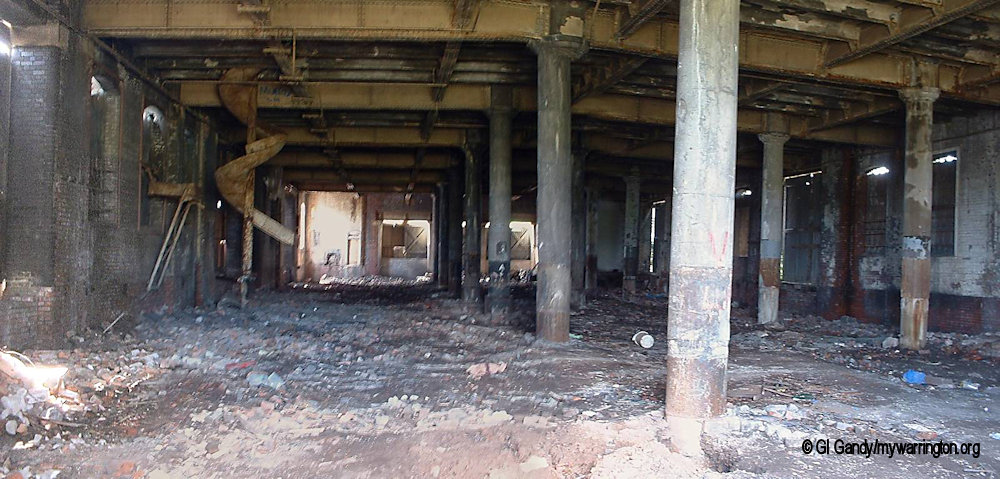
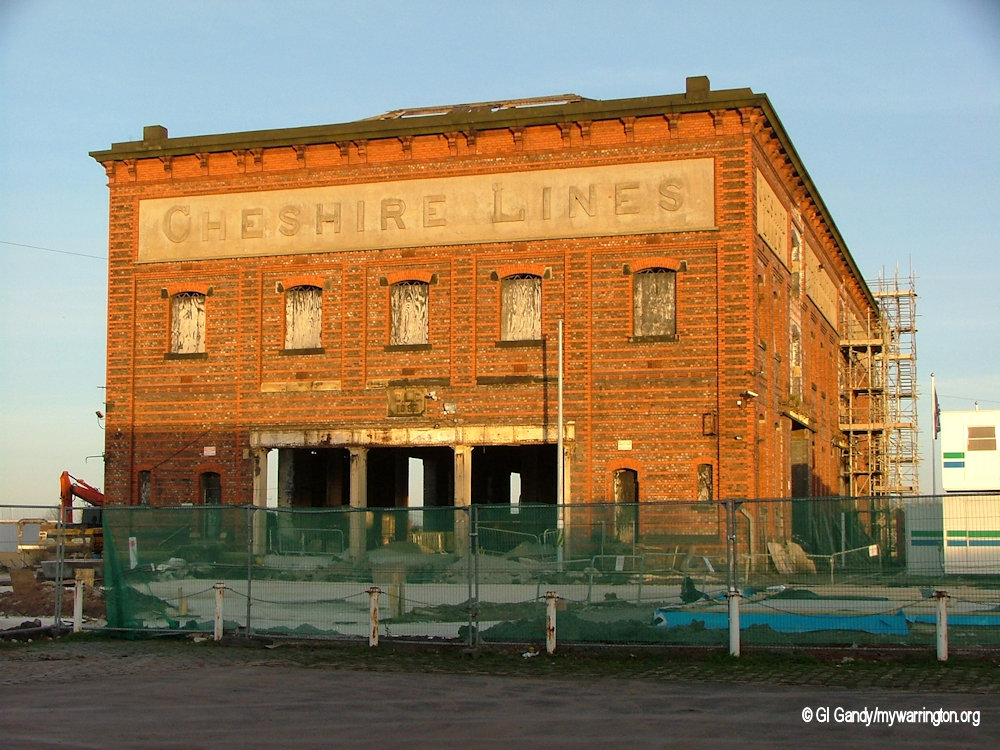
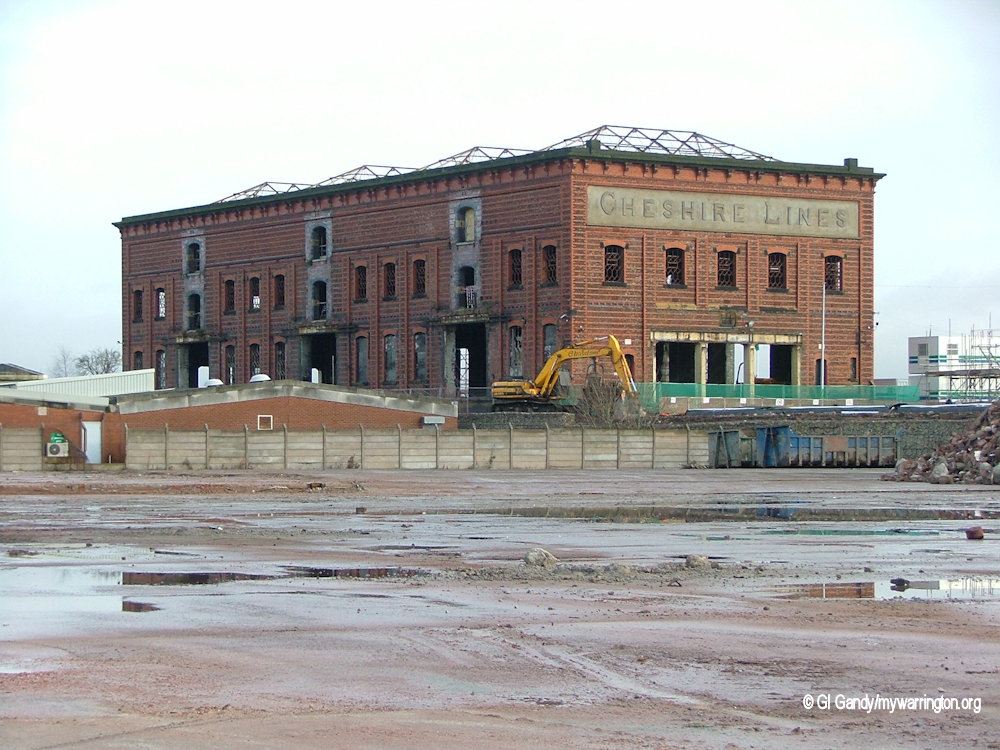
It was replaced in 1897 by a larger building set further back from the main lines, on the site of the original goods platform. This warehouse was a three-storey buff-red brick building with segmental windows set in brick panels decorated with moulded Accrington brick. The dominant feature of the warehouse is the series of large concrete panels under the roofline displaying the name of the CLC and its owning companies. It is recorded in the National Heritage List for England as a designated Grade II listed building.
There were several cattle pens to the north-west of the goods yard and several short sidings immediately to the east of the passenger station. The goods yard crane had been upgraded to ten-tons.
The goods depot was the last on the line; goods traffic ceased and the depot closed in 1982.
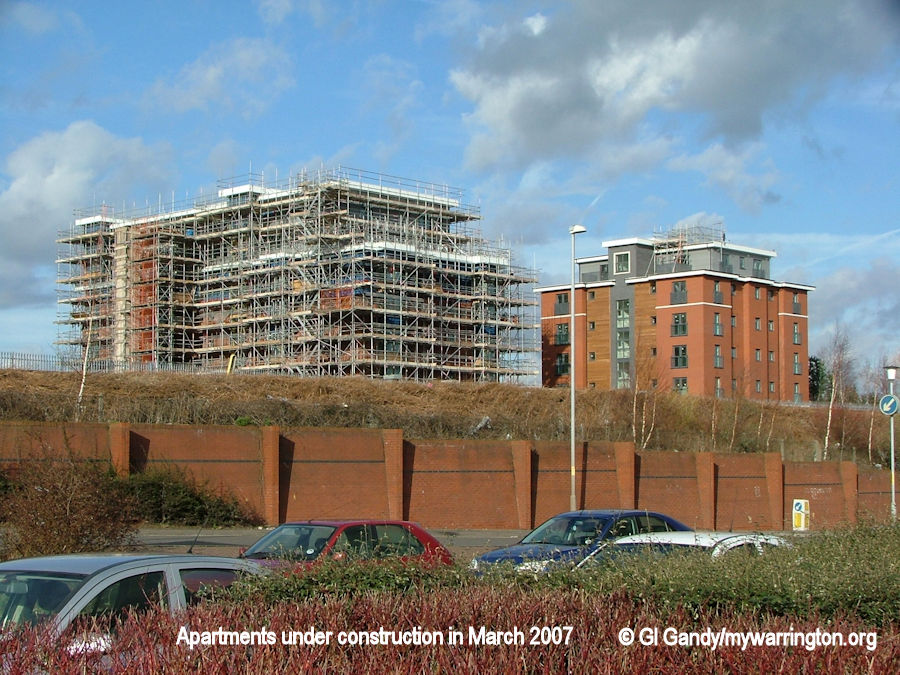
The warehouse has been redeveloped into apartments with several new build blocks occupying the former goods yard site.
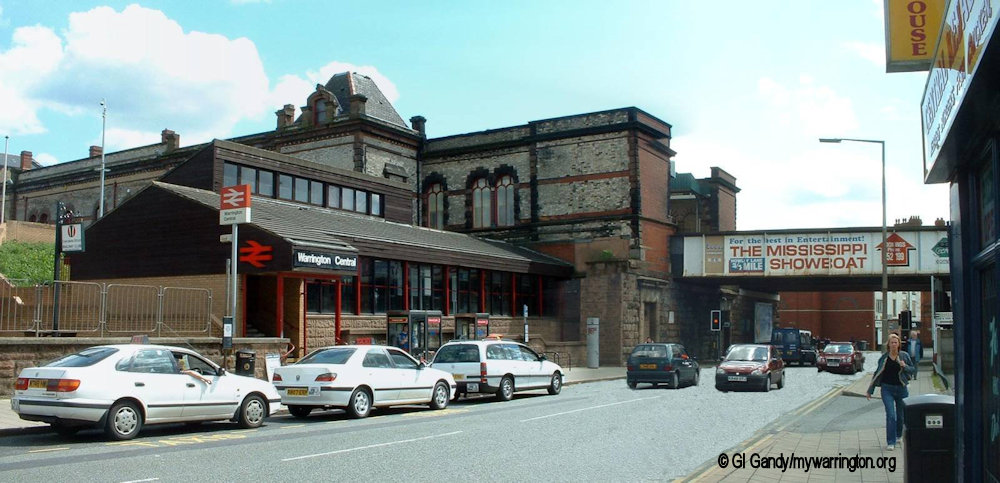
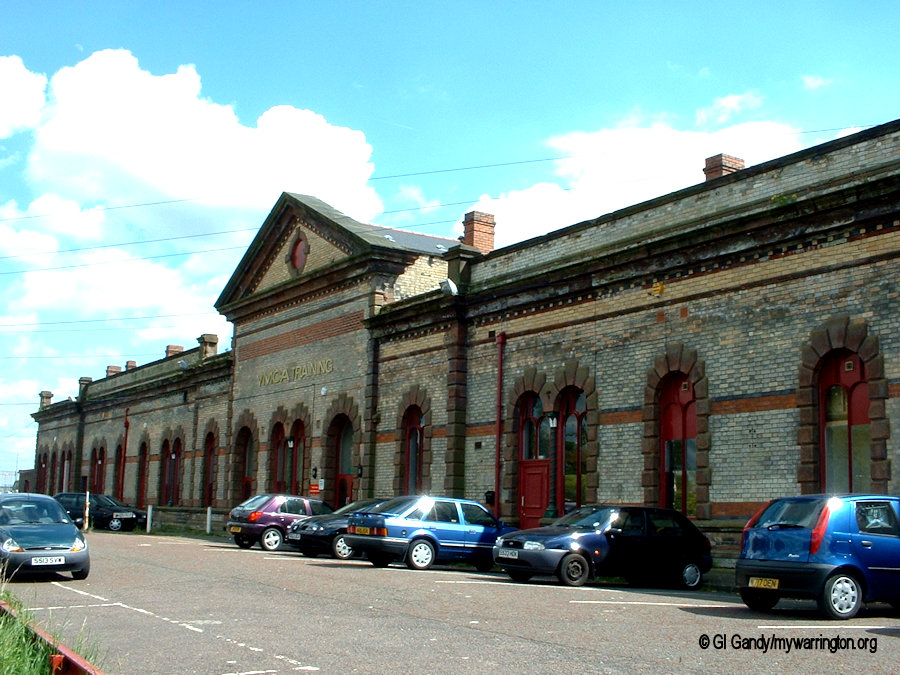
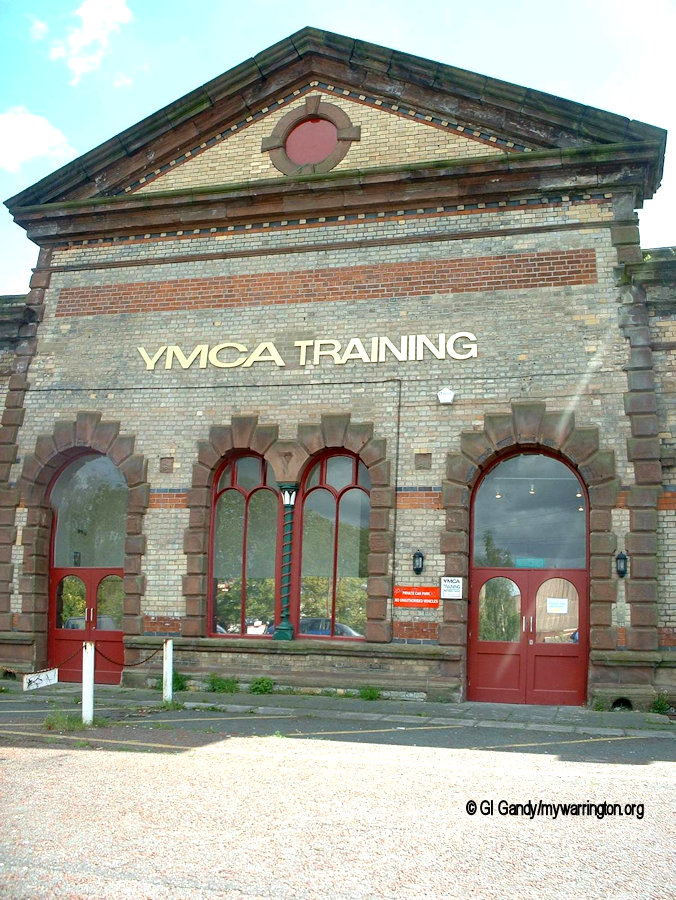
Three views of Warrington Central from Winwick Street and Central Way
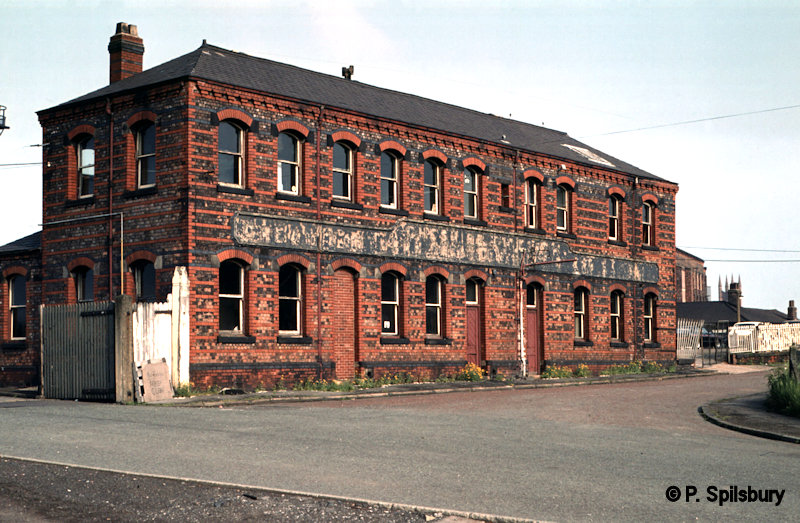
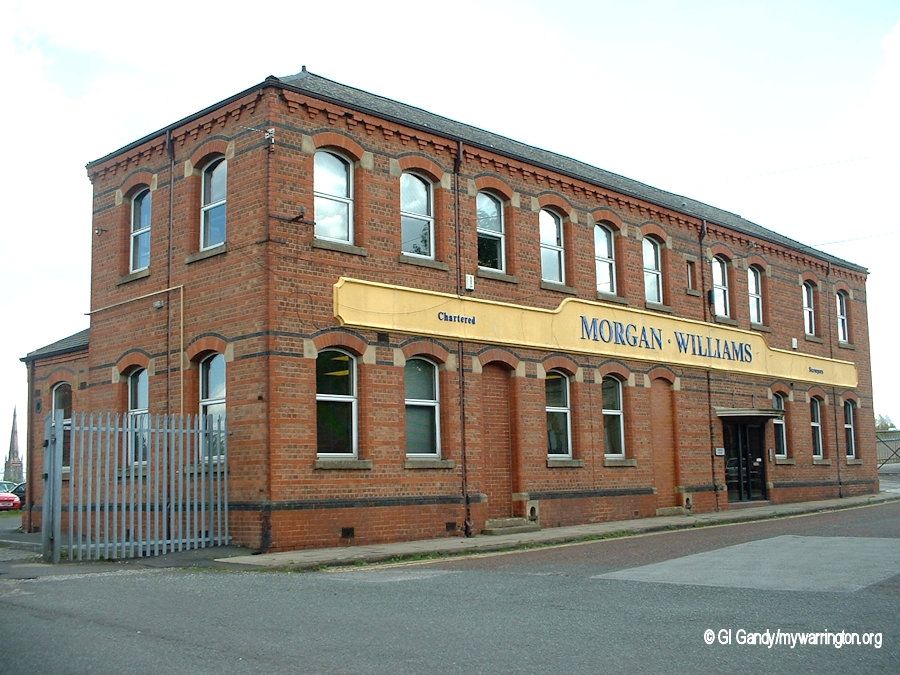
The following images show the goods warehouse and the conversion to the Grand Central apartments. The offices have also been converted for modern use. Three additional apartment blocks were built on the vacant land alongside the former warehouse building.
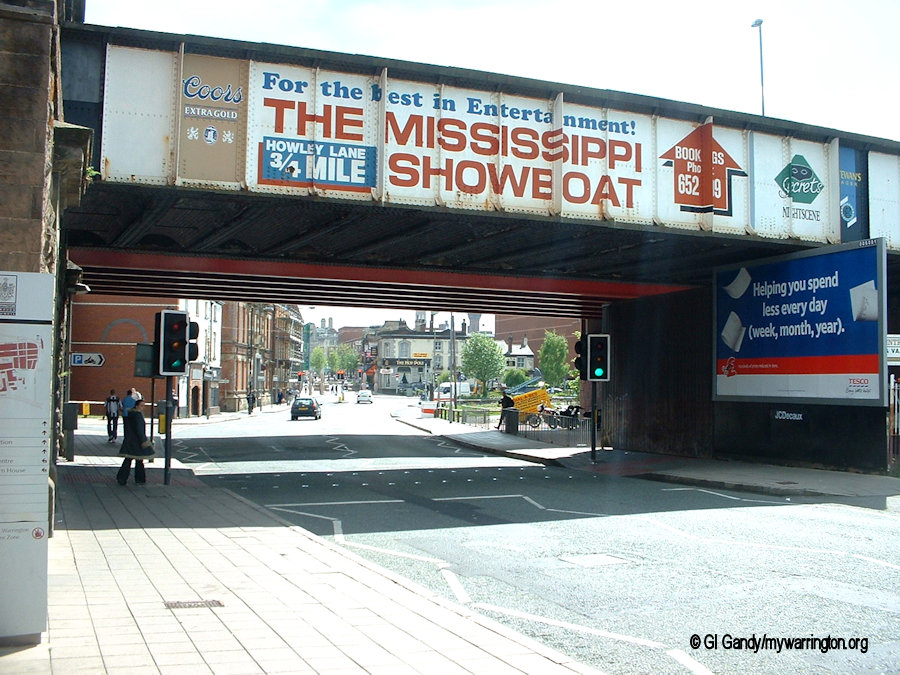
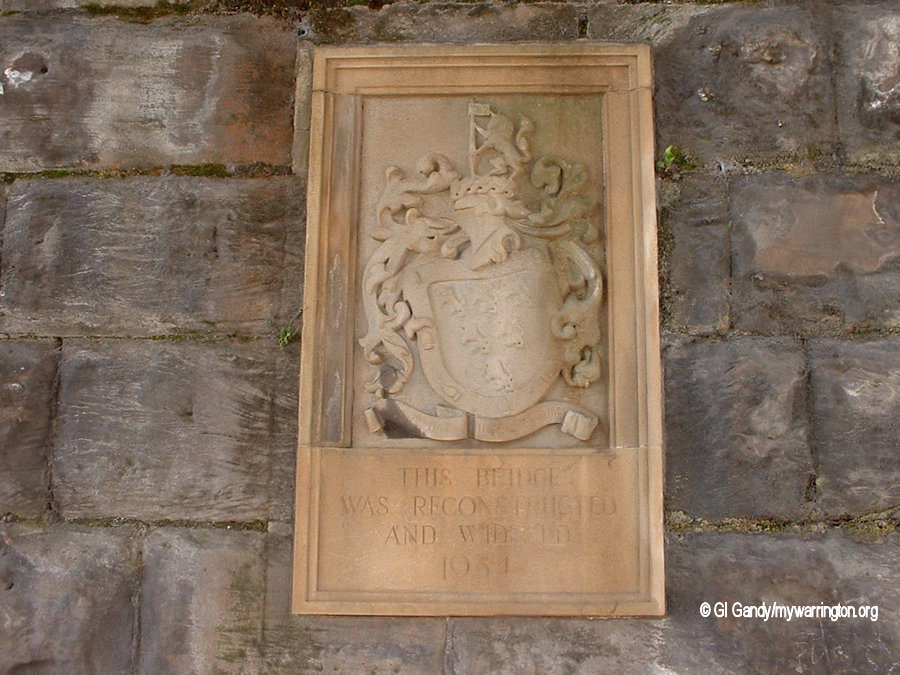
The following two images show the current bridge over Winwick Street which was widened in 1934.
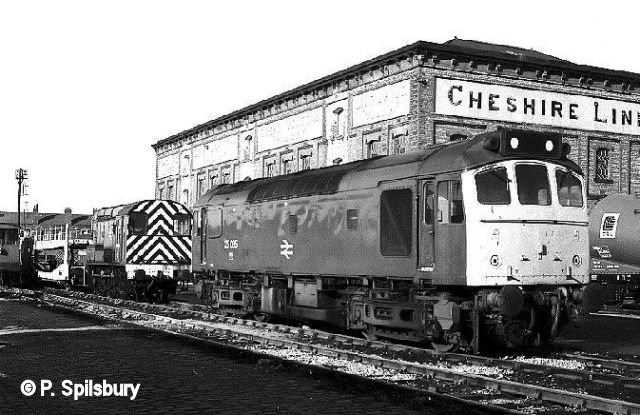
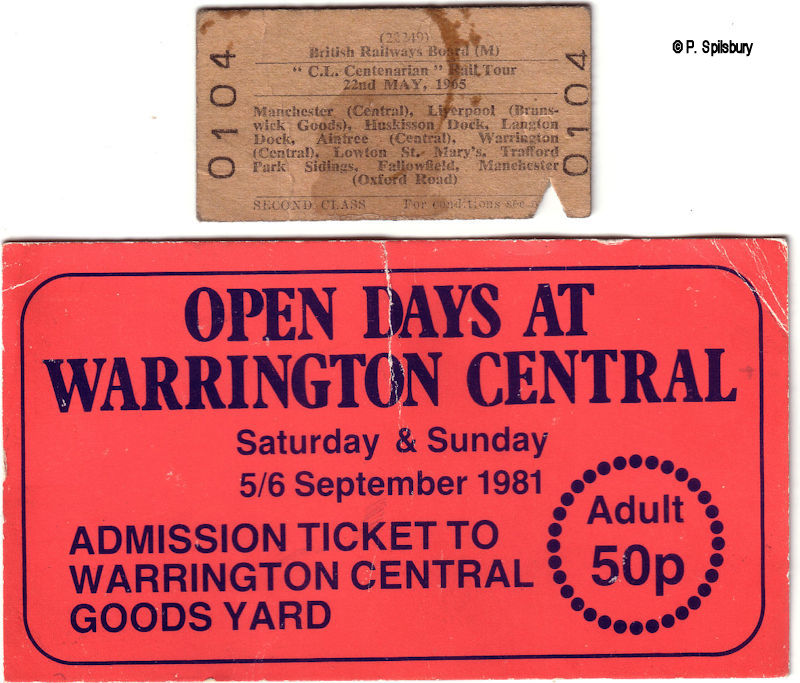
The following images were taken by Peter Spilsbury. They illustrate an open day at Warrington Central in 1981. The engine is No. 25085 with a shunter behind it.
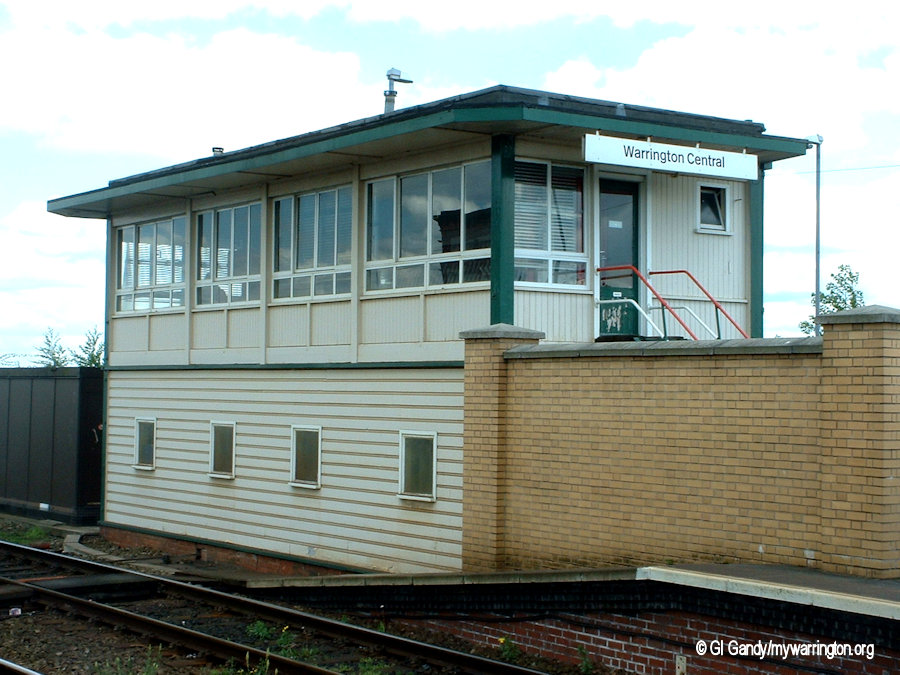
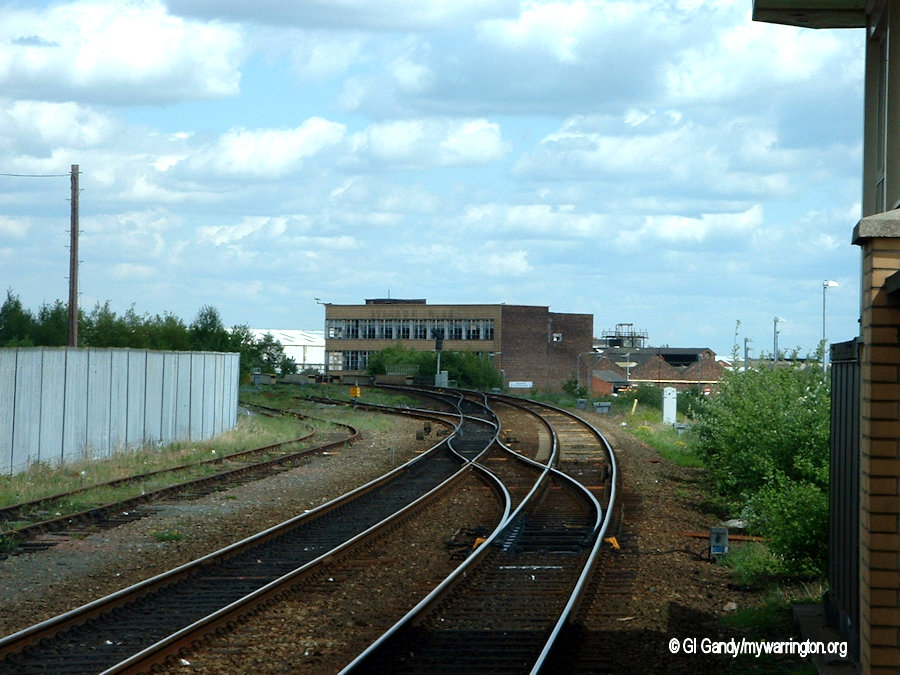
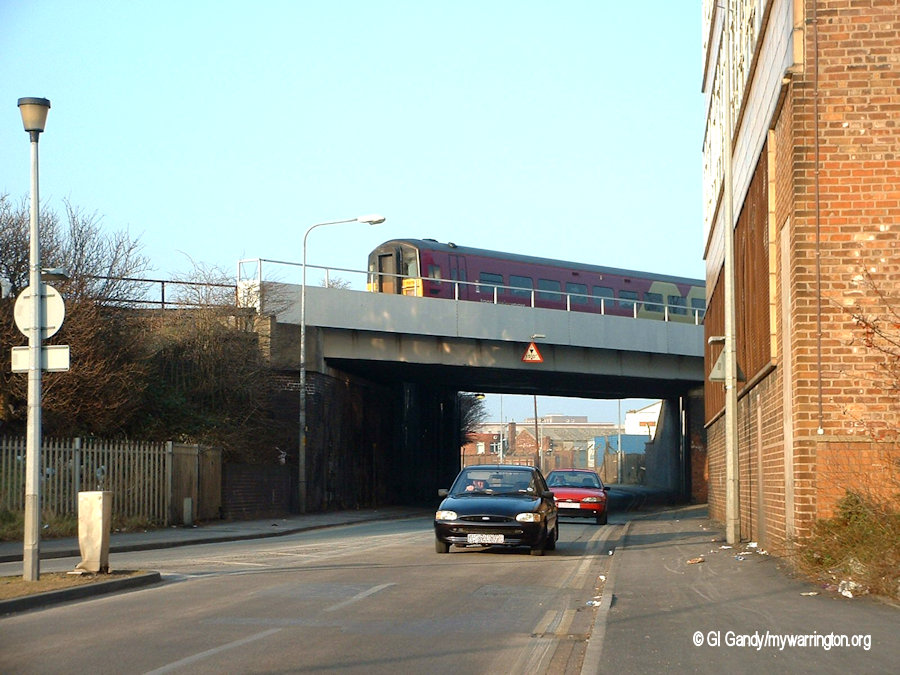
And finally for Warrington Central, images taken from the platforms. They feature the signal box, a drinking fountain and the view to the Rylands Wire offices on Battersby Lane. The fourth image is a street-level view of Battersby Lane with the Rylands offices on the right.
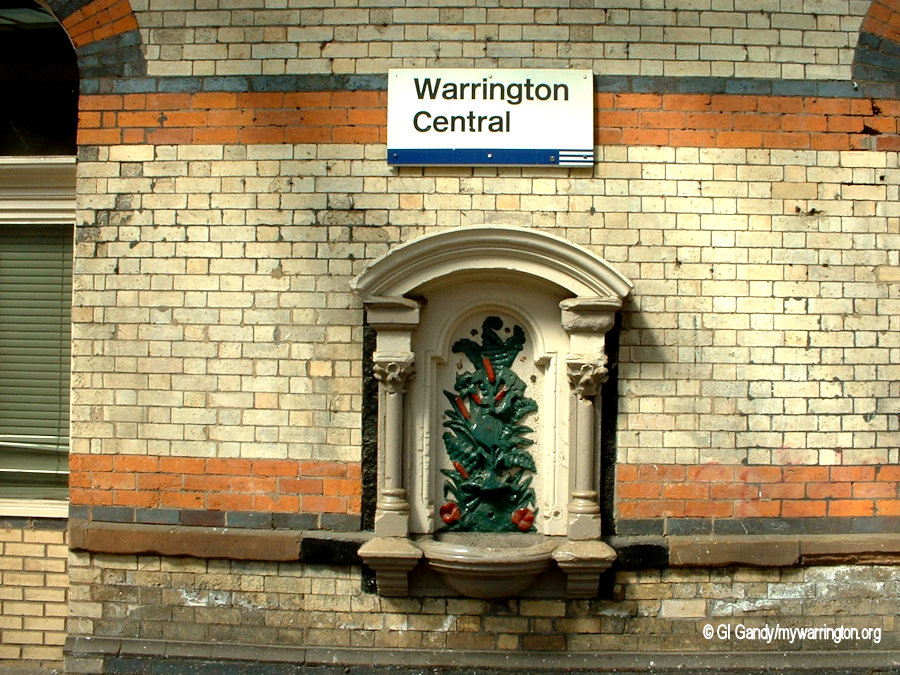
Padgate Station
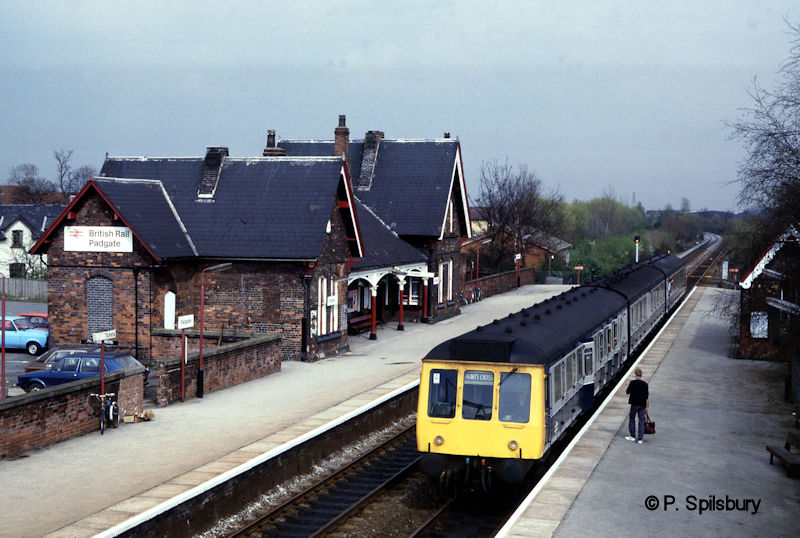
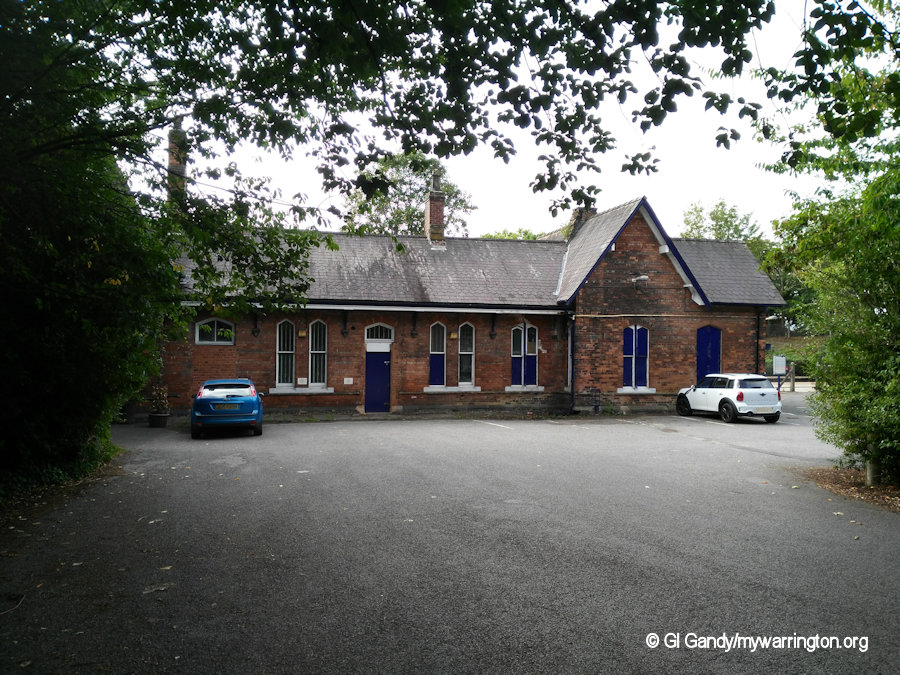
Padgate Station is located in the east of the town, just past the junction of the “straight line” and “loop line” sections of the Cheshire Lines Railway. The building opened on 1 September, 1873. It is an unstaffed station, so passengers must purchase their tickets on the train. In the war it was the nearest station for troops to disembark for the local RAF Padgate base, which is now the location of a housing estate and Bennett’s Rec recreation ground.
The “Plaice Station” fish and chip shop now occupies part of the station building, located on Station Road South. It has received a Sea Fish Friers Quality Award, a nationally recognised award for producing first class fish and chips in a first class environment. See http://www.seafish.org for more.
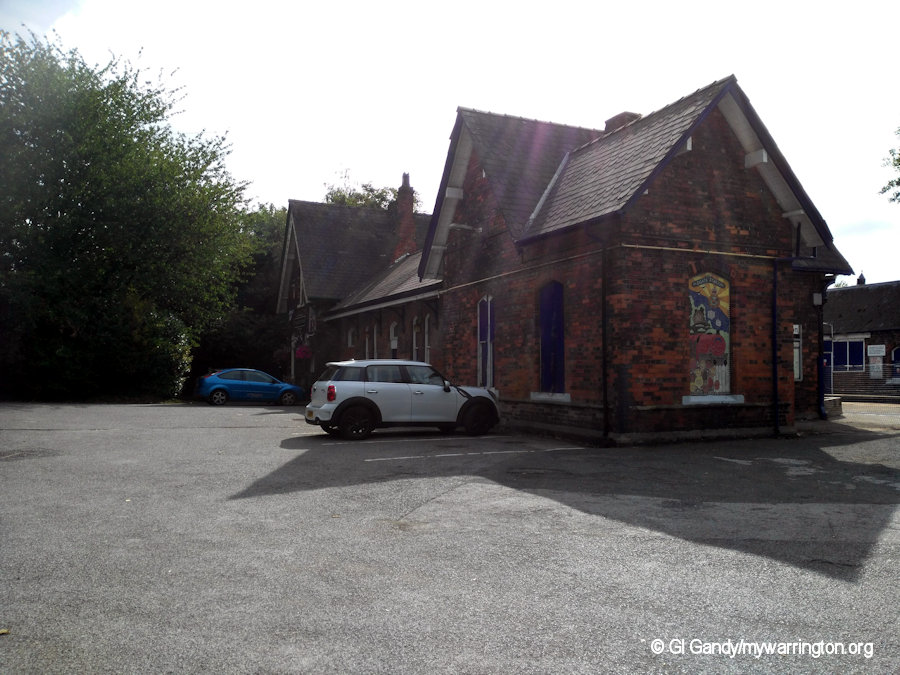
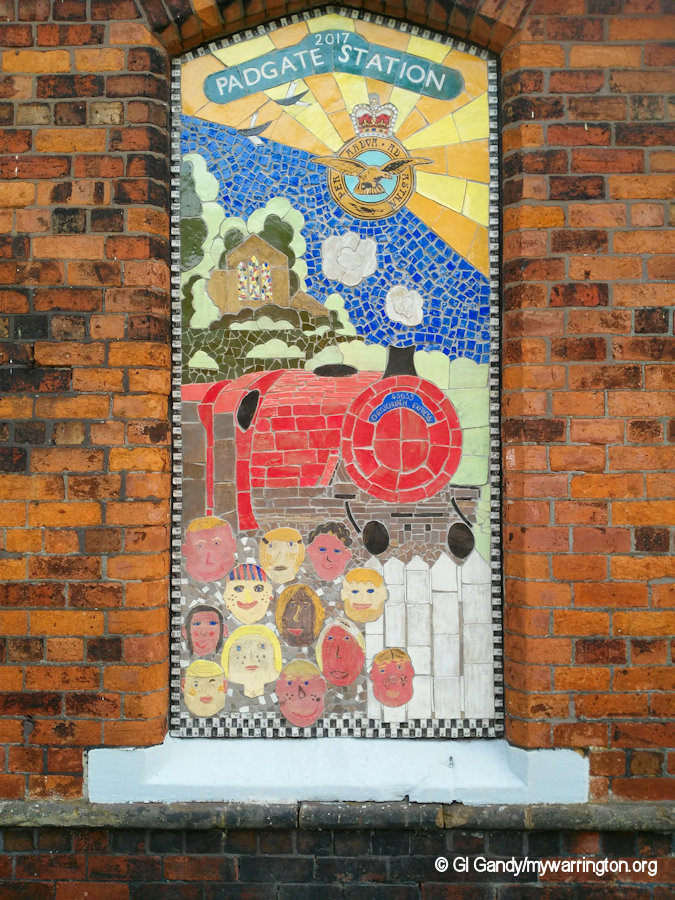
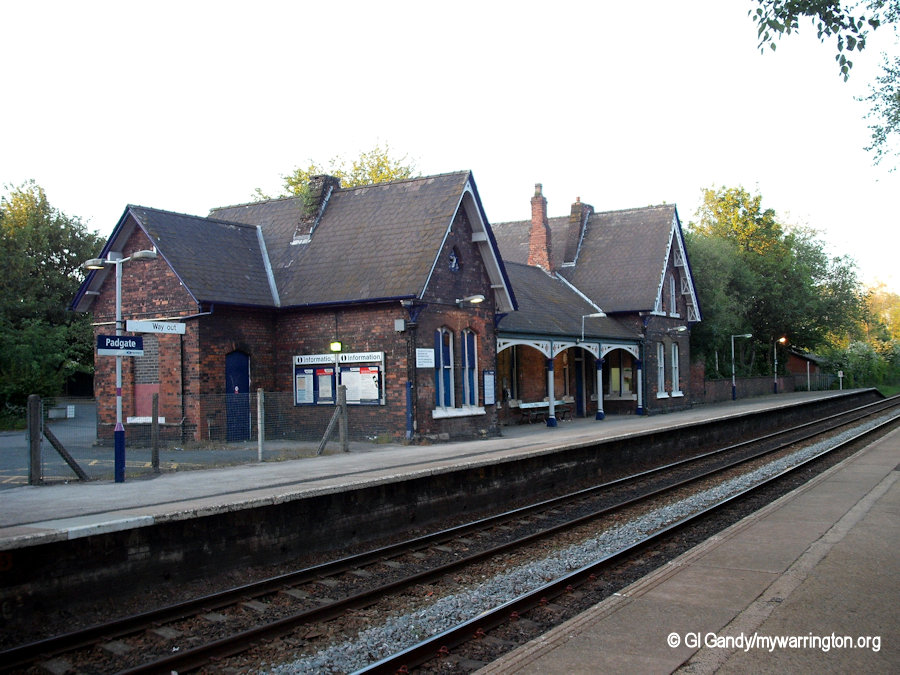
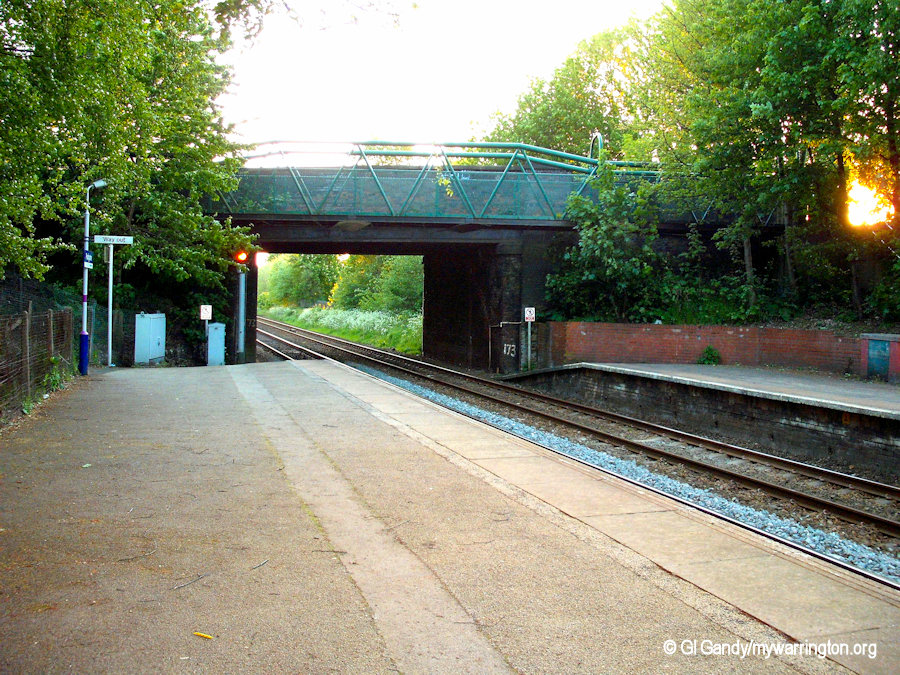
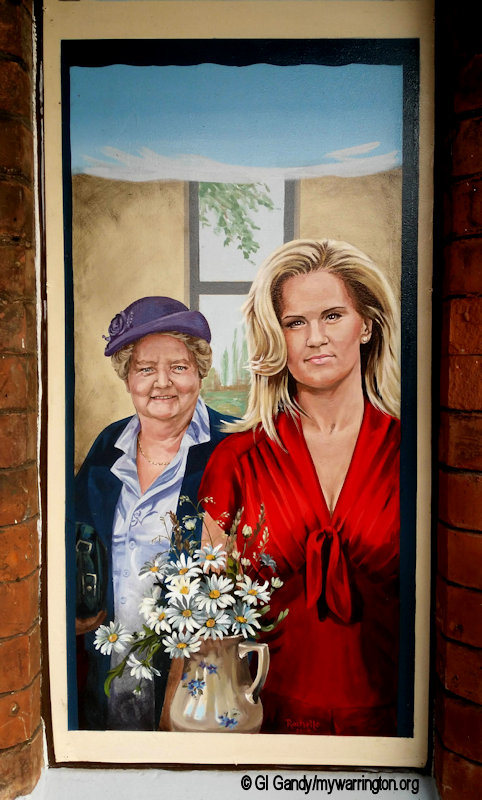
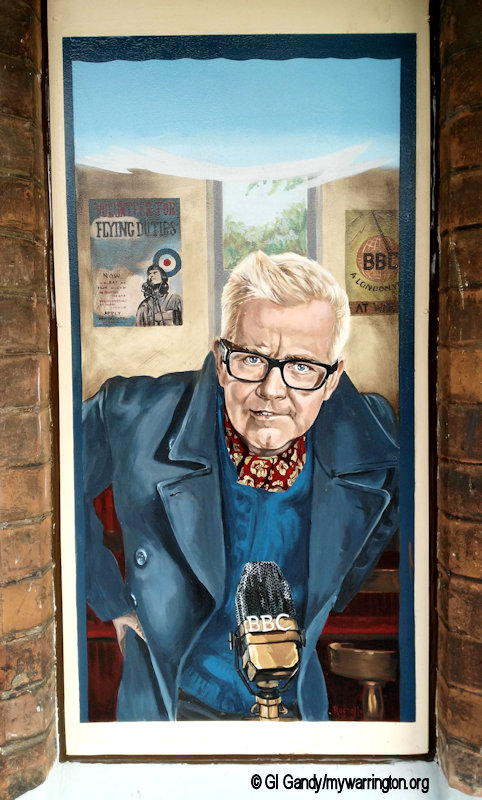
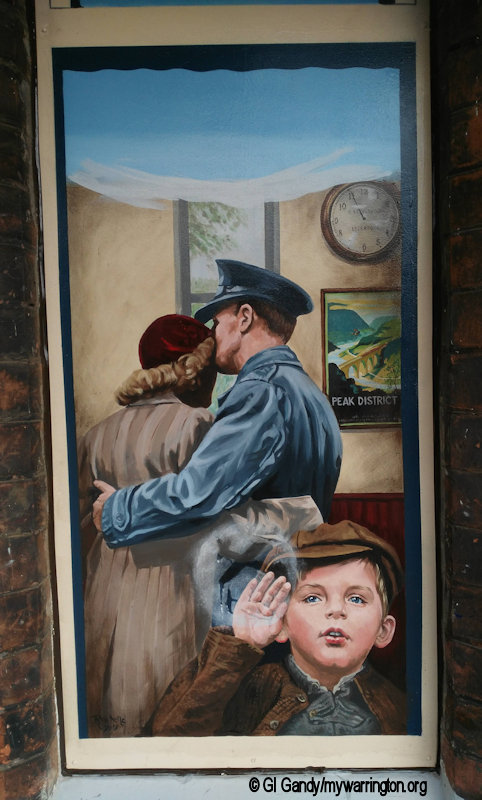
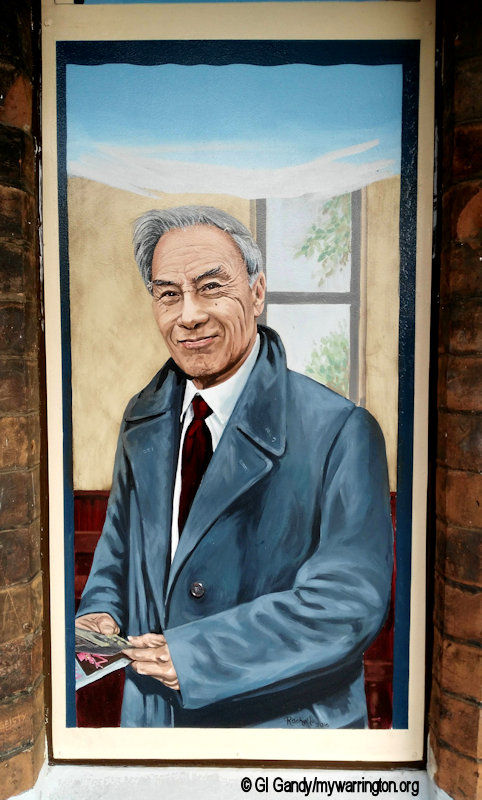
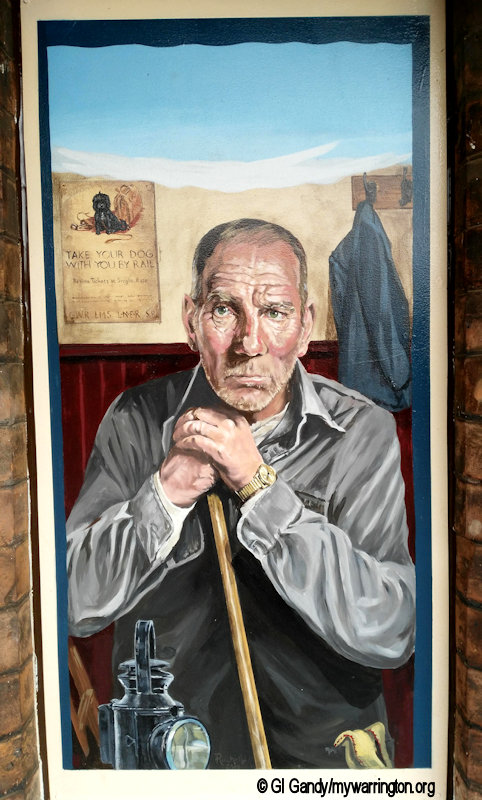
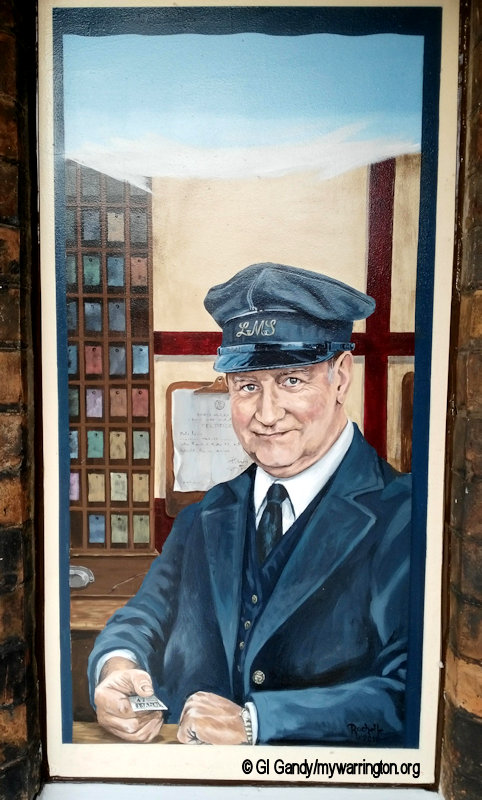
One of the more interesting features of Padgate station is a series of artworks featuring famous people from Warrington, which were installed in 2018. They were created by Rachelle Cleary.
From left to right: the lady next to Kerry Katona is Radio presenter Chris Evans’s mum, Minnie Beardsall, who died in 2018 aged 92. Next is Chris Evans himself.
The third image represents RAF Padgate with a child and his mum saving goodbye to her husband as he left for the war.
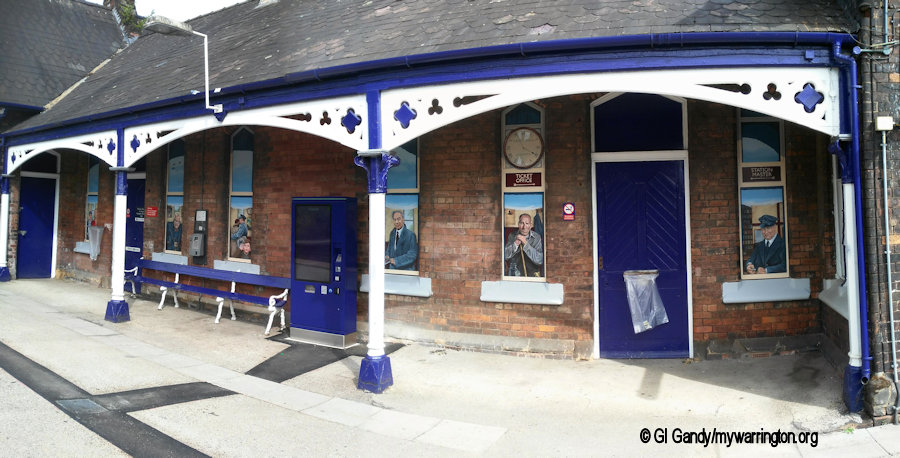
The fourth and fifth images are actors Bert Kwouk and Pete Postlethwaite, whilst the final image is of Bob McLaughlan, chairman of the Friends of Padgate Station. You can read more on the story in the Warrington Guardian.
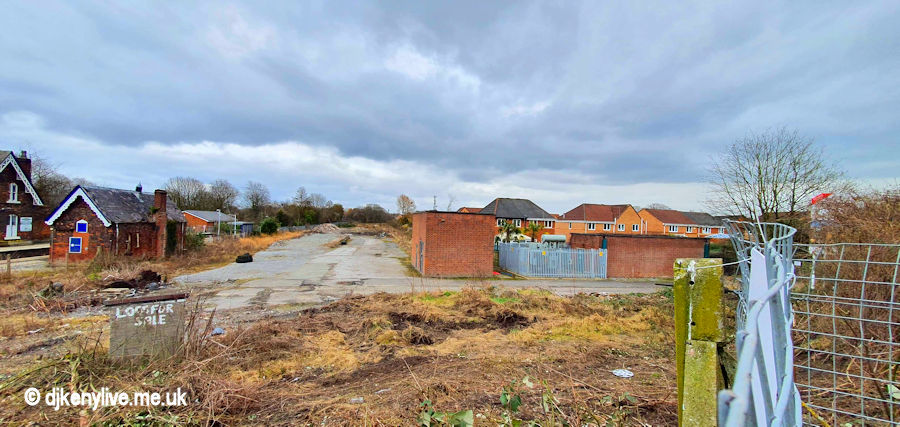
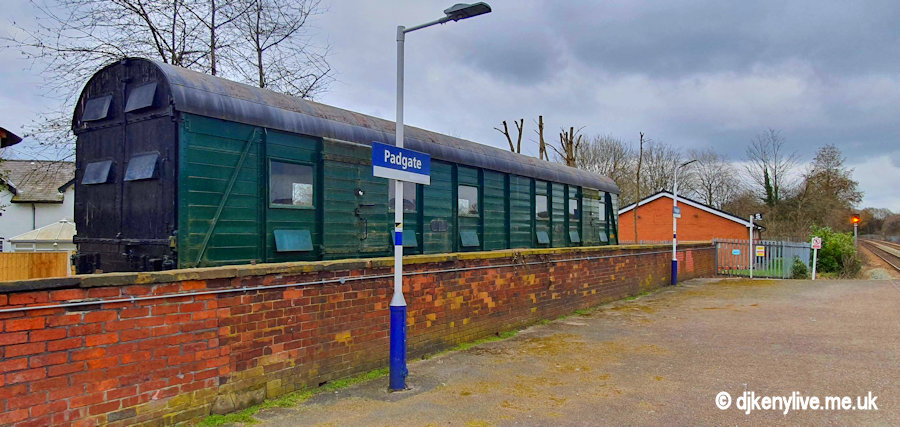
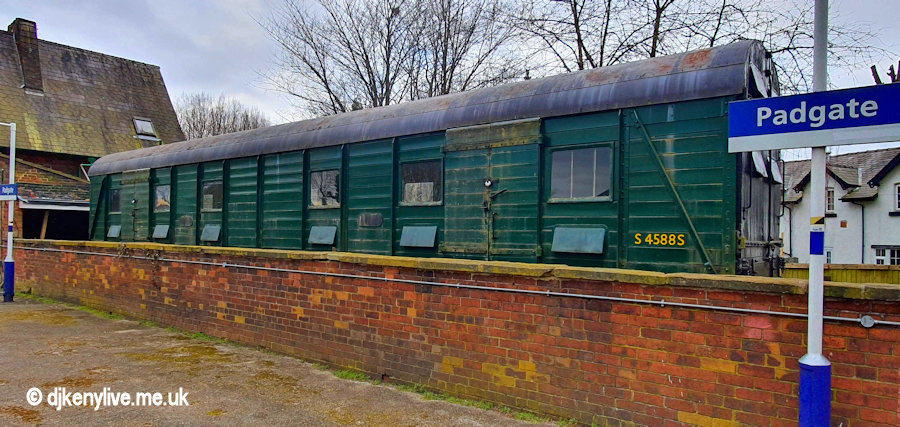
To finish, here are three photos from my friend Kenny. They show the site of the goods yard on the south side and and a railway carriage converted into a café on the south side. They were taken on 4 March 2021. However, a planning application for the site last came before Warrington Borough Council’s planning department in November 2023, but it was refused. The railway carriage, affectionately named Nellie, was removed and is now at its original location in Kent. Personally, I think it would have been a great addition to the site, which would not only support a local business but bring back some nostalgia from the railway’s heyday. Read more on the story in the Warrington Guardian.
Birchwood Station
Birchwood station is one of two stations built since the CLC was nationalised in 1948. The other station, Warrington West, has already been discussed.
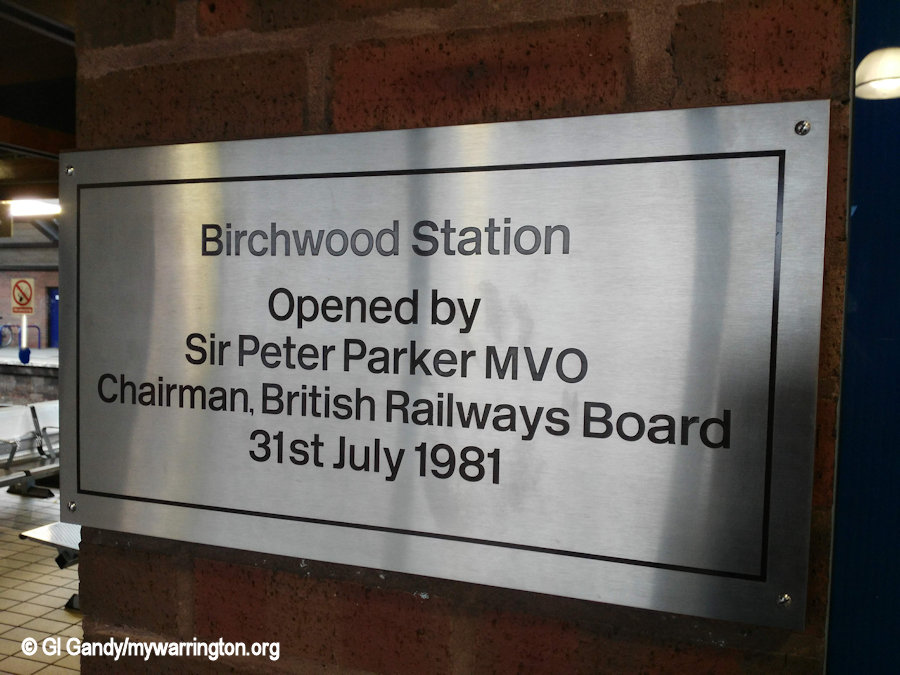
The station was officially opened by British Rail Chairman Sir Peter Parker on 31 July 1981.
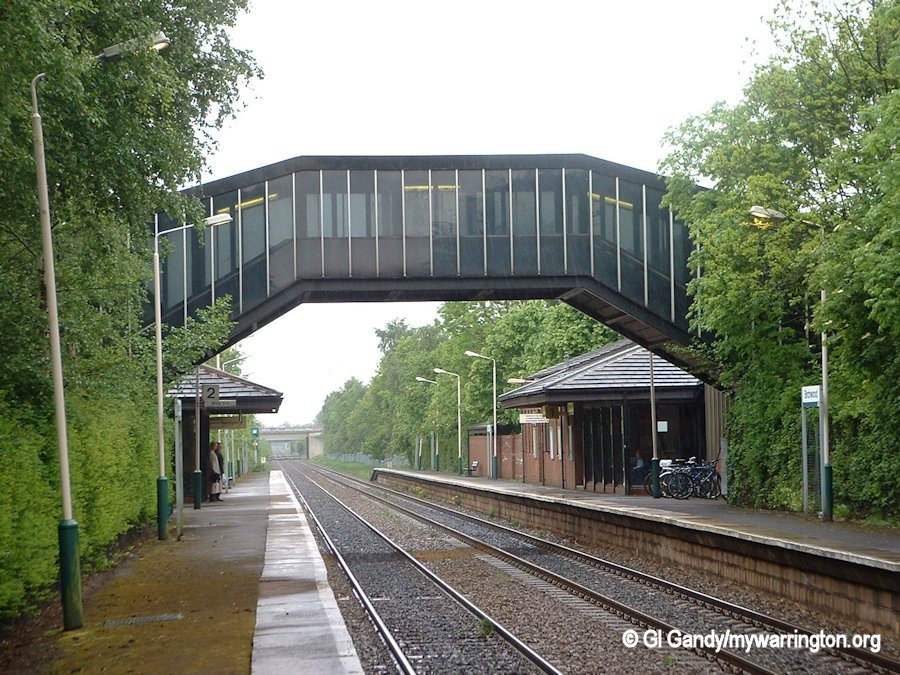
Constructed at a cost of £750,000, it was the result of cooperation between British Rail, Warrington New Town Development Corporation, Warrington Borough Council and local bus companies. The initial service provision was fifty trains per day.
Bus interchange facilities were provided at the station, which serve a residential and commercial area.
The district of Birchwood occupies the site of the former Risley Royal Ordnance Factory. More on this shortly.
The minimum journey times are five minutes to Warrington, 20 minutes to Manchester Oxford Road and 31 minutes to Liverpool Lime Street.
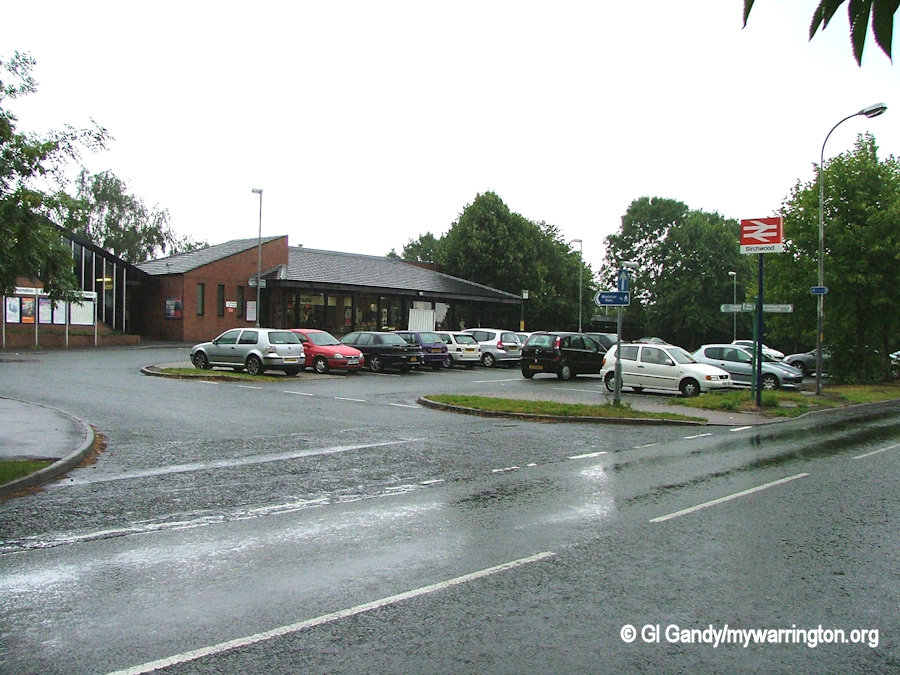
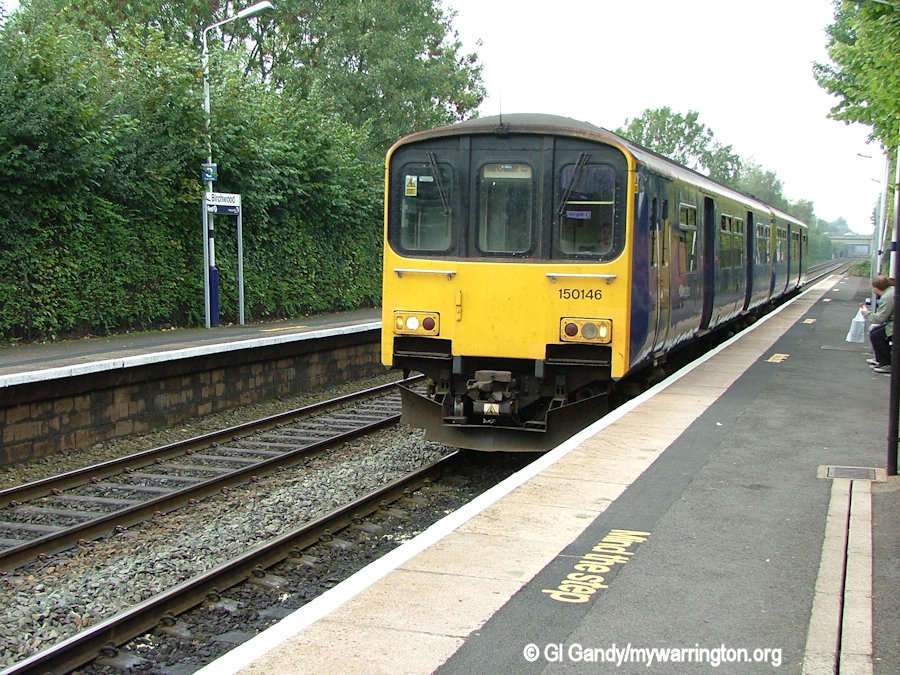
Birchwood station on 15 August 2006, eight years before lifts were installed.
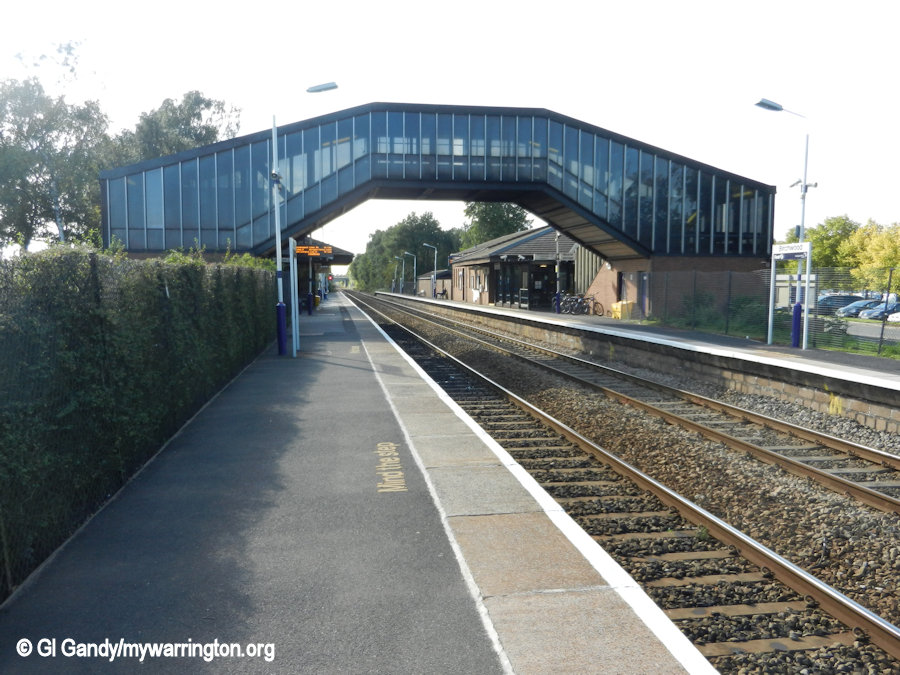
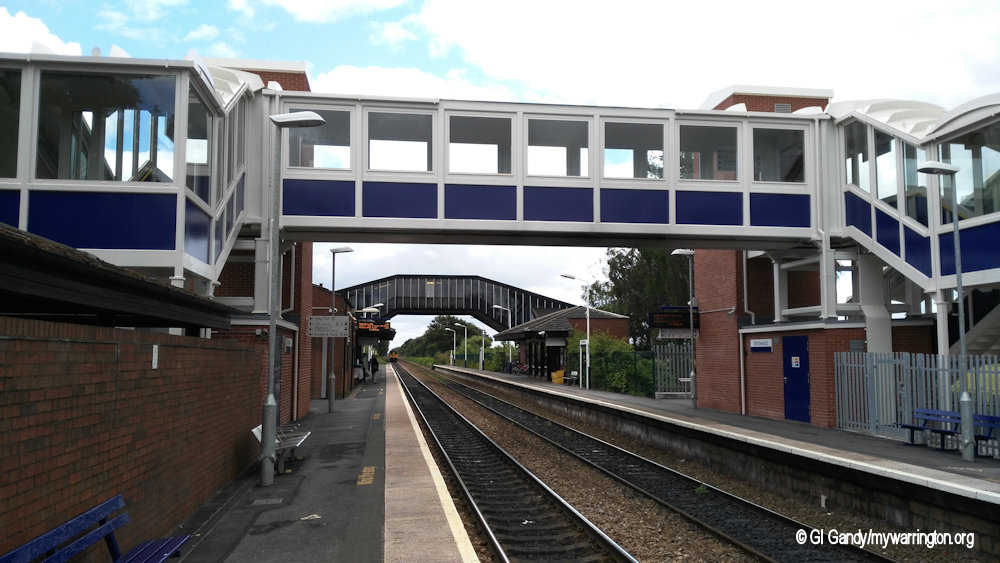
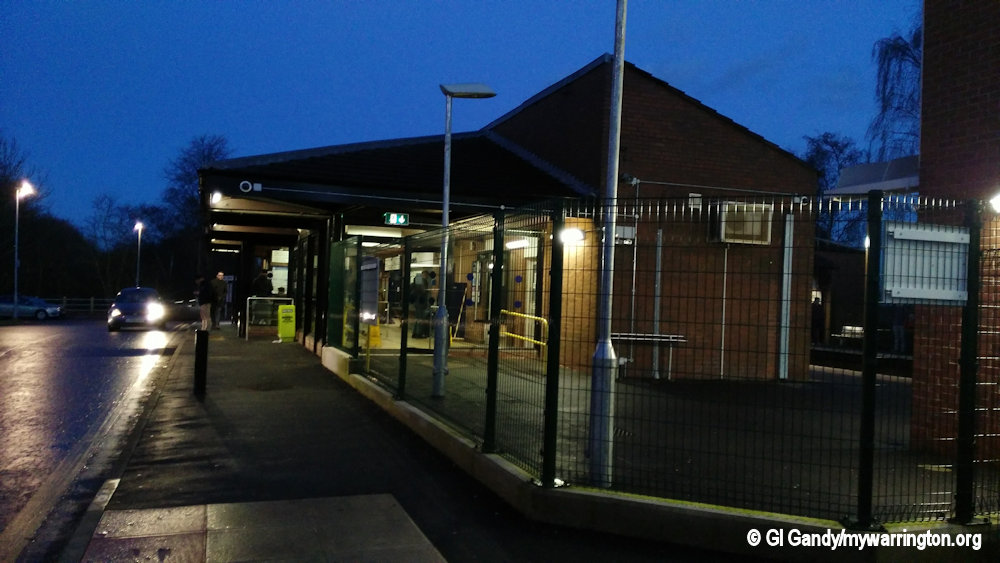
There now follows a series of images showing how the station building has developed since 1981.
One of the main problem for passengers in the early years of the station was the lack of lifts between platforms, which was only resolved in the autumn of 2014 when a second footbridge and lifts were installed.
Until then there had been a footbridge but no lift. To travel to Warrington customers were expected to travel to Manchester Oxford Road and then to Warrington Central.
The only problem then was the fact that in those early years there were no lifts at Warrington Central either!
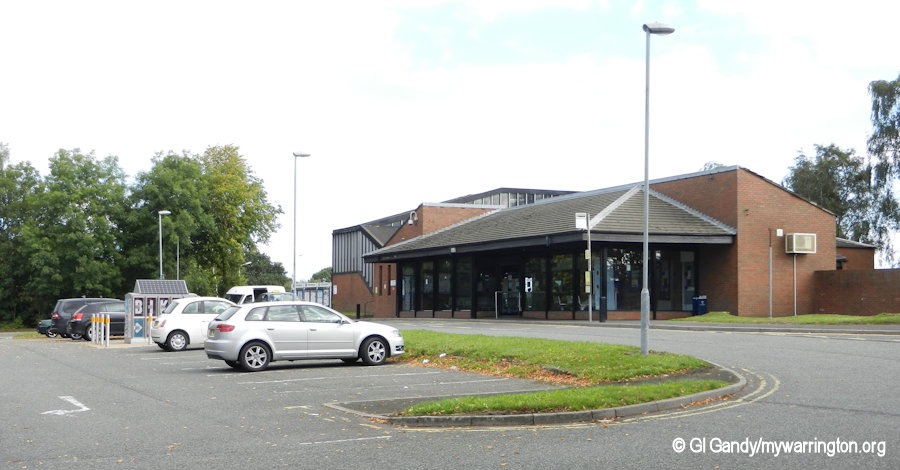
Birchwood station on 22 September 2013, one year away from lifts being installed.
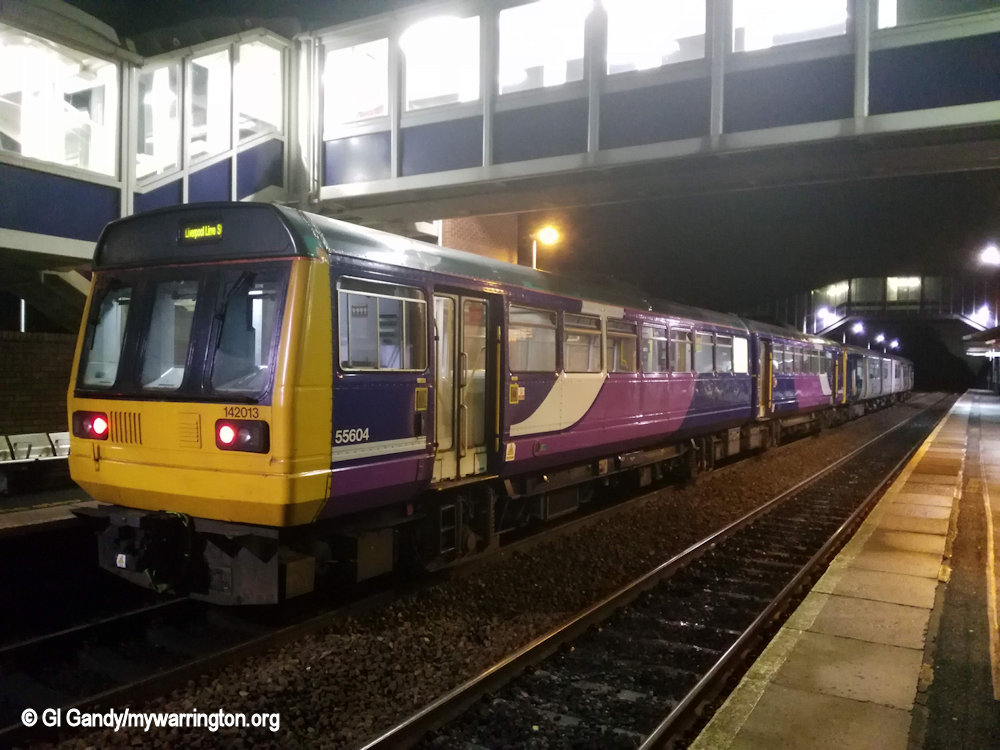
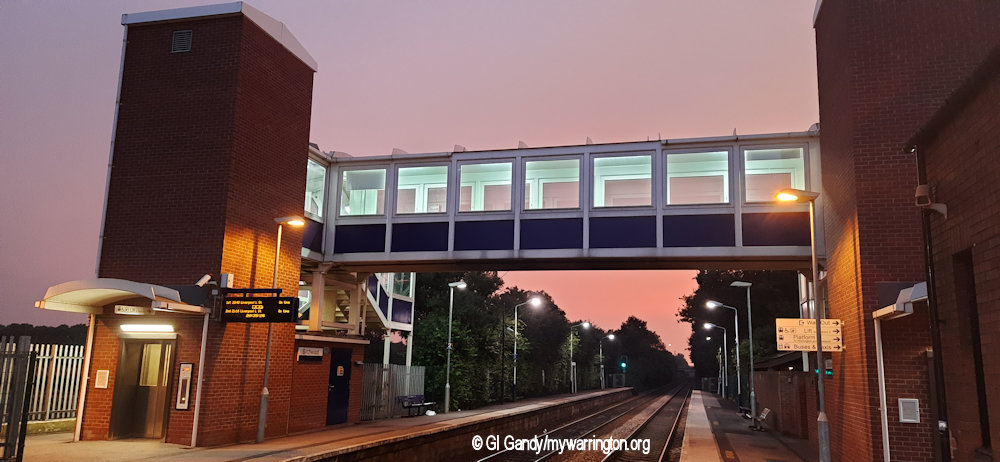
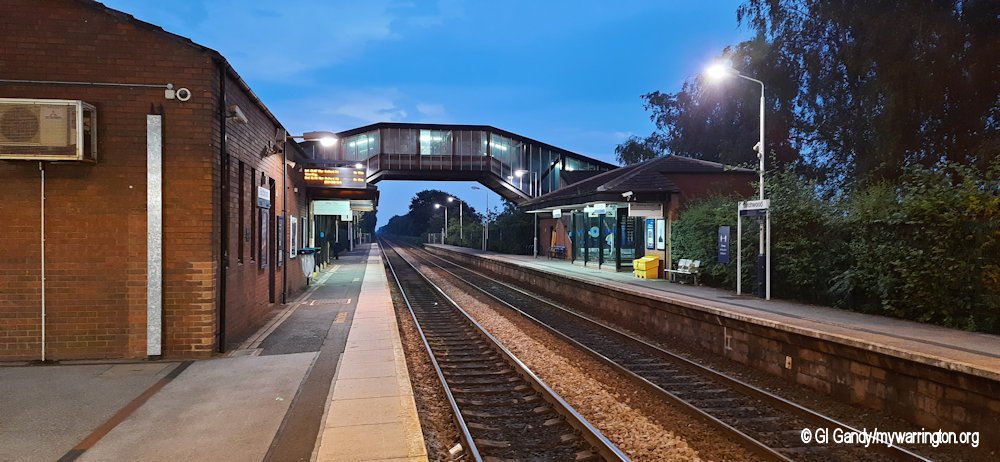
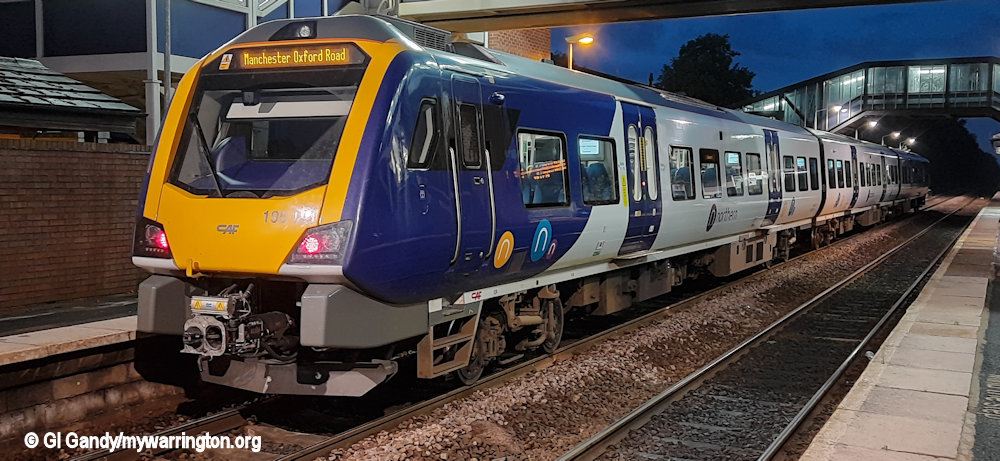
Other Connections with Risley and Birchwood
Two other important links with the Risley area are Risley station and Newchurch Halt.
Risley station
A station called Risley served the area during the days of ROF Risley. It was located about a quarter of a mile east of the current Birchwood station. The railway station opened on 2 April 1940.
The location of ROF Risley was chosen because the low lying mist and cloud helped camouflage the factory from the air.
The OS One Inch 7th Series 1955-61 map on the National Library of Scotland website shows the area in question.
Newchurch Halt
The station opened on 1 February 1943, to serve nearby military establishments: a Royal Ordnance Factory at Risley and a Royal Navy training camp. A single-track private railway left the Wigan line just to the East of Newchurch Halt, and ran South, across a staffed level crossing at Silver Lane and eventually into the Royal Ordnance Factory.
The station closed on 2 November 1964, when passenger services were withdrawn from the Wigan line.
Glazebrook Station
Glazebrook station was formerly located between two junctions, Glazebrook West for the Wigan Junction Railways to Wigan Central and St Helens Central (GCR), services to those stations ceasing in 1952 (St Helen’s Central) and 1964 (Wigan Central); and Glazebrook East Junction for the line to Stockport Tiviot Dale via Skelton Junction, passenger services to there also ceased in 1964. East of Glazebrook there is the only passing loop east of Warrington, used regularly for late running fast trains to pass local services. From Wikipedia.
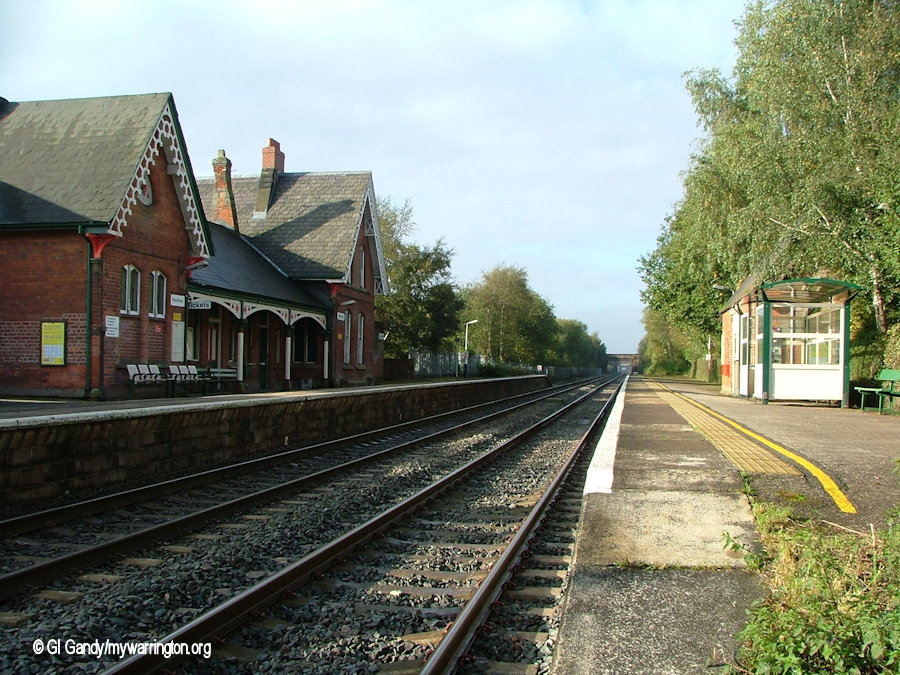
The station building, opened on 2 September 1873, is seen here from the Manchester-bound platform.
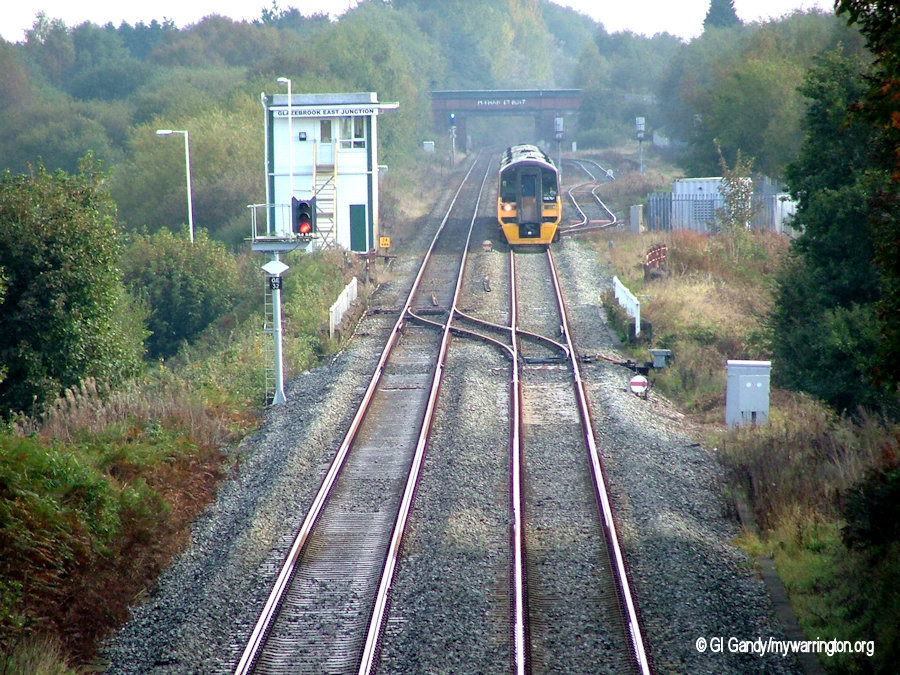
The junction is seen here from the road bridge over the line at Glazebrook Lane.
East of Glazebrook there is the only passing loop east of Warrington, used regularly for late running fast trains to pass local services.
The station building, opened on 2 September 1873, is of typical Cheshire Lines Committee design.
Although this station is not within the Greater Manchester area, it does mark the western boundary of the range of rail tickets produced by Transport for Greater Manchester.
Services from the station run every two hours in both directions.
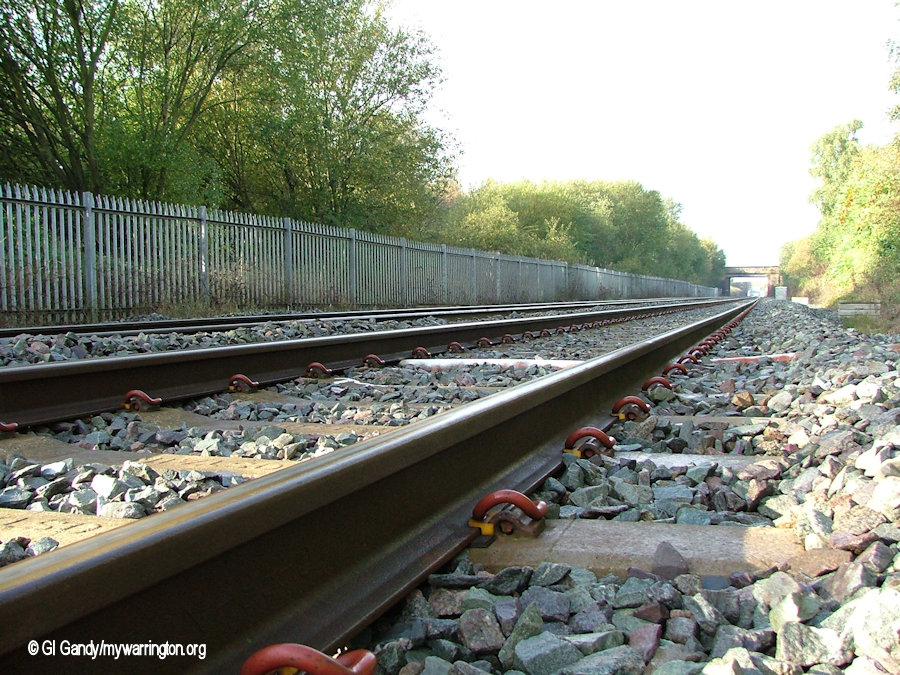
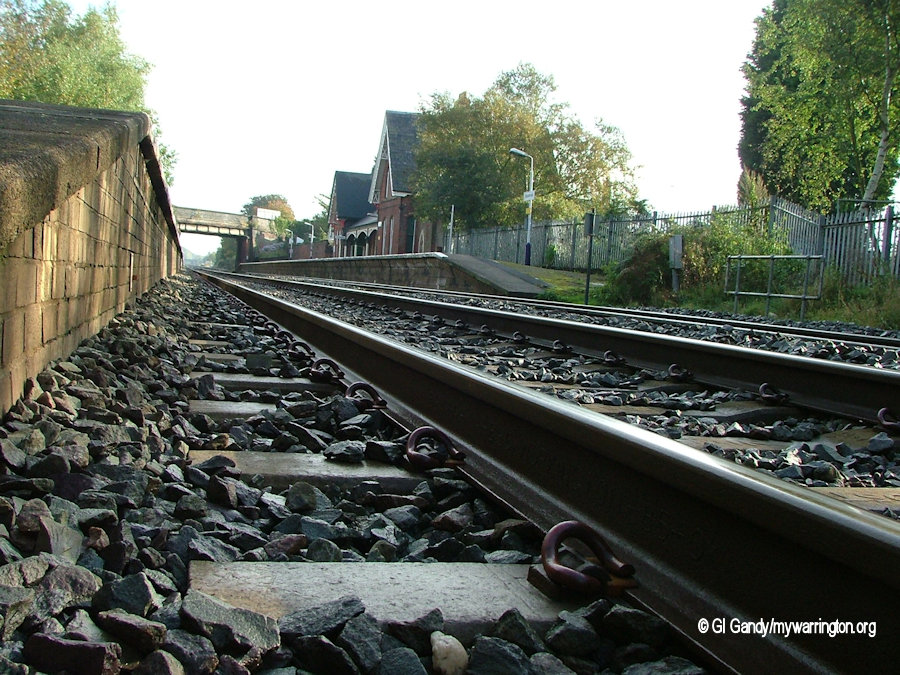
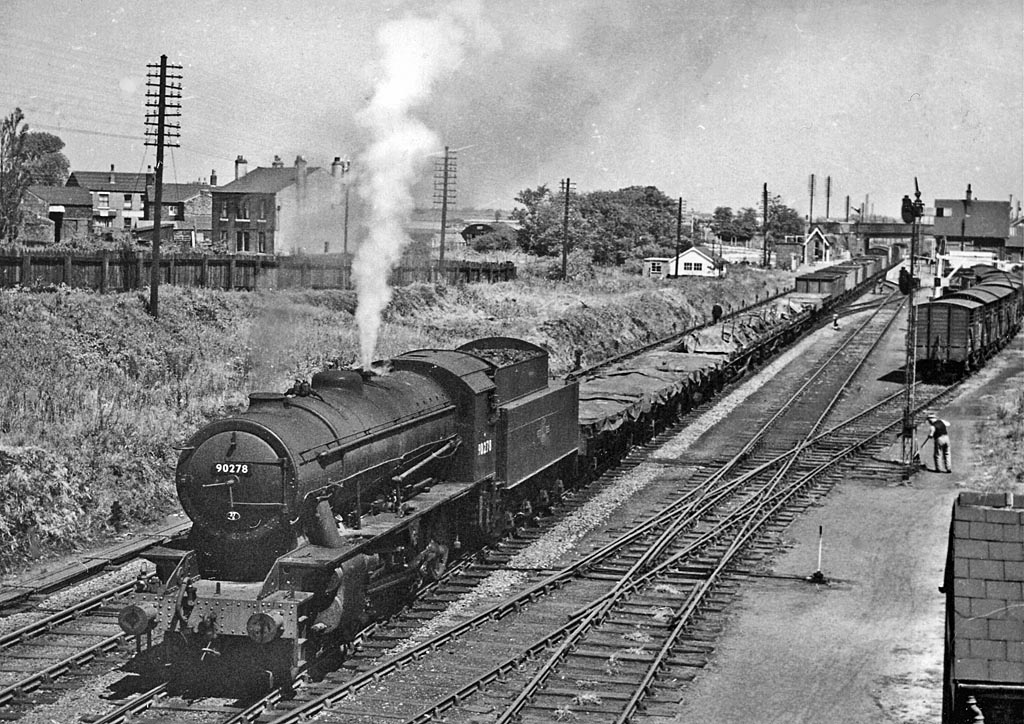
Down freight on Cheshire Lines at Glazebrook. View eastward back to Glazebrook Station; CLC main line Manchester/Stockport – Warrington and Liverpool. The train must be an important one, fully fitted, as it has Class C headlamps. The locomotive is a quite smart ex-War Department 2-8-0, No. 90278. Uploaded by Ben Brooksbank and used under the Creative Commons Attribution Share-alike license 2.0
Culcheth Station
Culcheth Station opened on 1 April, 1884, along with six other stations on the Wigan Joint Railway, which included Glazebrook and Lowton. It was located on the north side of Wigshaw Lane. The line had been promoted by the Cheshire Lines Railway in 1874 as a branch from its main Liverpool to Manchester line at Glazebrook that would link it to the lucrative Lancashire coalfields.
Only the Manchester Sheffield and Lincolnshire constituent of the CLC remained interested in the concept, and it was they who built the line which opened to goods services in 1879. When opened, it connected to the main line at Glazebrook with an east to north curve, meaning services could only easily go towards Manchester. In 1900, a west to north curve was added to allow trains to head to and from Liverpool. The line became part of the Great Central Railway and, in 1923, part of the LNER, but it was operated as part of the CLC system.
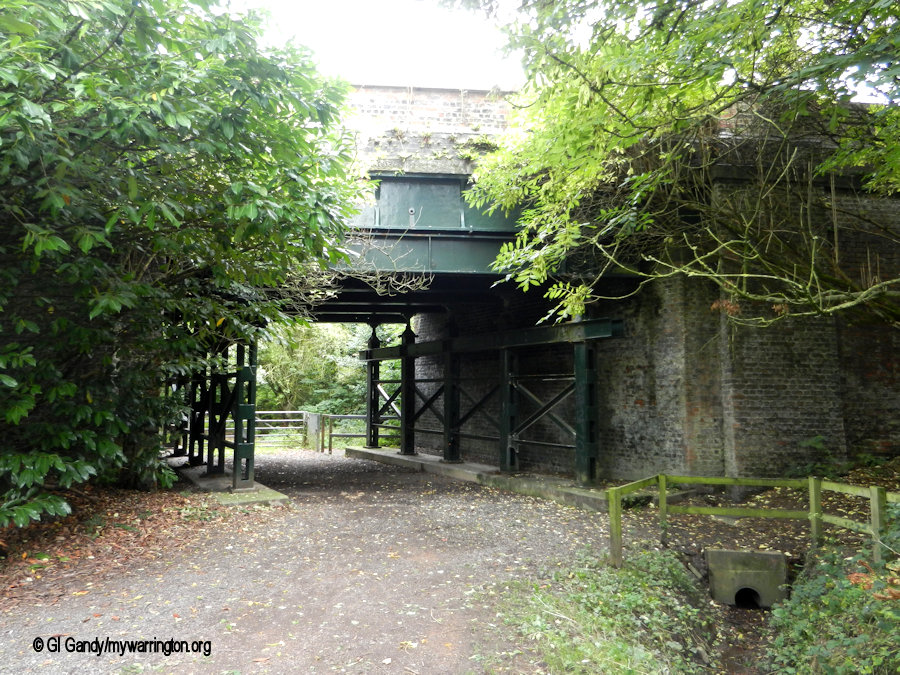
The location of the CLC line at Culcheth, now part of Culcheth Linear Park.
The station had two platforms with wooden booking facilities on the southbound platform. A basic shelter was provided for northbound passengers.
Initially, passenger services ran from Manchester Central to a temporary terminus at Wigan, which was not replaced until the opening of Wigan Central in 1892. From 1900, when a west to north curve was added at Glazebrook, services started to run to Warrington Central. Monday to Friday services in 1903 saw the GCR run eight trains to Manchester and six to Warrington each day.
From 1900 until 1952, Culcheth also enjoyed some services to and from St. Helens Central but these ceased with the closure of that line to passengers. At the outbreak of World War Two, lines were connected to the naval camp at Culcheth and the Royal Ordnance Factory at Risley.
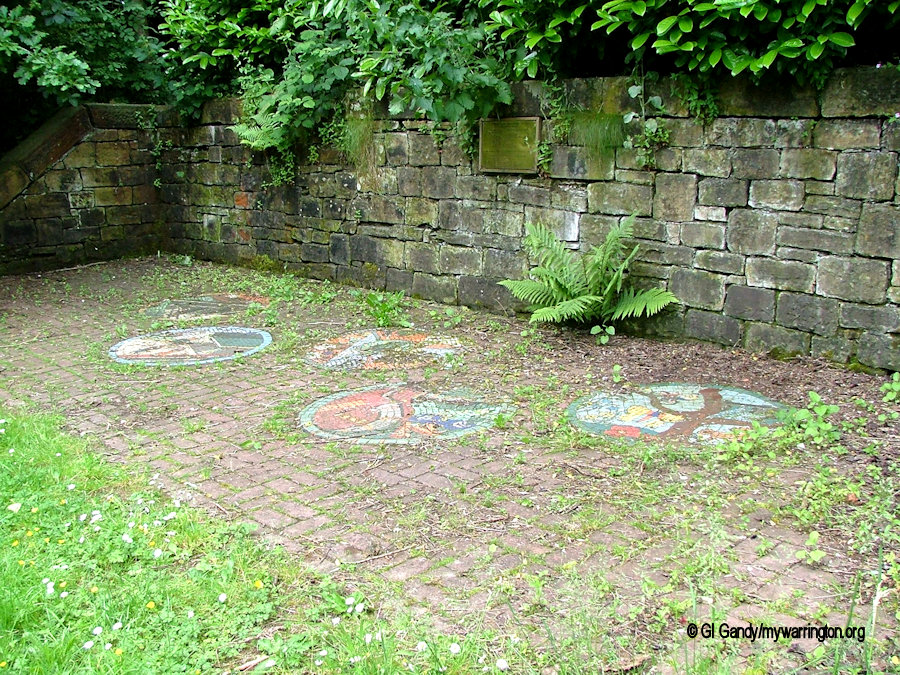
Part of the northbound platform still in place at Culcheth Linear Park.
Services increased under the LNER, especially during the war years. However, after 1945 the line went into decline and the last service was the Wigan Central to Irlam or Manchester Central service.
Latterly, some of these services where operated by DMU’s until the end came on 1 November, 1964. It was closed for good by British Railways (London Midland Region) on 4 January, 1965. The line lingered on for goods services until 1968.
The station has been demolished but the path down from the road bridge survives. Today the station building site is now the location of the Ranger’s cabin for Culcheth Linear Park, which extends along the old track bed. There was another station called Newchurch Halt, which also closed in 1964.
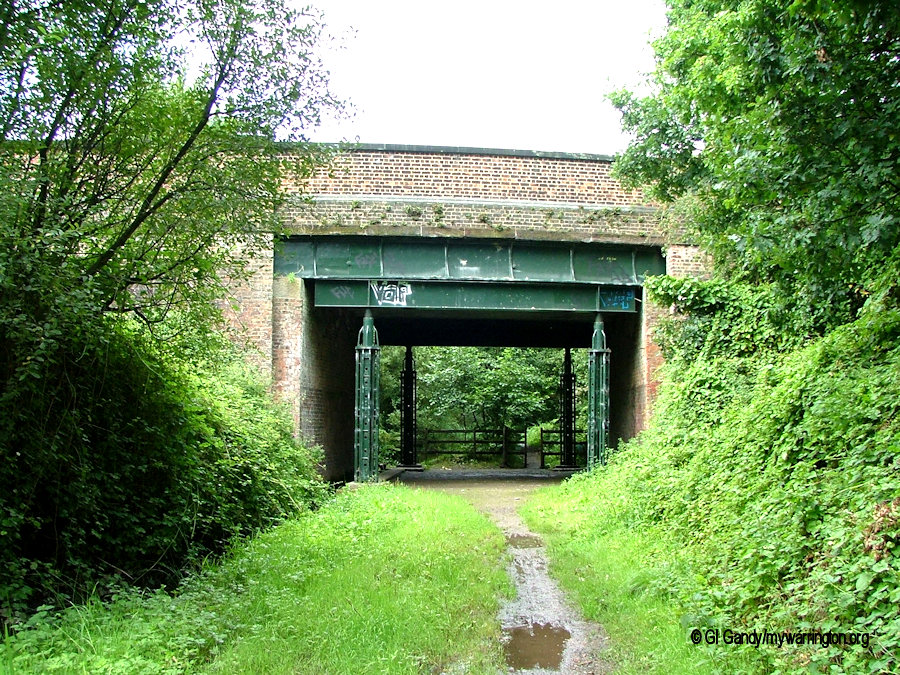
A view looking south from where the track originally stood.
Cheshire Lines Committee Route Through Warrington Today
The main line through Warrington Central is now run by Northern Trains (the original “loop” section of Cheshire Lines).
The “straight” section closed in the second half of 1968 and the trackbed and bridges were removed sometime between 1970 and 1972.
I make the assumption that the “straight” section was removed due to cost as most of the traffic was now going through the “loop” section via Warrington Central.
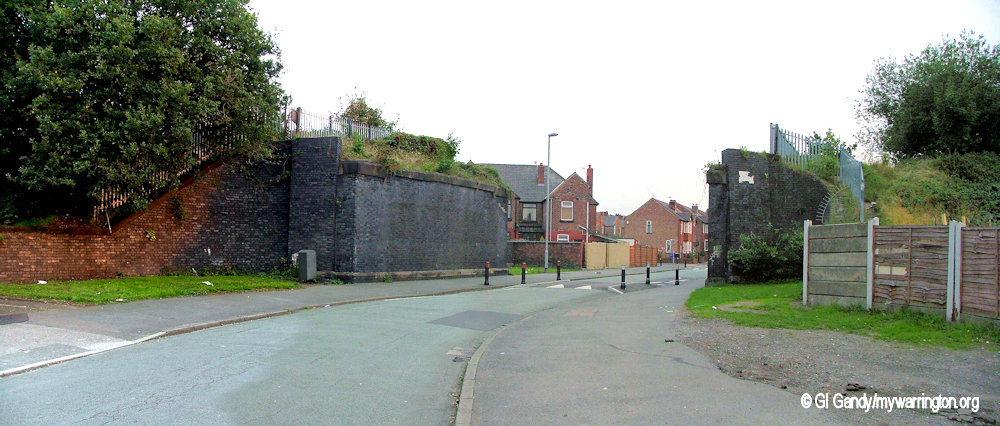
Parts of the “straight” section embankments are still here, whilst other sections have been sold off for new housing or business locations.
The following photos show what is here now, with three old photos from Peter Spilsbury.
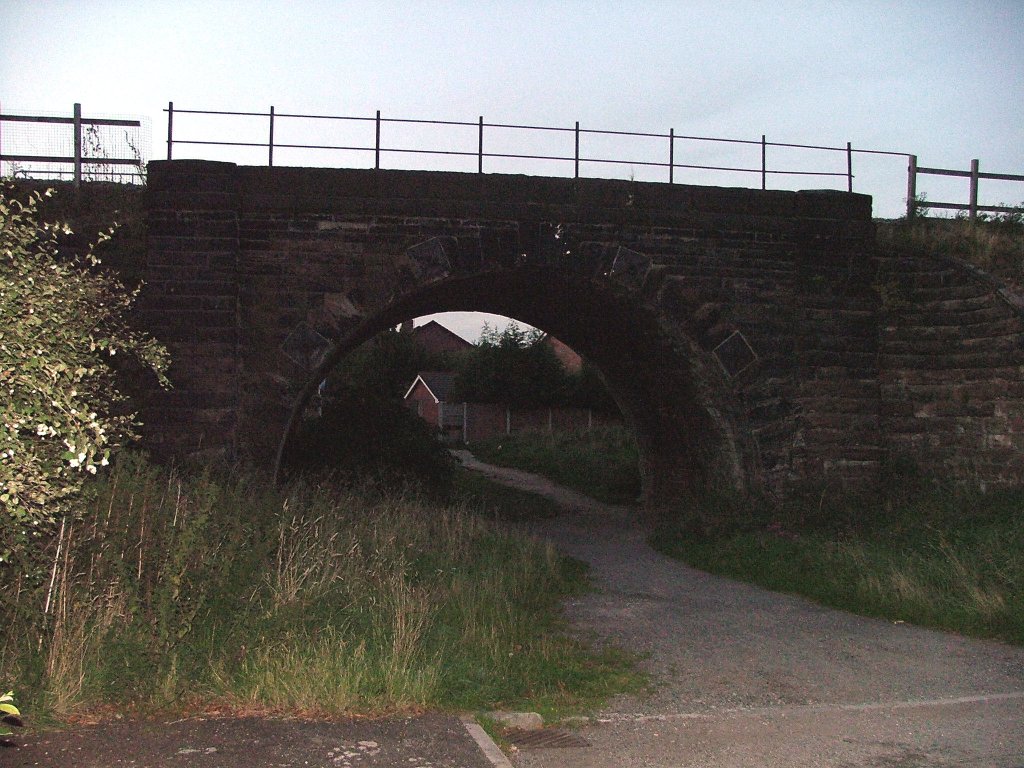
Whitecross and Bewsey area where the straight and loop lines separate. There was an identical bridge to the right of my viewpoint which supported the straight line.
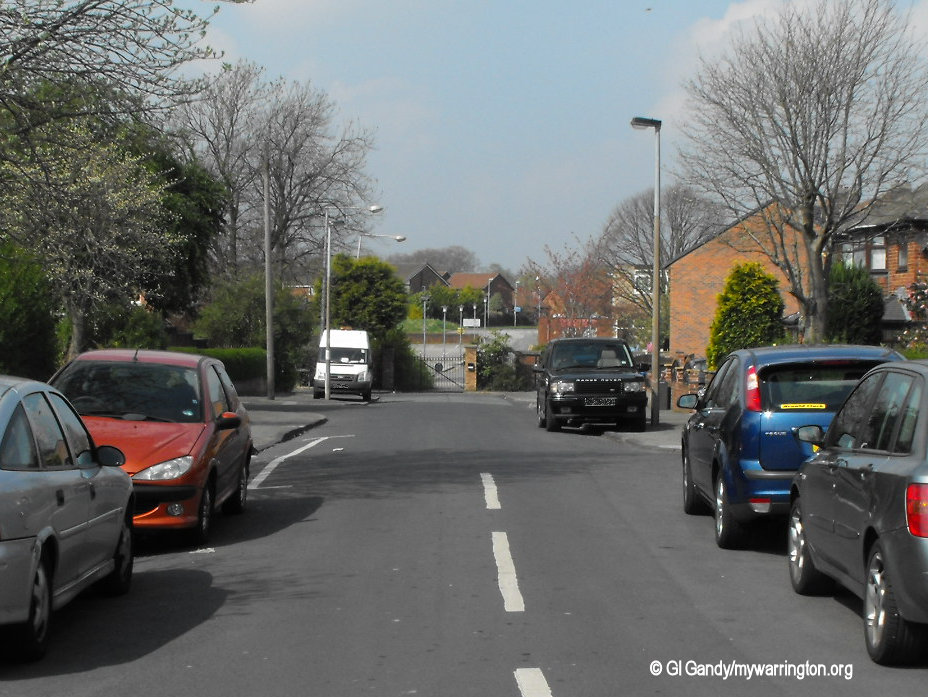
The railway line travelled across Clapgates Road on this side of the fence. This used to be the main entrance to Bewsey Secondary Modern School, which became Bewsey High towards the end of its life. The school closed in 1993 and has since been demolished.
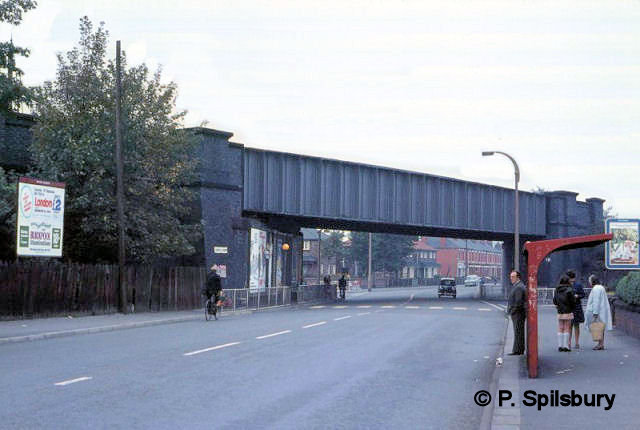
This is the bridge over Lovely Lane/Folly Lane. Known locally as Folly Lane Bridge [also as Bewsey Bridge] with Bewsey Road to the right, Lodge Lane to the left. A poster offers a train to London for £2 and Blackpool for 18/- (90p). A bargain even in 1970 when this was taken. Photo © Peter Spilsbury
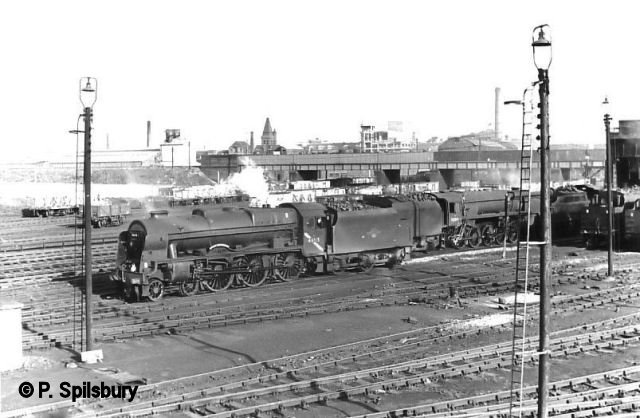
46115 Scots Guardsman is on steam at Dallam shed. The bridge of the CLC “straight” line can be seen in the background of Peter’s photo taken in 1965. Photo © Peter Spilsbury
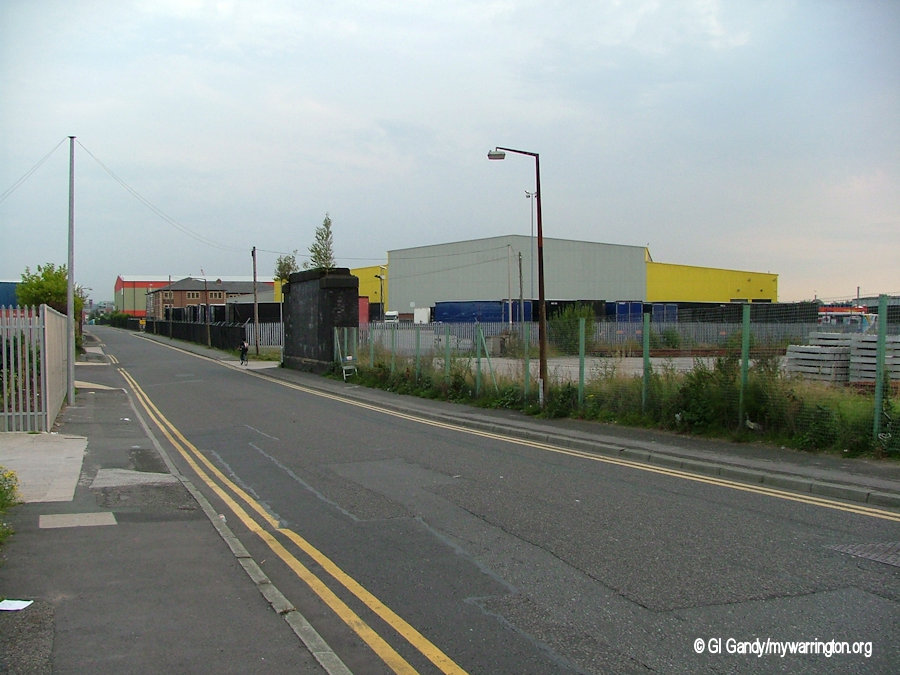
Dallam Lane was the next section to contain a bridge. The line passed Dallam shed maintenance depot. The yellow and grey building started life as a Channel Tunnel rail depot, although I don’t think it was ever used to transport goods to France. It was later used by Asda.
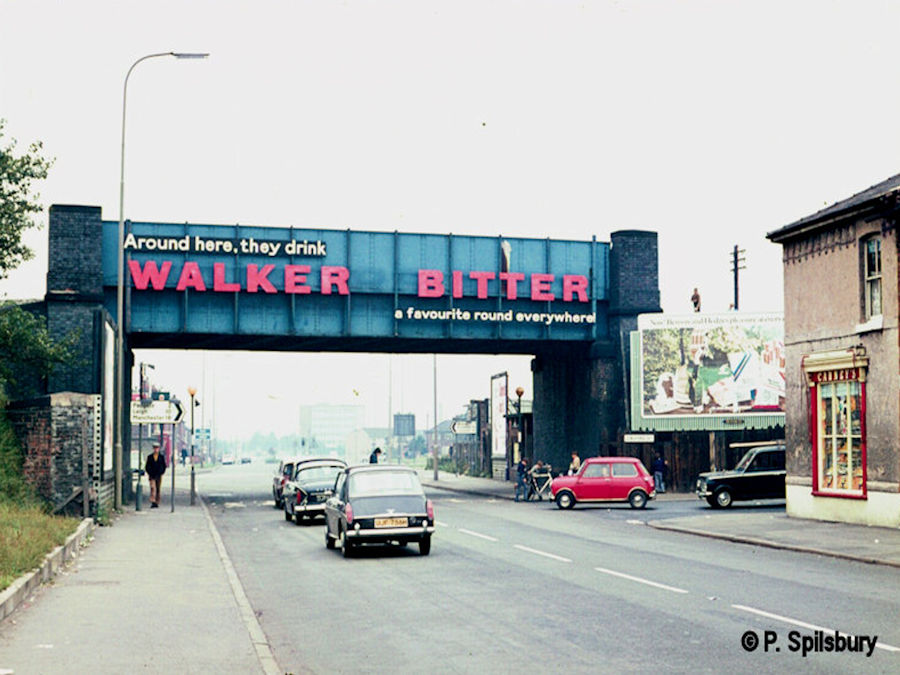
Peter describes this 1970 scene (left): To the right is Longford Street with Carney’s greengrocers shop on the corner. Another member of the family had a shop in Warrington Road, Penketh, just opposite the recreation field. Under the bridge to the left is Kerfoot Street, with the Horse and Jockey pub on the corner. On the right just under the bridge is a belisha beacon, and behind it is a gents toilet.
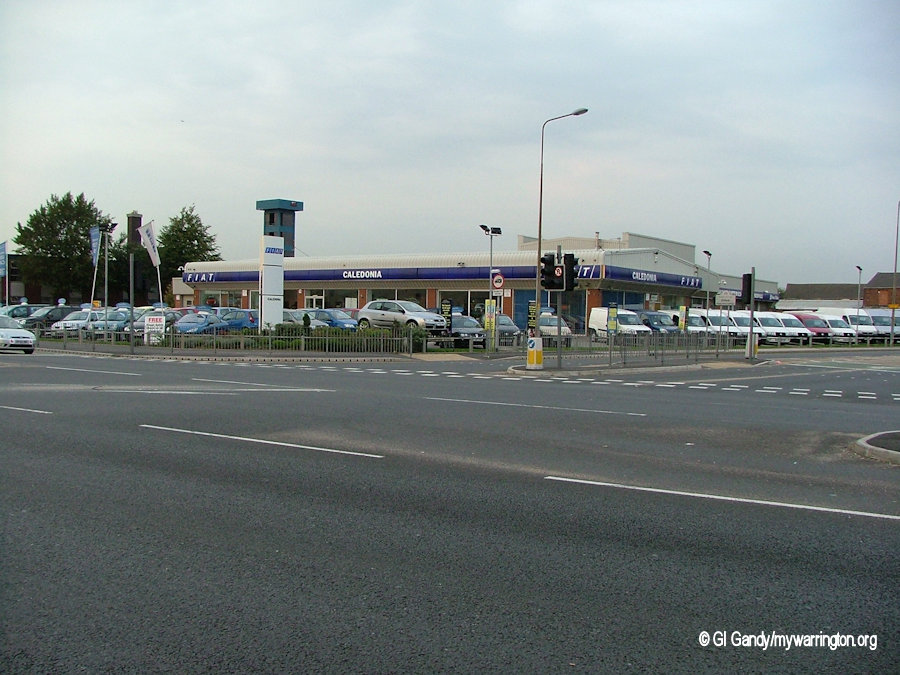
A little further up is Jockey Street (giving the bridge its name). The fire station was built next to that later. In the background is Long Lane Technical school [Warrington Collegiate now]. If you look to the rear of the red mini you will see a boy looking at the fencing. Look up from there above the hoarding and you will see another boy trespassing on the railway. My image shows the scene today from Matalan.
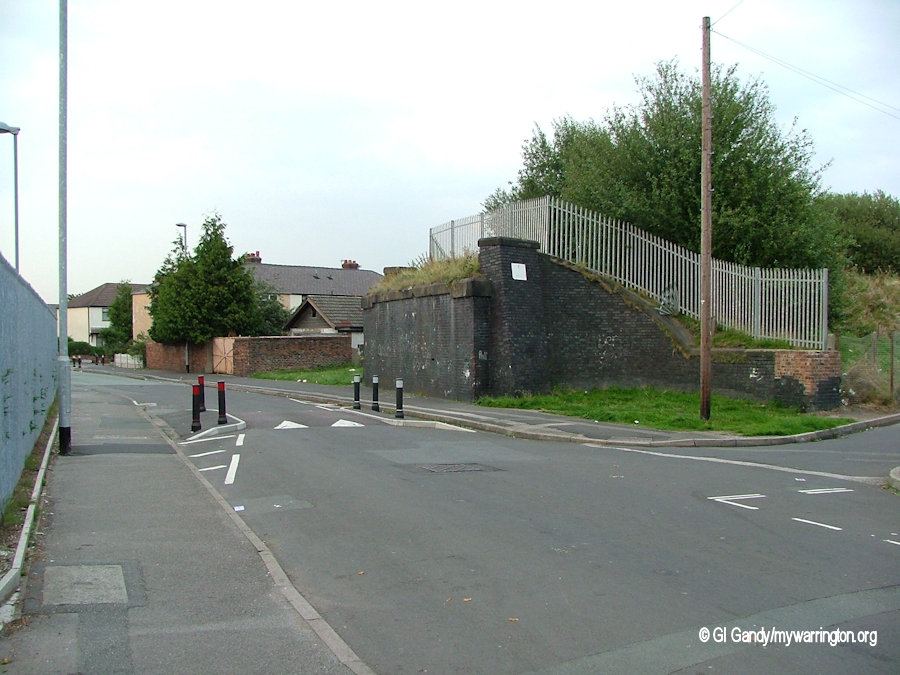
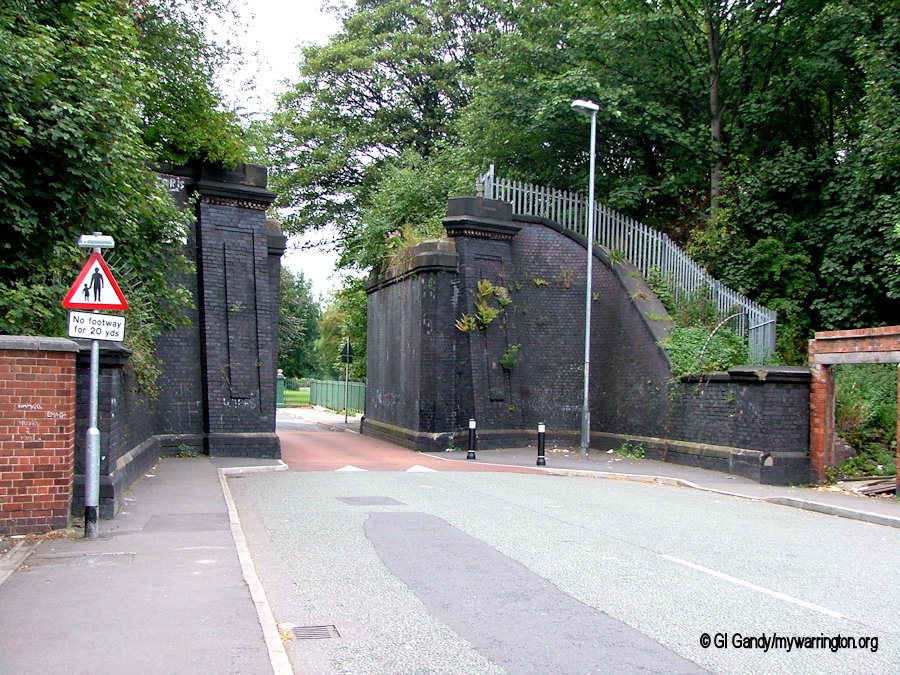
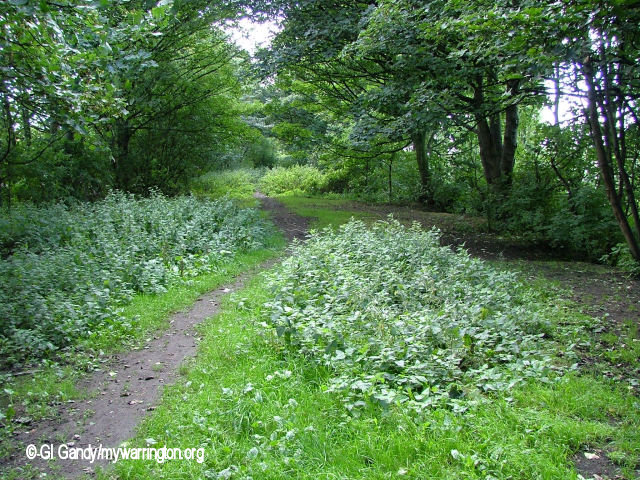
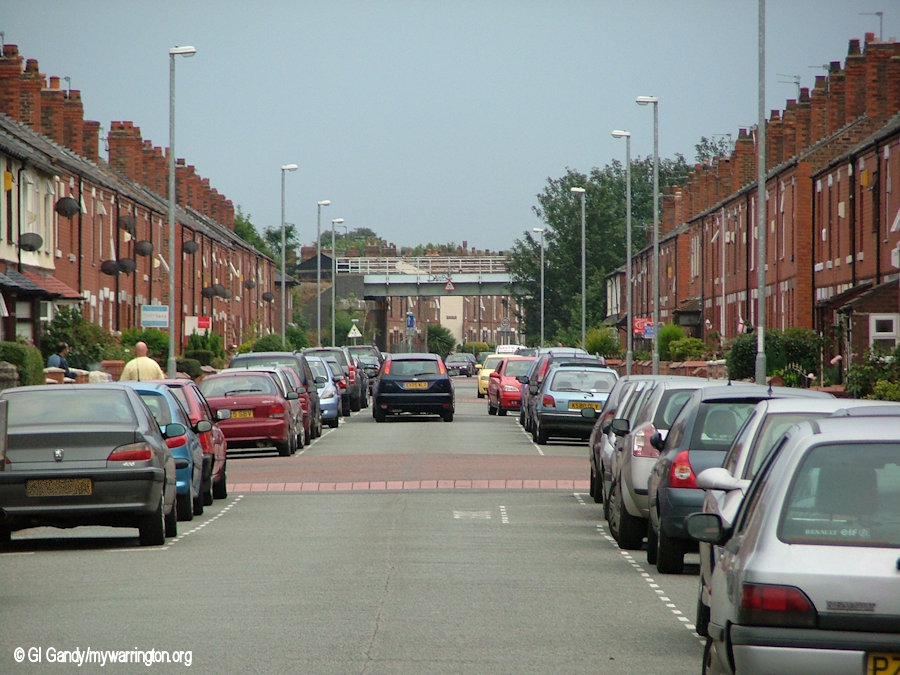
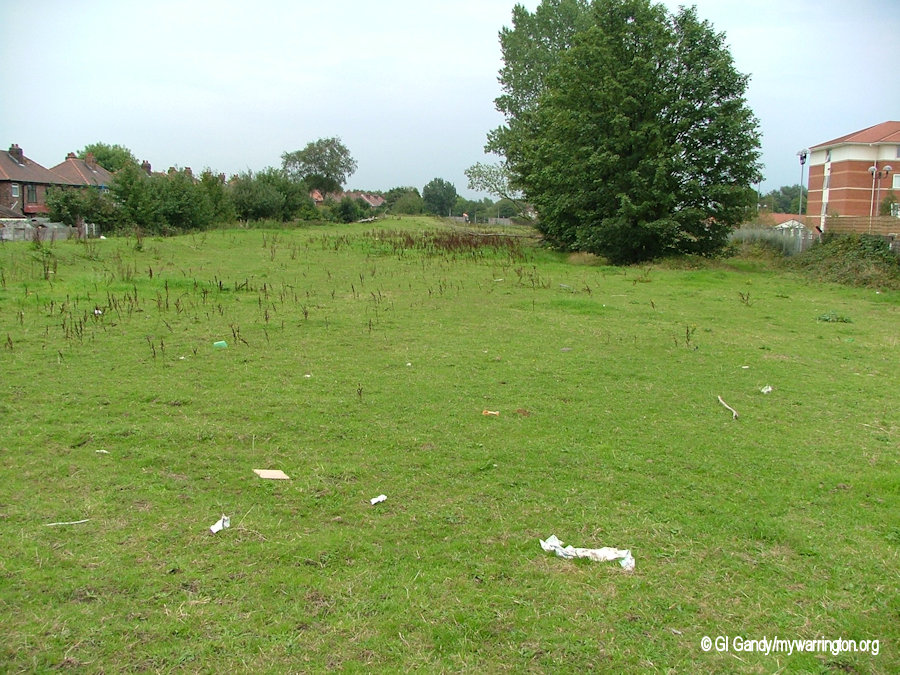
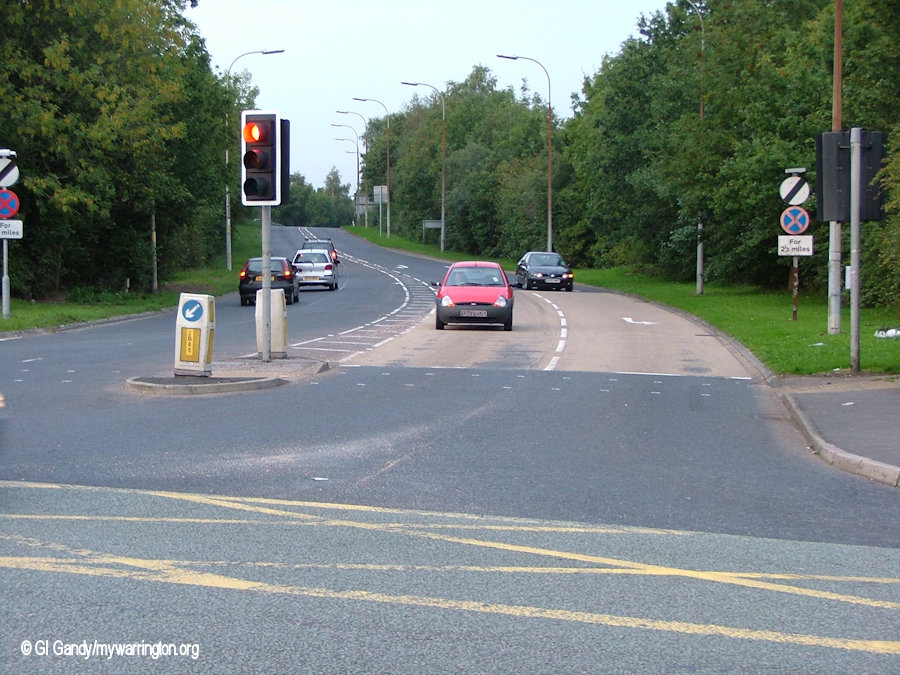
The route now passes through the Orford estate, crossing Hale Street at the back of the fire station (first image), then along the back of the houses on West Avenue, crossing Central Avenue (2nd image) and on to Alder Lane bridge (image 3). The fourth mage shows nature taking control again on the top of the embankment. From here the line ran along the back of Orford Park on its way through to the junction of Orford Road and Birchwood Way. It then linked up with the “loop” section just before Padgate Station.
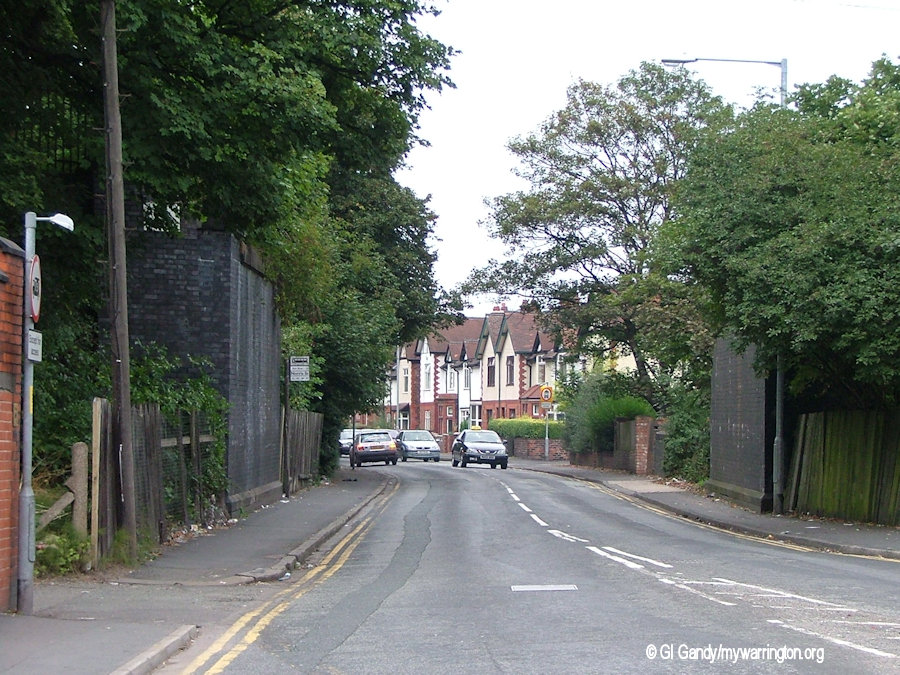
Remains of the bridge supports over Hallfields Road.
The “loop” gets closer on Gorsey Lane.
The trackbed continues behind Ryfields retirement home.
Birchwood Way. The railway continued where the trees are now.
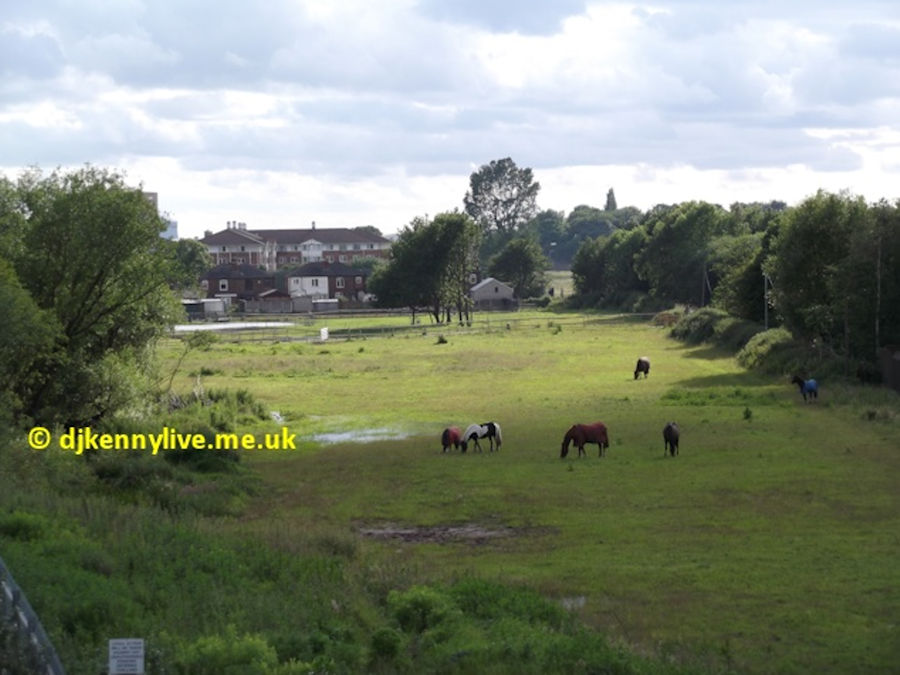
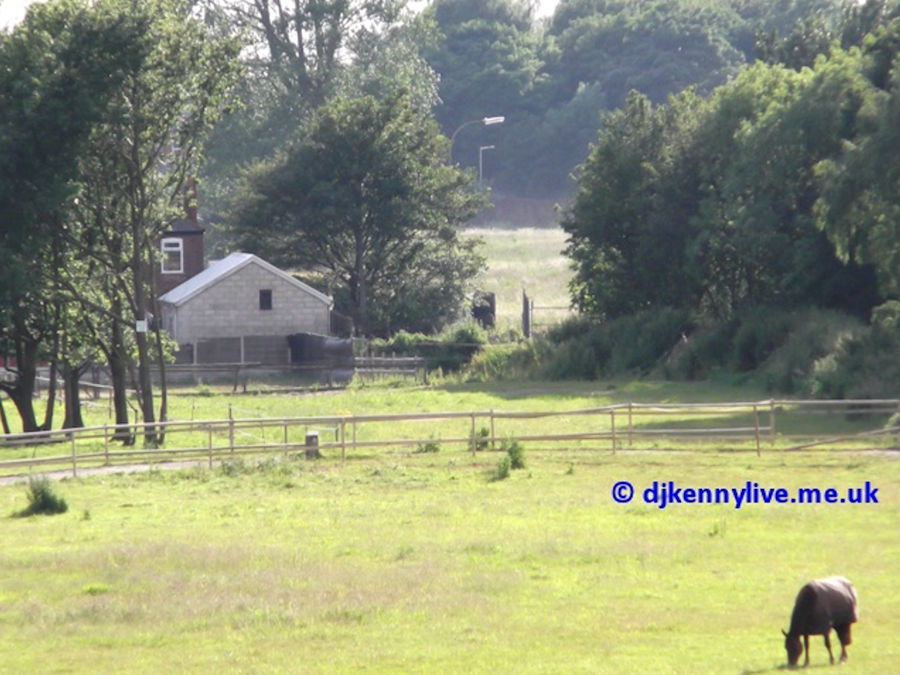
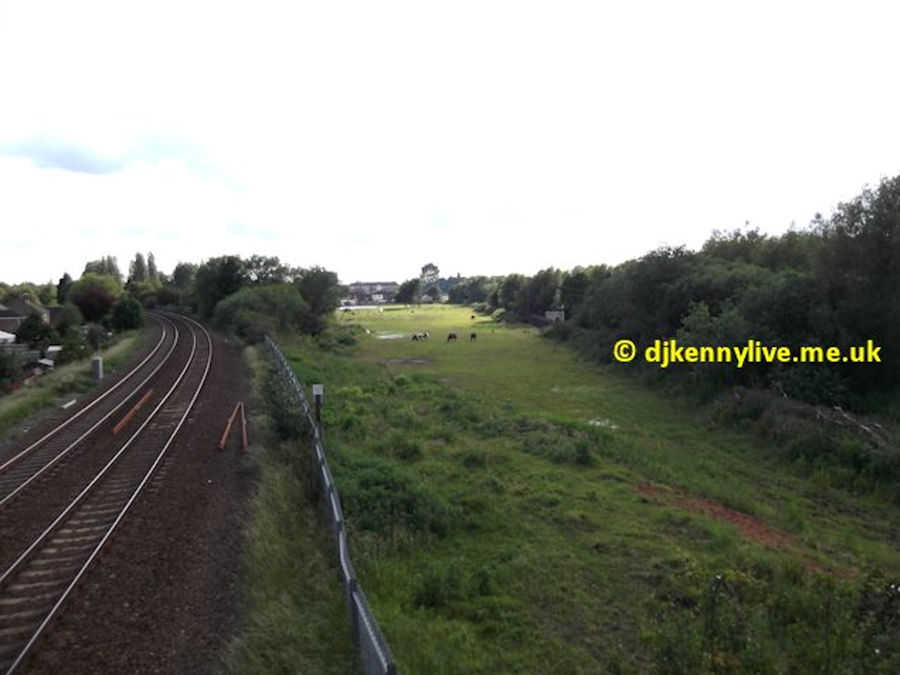
And to finish off this section, here are three more photos from my friend Kenny. They show the final section of the straight line just before it connected up with the loop line again on the way to Padgate station. The photos were taken on 25 June 2012.
Other CLC Connections
Manchester Central
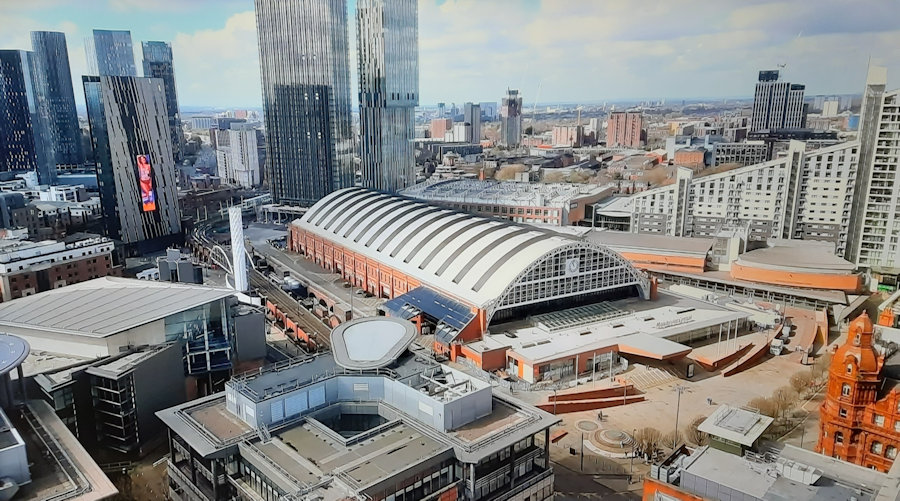
Manchester Central, formerly G-MEX, started life as Central Station and was Manchester’s fourth railway terminal. It was built between 1875 and 1880 by the Cheshire Lines Committee. The building was granted Grade I listed building status on 18 December, 1963, but has since been downgraded to Grade II* status.
The building consists of a huge wrought-iron and glass segmental vault spanning 210 feet, 550 feet long, and 90 feet high, and was built by Handysides of Derby. The substructure and masonry partition was provided by Robert Neill and Sons of Manchester. The engineers were Richard Johnson, Andrew Johnston and Charles Sacré. Whilst the station was under construction, a temporary facility called Manchester Free Trade Hall Station, was used by the Midland Railway from 9 September, 1877. It was later converted to become Manchester Central Goods.
The Midland, in particular, at last had a secure base for its services – the terminus for its expresses to London St Pancras. Initially it ran two prestige expresses, one a Pullman service, making the journey in four and a quarter hours. Later it added more services, a total of nine daily, with two on Sundays, including an overnight Pullman sleeper.
In LMS days, there were two named expresses the “Palatine” and The “Peaks”, the former making the trip in three hours and fifty five minutes, with stops at Chinley, Millers Dale, Matlock, Derby and Leicester.
There was a brief return to glory in British Railways days with the Midland Pullman, between 1960 and 1966, during the electrification of the West Coast Main Line. This stopped only at Cheadle Heath (now closed) and made the journey in three and a quarter hours.
Manchester Central, where I watched live snooker in April 2024
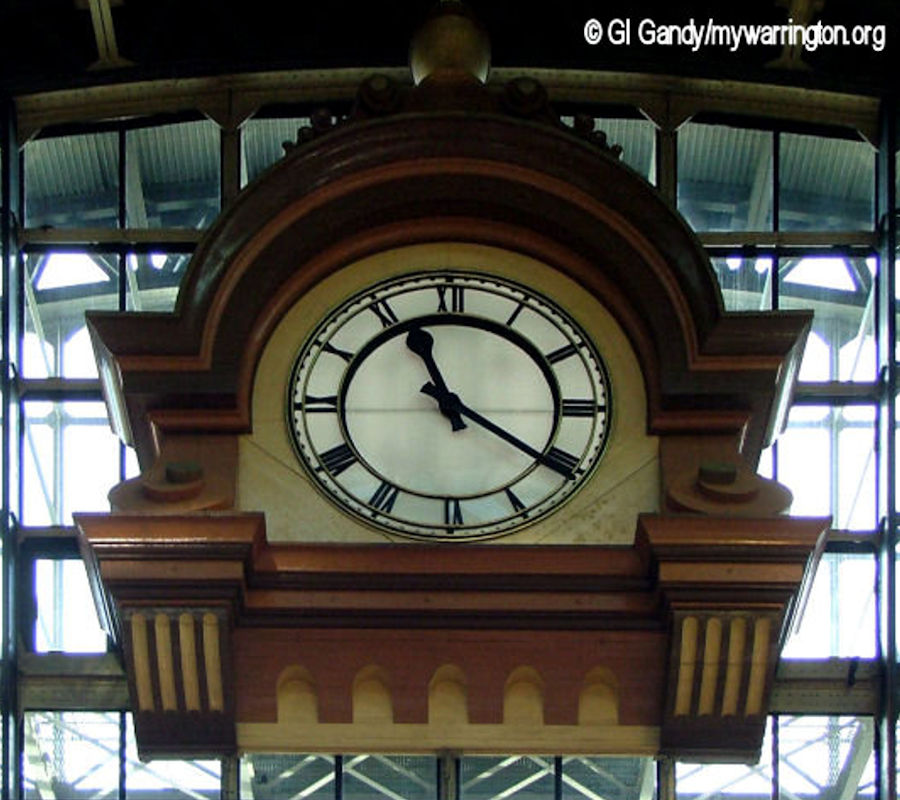
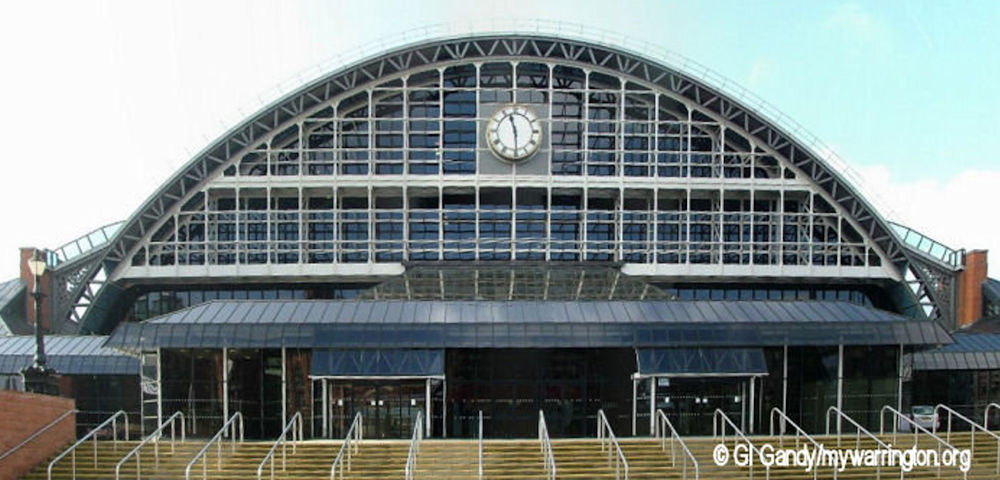
The ornamental clock from the Cheshire Lines Railway days, which is still on display inside Manchester Central, was made at the CLC’s workshop on Battersby Lane in Warrington. Photo © GI Gandy, mywarrington 2006.Thanks for access to the building.
Services through Millers Dale finished in 1968 when the line was closed. The station continued to provide local services for a while, but finally closed in 1969 when remaining services were switched to Manchester Piccadilly station.
The Midland Hotel, Manchester
The 303 bedroom Midland was built by Charles Trubshaw in 1898-1903 for the Midland Railway Company and is situated next to Manchester Central (formerly G-Mex Centre), Bridgewater Hall and Manchester Central Library. Its distinctive style is made of red brick and brown terracotta, with the exterior clad in several varieties of polished granite and Burmantofts (a type of terracotta).
The hotel was regularly used by American cotton traders whilst they were on business selling their raw cotton to Manchester’s cotton cloth manufacturers; the businessmen collectively referred to themselves as the Old Colony Club. One of the hotel’s restaurants has been renamed The Colony in recognition of this fact.
The Midland is perhaps most famous for being the meeting place of Charles Stewart Rolls and Frederick Henry Royce, leading to the formation of Rolls-Royce Limited in 1906. The Midland Hotel was also allegedly coveted by Hitler as a possible Nazi headquarters in Britain.
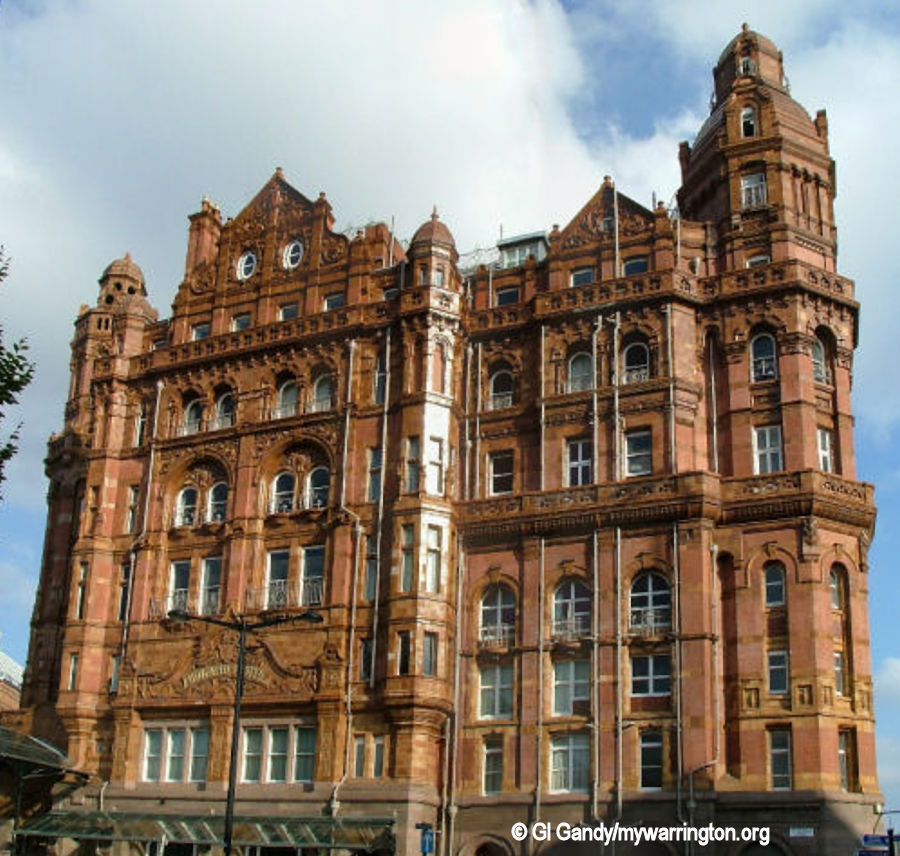
The Midland Hotel, Manchester
Reader Story
I remember the blue brick abutments at the extreme angles on Folly Lane bridge as a child and saw the girder bridge itself in pictures now long lost. I did see the Horse and Jockey bridge though and also witnessed its removal, so it must have outlived the Folly Lane bridge by a few years – I guess Tetley Walker were paying BR for the advert on it.
I grew up in John St in the centre of town until the council demolished the houses in 1971 and we moved. I remember all the shunters at the Central Station warehouse and the 3-wheeler lorries carrying steel to and from Rylands. My dad was an engine driver at Dallam shed till it closed and then he turned down the offer of diesel training and became a postman, so he took me for a final look round the place before it was converted into the present factory unit. The turntable was filled in but the pits and shed tracks were still in place – from memory I suspect most of it survives under the modern cladding, as I remember the walls being left standing prior to the new roof and frontage being built.
Rob Gandy.
 mywarrington