

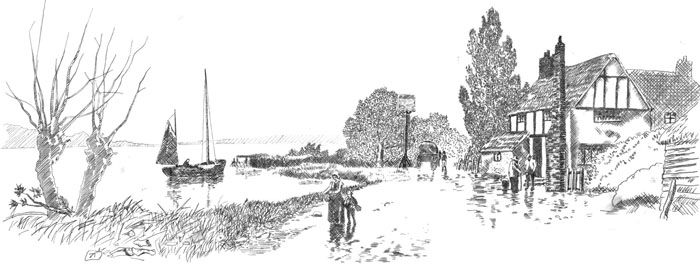
As the River Mersey meanders towards Liverpool Bay and the Irish Sea, it passes by Fiddler’s Ferry in west Warrington. The information here is in response to a request from a reader in Australia who lived in the area for many years. My thanks go to David Potts at Groundwork Mersey Valley and Warrington Borough Council Ranger Service for permission to use their artwork and extracts from their text. The copyright owner of the original painting used for David’s drawing is not known. If you are the owner, or know who is, contact me for a full credit.
In 1870-72, John Marius Wilson’s Imperial Gazetteer of England and Wales described Fiddlers Ferry like this:
FIDDLER’S FERRY, a place on the S border of Lancashire; on the river Mersey, adjacent to the Warrington and Garston railway, 4 miles WSW of Warrington It has a station, jointly with Penketh, on the railway.
GB Historical GIS / University of Portsmouth, History of Fiddlers Ferry, in Warrington and Lancashire | Map and description, A Vision of Britain through Time.
URL: https://www.visionofbritain.org.uk/place/26036
Date accessed: 22nd July 2024
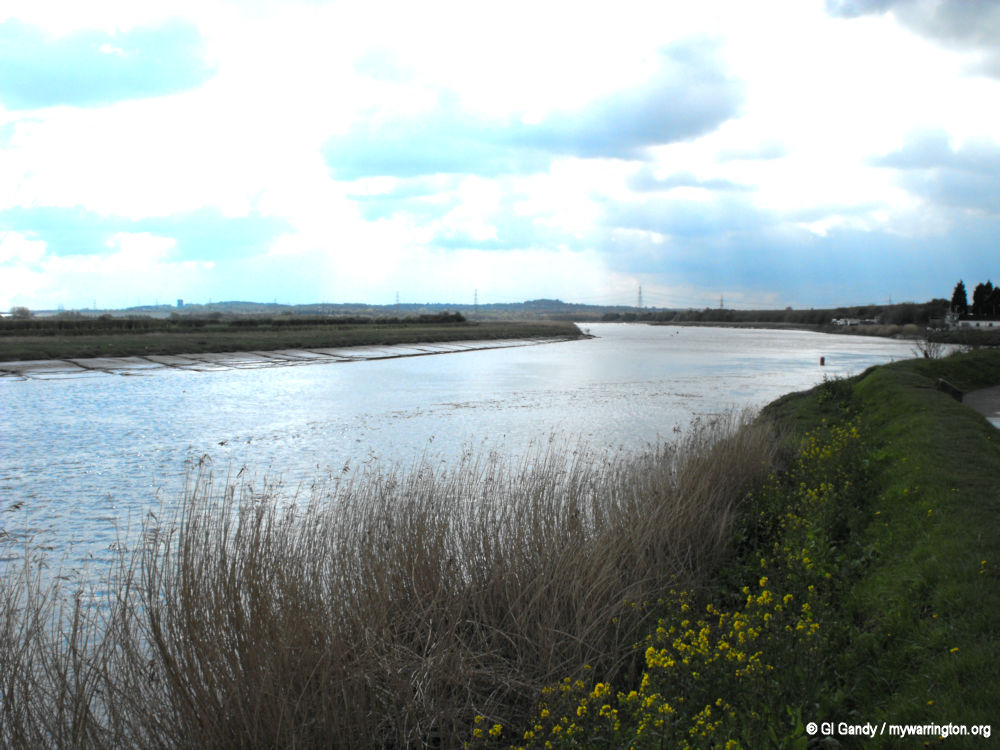
The Fiddler’s Ferry area is located in part of the 15-mile Sankey Valley, which follows the course of the oldest canal in England since the Industrial Revolution, the Sankey Canal (originally known as the Sankey Brook Navigation and later the St Helens Canal), opened in 1757. Sankey Valley covers an area between St Helens and Spike Island at Widnes, close to the Runcorn-Widnes Bridge. This area in turn forms part of the wider Mersey Forest, the largest of 12 community forests in England.
A ferry crossing existed in this section of the River Mersey for over 800 years. It is the narrowest section between Warrington and Runcorn, and passengers were ferried between Penketh and Moore.
So, who was the fiddler? Soon after the Norman invasion of 1066, Adam le Vieleur was the Lord of the Manor of Penketh. Vieleur is a French name and translated as ‘viol-player’ or ‘fiddler’. The lord owned the rights to the ferry, so it was ‘Fiddler’s Ferry’.
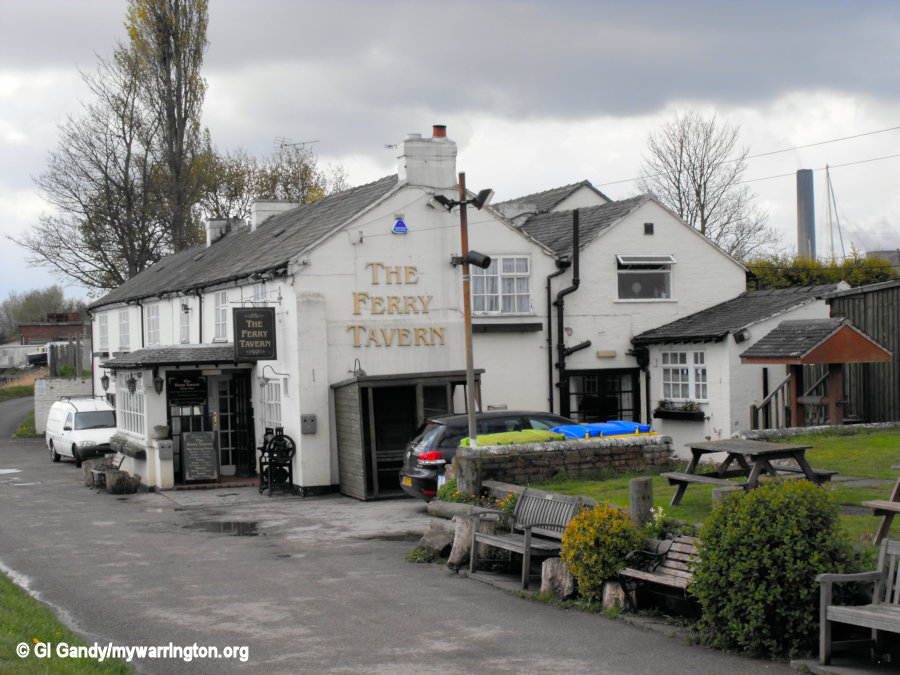
The Ferry Tavern today
In the Middle Ages ownership of the ferry passed to Norton Priory. A 9-foot (2.75 metre) statue of St Christopher, patron saint of travellers, was erected, which now stands in the museum at Norton Priory, Runcorn.
The present inn building dates back to 1762. Nobody knows how long an inn has stood on this site, but it would have played an important role for travellers along this section of the river.
One traveller in the 1800s wrote,
‘here is also a muddy but fairly large rowboat which plies from the stone jetty outside the inn to some point on the Cheshire side. This is not identified by either farm or road access.
‘The inn seems to be quite comfortable for visitors of a mildly adventurous mind. At night the sound of the tide must echo through the room, and in the wind there will be resounding notes.’
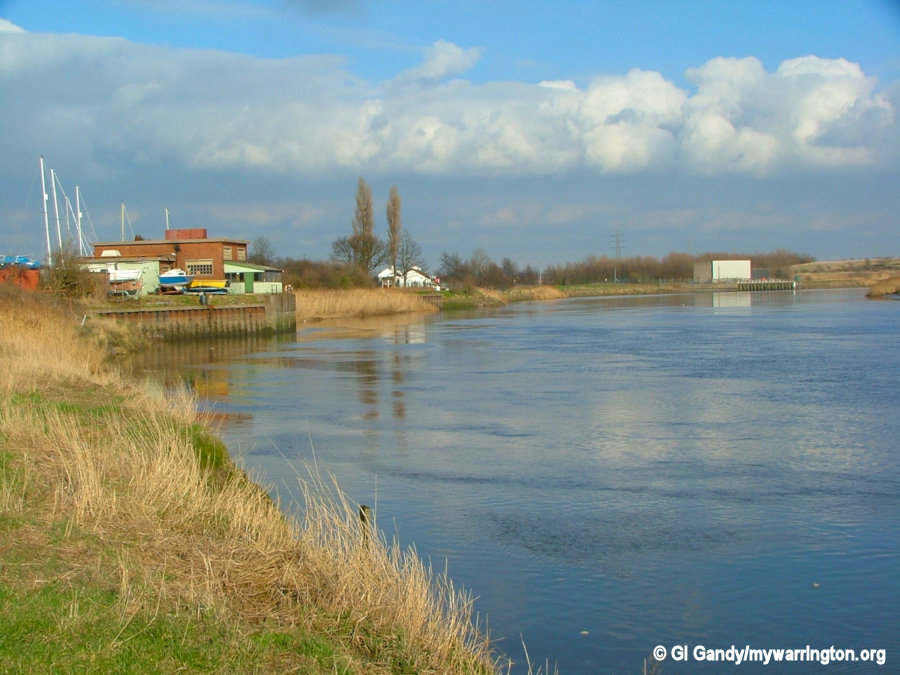
View to Fiddler’s Ferry Yacht Haven
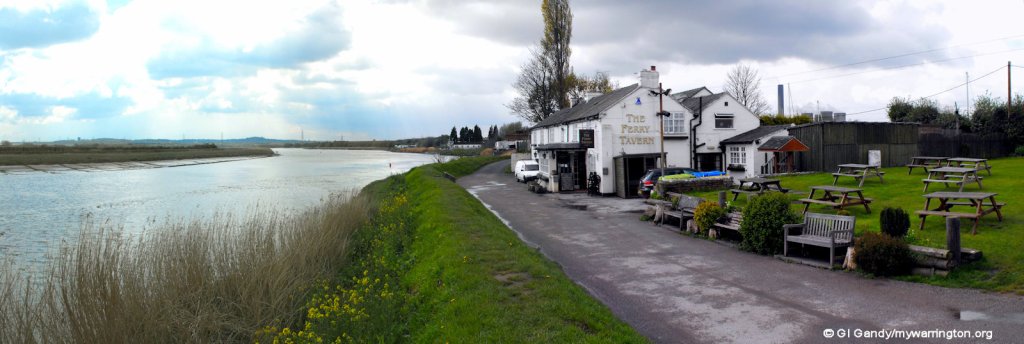
The ferry service came to an end around 1890, as the construction of the new Manchester Ship Canal, which opened in 1894, cut off access from the south. Today, the Ferry Inn is still a regular resting point for travellers on the 350 mile Trans Pennine Trail, which stretches from Hornsea on the east coast to Liverpool and Southport on the west. It takes in Leeds, Sheffield, Manchester and Warrington along the way.

A view from the banks of the Manchester Ship Canal on the opposite side of the river (20 Mar 2007)
Close by is Fiddler’s Ferry Yacht Haven, opened on 3 August 1985 by the former Mayor of Warrington, Councillor P. Mounfield. The Yacht Haven has a boat yard that offers a range of services, including dry storage, boat repair facilities, fresh water, toilet facilities, sewage disposal, trailer and cradle storage, lift out facilities, battery charging, electrical instrument repairs, a rest room, chandlery and engine repairs.
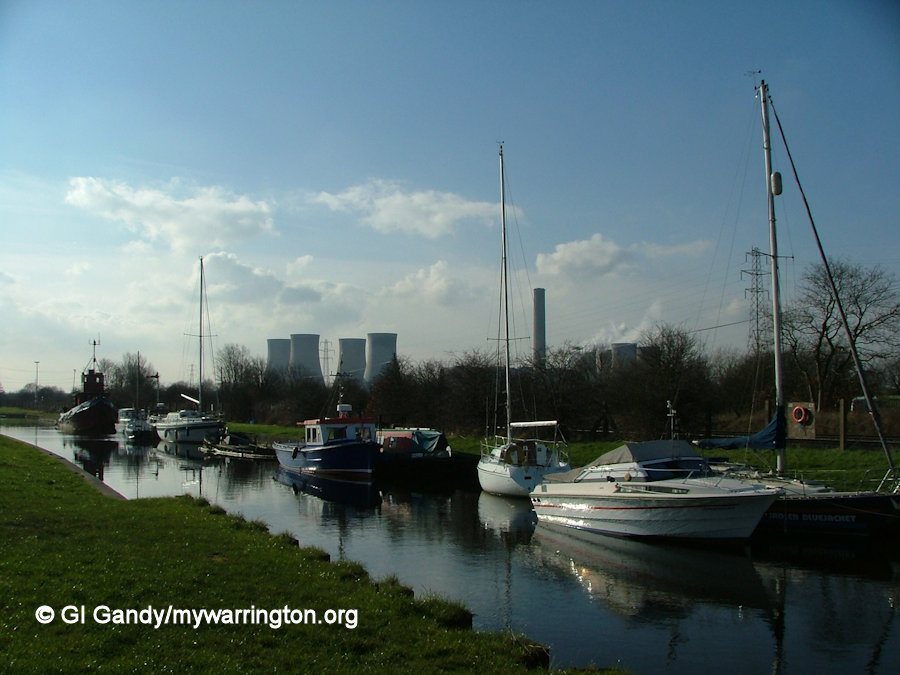
Fiddler’s Ferry Yacht Haven
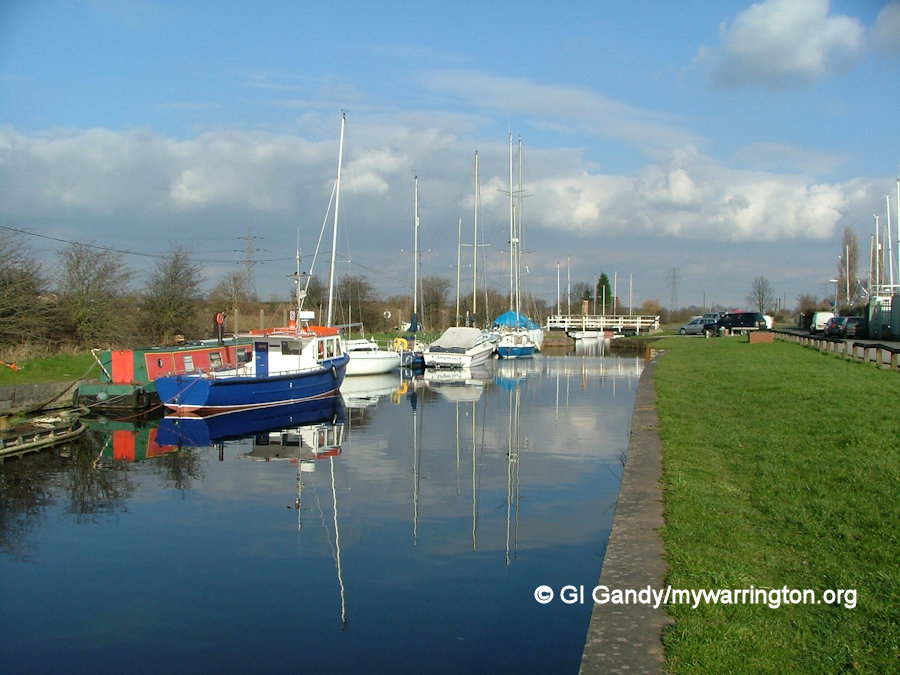
Fiddler’s Ferry Yacht Haven
Gatewarth is a landfill site and offers a haven for wildlife, including birds, stoats, weasels and dragonflies. There are some wonderful views of the tidal river and the surrounding area. There is so much to enjoy in this tranquil part of west Warrington.

Gatewarth Nature Reserve alongside the Mersey
(18 Feb 2007)
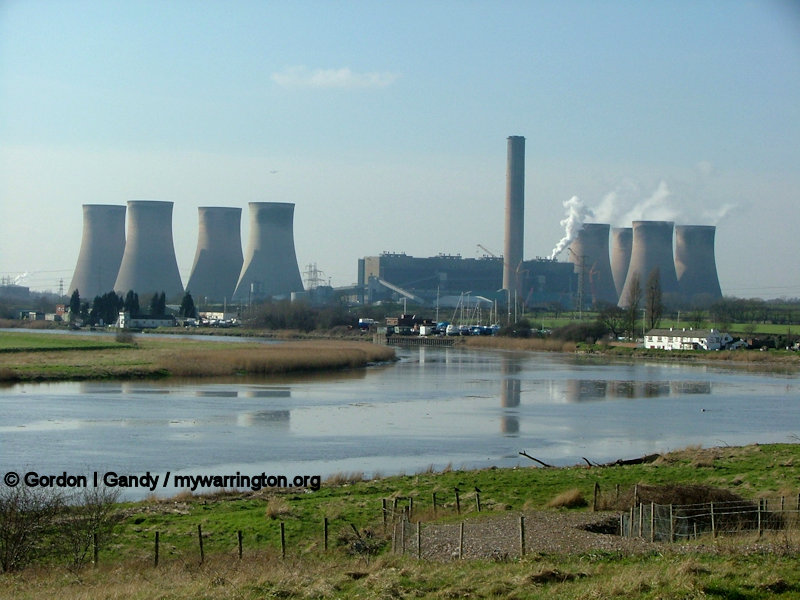
The former Fiddler’s Ferry power station, which closed on 31 March 2020. Photo taken 18 Feb 2007.
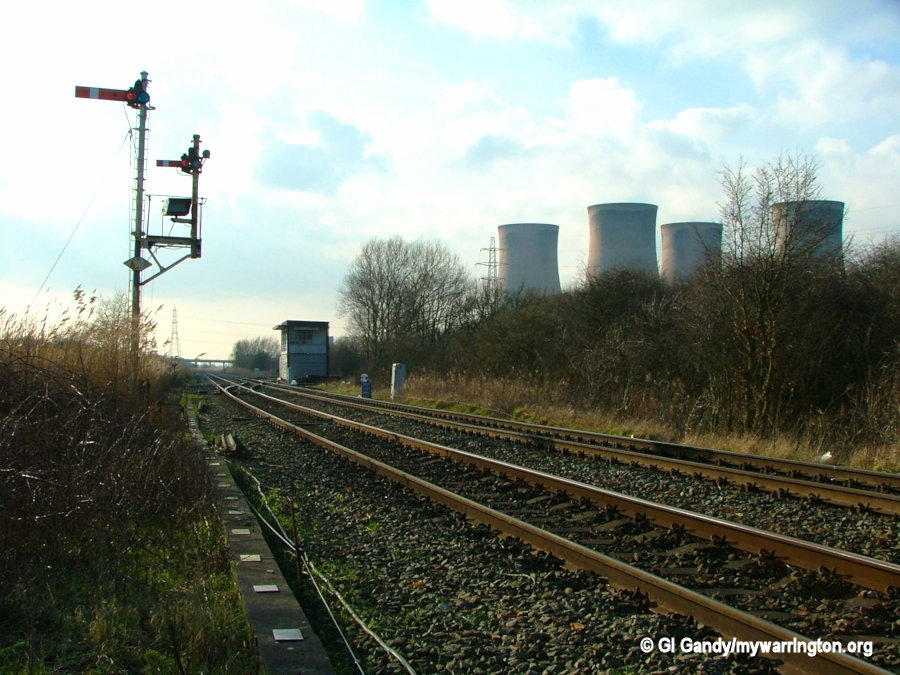
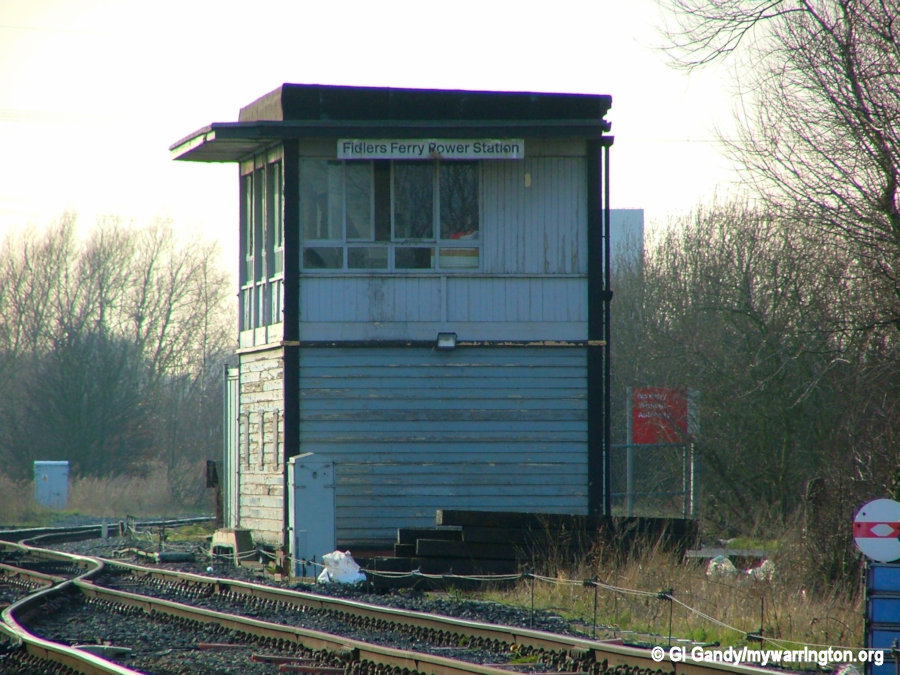
Fiddler’s Ferry Power Station signal box on the former Warrington and Altrincham line
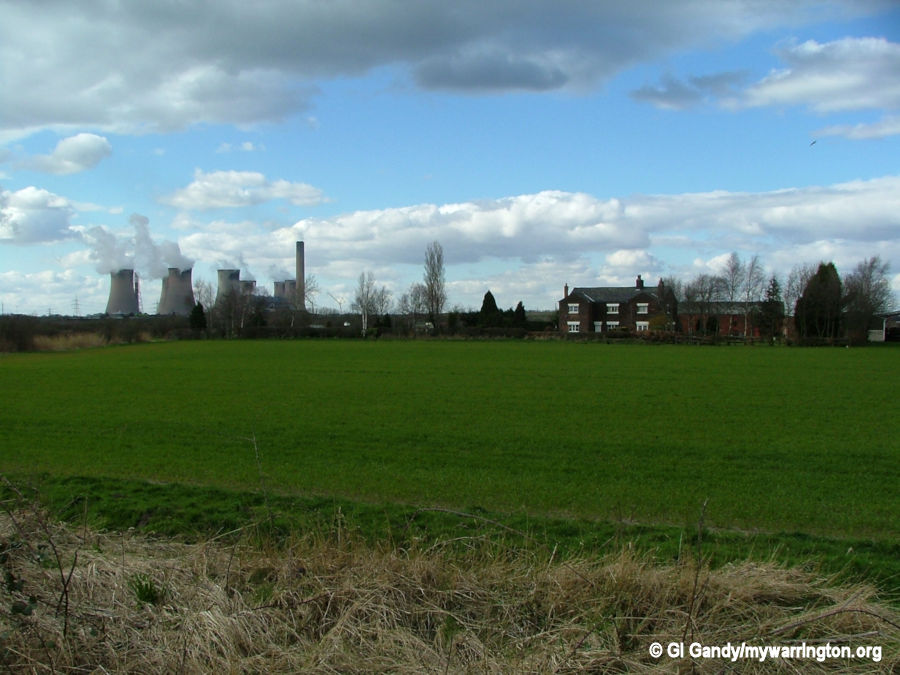

The former power station. Four of the towers were demolished on 2 December 2023.
 mywarrington