

- Back in Time
- The Raven Inn
- Other Glazebury Pubs are Available
- Church Life
- Around the Village
- Bents Garden and Home
In 1870-72, John Marius Wilson’s Imperial Gazetteer of England and Wales described Glazebury like this:
BURY-LANE, a chapelry, with a r. station, in Newchurch-Kenyon parish, Lancashire; on the Liverpool and Manchester railway, 11 miles W by S of Manchester. The living is annexed to Newchurch-Kenyon.
GB Historical GIS / University of Portsmouth, History of Glazebury, in Warrington and Lancashire | Map and description, A Vision of Britain through Time.
URL: https://www.visionofbritain.org.uk/place/25008
Date accessed: 22nd July 2024
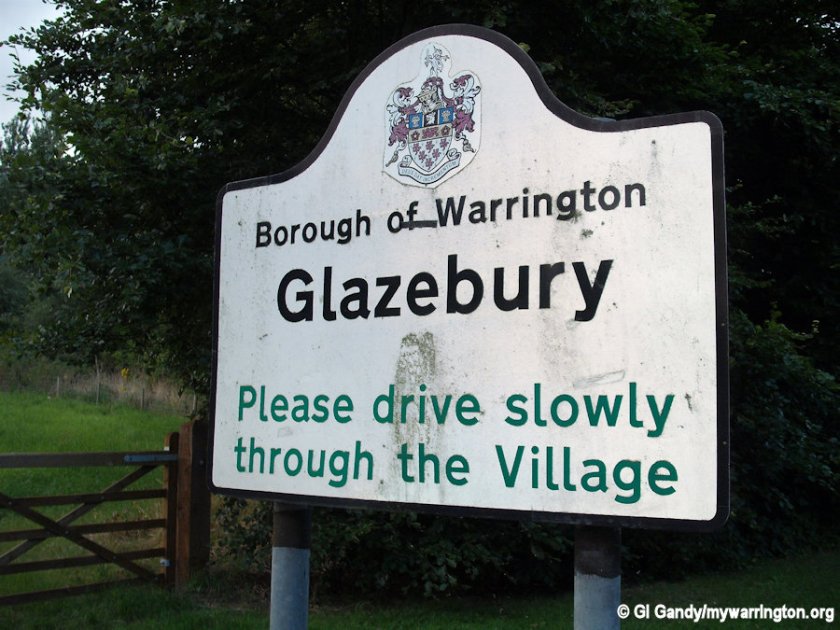
Back in Time
Prior to the Civil War, Glazebury was part of Culcheth, previously being known as Hurst because of Hurst Hall. Hurst Hall was along Hurst Lane next to Dukinfield House Farm and marked alongside the railway line on the map. Formerly the seat of the Holcroft family, before the Adamsons were there during the 19th and early 20th centuries.
Hurst Mill was located at the northern end of the village and Hurst Mill Bridge, rebuilt in 1906, crosses Carr Brook near to the mill. Bent’s Garden Centre is close to the bridge. The village’s name is unusual inasmuch as the ending “bury” in English place names normally signifies a fortified place. However, tradition has it that Hurst came to be known as Glazebury in a different way.
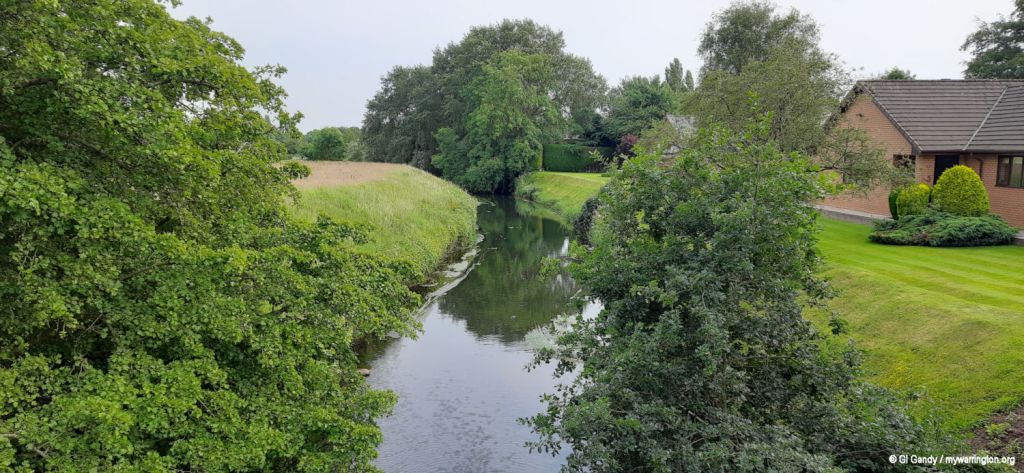
In the 17th century Civil War combatants were buried in a road which became known as Bury Lane (now part of Warrington Road) and Glazebury is believed to take its name from a combination of bury and glaze from the nearby River Glaze.
The Wigan Archaeological Society website says the history of the area suggests a possible Civil War connection as apparently there was a large skirmish in the vicinity. They go on to say that it could be much older as an Iron Age site had been discovered a few years ago only about one mile south of this one.
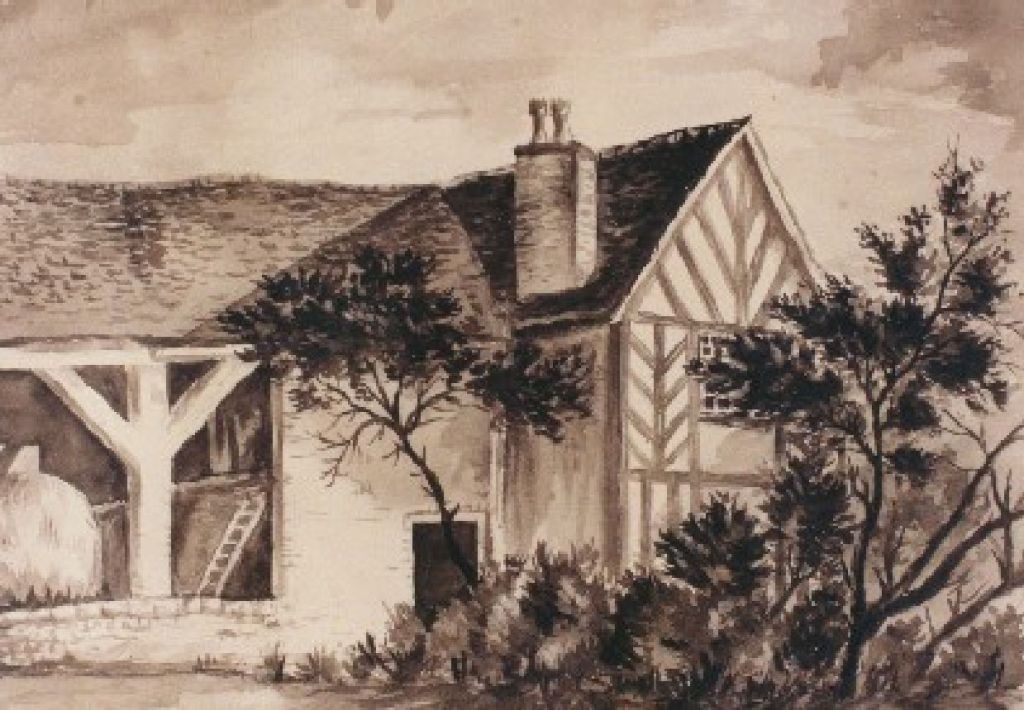
Hurst Hall, Glazebury (public domain image via Wikipedia).
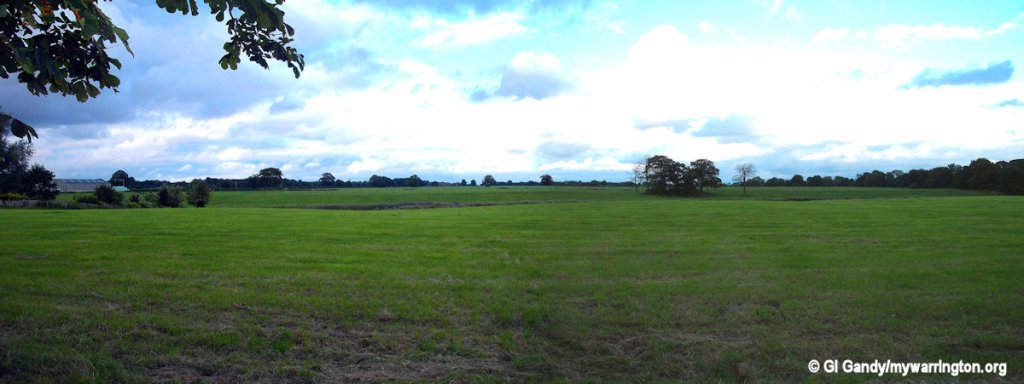
Land off Warrington Road, Glazebury on 10 August 2009.
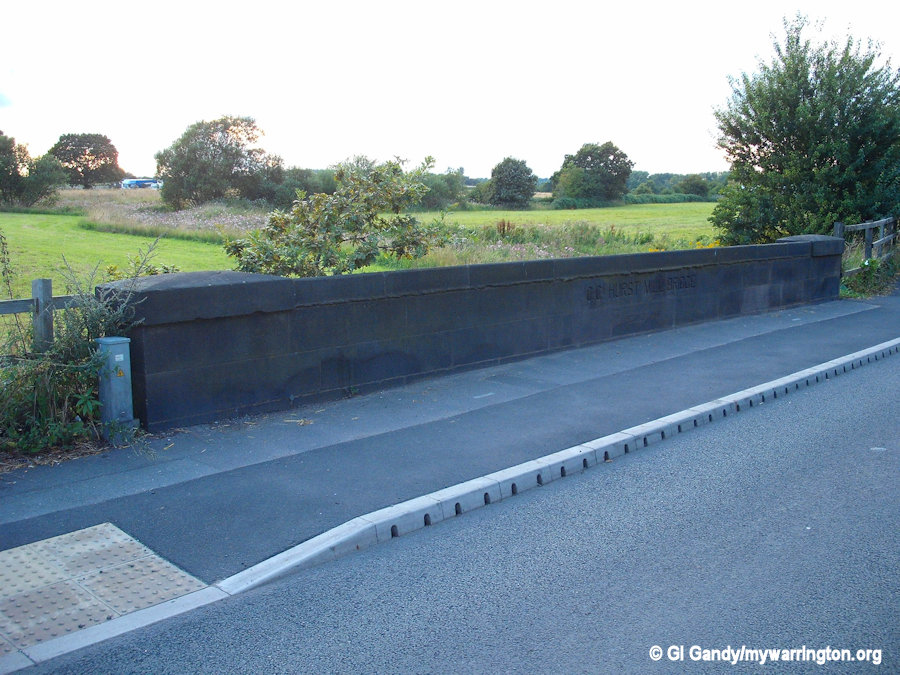
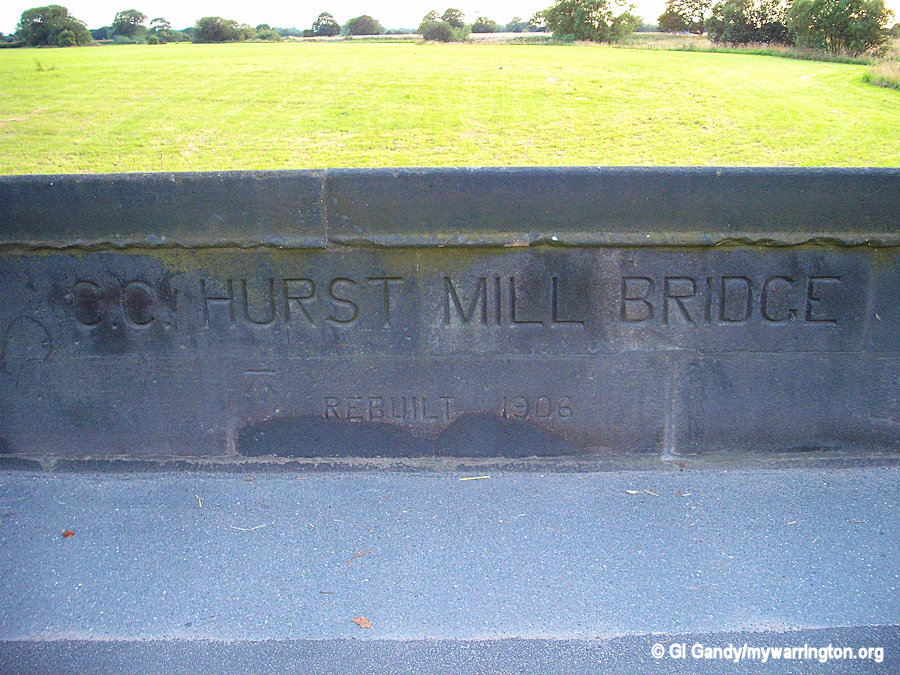
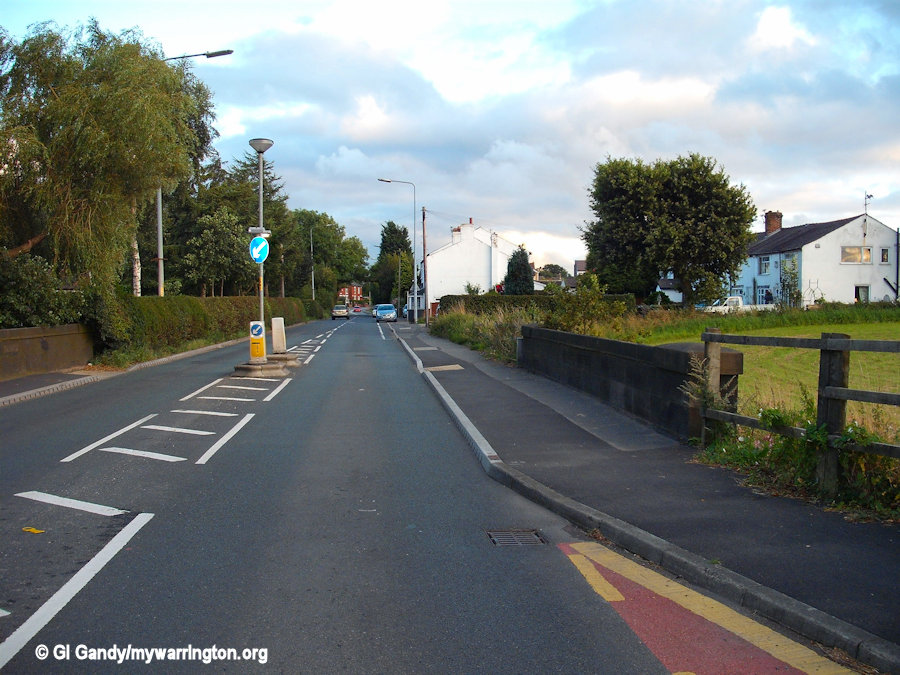
Hurst Mill Bridge at the northern end of the village
The Raven Inn
I am grateful to Bob Eden at the Raven Inn for additional information on the history of the Raven, for the guided tour of the work in progress and for permission to use extracts from their website.
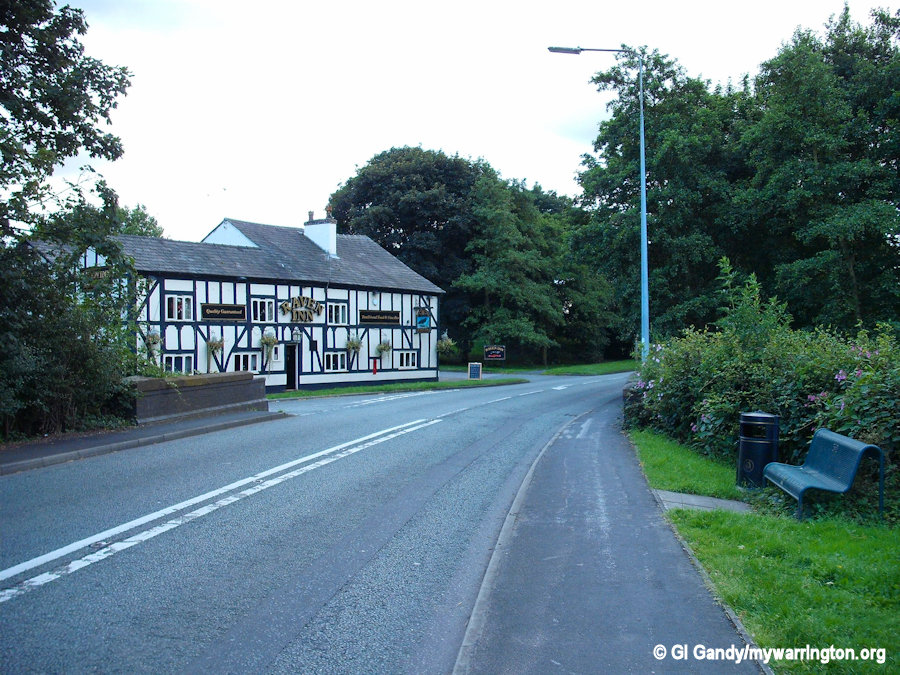
The Raven Inn was put up for sale in 2019 for demolition and redevelopment. The advertising for the planned development included the lure: “Built on the site of the historic Raven Inn”.
This plan was, frankly, devastating for the local community who loved the landmark, its history and its once thriving environment. An action group was set up on Facebook to ‘Save the Raven’, which over the next three years attracted 1,000 supporters.
The site of the Raven fell on a spacing between Holcroft Hall and Hurst Hall, which Arizonian historian Van Hostetler considered significant, alerting the ‘Save the Raven’ action group.
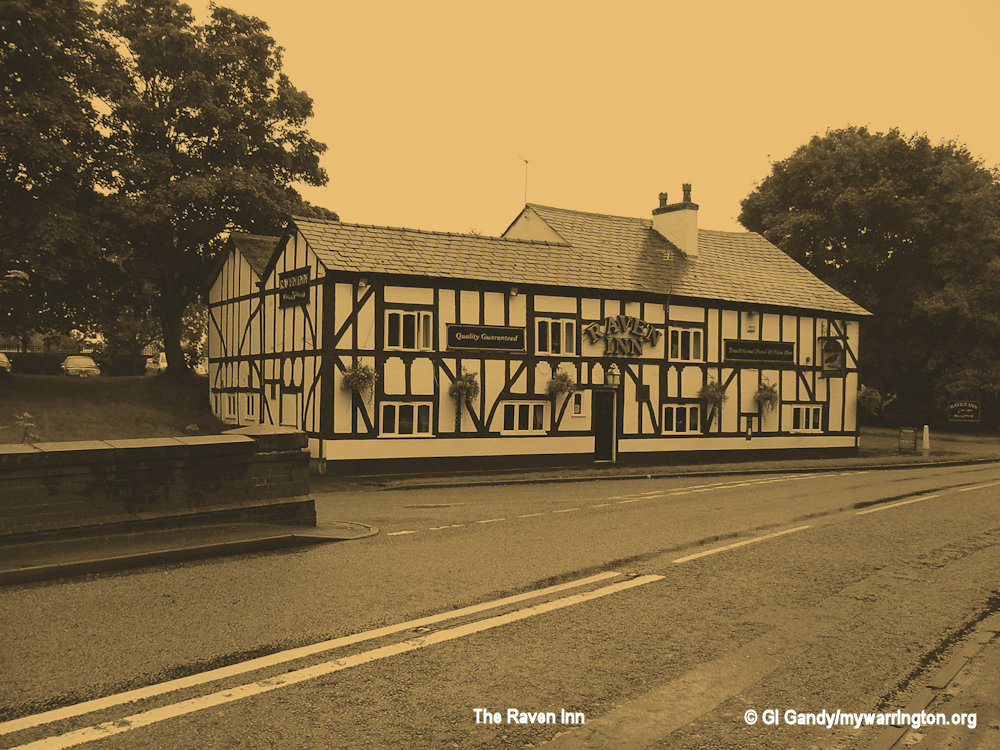
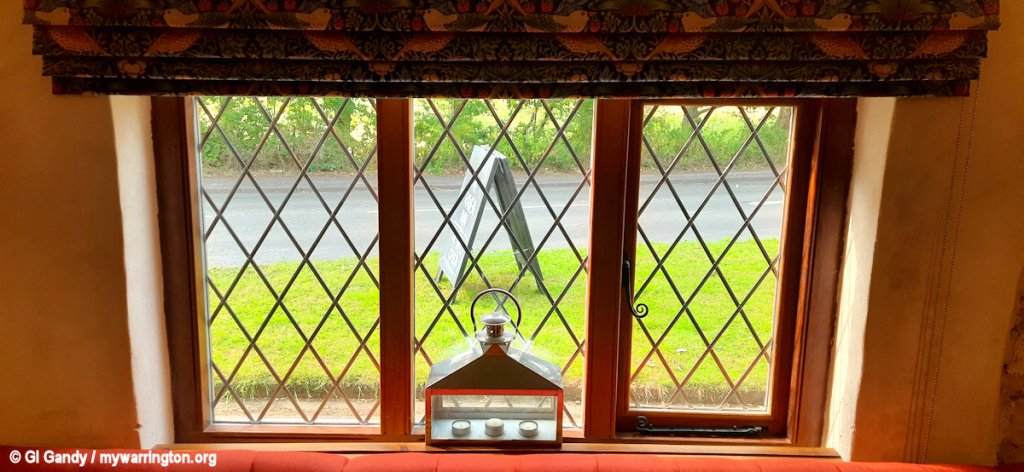
The mock Tudor windows were made by a Gloucester woodworker. Seen here on 25 Jun 2024.
This is the remarkable nature of the internet – a historian 5,000 miles from the inn could join the fight and participate on an equal footing with the local community. And so the research began.
Intrigued, scientist and amateur historian Bob Eden responded to a request from the ‘Save the Raven’ action group to investigate this ‘strange’ claim of Van’s. He did, with some initial scepticism, and it was the beginning of a trans-Atlantic collaboration lasting to this day.
Originally the Raven was the site of a water mill and a date of 1562 is suggested as the changeover from a mill to an inn. The reason for this change of use was because the larger Culcheth Corn Mill opened to serve the three halls of Holcroft, Hurst and Light Oaks, which made the Raven surplus to requirement.
The initial clue that the building was a mill came from the 1840 Tithe map and the 1849 OS 6” map showing what appears to be a millpond fed from the Twiss Brook. It is firmly believed ‘Lyttyl Mylle’ was repurposed as a hostelry in the 16th Century.
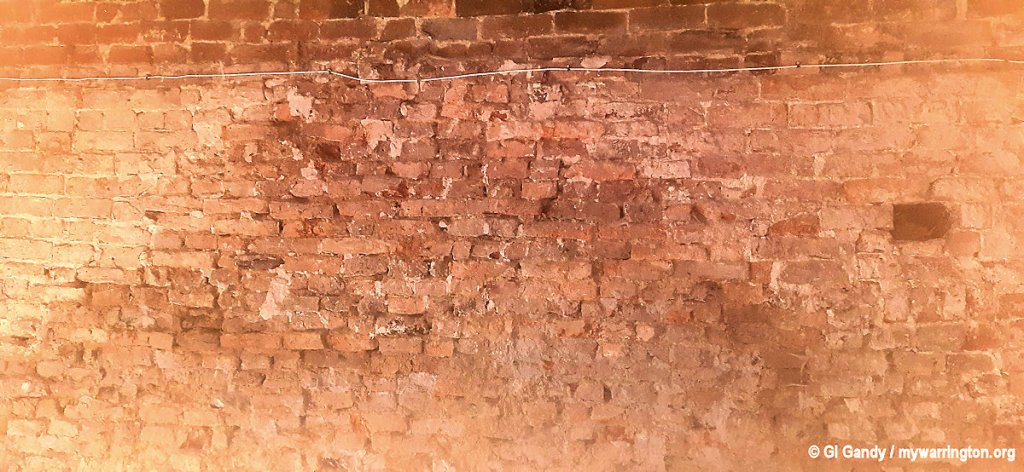
Supporting this timeframe, the mill walls at the north end of the Raven are Tudor in origin. The beautiful brickwork has been revealed and will remain on display for all to admire.
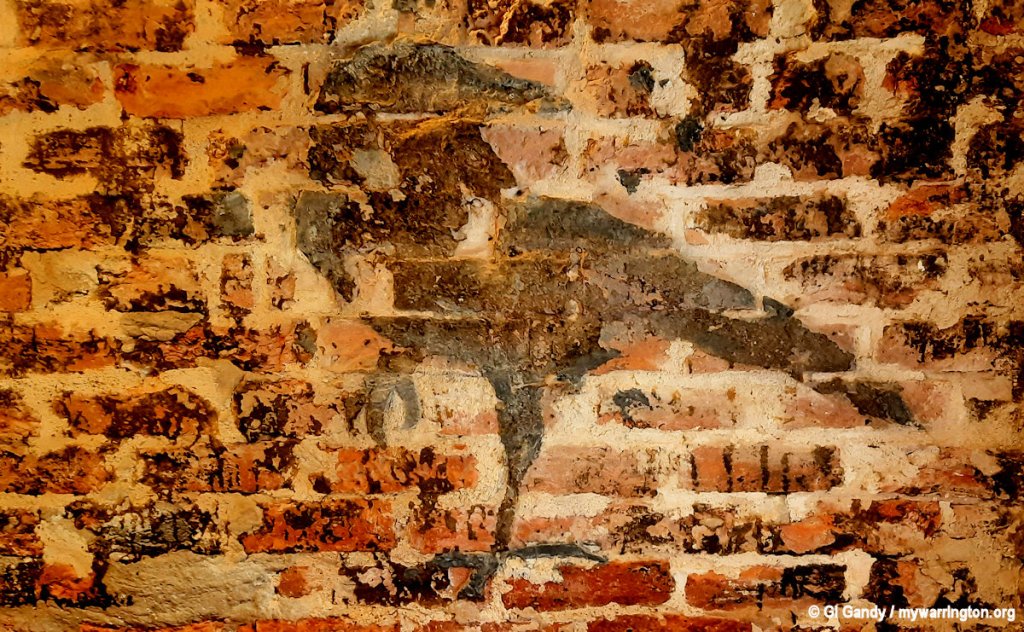
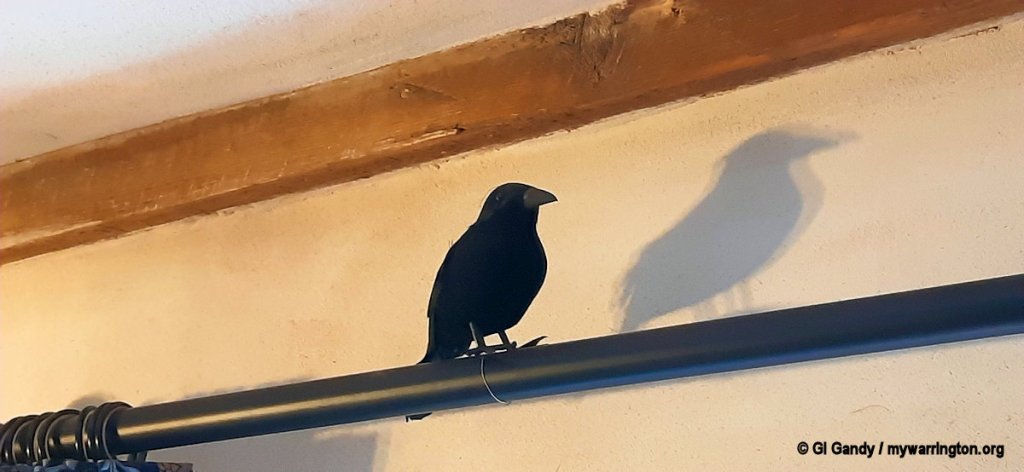
The raven in the brickwork was pointed out to me on my visit. I am informed the image was painted with coal and tar.
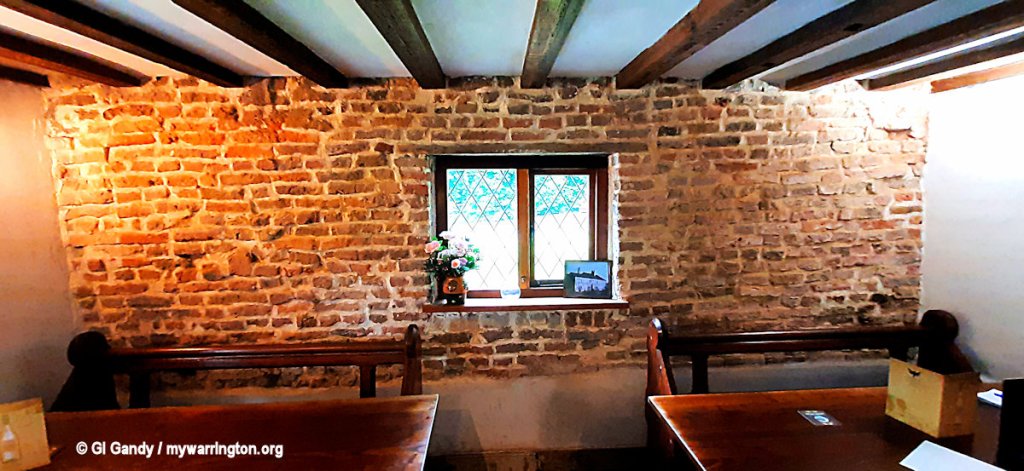
The Tudor brickwork at the far end of the inn has been left on display for all to admire
However, The water mill site dates from the mid C13th, though perhaps earlier. It was built by the land-owning de Culcheths, but which of the de Culcheth heads of family commissioned the watermill is yet to be discovered.
In 1246 the head was Gilbert de Culcheth, and in this year he was murdered. One of Gilbert’s four daughters, Joan, married Thomas Hindley, also one of four, and each Hindley brother married a de Culcheth. Each daughter inherited part of Gilbert’s estate and the area was surveyed and divided into the four townships of Culcheth, Risley, Peasfurlong and Holcroft by ‘metes and bounds’ (divided by straight lines and boundary features).
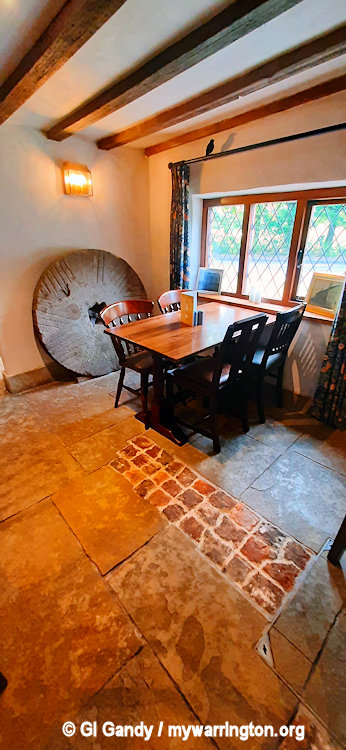
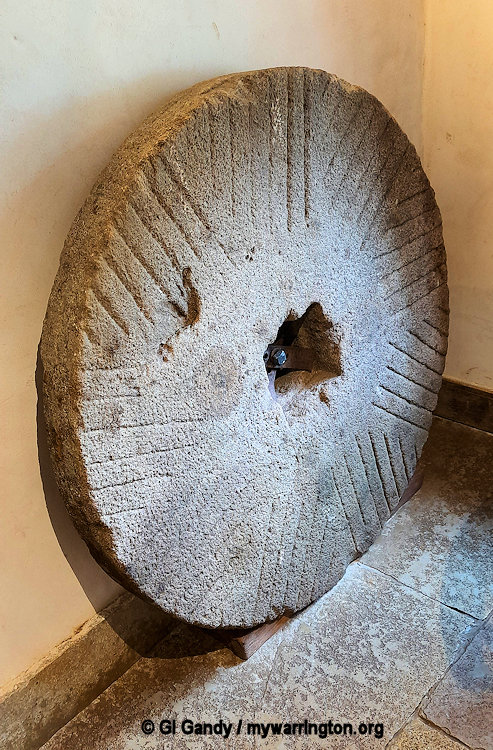
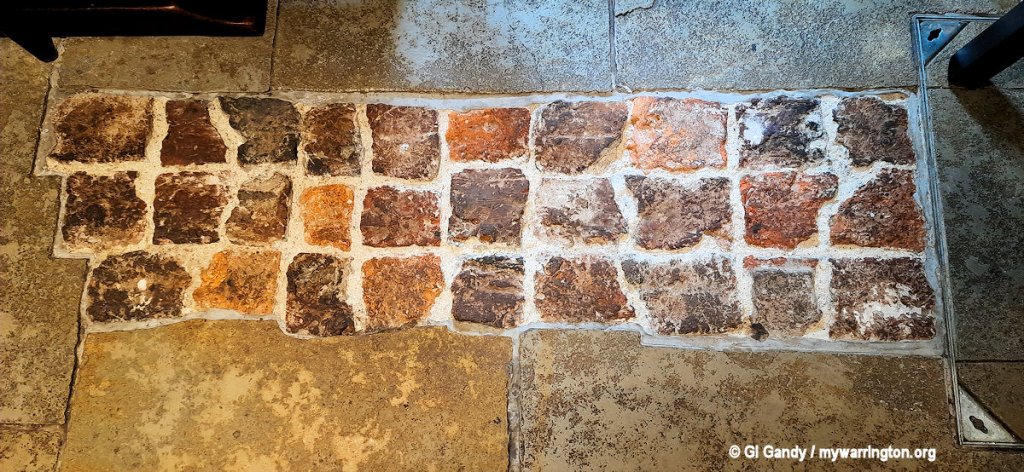
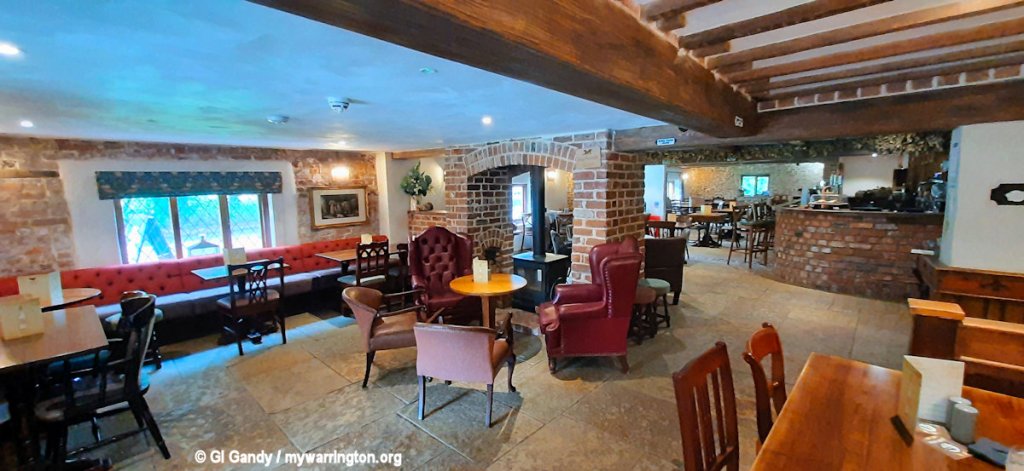
The millstone in the inn today, seen here in the photos, is typical of the type that would have been used at the Raven mill. This one was brought in from the Peak District and is a ‘nine harp’ runner stone that ground corn at Norbury Mill near Poynton. The stone floor is original though and the brickwork in the floor is a recreation of what the foundations looked like. Some of the original archaeology is beneath the floor hatches.
Waterpower to the mill was augmented with additional water through the construction of a shallow gradient ‘contour leat’ connecting the Jibcroft Brook to the Twiss Brook through Fowley Common. Delivery of water from the Fowley Common Leat across the trackway (which is now Warrington Road) to the Twiss Brook was controlled by a sluice gate.
The English Civil War Period
Let us as this point introduce somebody who was connected to the Raven during the Civil War.
In 1650 an historically important Holcroft marriage took place at New Church, Culcheth. Through his friend Captain Thomas Holcroft, the ‘dashing’ Irishman 34-year-old Captain Thomas Blood caught the attention of 17-year-old Marie Holcroft, daughter of the head of the family Lieutenant Colonel John Holcroft of Holcroft Hall. Her father was not happy, but the couple married at New Church in Culcheth.
In September 1651 two thousand defeated Scots from the Battle of Worcester escaped north. They were harassed and picked-off along the way. Five hundred Scots crossed the River Mersey at Hollin Ferry and following the track just west of the Glaze Brook traversed the next obstacle, Jibcroft Brook, five miles north at the Raven Inn, where Parliamentarians John and Thomas Holcroft held control.
Because the Raven Inn was later described in 1770 as ‘ancient’, it is more than likely that Captains Holcroft and Blood frequented the Raven for their ale. No doubt they discussed Blood’s and Marie’s marriage plans and later celebrated the Scottish harassment, which became a skirmish, a rout and then, in local lore and perhaps even to Holcroft’s ‘best’ recollection, a full-blown battle.
But that wasn’t the end of Thomas Blood’s story. He remained a military man, rising to the self-appointed rank of Colonel, and with Marie hatched ‘a dashing plan’ to steal the Crown Jewels. In 1671 the news of the attempted, but failed theft, would have reached the Raven Inn. Surprisingly, he was not hanged for this crime, and perhaps the only thing of Blood’s that was hung was his portrait.
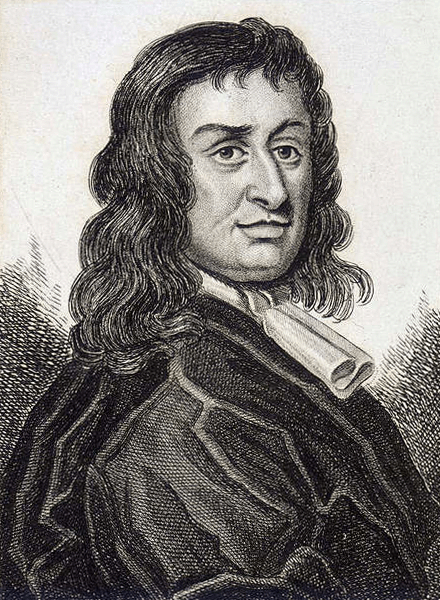
Colonel Blood in an 1813 illustration
Back to the inn itself.
Records show that In July 1770, the Tyldesley family sold, what was then referred to as “…the ancient hostelry, the Raven Inn…” and other properties to John Lyon. Lyon was responsible for greatly expanding the inn, ‘wrapping’ the new Georgian building around the old Tudor fabric.
Fast-forward to the latter part of the 20th century, inappropriate use of modern building materials during refurbishment (plastic membranes and cement render) kept out the damp but also trapped damp in the building from the leaking roof.
But after the Raven was bought and saved in 2022, all membranes have been removed and the brickwork has been repaired with lime mortar pointing and lime render throughout. The brickwork can now ‘breathe’ and the building is drying out.
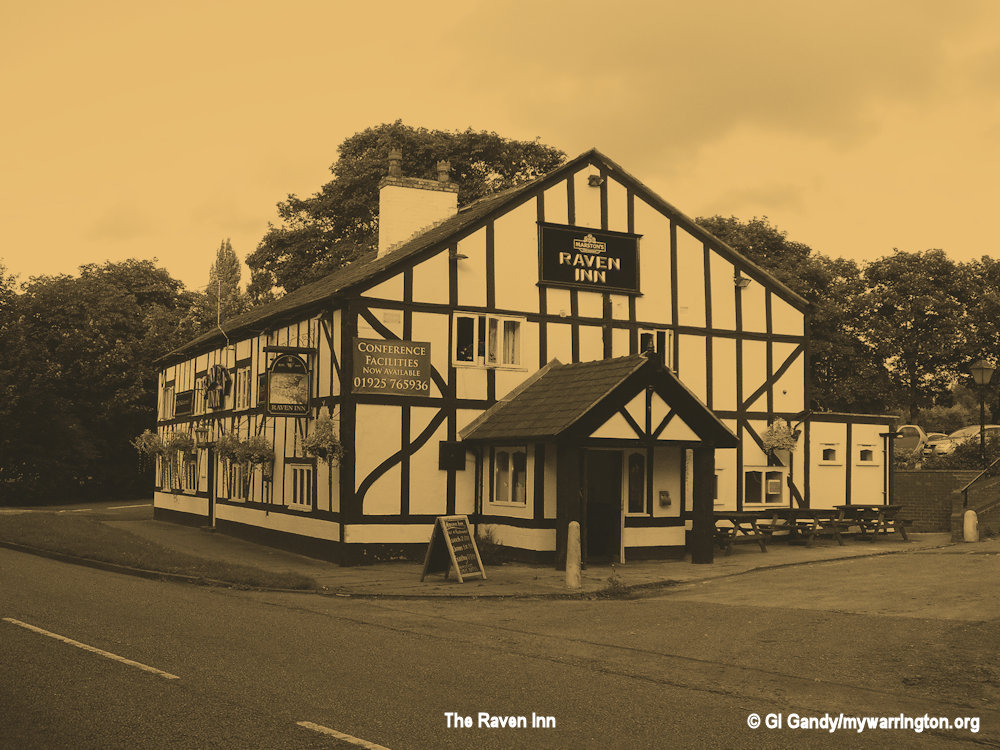
The Raven Inn
During the conservation and renovation work, brick pockets chiselled into the brickwork to take floor timbers were identified; their width & height, spacing and height from the ground were sufficient to recreate the original 16th century timber beam arrangements by recycling nearly 100 Victorian ceiling joists. Everything required was already on site.
Local campaigner Bob Eden, along with Lyttyl Mylle historian Van Hostetler, in Arizona, unearthed and evidenced the incredible history of the Raven, which Bob has enacted, directing, and overseeing the detailed, sympathetic preservation and restoration work.
Bob said: “We could have ignored the ancient story and delivered a functional magnolia box instead: all plasterboard and straight lines. This would have got the pub up-and-running before last Christmas [2022]. But that would have been a travesty; we had one chance to get this right: to recognise and reflect the history of this building for all to enjoy. The ‘Saturday Crew’ of volunteers have been working every weekend since last April, making this transformation possible. We could not have done it without their hard work and shared vision. We were also fortunate to identify local plasterers who specialise in the all-important lime”.
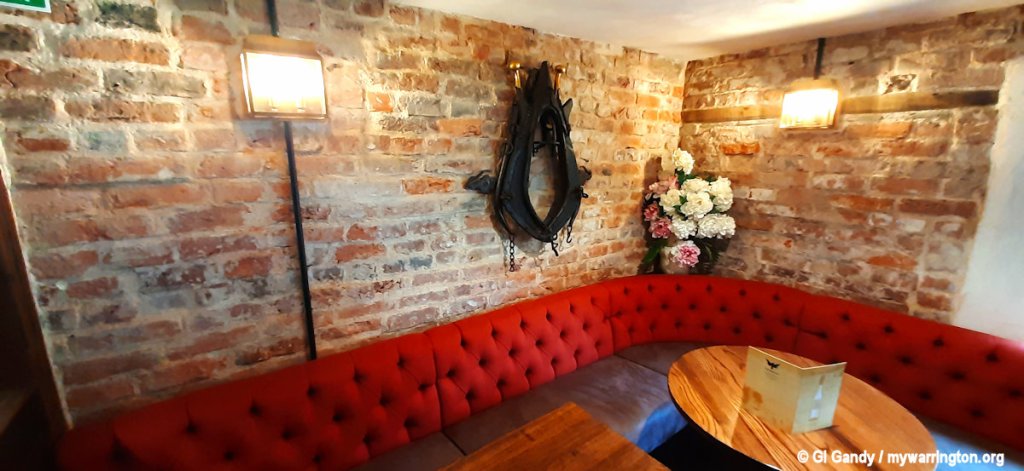
The Lancastrian horse collar at the Georgian end of the building seen here marks the spot where the stables were, the mill being at the opposite end of the building.
Chair Peter Sturman added: “The thing that strikes me most is the sheer dedication of Bob and the Saturday crew, along with the very skilled tradespeople. You have to see people wire brushing the newly set lime mortar, and each and every brick, to create the clean authentic look, to appreciate just how painstaking this work has been”.
Some information from Warrington-Worldwide.
The inn has also been known as The Raven and Sword and at one time had a bowling green (see the online map).
See also https://www.theraveninn.org/history
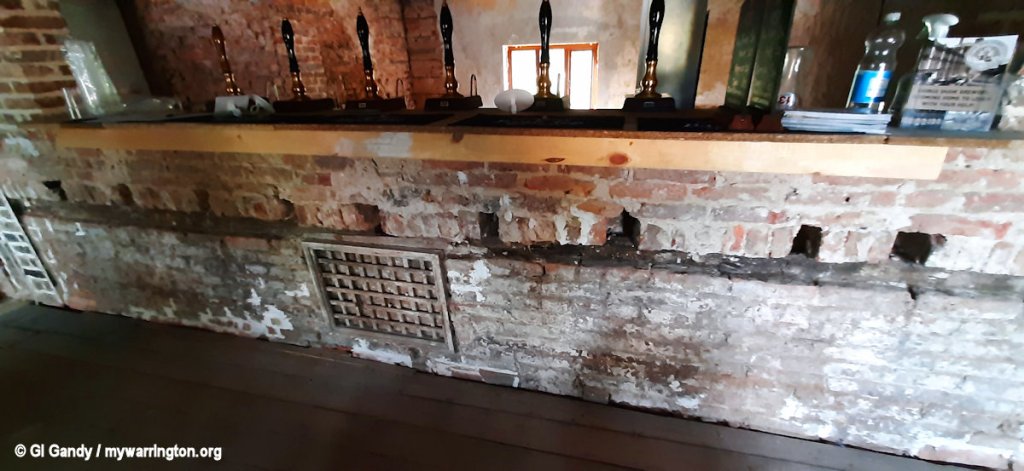
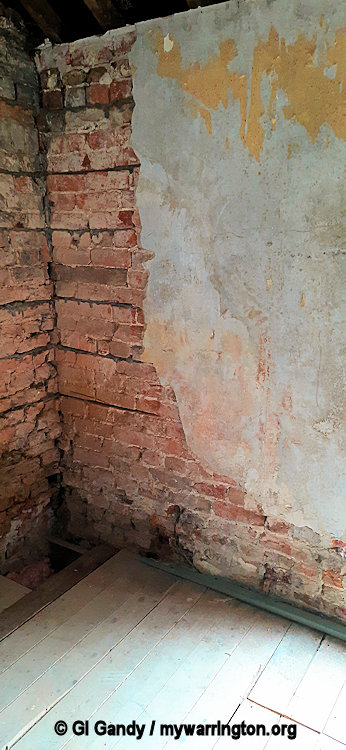
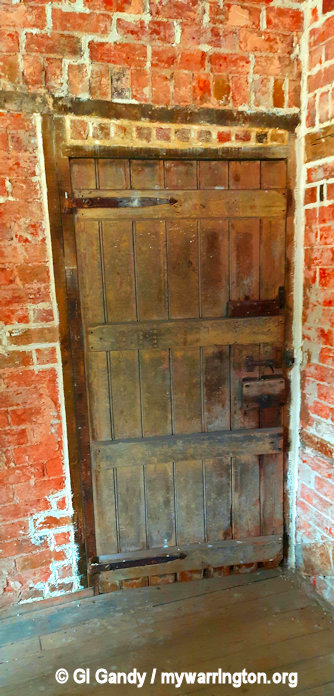
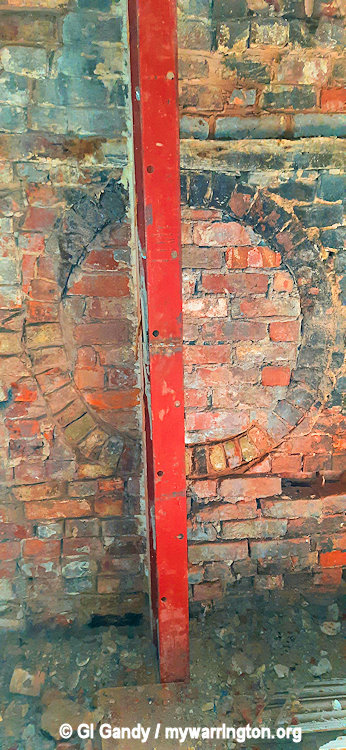
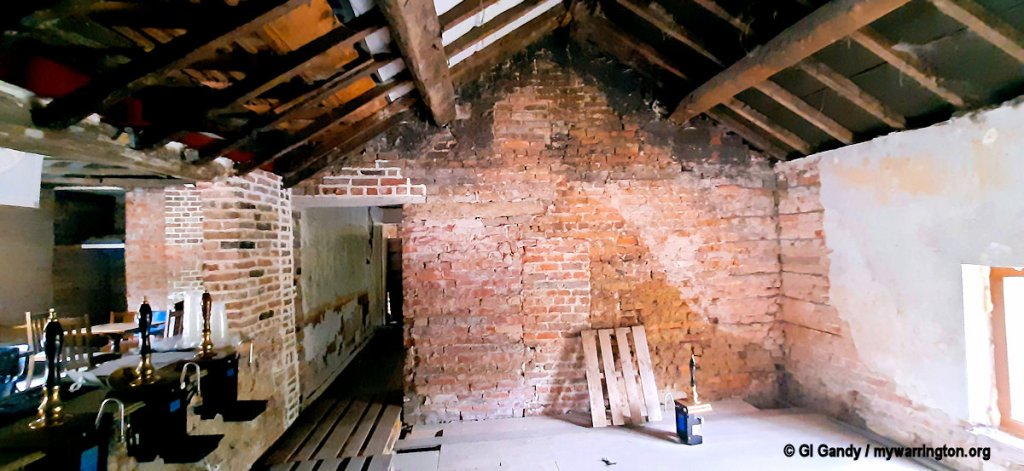
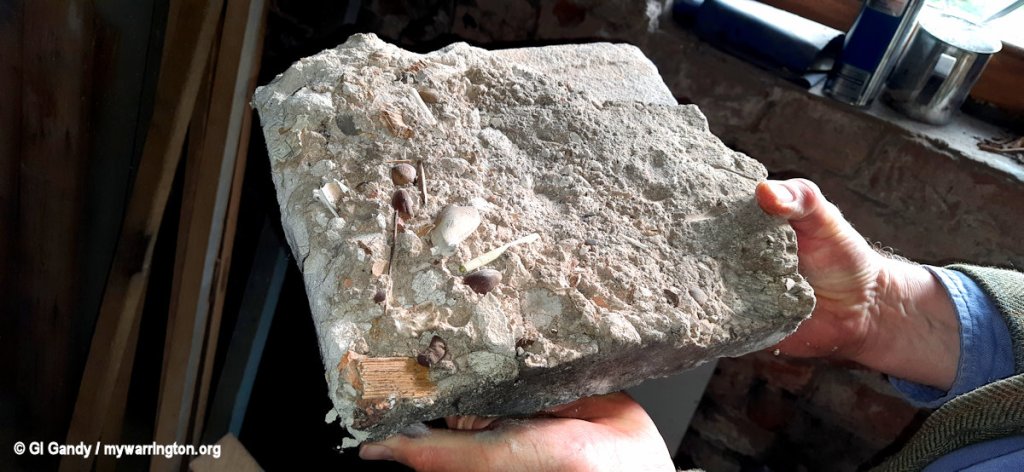
The lower level of brickwork and the beams on top of them are from the Tudor period. The brickwork above is from the 19th century. The holes (or sockets) were created when common rafters bricked over in early 19th century were removed mid-19th century. You can see the beer pumps for the opening of a micro brewery when all the renovations upstairs are completed.
While we are upstairs, lets look at some more features. View them as a manual slideshow where you can read captions to explain the content.
Back downstairs now for views towards the front of the inn.
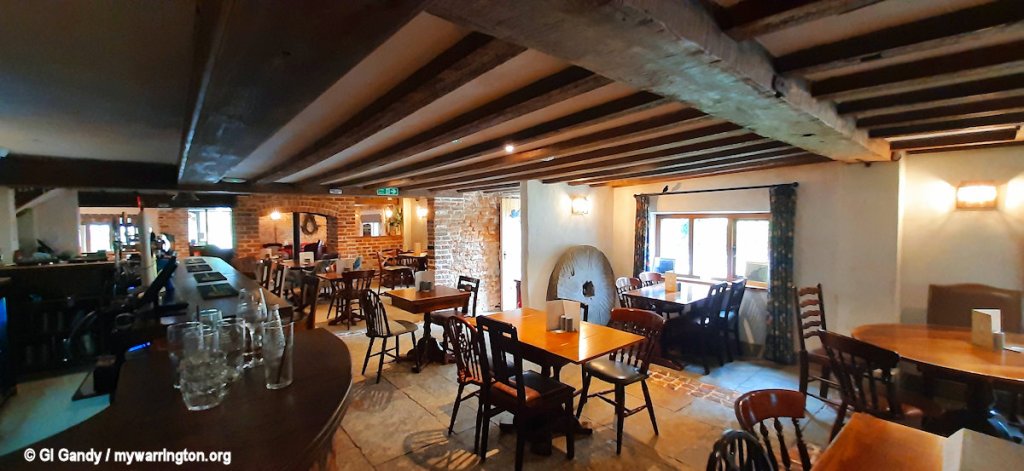
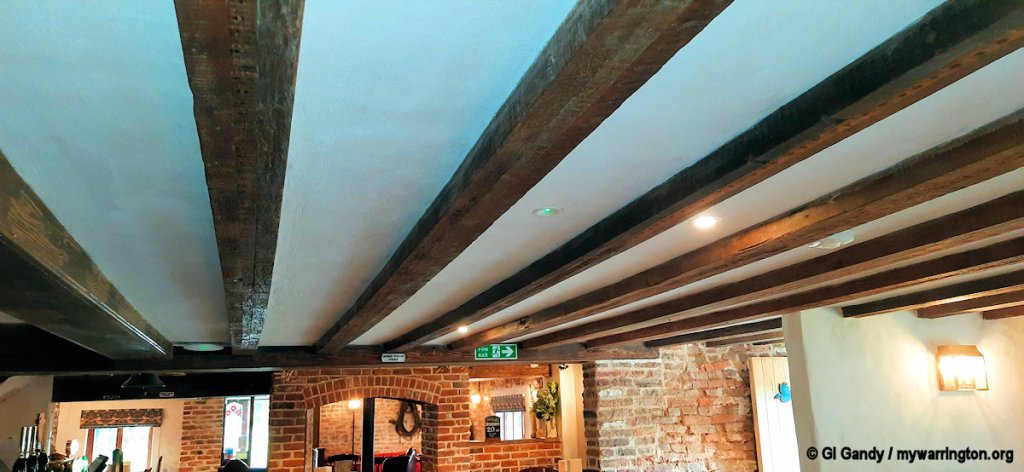
I followed the story of the community pulling together through the media, and when I entered the building for the first time ever on 15 June 2024 I was really impressed with the progress. It will be some time before the work is completed but there is a dedicated team of volunteers and tradespeople making the dream come true. And to think somebody wanted to demolish it…
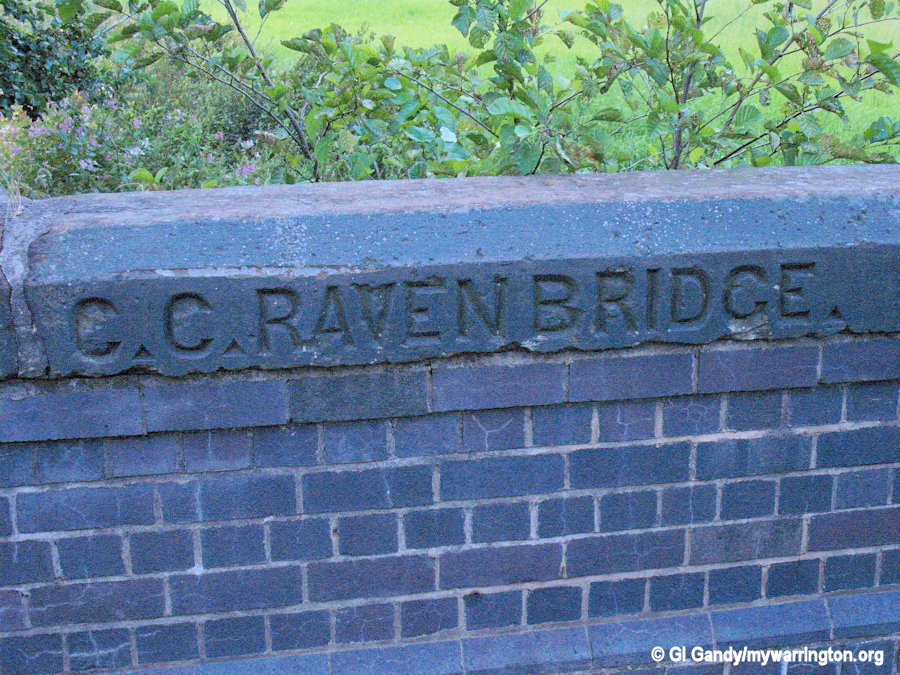
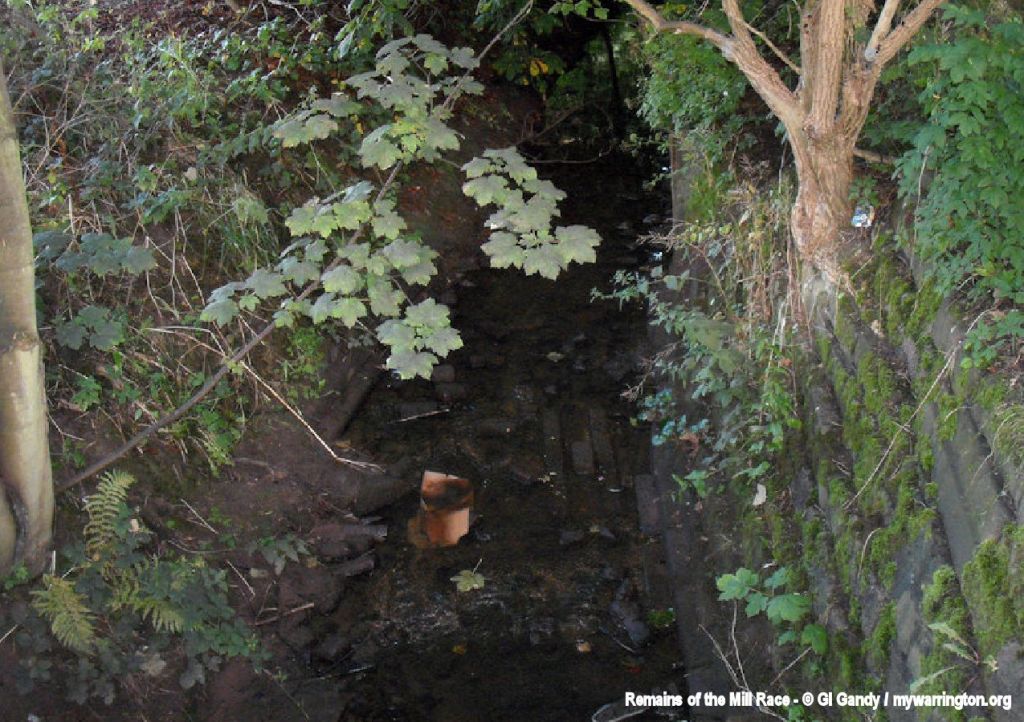
Raven Bridge and one of the waterways that fed the mill in the past.
Don’t forget to view the website where there is more history and photos.
The pub reopened on 12 August 2023 – the Glorious Twelfth, one might say!
Other Glazebury Pubs are Available
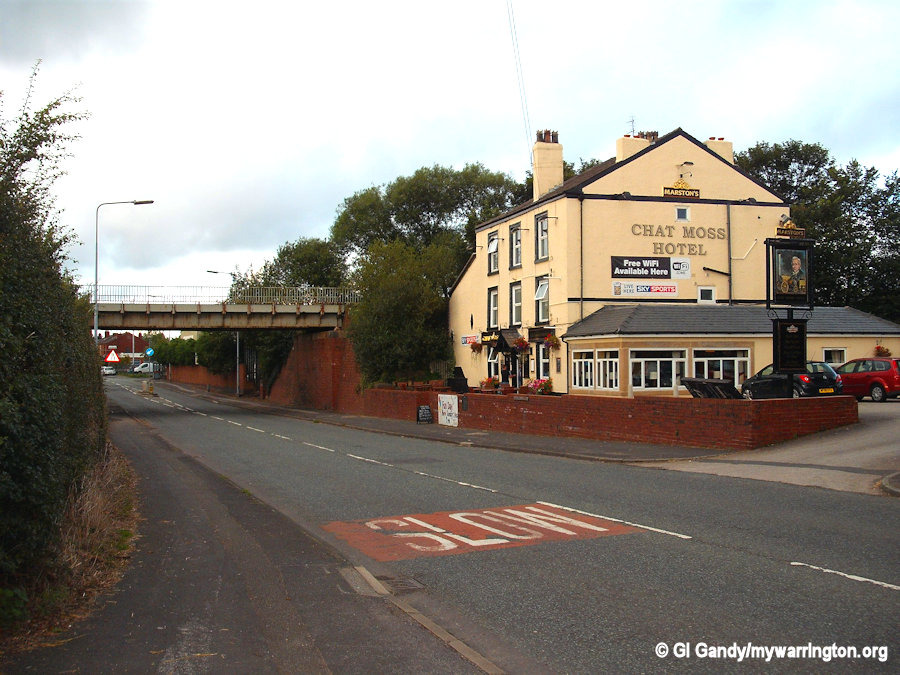
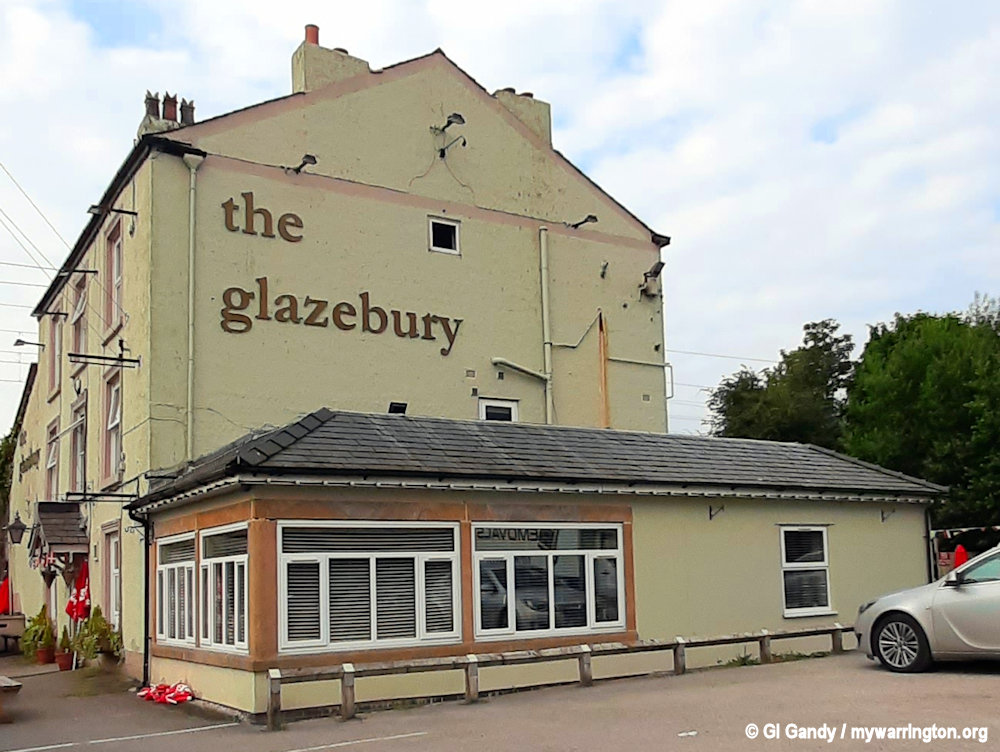
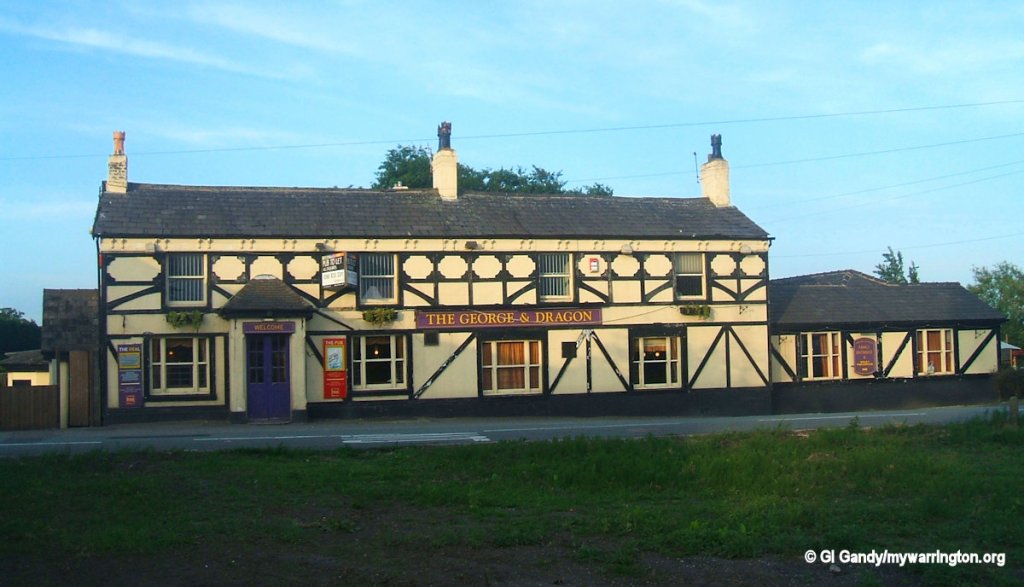
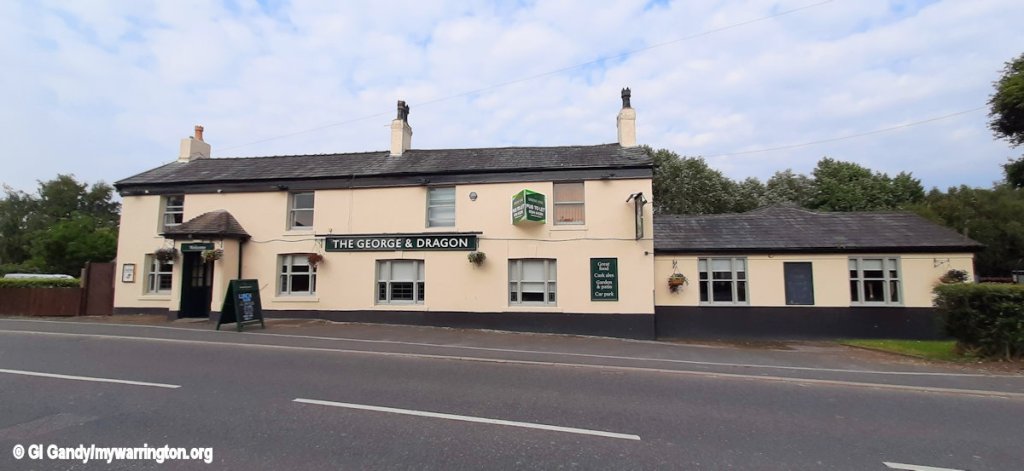
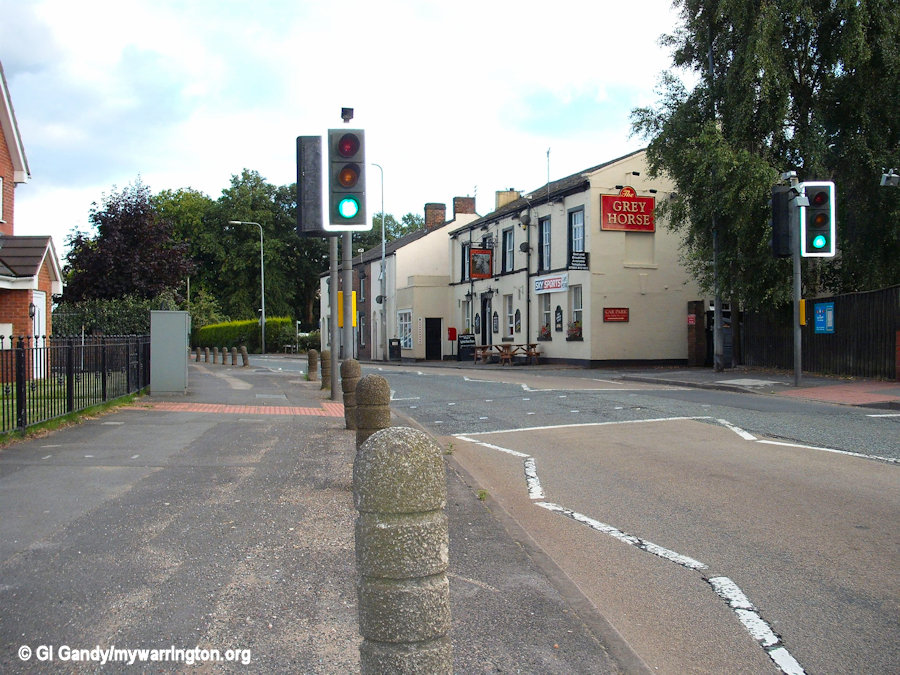
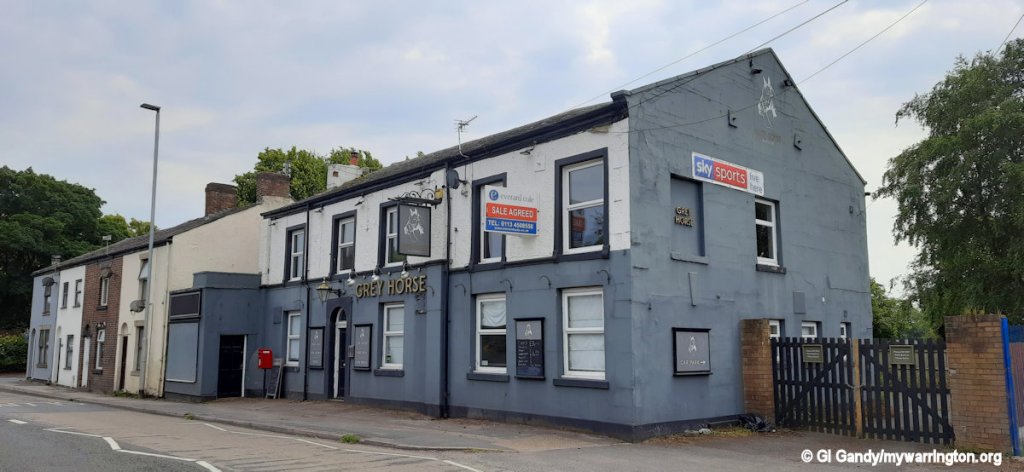
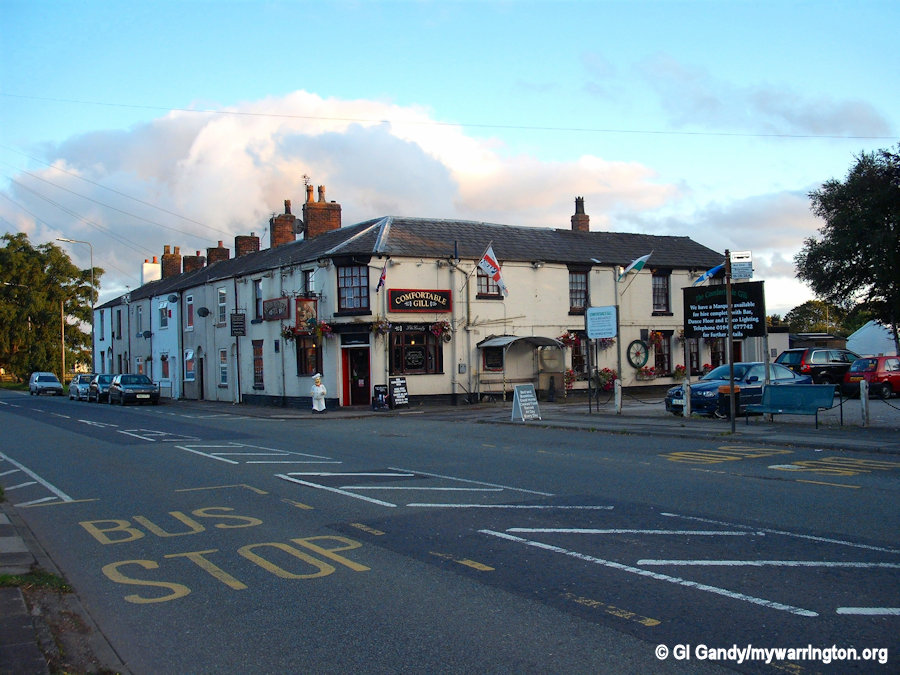
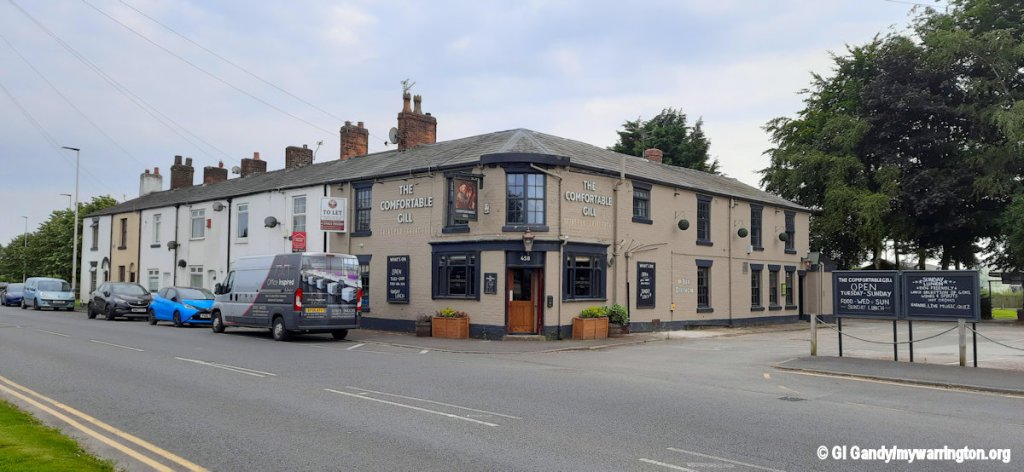
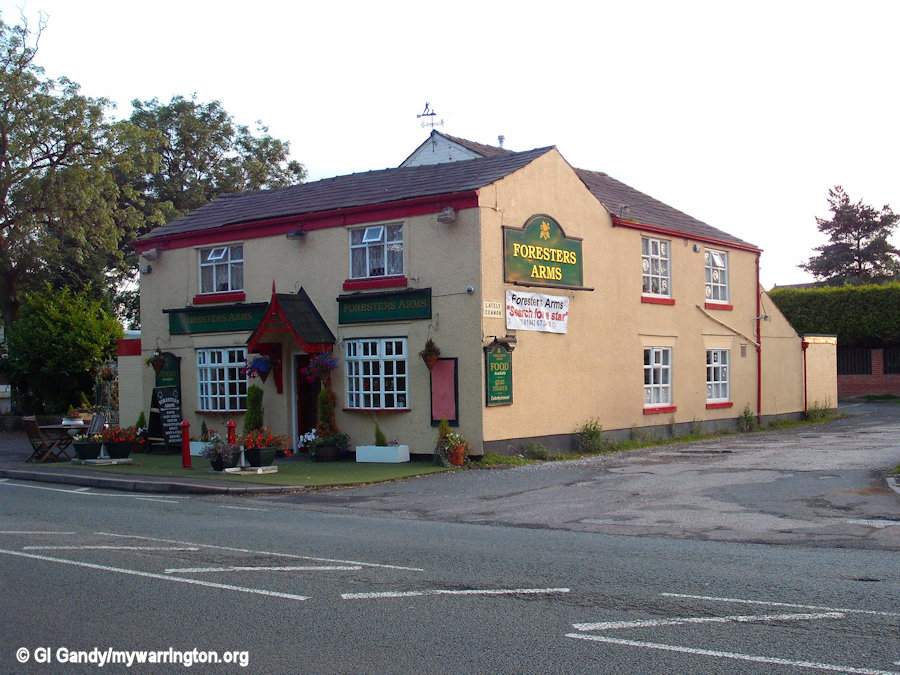
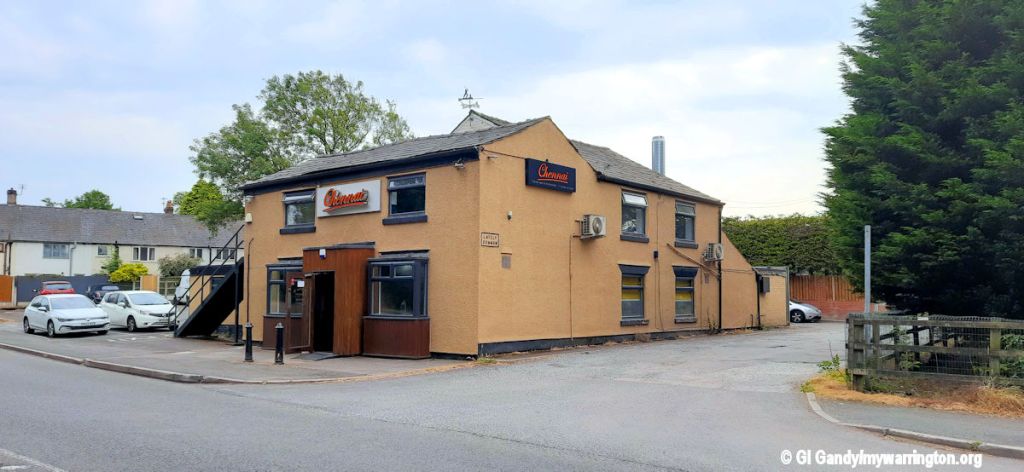
Glazebury has four more pubs: the Comfortable Gill, The Grey Horse, the George and Dragon, and The Glazebury (formerly the Chat Moss Hotel). Here they are in then (10 Aug 2009) and now (25 Jun 2024) mode.
Church Life
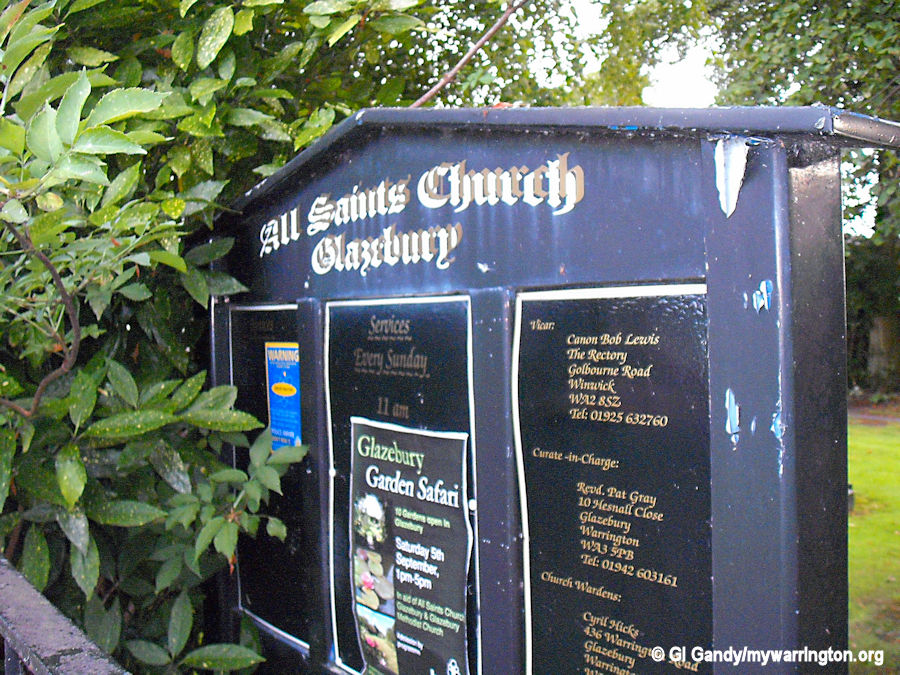
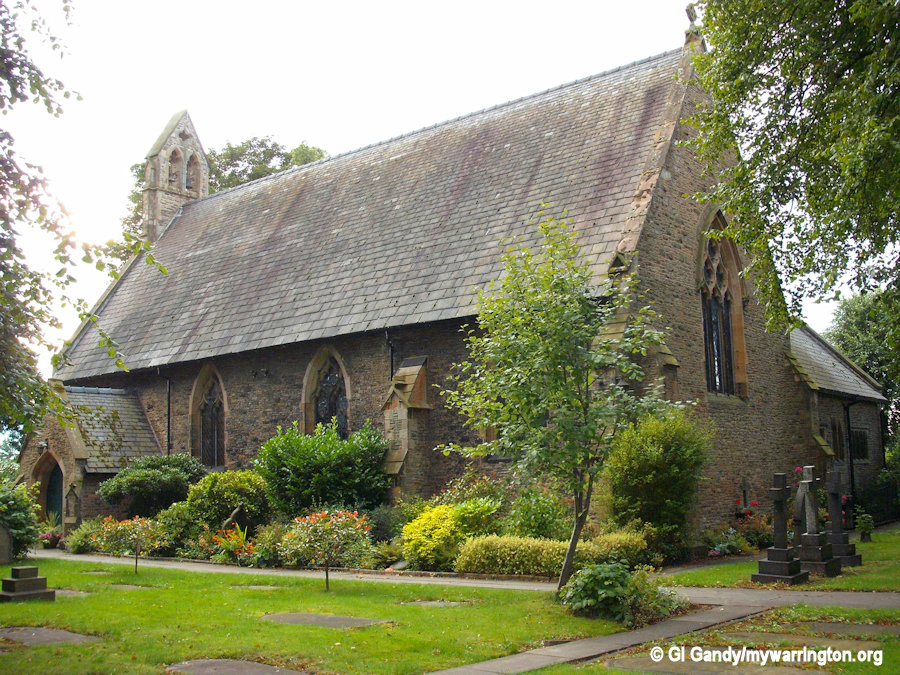
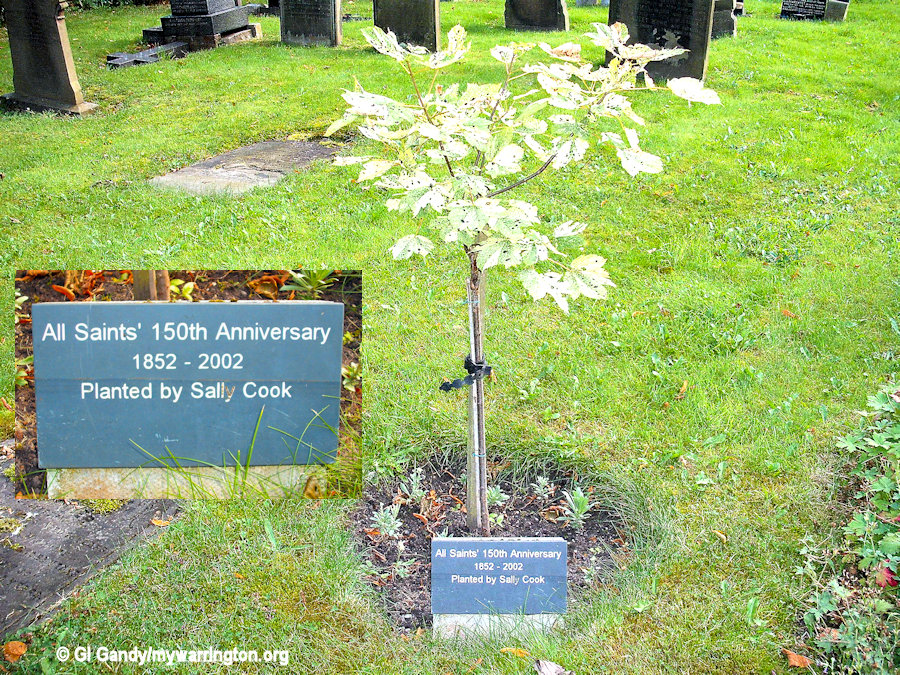
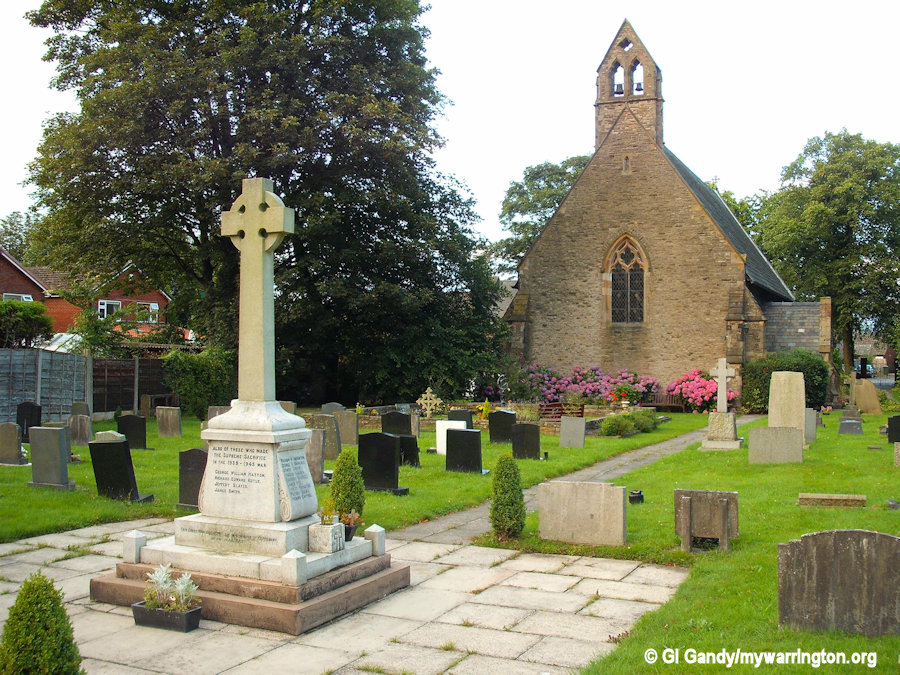
All Saints Glazebury
All Saints’ Church was founded in 1851 and opened in 1852. It is run by the Church of England and is Grade II Listed.
All Saints’ Glazebury
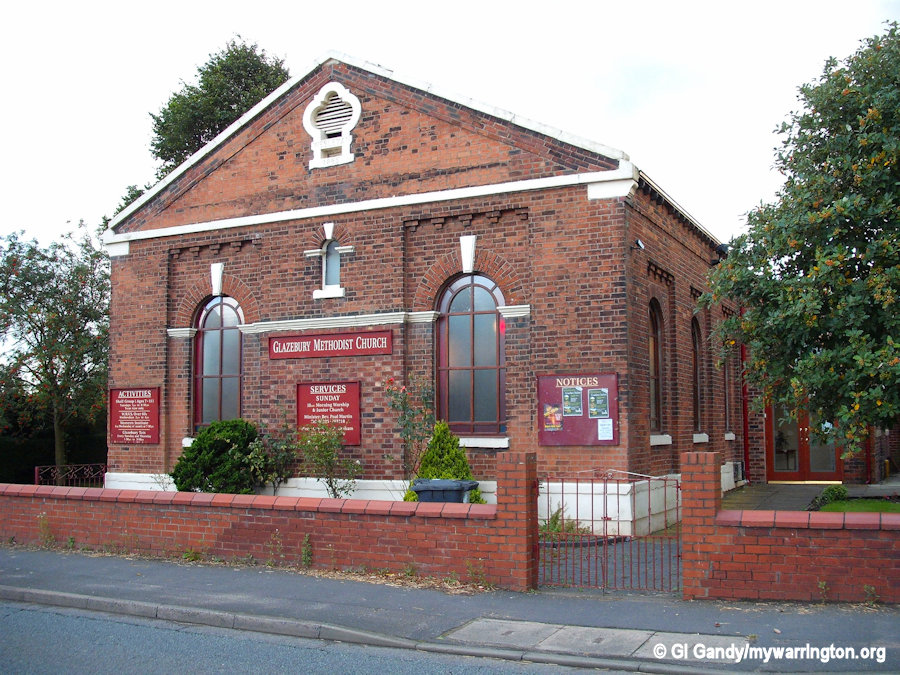
Glazebury Methodist Church
Glazebrook Methodist Church, originally a Wesleyan Methodist Church, is on Warrington Road. The church was built in 1865 and formerly known as St John’s Church. It was originally registered as Bury Lane Chapel. It amalgamated with a neighbouring Primitive Methodist Chapel in Warrington Road in 1967.
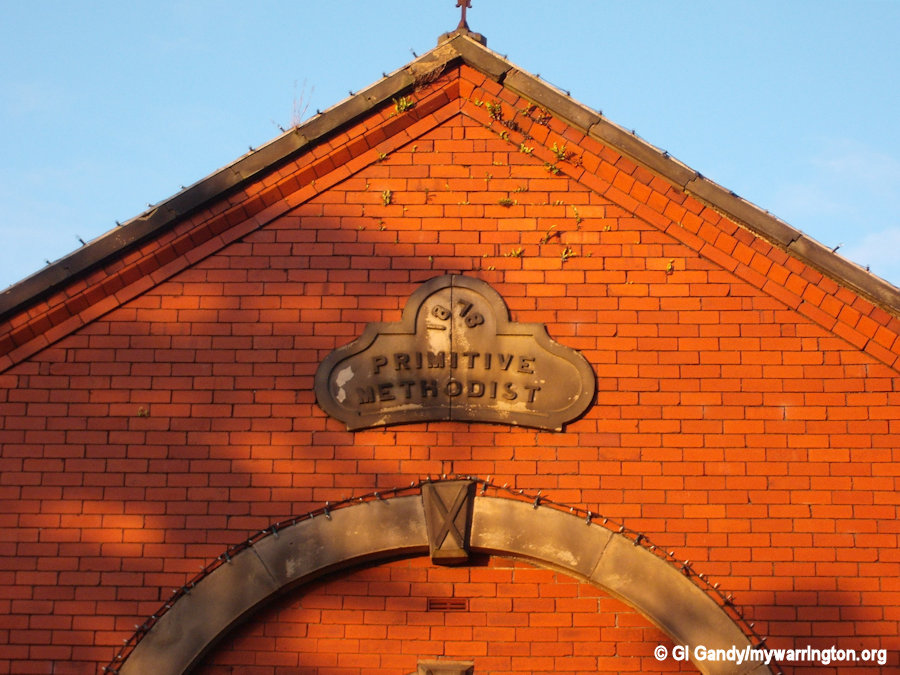
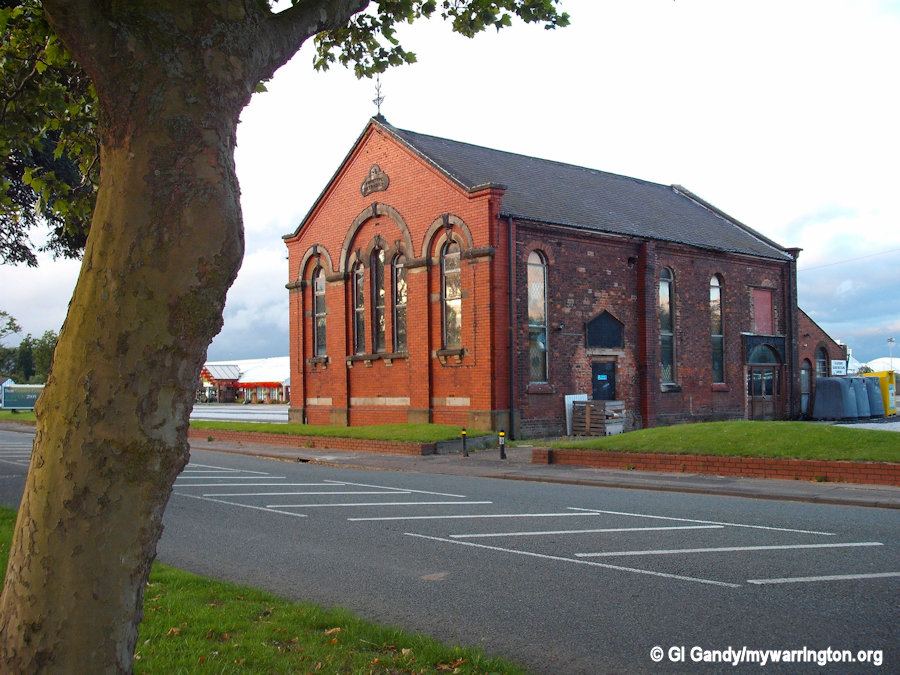
Glazebury Primitive Methodist Church
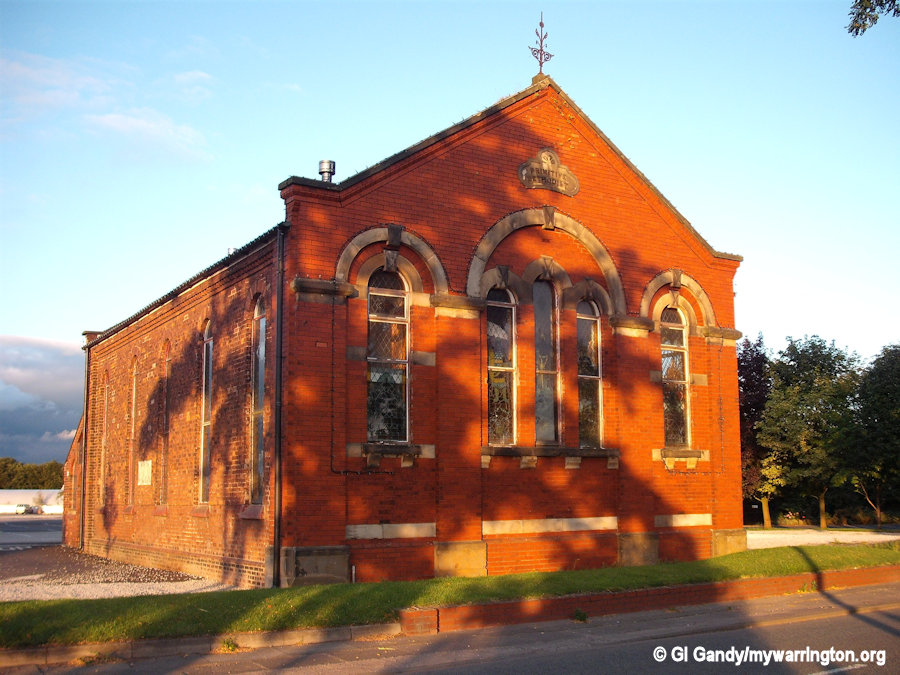
A former Primitive Methodist church one stood by Bent’s Garden centre and was built in 1878. The congregation dates from c1826 in an old schoolroom. The first chapel was built in 1837 and was then replaced in 1878 (the building in my photograph). In later years it was used for storage by Bent’s Garden Centre but was demolished in the 21st century to make way for a new roundabout junction near the garden centre.
Around the Village
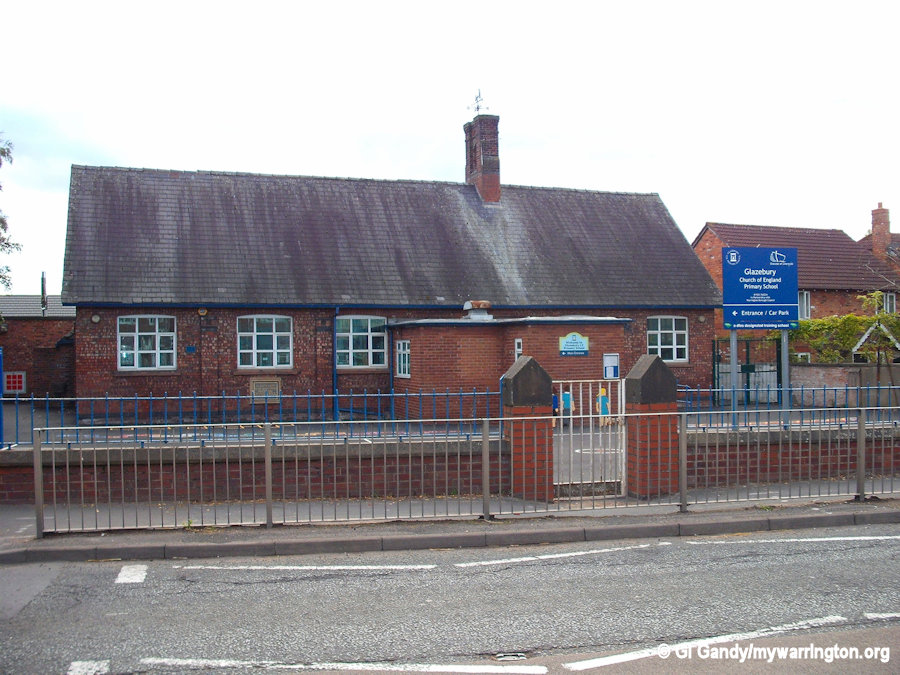
Glazebury Church of England (Aided) Primary School is on Warrington Road. It opened on 22 November 1882.
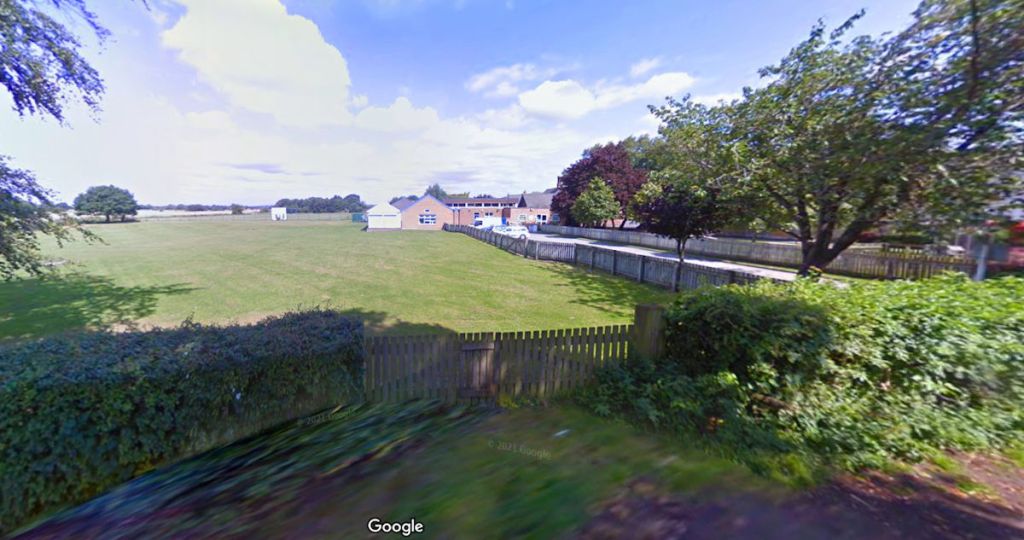
Glazebury Cricket Club, which was established in 1896, is situated on Hurst Lane. In 2017 they received recognition as an ‘All Stars Cricket Centre Club’; giving children the chance to play, learn great skills and meet new friends. The club plays in Division 3 of the Cheshire Cricket League. See their website.
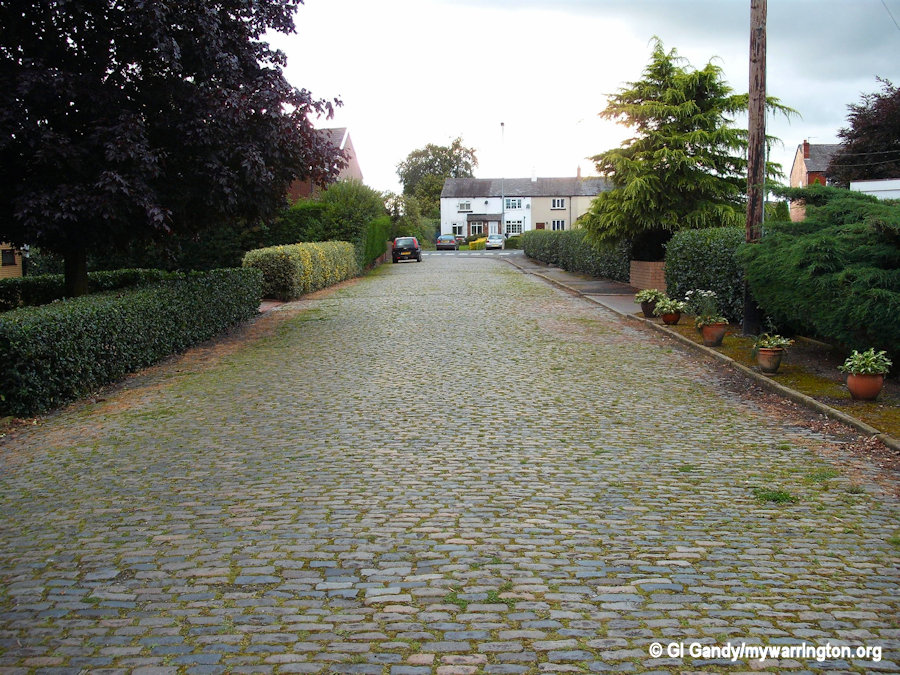
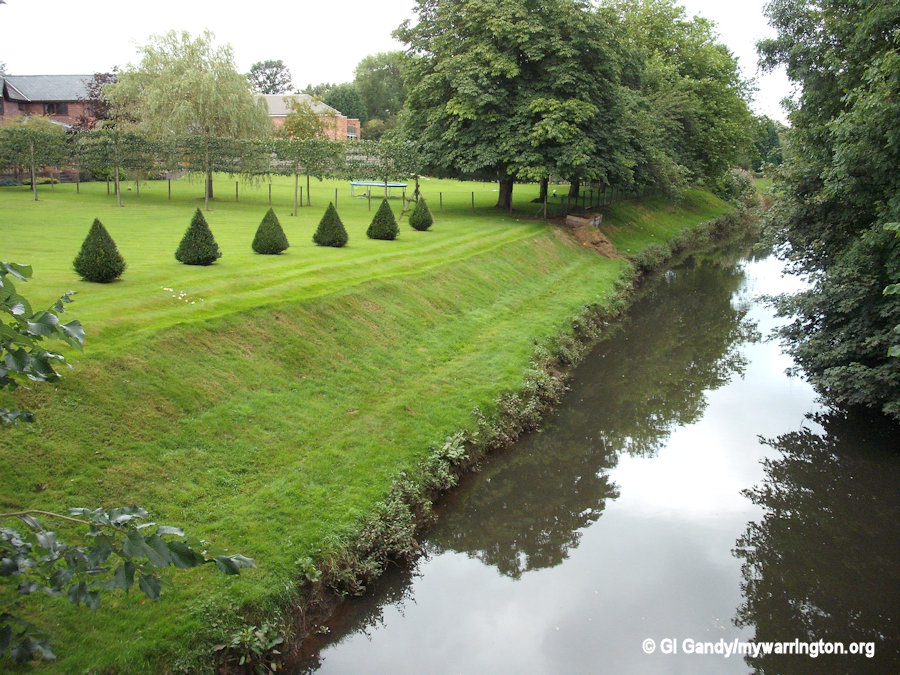
Light Oaks Road and the Glaze Brook. The road leads to Light Oaks Hall.
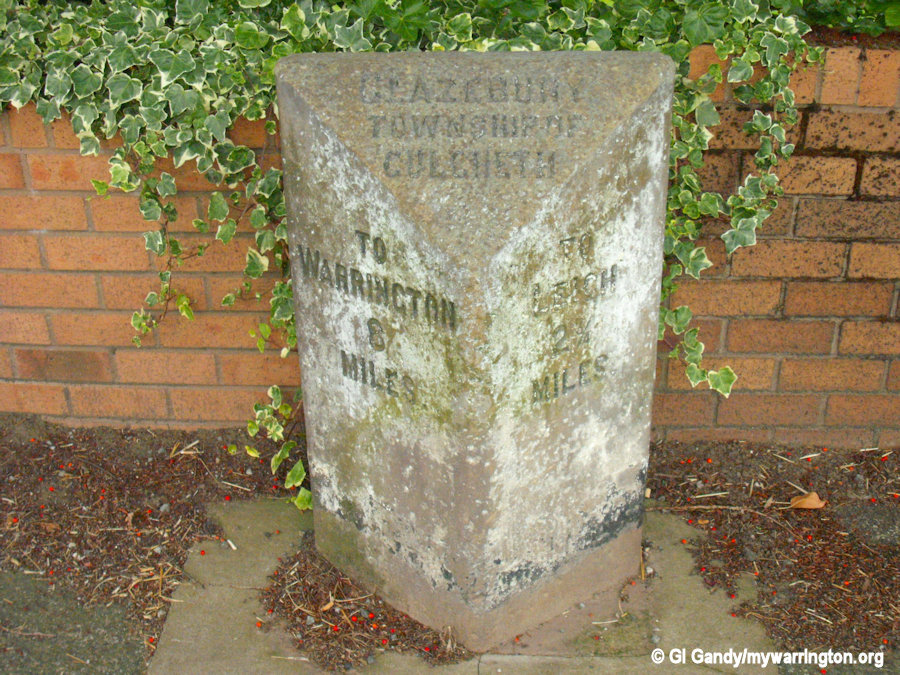
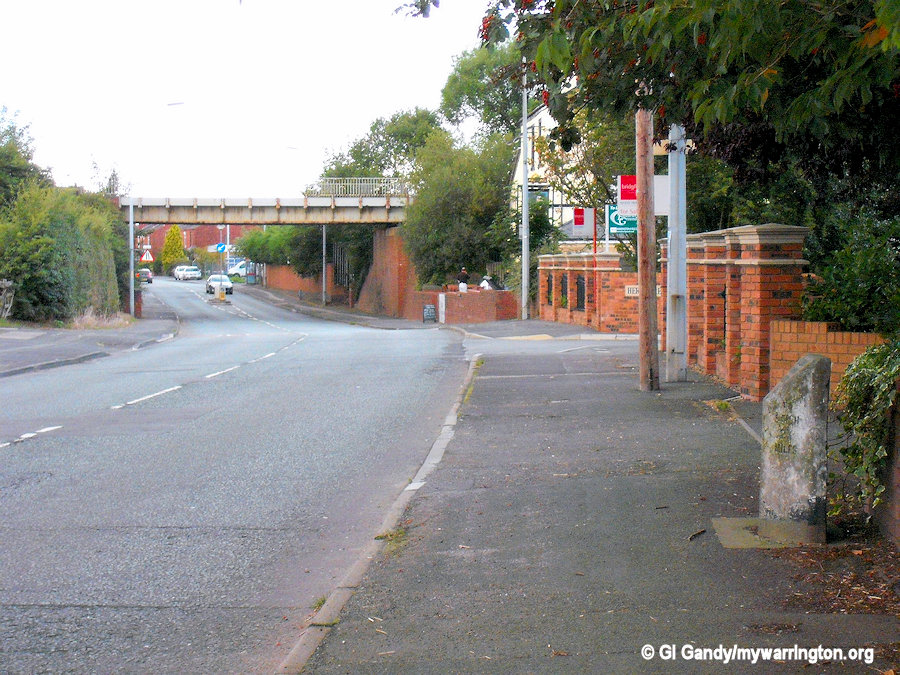
The village milestone on Warrington Road close to The Glazebury pub next to the Liverpool and Manchester Railway. To read about the village’s Glazebury and Bury Lane railway station, see the Disused Stations website. Glazebury Cotton Mill once stood on the land beyond the railway bridge to the right where Albion Park industrial units now stand. On the opposite side of the road from the mill behind the houses was a cricket ground.
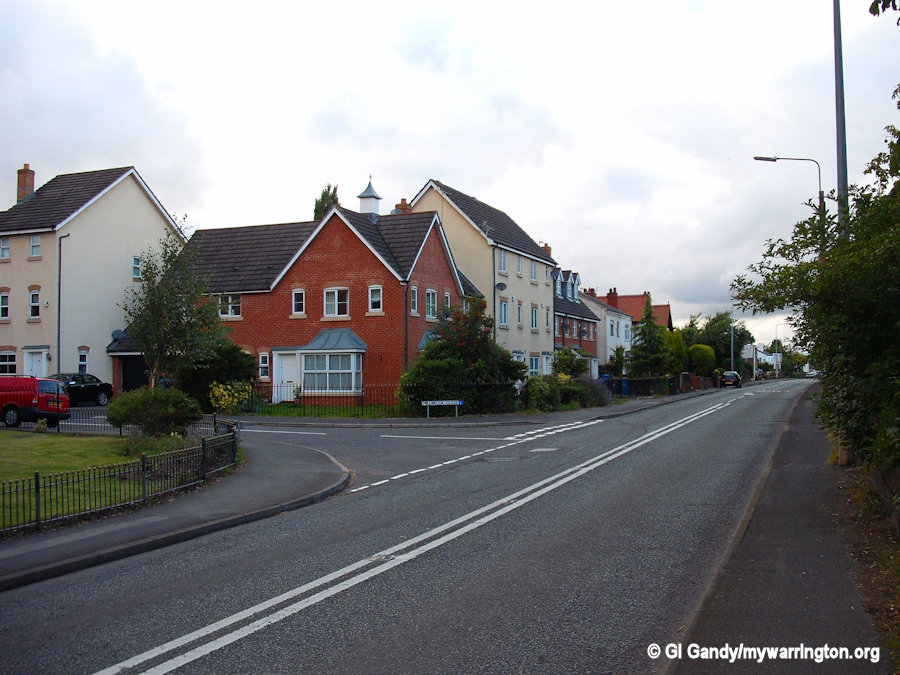
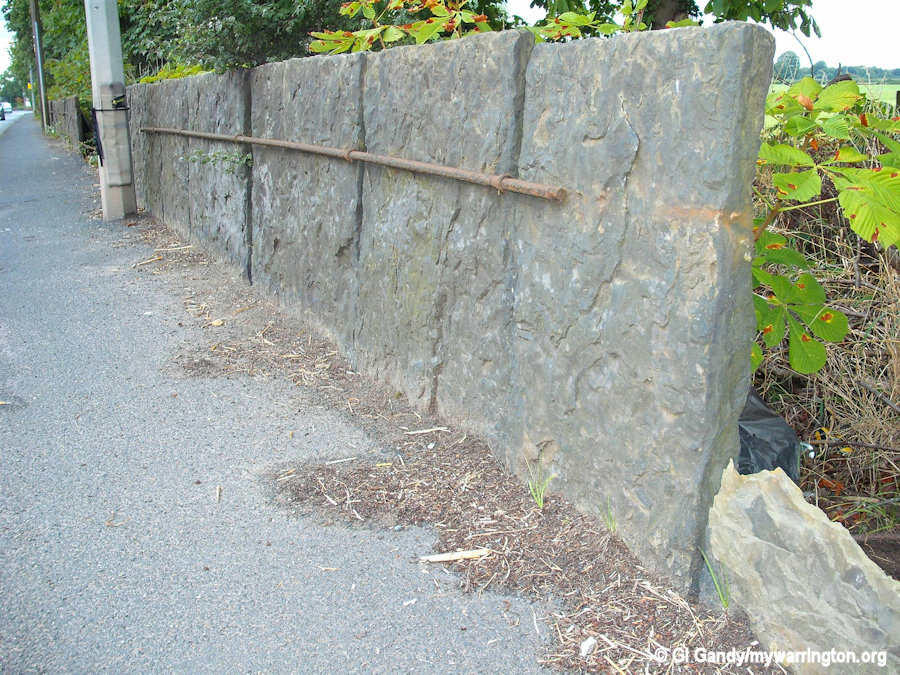
The houses here stand on the site of the former Glazebrook Corn Mill and Brook House, hence the name of Millbrook Close. On the opposite side of the road are some old style boundary slabs.
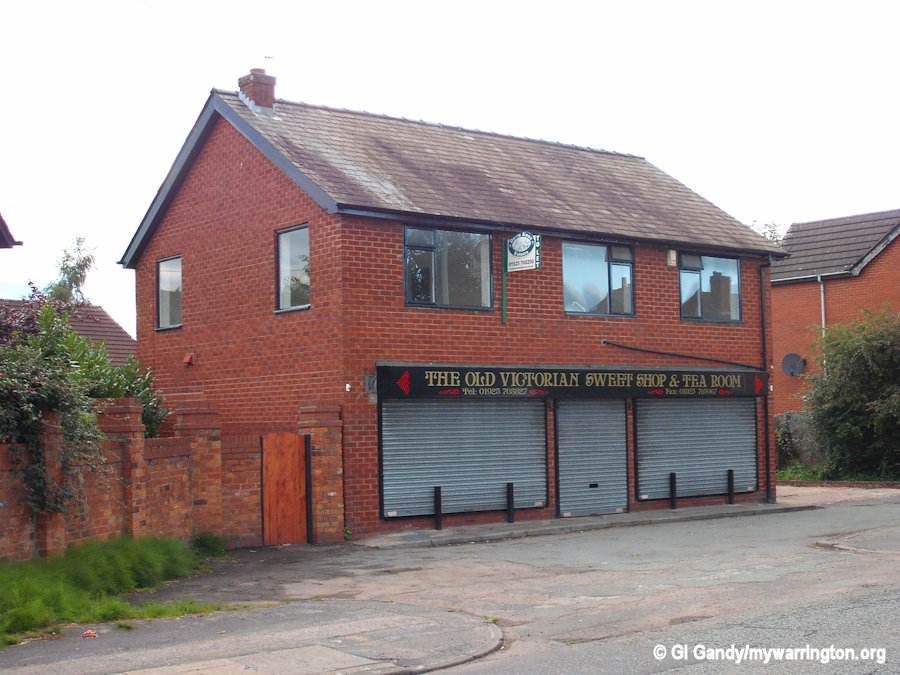
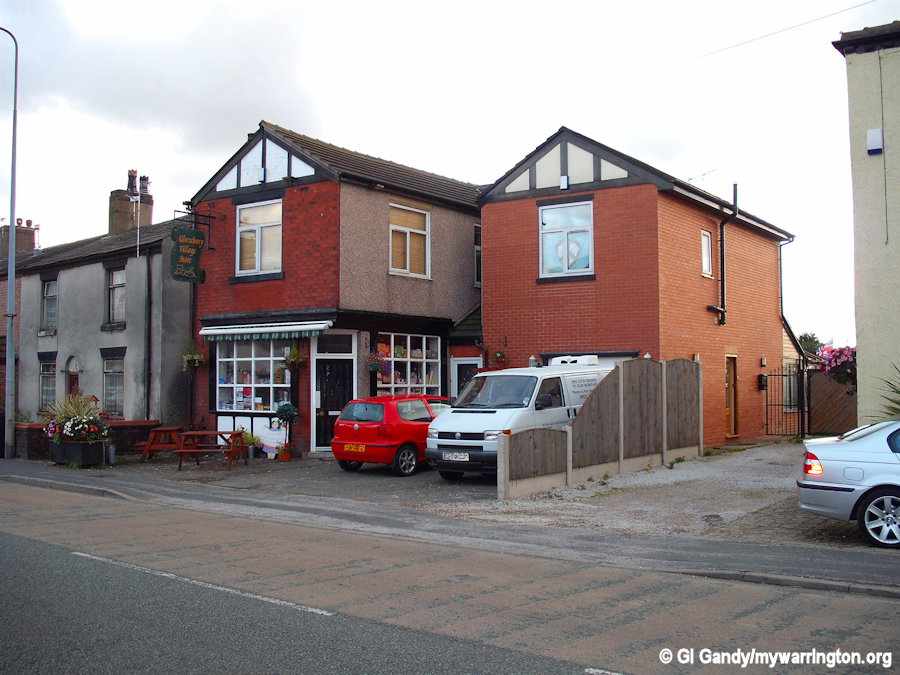
The Old Victorian Sweet Shop and the former Glazebrook Village Store.
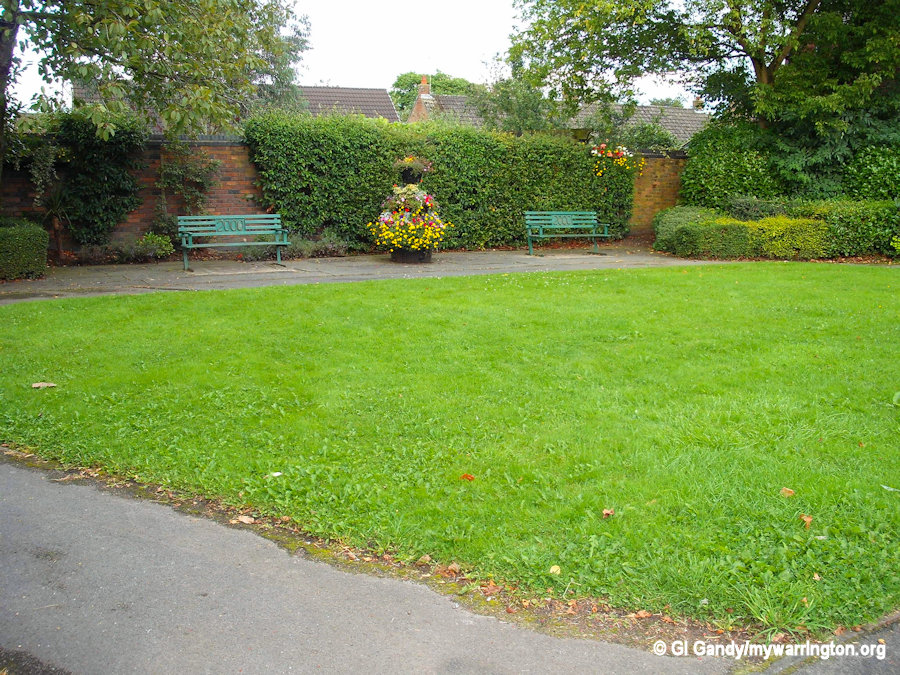
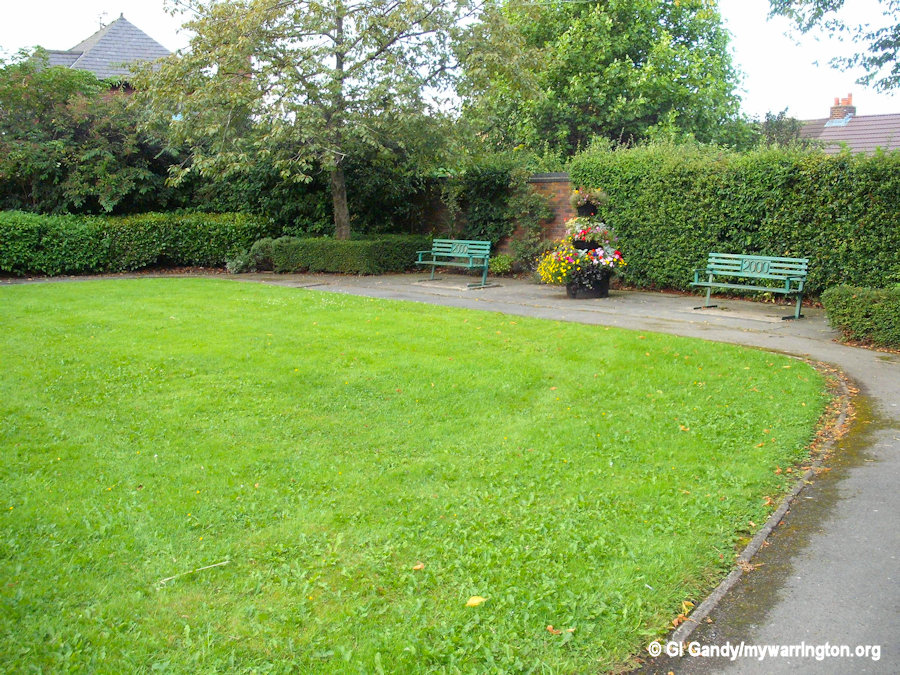
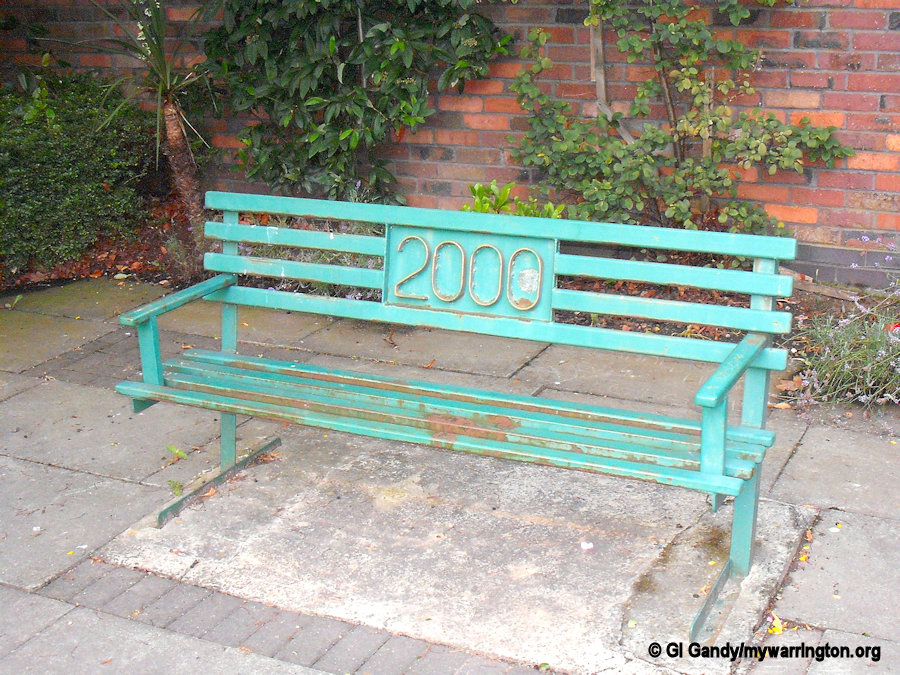
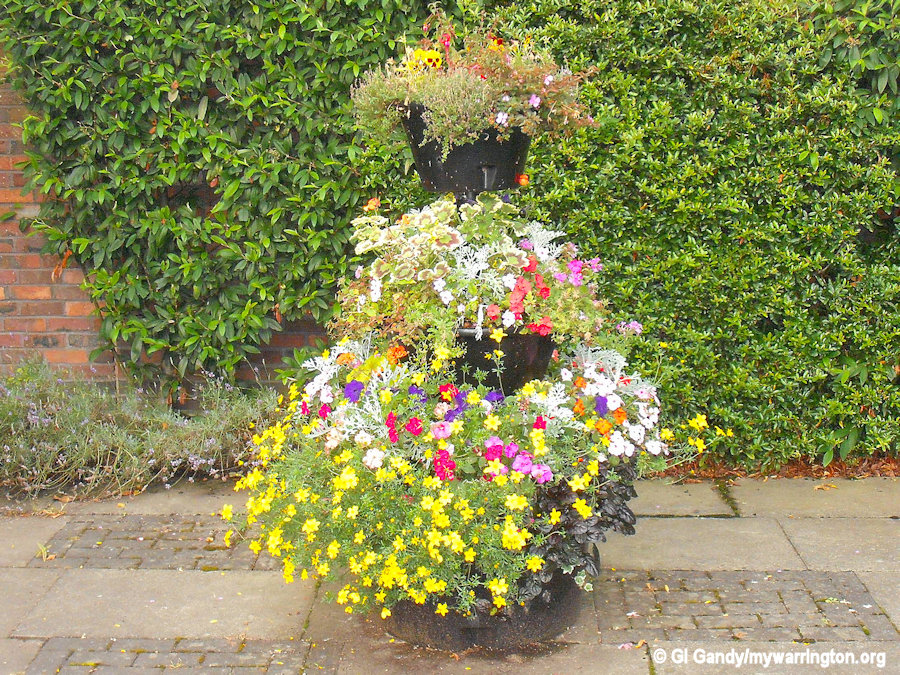
The Millennium Garden on 10 August 2009.
Bents Garden and Home
The business can trace its origins back to 1937 when Alfred and Margaret Bent started selling their home-grown roses in the front garden of their terraced house in Glazebury. Alfred was working at the local co-op at the time, but the garden business did so well that he and Margaret decided to rent a half-acre plot of land so that they could increase supply. Just as the business began to establish itself, the Second World War broke out and Alfred joined the war effort by taking a post with the fire service.
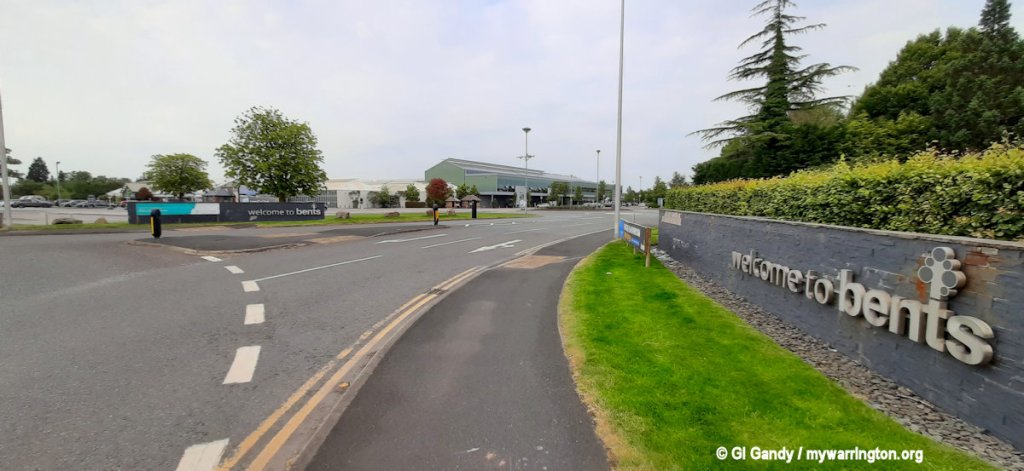
When the war was over, Alfred became and was advised by his doctor to take a permanent job outdoors. In the early 1950s, Alfred and Margaret purchased 16 acres (6.5 ha) of land, allowing them to carry out the business they had created before the war, but on a larger scale. At this time, garden centres did not exist and the challenges were numerous, not least financial: everything was planted in either November to December or March to April and the revenue generated in the active months had to last all year round.
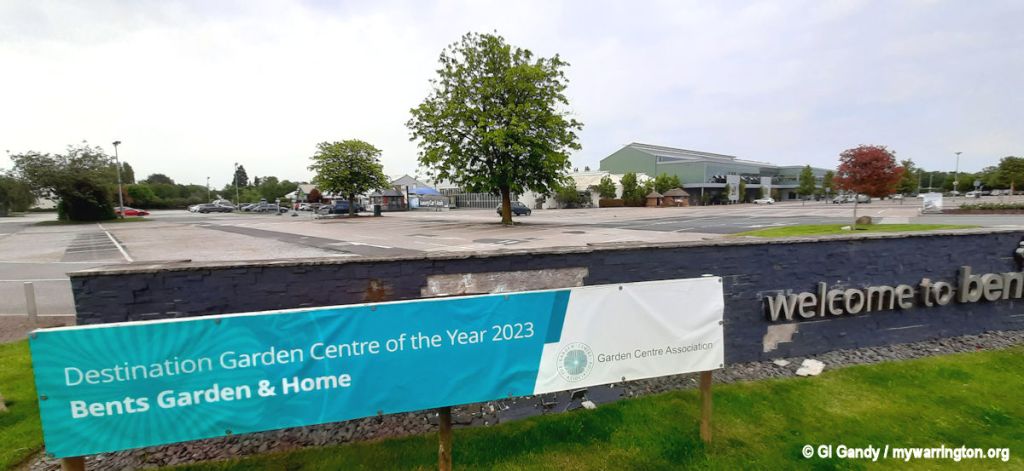
In the 1960s, the Bents bought an additional 44 acres (18 ha) adjacent to the site they already owned, giving the family 60 acres (24 ha) of land in total. In 1966 a small shop was opened, marking the beginning of a retail operation that would prove central to further growth. It was around this time that Alfred and Margaret’s sons, Ron and John, joined the business and, along with Ron’s wife Wendy, they presided over a period of expansion and diversification.
In 1982 Bents became one of the first garden centres in the country to open a café. The decision to add a catering facility came at a time of renewed expansion to create more indoor space. It was a bold move and would prove to be a significant step in the company’s development and direction.
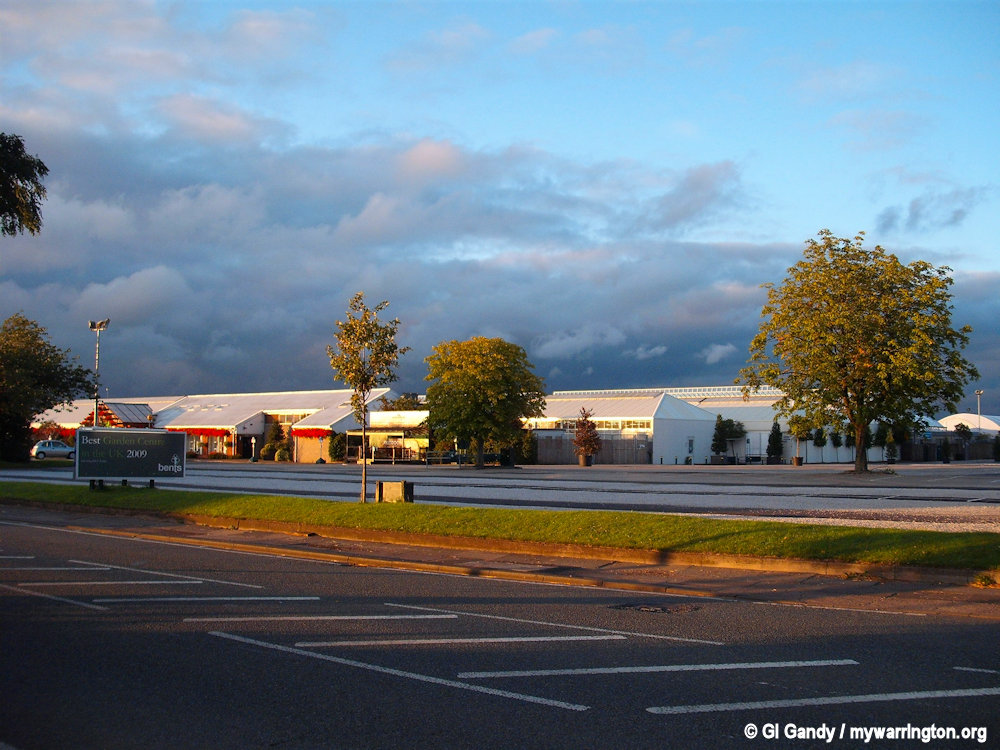
The business thrived and in 1995 underwent further expansion with additional space added on to the existing building. In 1998 almost all of the old garden centre buildings were demolished, replaced by new state-of-the-art continental style structures. Ron Bent’s visionary approach to garden centre retailing was recognised in 2012 when he was awarded a lifetime achievement award by the garden retail industry.
The early 2000s saw the next generation of the Bents family become involved in the business, as Ron’s son Matthew took over as managing director. In September 2001, a 450-seat restaurant and an Italian-style café opened on the site. The Open Skies Glass House was introduced in 2007 with a roof that is open when the sun shines but closes when it rains, allowing customers to shop for their plants whatever the weather.
Additional funding was secured in 2014, representing the start of a 10-year development plan to transform the site into a major retail and leisure destination. As part of this expansion strategy, six new retail developments opened in 2015, including a 4,400 sq ft (410 m2) Nevisport concession.
The centre’s largest restaurant The Fresh Approach celebrated its 15th anniversary in 2016 and became the centrepiece of an expanded dining offering: a total of six catering outlets providing over 1,200 covers with an average monthly footfall of 110,000 customers. With the number of employees rising to around 500 full and part-time staff at peak season, a new £700,000 staff facility was added to the site in January 2017. In April 2017, a dinosaur and pirate themed adventure golf course was added. Source: Wikipedia.
 mywarrington
