

In 1870-72, John Marius Wilson’s Imperial Gazetteer of England and Wales described Kenyon like this:
KENYON, a township in Winwick parish, Lancashire; on the LiVerpool and Manchester railway, at the junction of the Bolton and Leigh railway, 2½ miles E by N of Newton-in-Mackerfield. It has a station at the r. junction, and a post office under Manchester: and it gives the title of baron to the family of Kenyon. Acres, 1, 597. Real property, £2, 419. Pop., 274. Houses, 55. Bricks are made.
GB Historical GIS / University of Portsmouth, History of Kenyon, in Warrington and Lancashire | Map and description, A Vision of Britain through Time.
URL: https://www.visionofbritain.org.uk/place/10564
Date accessed: 07th August 2024
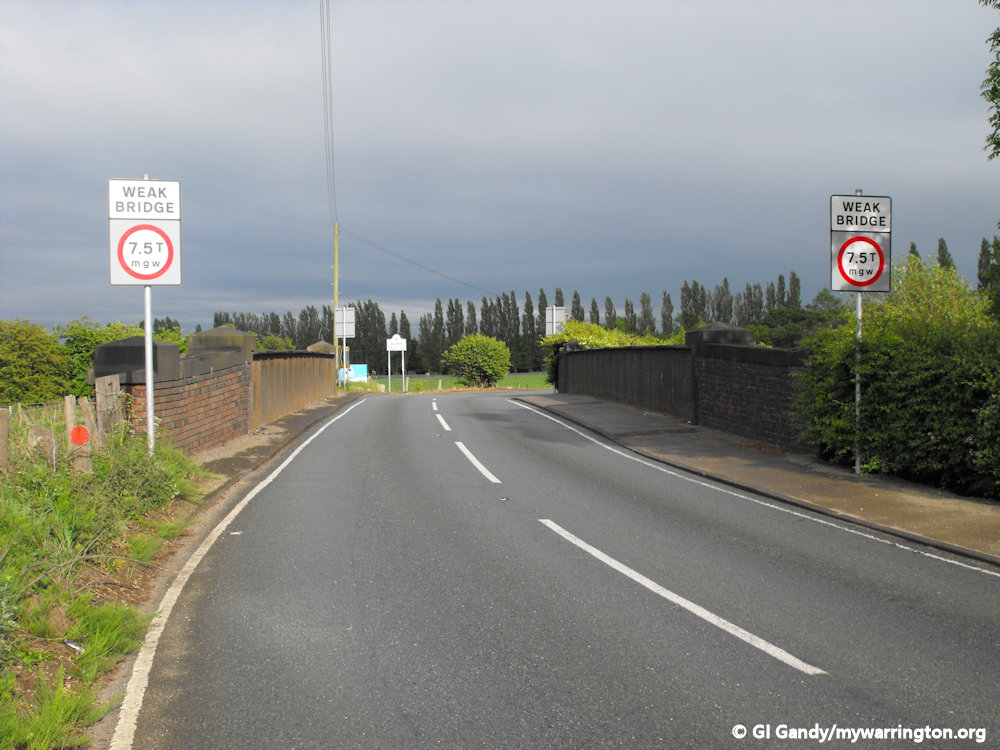
Kenyon and Culcheth border 20 May 2011
KENYON was originally part of Lowton, but about the end of the reign of Henry III William de Lawton granted to his son Jordan ‘the whole vill of Kenyon,’ at the rent of 1d. a year or a pair of white gloves. This was confirmed shortly afterwards by Robert, lord of Lowton, son of William. Jordan de Kenyon lived on until about 1300, when he was succeeded by his son Adam. This Adam, who was living in 1330, was followed regularly by a son and grandson of the same name.
The third Adam de Kenyon came into his inheritance about 1346, when a number of settlements were made. Three years later his son John was contracted in marriage to Joan, daughter of Gilbert de Southworth, but probably died soon afterwards, as the manor descended with Adam’s daughter Amery, who in 1358 was married to Richard son of Thurstan de Holland of Denton. Subsequently it descended, like Denton, Heaton, and the other estates of the family, to the Earl of Wilton. Lord Grey de Wilton in 1787 contributed £23 to the land tax of £29.
Read the remainder of this report at British-history.ac.uk
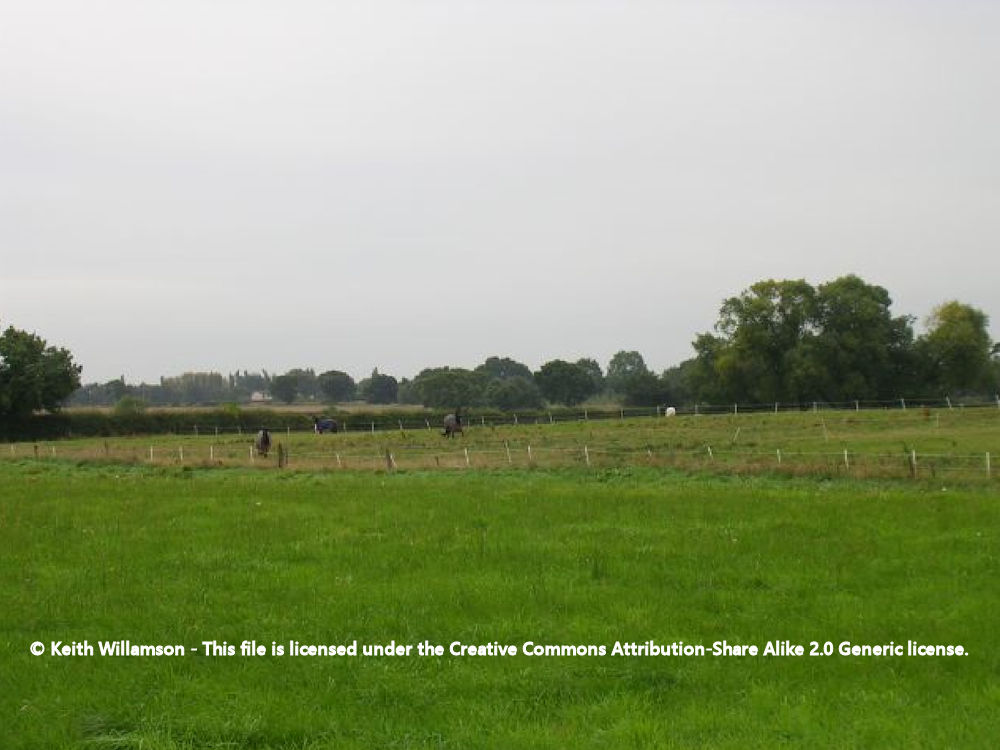
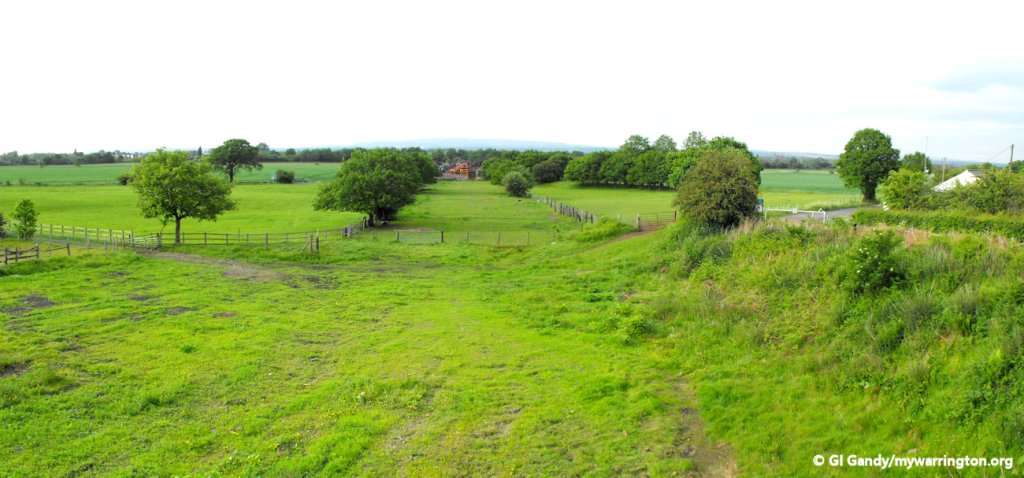
Kenyon. Looking southwest across fields at Kenyon, west of Culcheth. SJ63139575. Wikipedia.
Kenyon Hall, the family home of the Kenyon family is now part of the Culcheth district and the hall is now the base for Leigh Golf Club. Kenyon Hall Farm is further west and not connected to the golf club. See also Historic England for a description of the hall.
Kenyon is a village in the civil parish of Croft in north-east Warrington. Kenyon was recorded as Kenien in 1212, Kenian in 1258 and Kenyan in 1259.
There was formerly an ancient burial mound at Kenyon and Ekwall suggests that the name is a shortened form of a British name composed of the elements crūc ‘mound’ + a personal name cognate with Welsh Einion.
It was sparsely populated – in 1901 the population was 329. Kenyon covers an area of 1,685 acres (6.82 km2). The village was once a centre for brickmaking.
Kenyon was a township within the historic borders of Lancashire in Winwick ecclesiastical parish and part of Lowton until the reign of Henry III. It became part of Leigh Poor Law Union. In 1866 Kenyon became a separate civil parish, on 1 October 1933 the civil parish was abolished and became part of Golborne parish and Urban District.
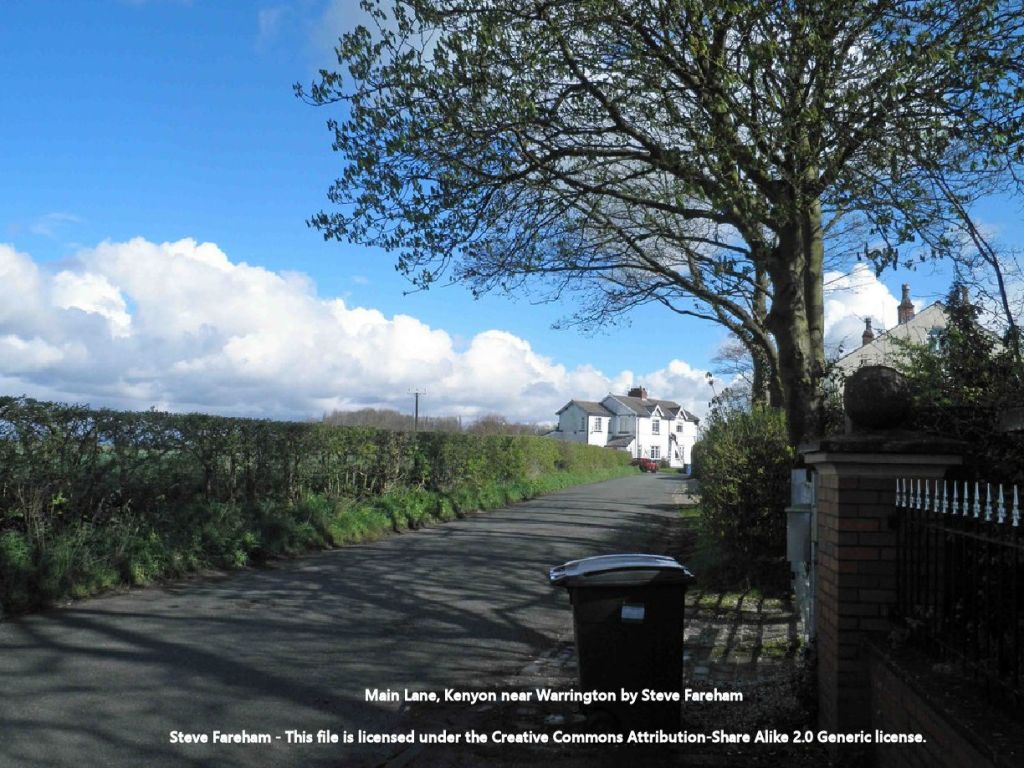
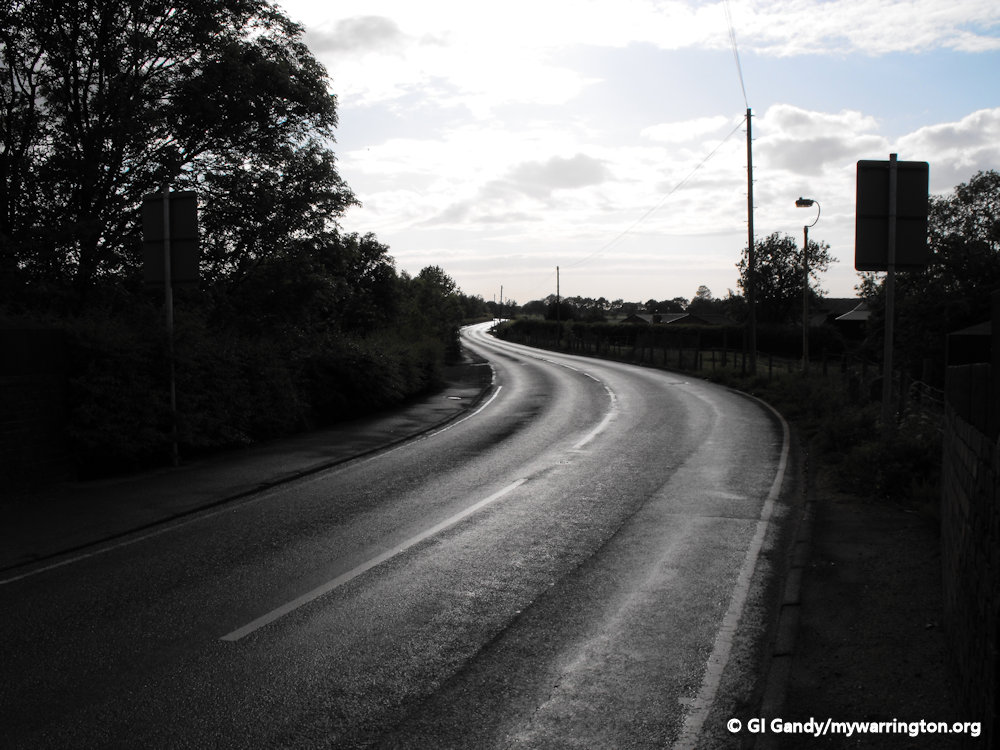
Main Lane, Kenyon near Warrington by Steve Fareham. Wikipedia.
Golborne Urban District was dissolved in 1974 and its area divided, the Culcheth and Newchurch wards (south of the old Kenyon Junction station and Kenyon Hall) became part of Warrington District in Cheshire, the rest became part of the Metropolitan Borough of Wigan, in Greater Manchester.
Kenyon covers an area of 1,685 acres (6.82 km2). It is about 2+1⁄2 miles from Newton in Makerfield (Newton le Willows), 13 miles (21 km) west of Manchester and 4 miles (6.4 km) south of Leigh. The underlying rock is sandstone with clay soil.
The road between Culcheth and Lowton crossed the village. To the west of the village the Liverpool and Manchester Railway had a junction with the Bolton and Leigh Railway where Kenyon Junction station was built. The Great Central Railway’s Manchester to Wigan line crossed the township.
Historically, Kenyon was a township within the historic borders of Lancashire in Winwick ecclesiastical parish and part of Lowton until the reign of Henry III.
Some information from Wikipedia.
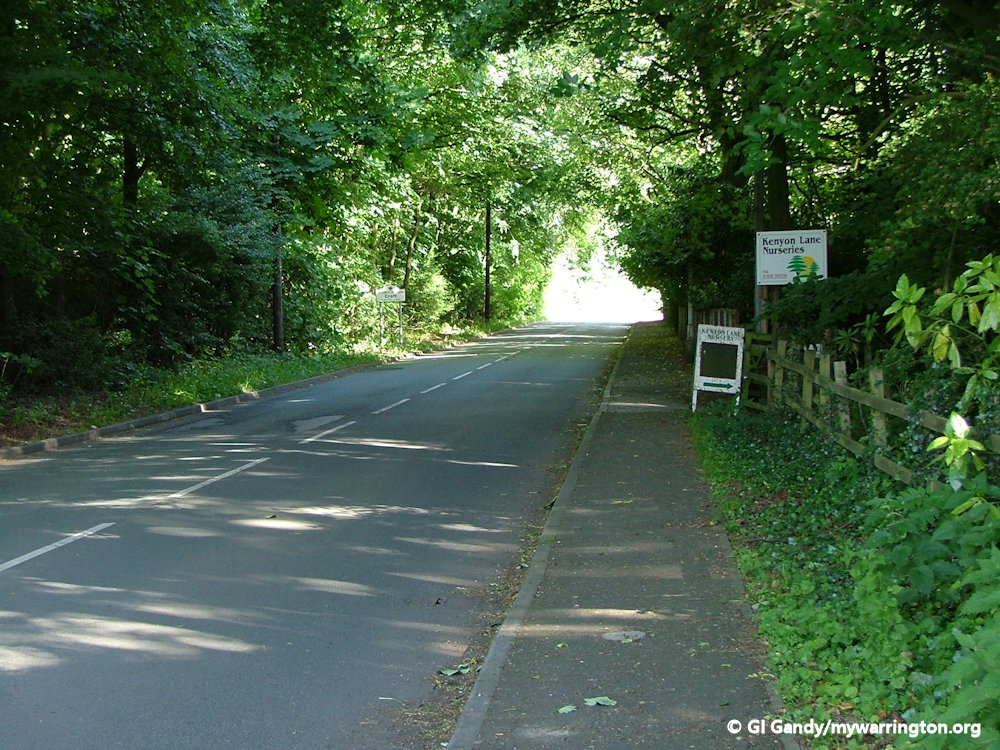
Kenyon Lane near Croft 10 Jun 2004
Kenyon Junction Railway Station
Kenyon Junction was a junction railway station at Kenyon on the Liverpool and Manchester Railway and the Bolton and Leigh Railway near Culcheth. The Bolton and Leigh Railway opened for goods on 1 August 1828, the first in Lancashire.
The Liverpool and Manchester line opened for passengers on 15 September 1830, but the station wasn’t listed in timetables until 1 March 1831 (as Bolton Junction) and the branch line to Leigh and Bolton closed to passengers in 1954.
Kenyon Junction itself closed to passengers on 2 January 1961, before closing completely on 1 August 1963. The junction fell out of use when the line serving Leigh was closed in 1969.
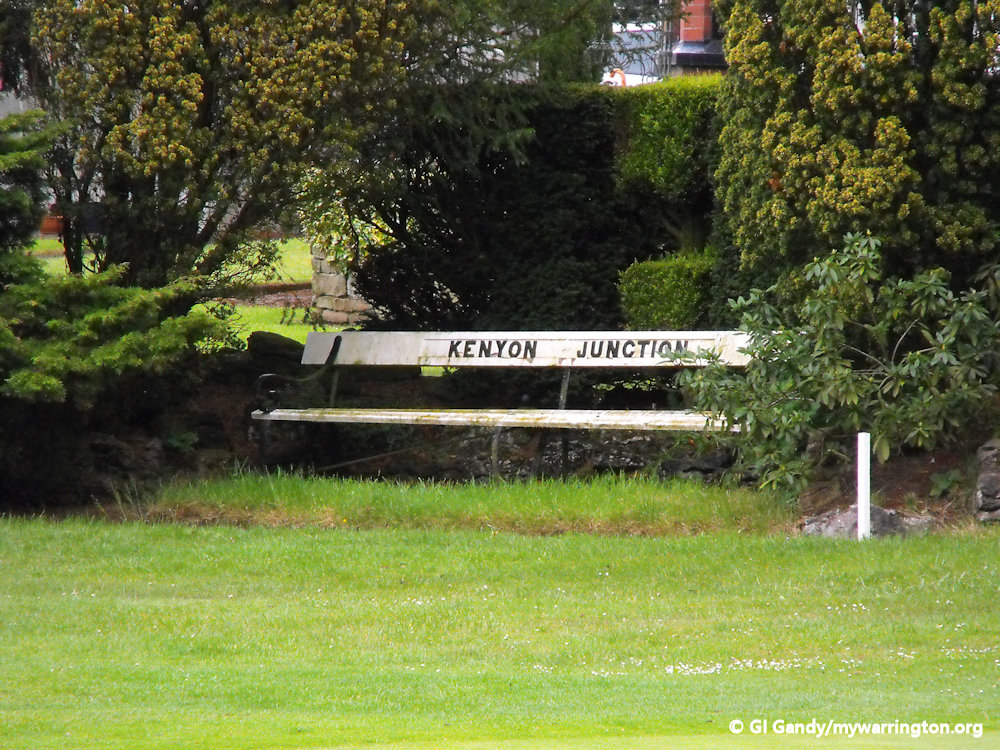
Bench from Kenyon Junction Station at Legh Golf Club 20 May 2011
In its early years it was referred to as Bolton Junction Station and was officially named Kenyon Junction in 1843. The early station was criticised for poor facilities and missed connections and was reconstructed in 1883.
The London and North Western Railway’s Tyldesley Loopline from Eccles to the junction west of Tyldesley station continued south-west to Leigh. Pennington and Kenyon Junction opened in 1864. The original engine shed closed before 1870.
There were large sidings to accommodate goods and coal traffic from Bag Lane, Westleigh, Bickershaw and Abram Collieries and Jacksons and Speakmans Sidings in Tyldesley. There were two signal boxes. All stations on the line to Bolton closed in 1954.
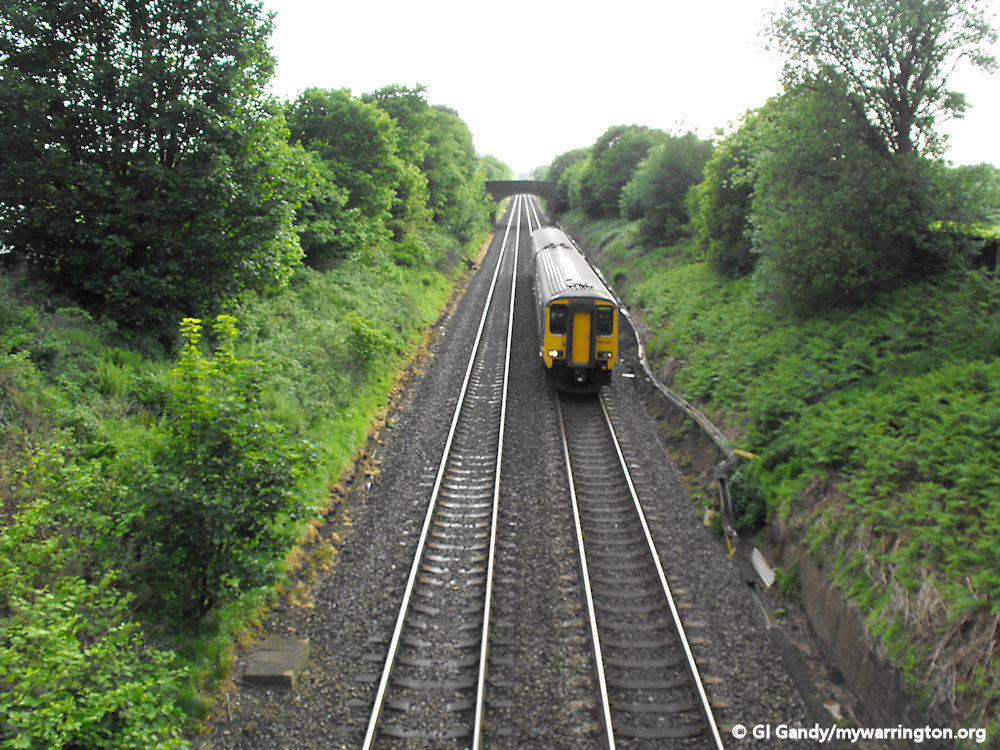
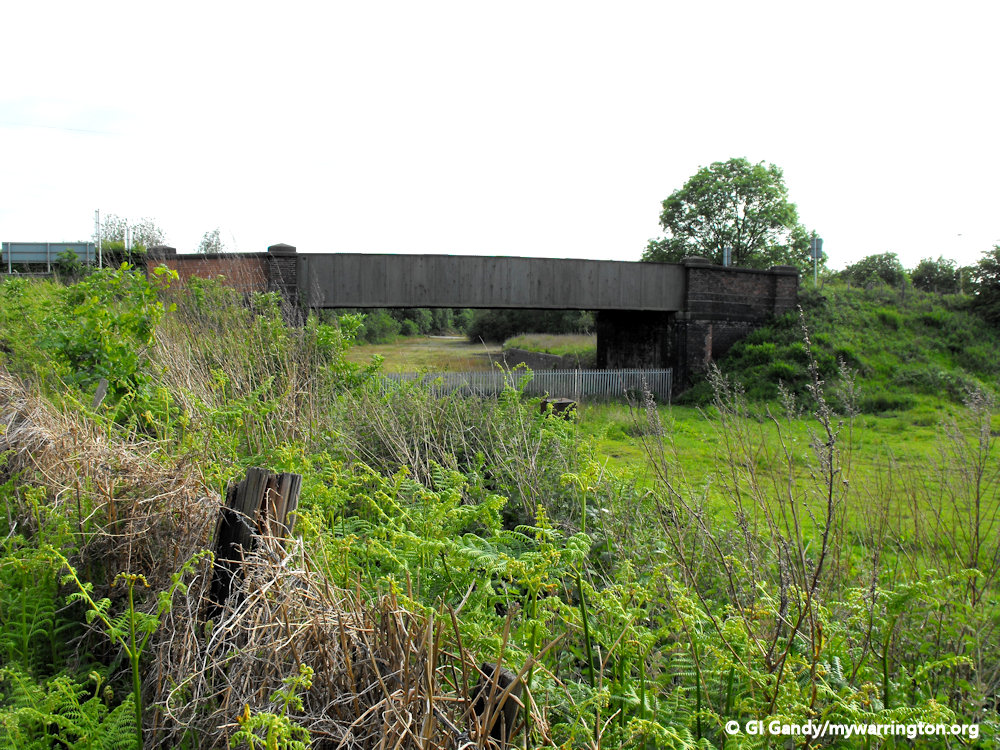
Liverpool and Manchester Railway from Broseley Lane, Kenyon on 20 May 2004
In 2001 a proposal to rebuild Kenyon Junction Railway Station was abandoned following the rejection of plans to build a leisure complex in Leigh, which the rebuilt station would have served. There is a lobby in the area to rebuild Kenyon Junction Station and build a link to Leigh. Construction of a new leisure complex, including a cinema, began in 2011, and is now open, so there is still hope for a rail connection, although nothing has been agreed so far.
Retrieved from Wikipedia.
See also the Disused Stations website for more.
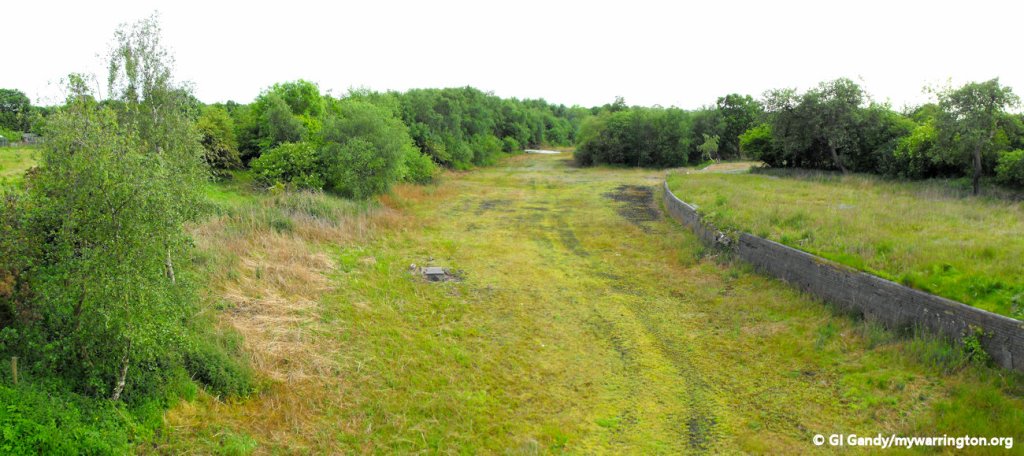
Kenyon Junction Railway location 20 May 2004
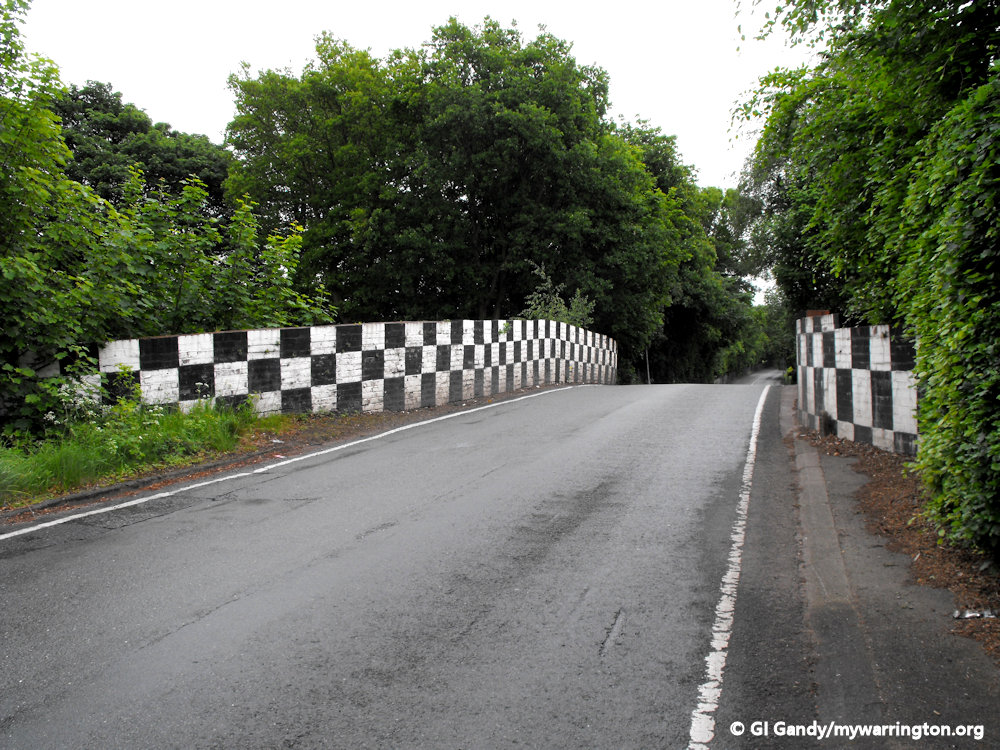
 mywarrington

