
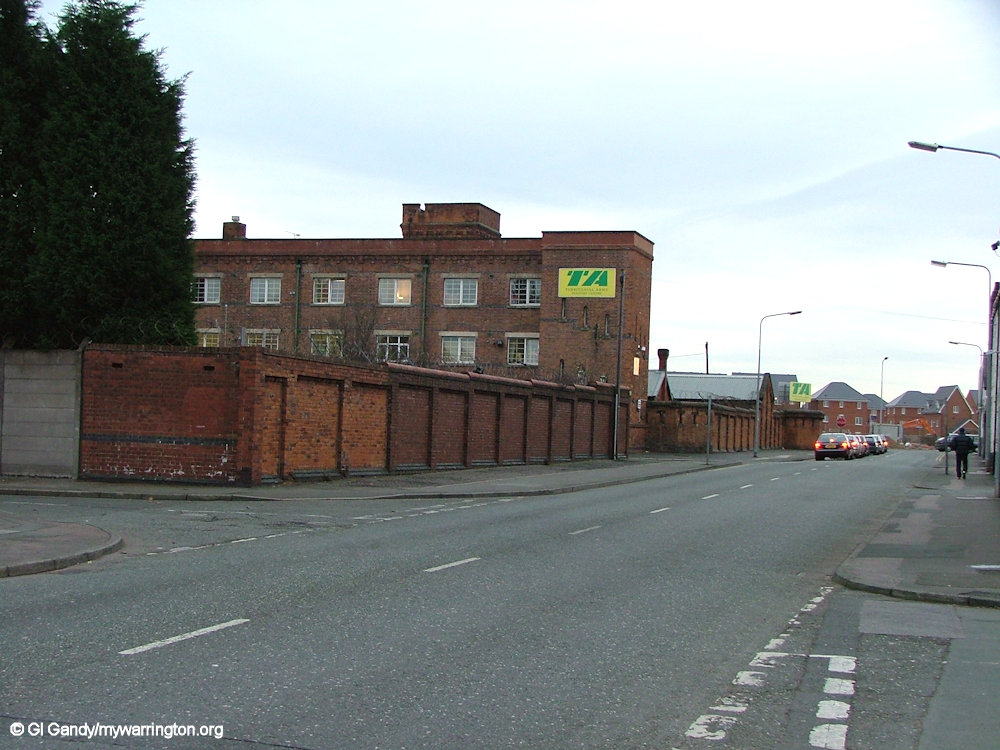
South Lancashire Regiment.
The South Lancashire Regiment was a line infantry regiment of the British Army in existence from 1881 to 1958.
The regiment, which recruited, as its title suggests, primarily from the South Lancashire area, was created as part of the Childers Reforms in 1881 as the Prince of Wales’ Volunteers (South Lancashire Regiment) by the amalgamation of the 40th (the 2nd Somersetshire) Regiment of Foot and the 82nd Regiment of Foot (Prince of Wales’ Volunteers). In 1938, it was renamed the South Lancashire Regiment (The Prince of Wales’ Volunteers) and on 1 July 1958 the regiment was amalgamated with the East Lancashire Regiment to form the Lancashire Regiment (Prince of Wales’ Volunteers).
Formation to the First World War
The 1st Battalion was in Ranikhet, India, when the regiment was created as part of the Childers Reforms in 1881 as the Prince of Wales’ Volunteers (South Lancashire Regiment) by the amalgamation of the 40th (the 2nd Somersetshire) Regiment of Foot and the 82nd Regiment of Foot (Prince of Wales’ Volunteers). It was deployed to Aden in 1884 and returned to the United Kingdom in 1886, where it remained until 1899. The 1st Battalion lost 41 men during the Battle of Spion Kop in February 1900, but then captured Green Hill at the Battle of the Tugela Heights later that month during the Second Boer War.
This file is licensed under the Open Government Licence version 1.0 (OGL v1.0). The source of this file is the Ministry of Defence, Defence Brand Portal via Wikipedia.
At the same time as the 40th and 82nd regiments amalgamated to form the South Lancashire Regiment, the 4th Royal Lancashire Militia (The Duke of Lancaster’s Own Light Infantry) became the new regiment’s 3rd Battalion.
In 1881, the local units of the Volunteer Force were affiliated to the regiment. In 1886, the 9th Lancashire Rifle Volunteer Corps at Warrington and Newton, and the 21st Lancashire Rifle Volunteer Corps at St Helens and Widnes became the 1st and 2nd Volunteer Battalions of the regiment.
The 2nd Battalion spent most of the first 30 years of its existence overseas, while the 3rd Battalion was embodied specifically for service in the Second Boer War.
In addition, the 1st and 2nd Volunteer Battalions raised a service company to reinforce the 1st Battalion in the field.
Following the end of the war in South Africa in 1902, the 1st battalion was sent to British India, where they replaced the 2nd battalion in Jubbulpore in Bengal. The 2nd battalion returned home, for the first times since 1884.
In 1908, the Volunteers and Militia were reorganised nationally, with the former becoming the Territorial Force and the latter the Special Reserve; the regiment now had one Reserve battalion and two Territorial battalions.
The First World War
Regular Army
The 1st Battalion spent the war on garrison duty in Quetta, Baluchistan, on the North-West Frontier. The 2nd Battalion landed at Le Havre as part of the 7th Brigade in the 3rd Division in August 1914 and spent the entire war on the Western Front.
Special Reserve
The 3rd (Reserve) Battalion spent the whole war in England, initially at Crosby, later at Barrow-in-Furness in the Barrow Garrison, fulfilling its dual role of coast defence and preparing reinforcement drafts of regular reservists, special reservists, recruits and returning wounded for the regular battalions serving overseas.
Territorial Force
The 1/4th Battalion landed at Le Havre as part of the 7th Brigade in the 3rd Division in February 1915 for service on the Western Front. The 1/5th Battalion landed at Le Havre as part of the 12th Brigade in the 4th Division in February 1915 also for service on the Western Front. The 2/4th and 2/5th Battalions landed at Boulogne as part of the 172nd (2/1st South Lancashire) Brigade in the 57th (2nd West Lancashire) Division in February 1917 also for service on the Western Front.
New Army Battalions
The 6th (Service) Battalion landed at Cape Helles in Gallipoli as part of the 38th Brigade in 13th (Western) Division in July 1915; a detachment from the battalion was commanded by Captain Clement Attlee, who fell ill with dysentery during the campaign but went on to become prime minister.
The battalion was evacuated from Gallipoli and went to Egypt in December 1915 before moving on to Mesopotamia in February 1916.
The 7th (Service) Battalion landed at Boulogne as part of the 56th Brigade in the 19th (Western) Division in July 1915 for service on the Western Front. The 8th (Service) Battalion landed in France as part of the 75th Brigade in the 25th Division in September 1915 also for service on the Western Front.
The 9th (Service) Battalion landed in France as part of the 66th Brigade in the 22nd Division in September 1915 for service on the Western Front but transferred to Salonika in November 1915. The 11th (Service) Battalion (St Helens Pioneers) landed at Le Havre as pioneer battalion to the 30th Division in November 1915 for service on the Western Front.
Between the World Wars
The 1st Battalion saw action on the North West Frontier in May 1919 and then took part in Third Anglo-Afghan War in July 1919.
After the Armistice with Germany the 3rd (Reserve) Battalion went to Ireland and in 1919 it was stationed in Dublin carrying out duties in support of the civil power during the Partition crisis. It returned to England to be disembodied later in the year.
Second World War
Regular Army
The 1st Battalion, a Regular Army battalion, was shipped to France on the outbreak of war in 1939 as part of the 12th Infantry Brigade, 4th Infantry Division, British Expeditionary Force, returning to England via Dunkirk. After returning to the United Kingdom, it was transferred to the 8th Infantry Brigade (which included the 1st Suffolk Regiment and 2nd East Yorkshire Regiment) attached to the 3rd Infantry Division, nicknamed Monty’s Ironsides. With this division, it landed at Sword Beach on D-Day and fought its way through the Normandy, the Netherlands and later the invasion of Germany.
The 2nd Battalion was in Bombay in 1939, being transported back to Britain in July 1940 to defend the home front against the expected German invasion. In 1942, commanded by Lieutenant Colonel Michael West, later to become a full general, attached to the 29th Independent Infantry Brigade, it was part of Force 121, which invaded Madagascar in order to prevent use of the island by the Japanese. From April 1944 until the end of the war, it fought in the recapture of Burma, initially with the 36th Infantry Division alongside the 2nd Battalion, East Lancashire Regiment. The 2nd battalion was then transferred to the 114th Indian Infantry Brigade, 7th Indian Infantry Division, serving with them until July 1945, when the Battalion came under command of the 20th Indian Division.
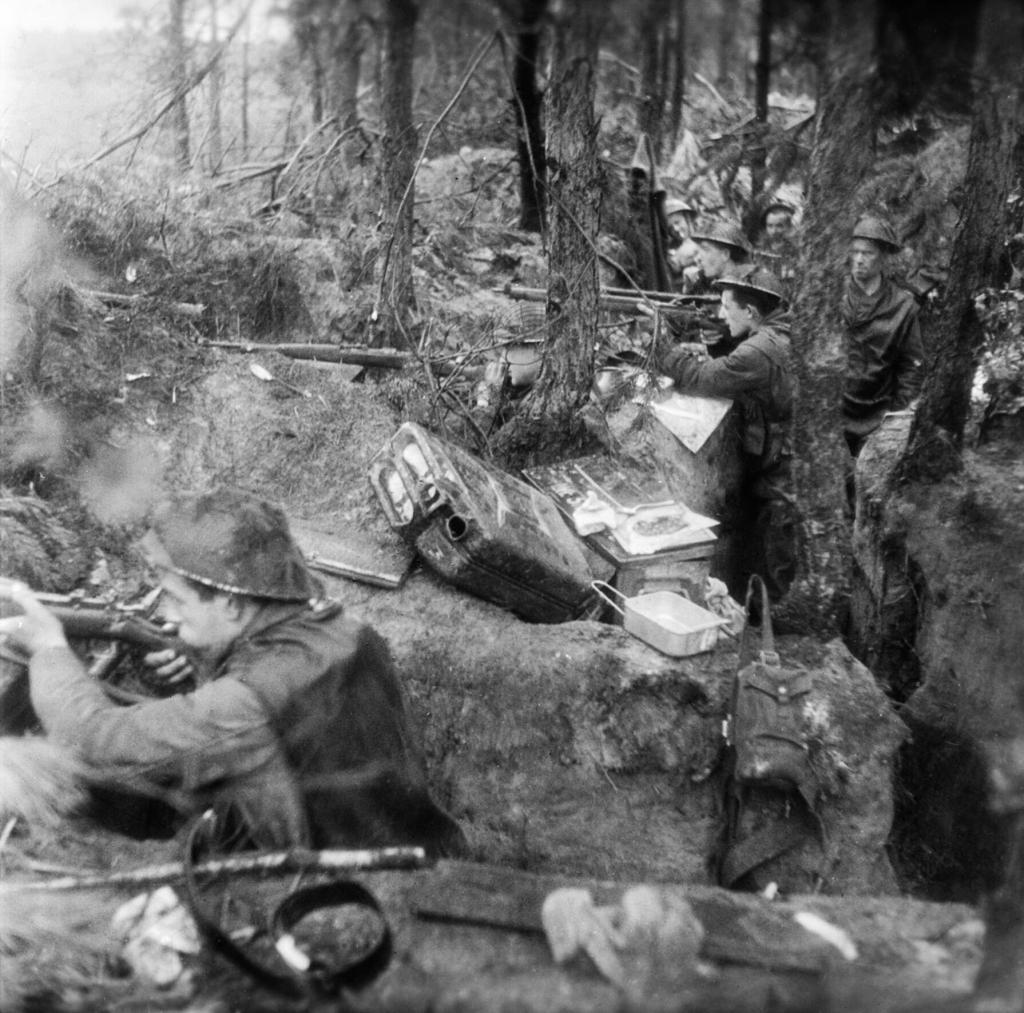
Men of the 1st Battalion in action in the Netherlands, November 1944
This image was created and released by the Imperial War Museum on the IWM Non Commercial Licence. Photographs taken, or artworks created, by a member of the forces during their active service duties are covered by Crown Copyright provisions. Faithful reproductions may be reused under that licence, which is considered expired 50 years after their creation. Via Wikipedia.
Territorial Army
The 2/4th Battalion was raised in 1939 as a 2nd Line Territorial Army battalion duplicate of the 1st Line 4th Battalion, later redesignated the 1/4th Battalion. Both the 1/4th and 2/4th battalions served in the 164th Infantry Brigade, part of the 55th (West Lancashire) Infantry Division. In 1943, the 2/4th Battalion was transferred to the British Army’s airborne forces and converted to become the 13th Parachute Battalion of the Parachute Regiment, part of the 5th Parachute Brigade, which itself was part of the newly raised 6th Airborne Division. The 13th Parachute Battalion saw combat during Operation Tonga, the British airborne landings in the early hours of 6 June 1944, D-Day.
The battalion served as normal infantrymen for the duration of the Battle of Normandy until being withdrawn, with the rest of the division, to England in September 1944. The 6th Airborne Division was then sent to Belgium in December 1944 to fight in the Ardennes offensive, the Battle of the Bulge. They were then involved in the largest airborne drop of the entire war with over 16,000 airborne troops taking part, known as Operation Varsity, with the US 17th Airborne Division.
Hostilities-only
The regiment raised many other battalions for service before and during the war but most were disbanded before the war’s end. The 6th (Home Defence) Battalion was raised in 1939 and, in 1941, was redesignated the 30th Battalion. It was disbanded in January 1943.
The 7th and 8th battalions were both raised in 1940 and joined the 204th Infantry Brigade. On 1 September 1942, the brigade was redesignated the 185th Infantry Brigade and the 7th Battalion was sent to India, where it remained until disbandment in 1946, as a training battalion with the 52nd Brigade. The battalion’s role was training British infantry replacements in jungle warfare for the British Fourteenth Army.
The 50th (Holding) Battalion was raised in 1940. That October, it was redesignated as the 9th Battalion and joined the 225th Infantry Brigade and then the 207th Infantry Brigade. The battalion remained in the United Kingdom for the war and was later transferred to the 164th Infantry Brigade, alongside the 1/4th Battalion, and supplied replacements to units overseas. It was apparently disbanded in July 1944, but another source claims it was disbanded in 1946.
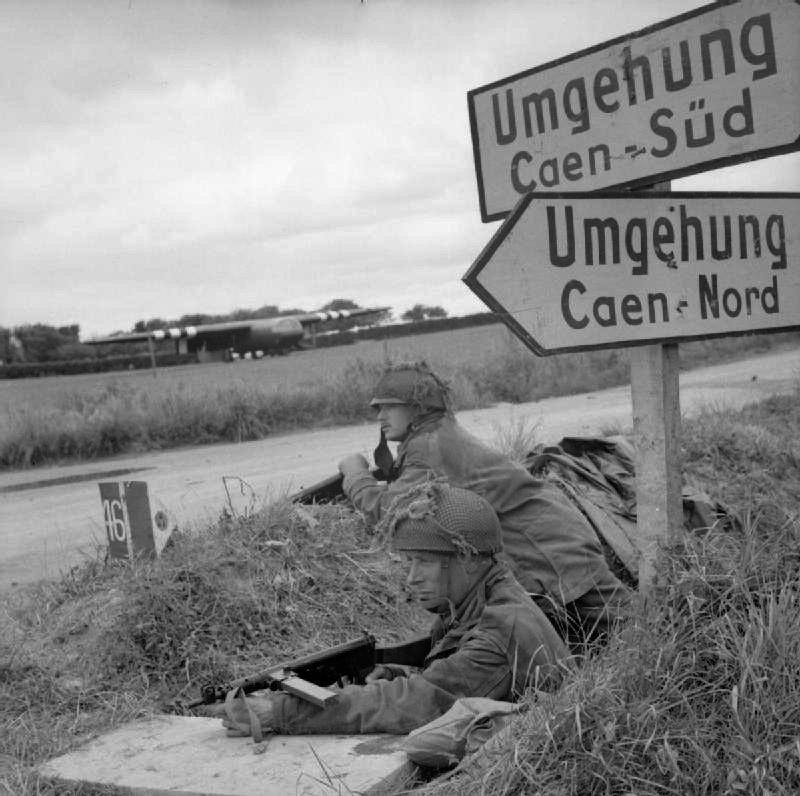
THE BRITISH ARMY IN THE NORMANDY CAMPAIGN 1944. Lance Corporals A. Burton and L. Barnett of 6th Airborne Division guarding a road junction near Ranville, 7 June 1944. Each is armed with a Mk V Sten submachine gun. Horsa gliders can be seen in the background.
This work created by the United Kingdom Government is in the public domain. Source: This is photograph B 5291 from the collections of the Imperial War Museums (collection no. 4700-29) Via Wikipedia.
Peace and Amalgamation
Immediately after the war, the 1st Battalion served in Egypt and Palestine before being reduced to a cadre and amalgamated with the 2nd Battalion at Trieste in 1948.
The surviving 1st Battalion saw further service in the Sudan, Britain, Berlin and Hong Kong where, in 1958, it was amalgamated with 1st Battalion, the East Lancashire Regiment, to form 1st Battalion, the Lancashire Regiment (Prince of Wales’ Volunteers) which was later amalgamated with the Loyal Regiment (North Lancashire) to form the Queen’s Lancashire Regiment which was, however, merged with the King’s Regiment (Liverpool and Manchester), the King’s Own Royal Border Regiment, in 2007, to form the Duke of Lancaster’s Regiment (King’s, Lancashire and Border).
Regimental museum
The Lancashire Infantry Museum is based at Fulwood Barracks in Preston.
Peninsula Barracks, O’Leary Street, Orford
Peninsula Barracks is a military installation on O’Leary Street.
The barracks were built in the Fortress Gothic Revival Style and, although construction started a few years earlier, they were opened as Orford Barracks in 1878. Their creation took place as part of the Cardwell Reforms which encouraged the localisation of British military forces. The barracks were intended as a depot for the two battalions of the 8th (The King’s) Regiment of Foot.
Under the Childers Reforms, the 8th Regiment of Foot evolved to become the King’s Regiment (Liverpool) with its depot at the barracks in 1881.
The barracks were also intended as a depot for the 40th (2nd Somersetshire) Regiment and the 82nd Regiment of Foot (Prince of Wales’s Volunteers). Under the Childers Reforms the 40th and 82nd regiments amalgamated to form the South Lancashire Regiment in 1881.
The King’s Regiment (Liverpool) moved out to Seaforth Barracks in 1910 leaving the barracks as the mobilisation point for the South Lancashire Regiment at the start of the First World War. After the Second World War the barracks became the home of the 4th Battalion the South Lancashire Regiment (The Prince of Wales’s Volunteers); although the regiment was disbanded in 1958 the battalion transferred to the Lancashire Regiment and continued to be based at the barracks. This battalion was reduced to company status in 1967 and that company transferred to the Queen’s Lancashire Regiment in 1970.
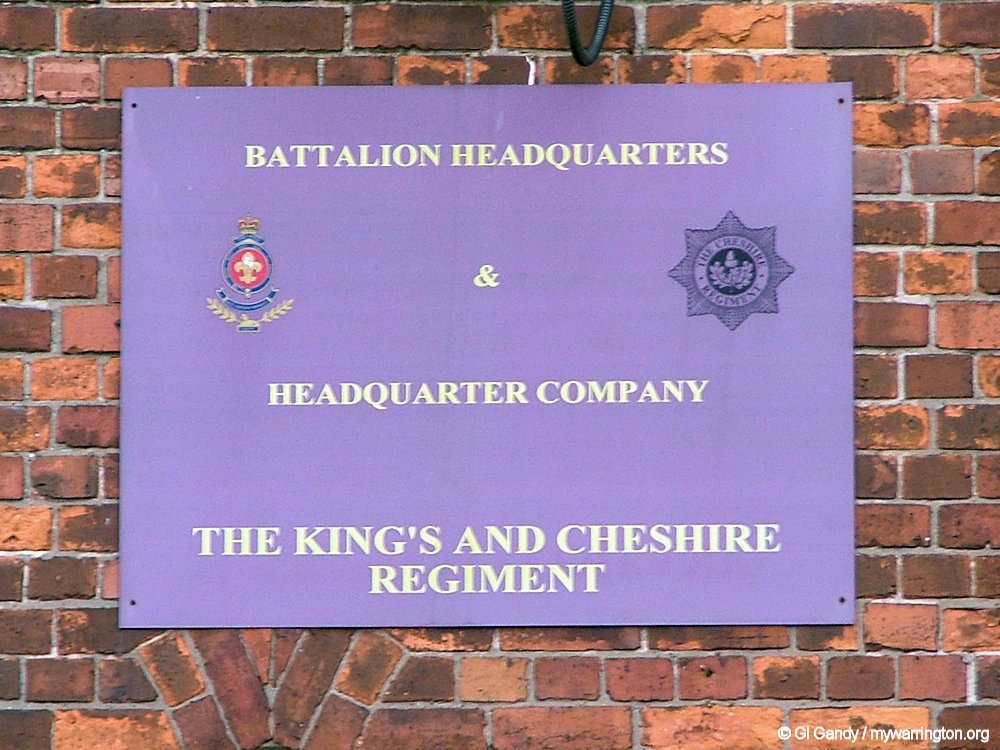
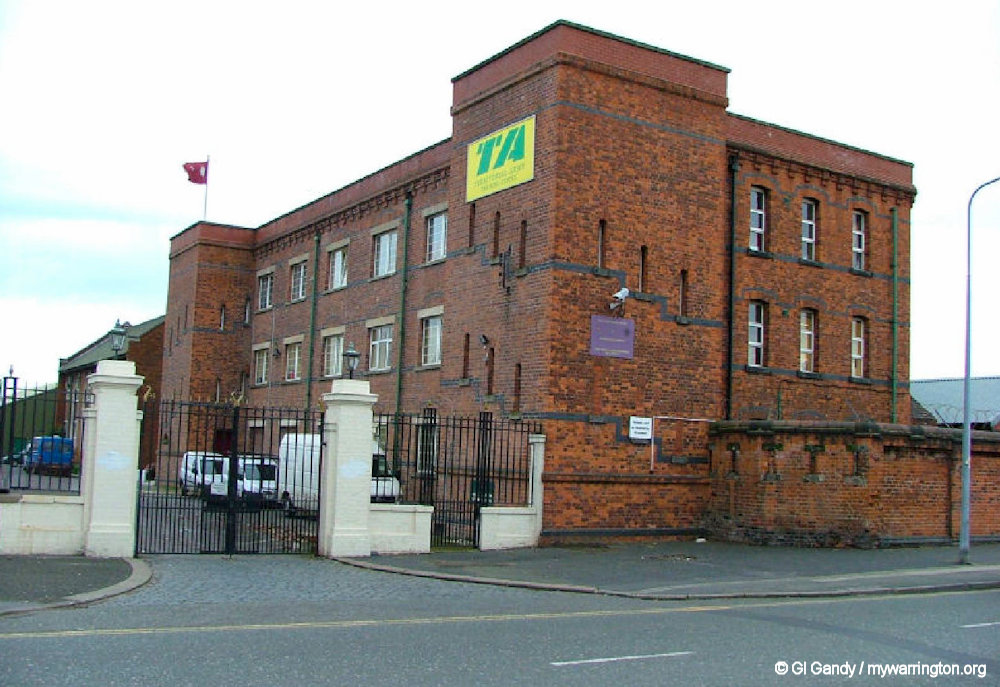
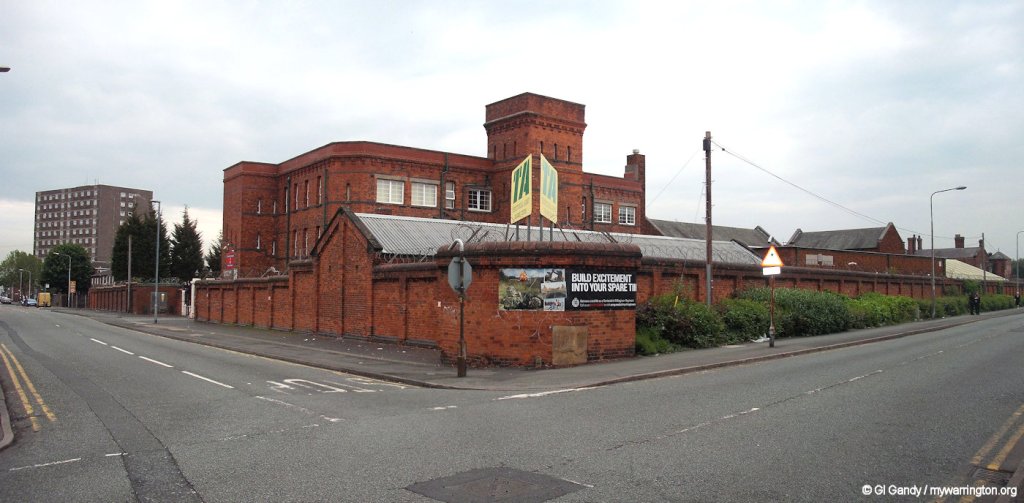
In 1975 the barracks became the headquarters of 5th/8th (Volunteer) Battalion the King’s Regiment and in 1999 they became the home of B (Cheshire) Company of the King’s and Cheshire Regiment. Since 2007 they have been the home of a squadron of 75 Engineer Regiment.
In 2019, a detached platoon of A (Ladysmith) Company, 4th Battalion Duke of Lancaster’s Regiment, based in Liverpool, was raised at the barracks after a 14 year absence of infantry in the town.
Notes from Wikipedia.
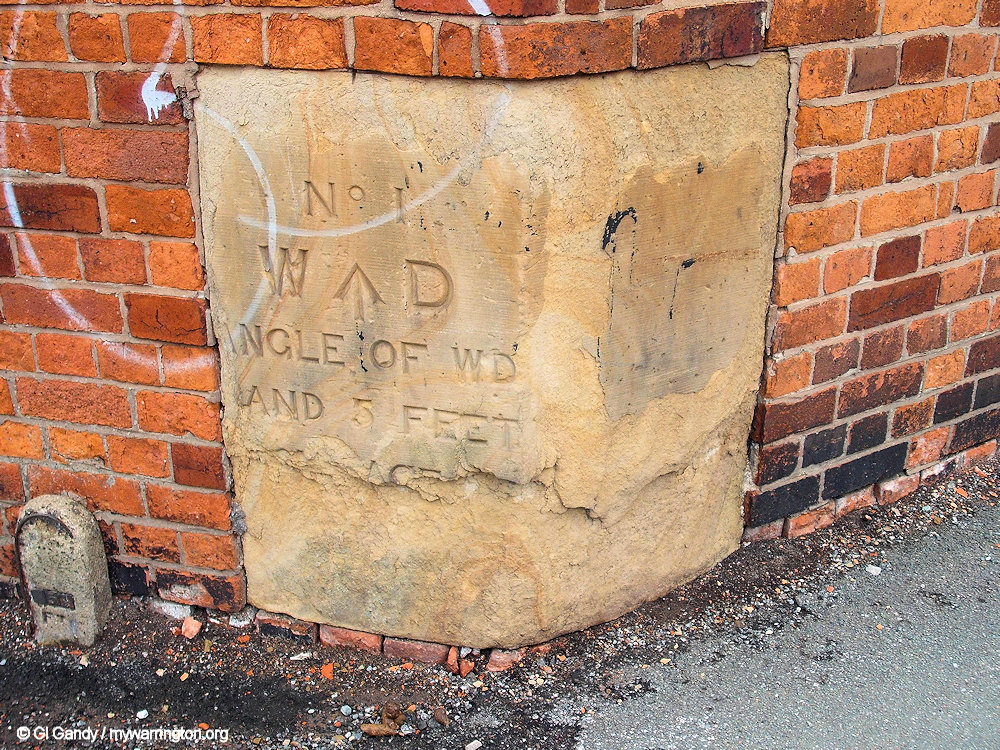
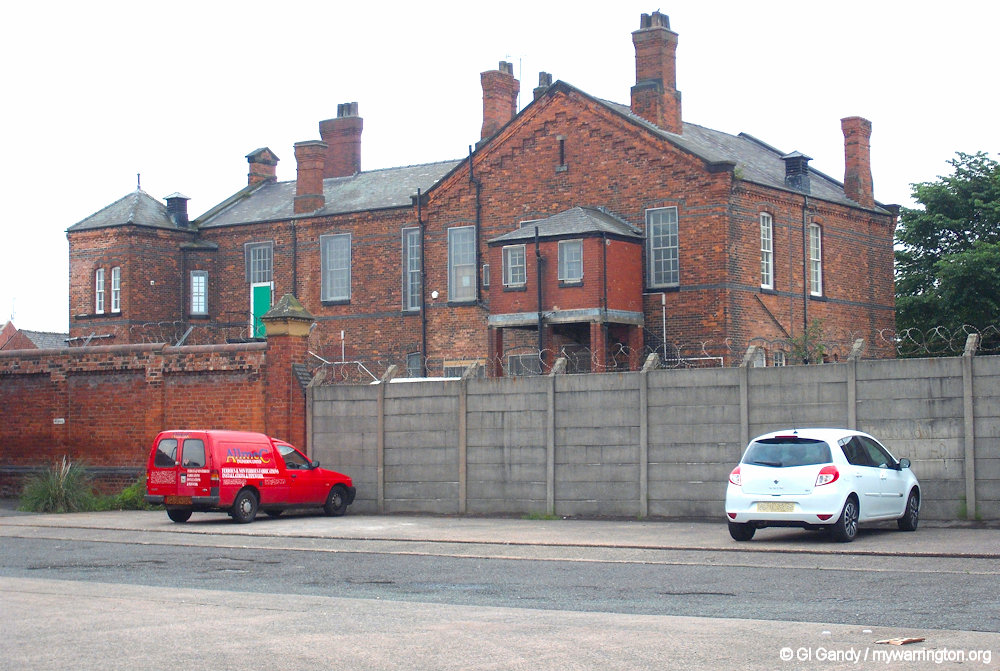
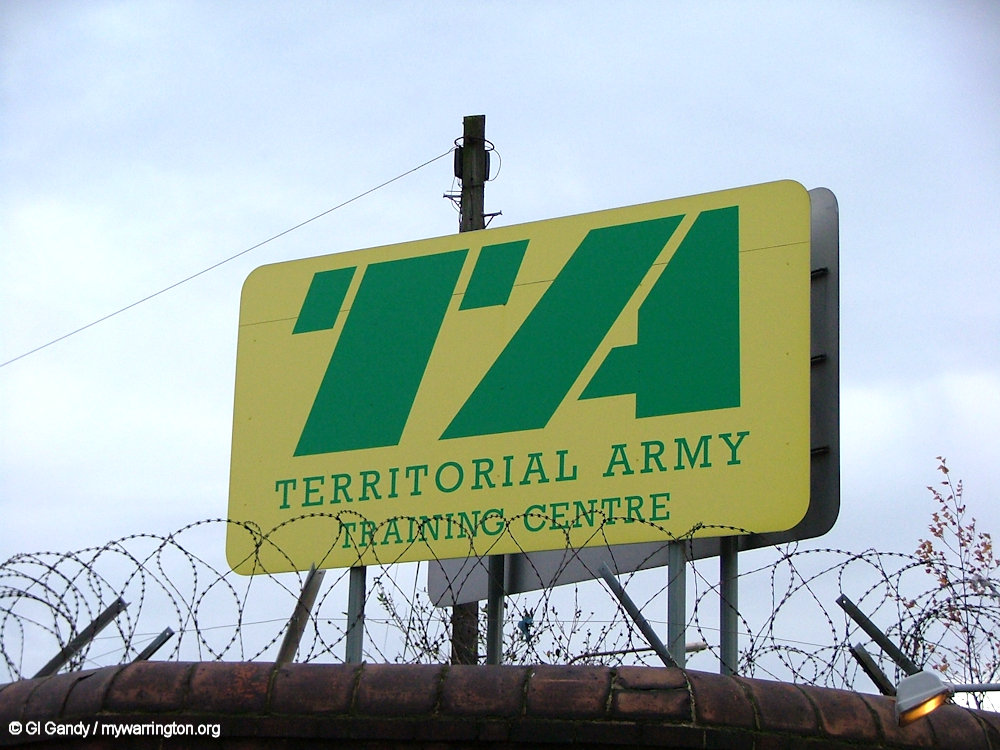
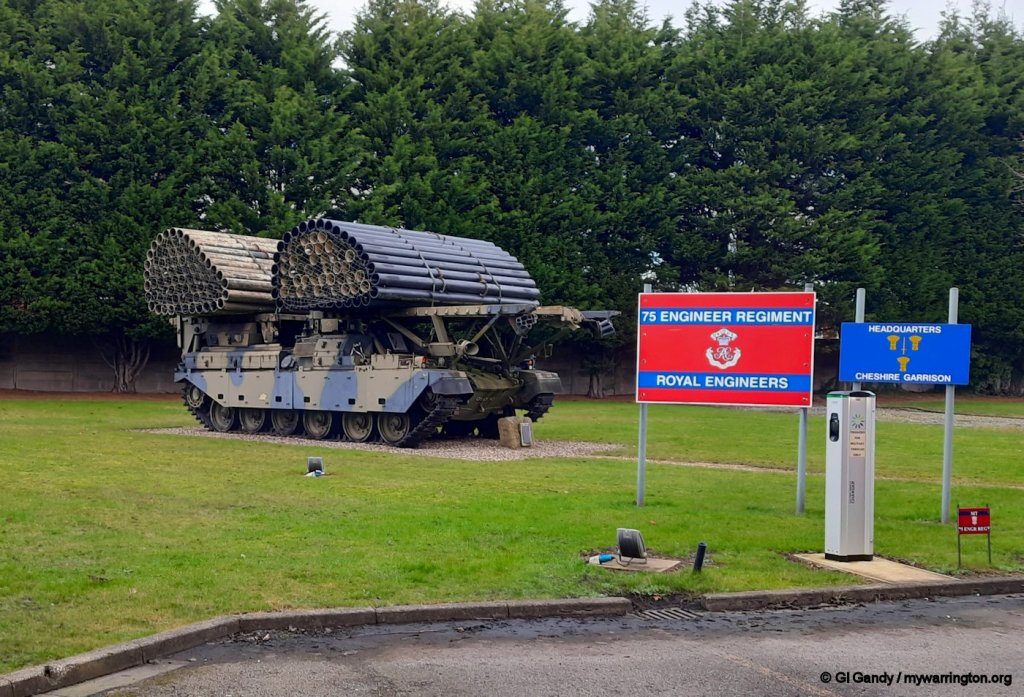
By viewing the OS six inch map of 188-1915 we can see the Orford Barracks. Notice the space taken by the barracks was bigger than today. In fact, it stretched to the site of Quebec Road, north of Peninsula House, the block of flats on O’Leary Street.
You will also notice O’Leary Street itself did not exist at that time. It was added later, and is of course named after the Colonel O’Leary himself.
Remembering Lt Col W McCarthy O’Leary
On 27 February 2022, Warrington-Worldwide reported on a ceremony to commemorate the 122nd anniversary of the Battle of Pieter’s Hill during the Boer War.
The ceremony took place next to the statue of Lt Col W McCarthy O’Leary in Queen’s Gardens, Palmyra Square as military veterans were joined by the Mayor of Warrington Cllr Maureen Creaghan, who laid a wreath.
Lt Col W McCarthy O’Leary commanded the 1st battalion of the South Lancashire Regiment when it left Preston for South Africa.
As he led the charge on Pieter’s Hill, his words have become a part of the regiment’s history as he told his gallant troops: “Remember men, the eyes of Lancashire are watching over you.”
Sadly the Colonel and three of his men were killed at the moment of victory on February 27, 1900. His statue in Palmyra Gardens, was unveiled seven years later on February 21, 1907.
In January 1883 he was appointed Adjutant to the 9th Lancashire Volunteers at Warrington, and with them he served five years, with advantage to the corps and great credit to himself, being equally respected by both officers and men.
Then in 1888 he was appointed to the command of the battalion, and in autumn of 1898 he took his corps to the manoeuvres at Salisbury Plain, where he was highly complimented on the efficiency and smart appearance of his men, and upon the skilful manner in which he handled them.
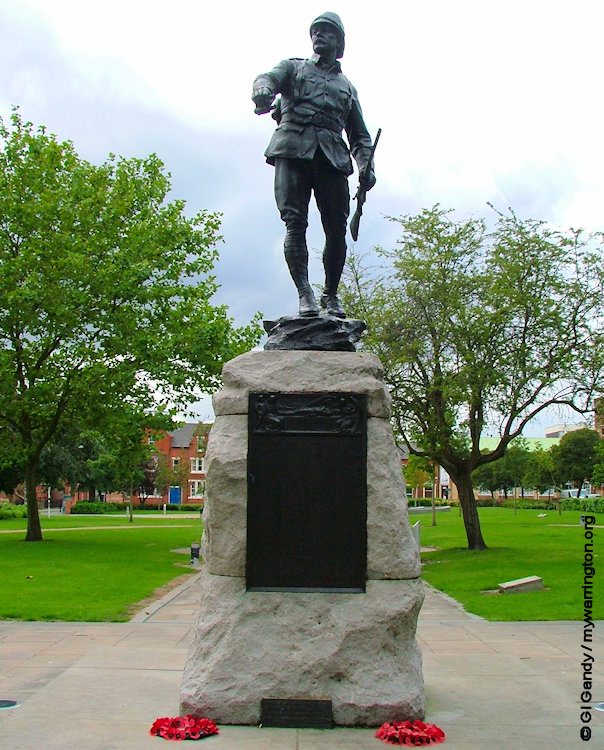
The 1st South Lancashire moved to Preston, where they became distinguished by their prowess on the football field, and in 1899 the battalion won the Army Cup.
While in service at Preston, Lieutenant Colonel O’Leary had an opportunity of renewing his acquaintances with the 1st Vol. Batt. South Lancashire Brigade, in which he was always interested, and it was a source of much gratification to him to be asked to present the annual prizes to the members of the corps in December 1898, when he met many old friends.
At Pieters Hill, on the 27 February 1900, the South Lancashire’s much distinguished themselves. They carried the hill, and opened the road to Ladysmith, as General Sir Redvers Buller reported in his dispatch of February 28th; “The main position was magnificently carried out by the South Lancashire’s about sunset.”
But in this final and successful attack, Lieutenant Colonel O’Leary was shot dead – close to the enemy position while leading his men to victory.
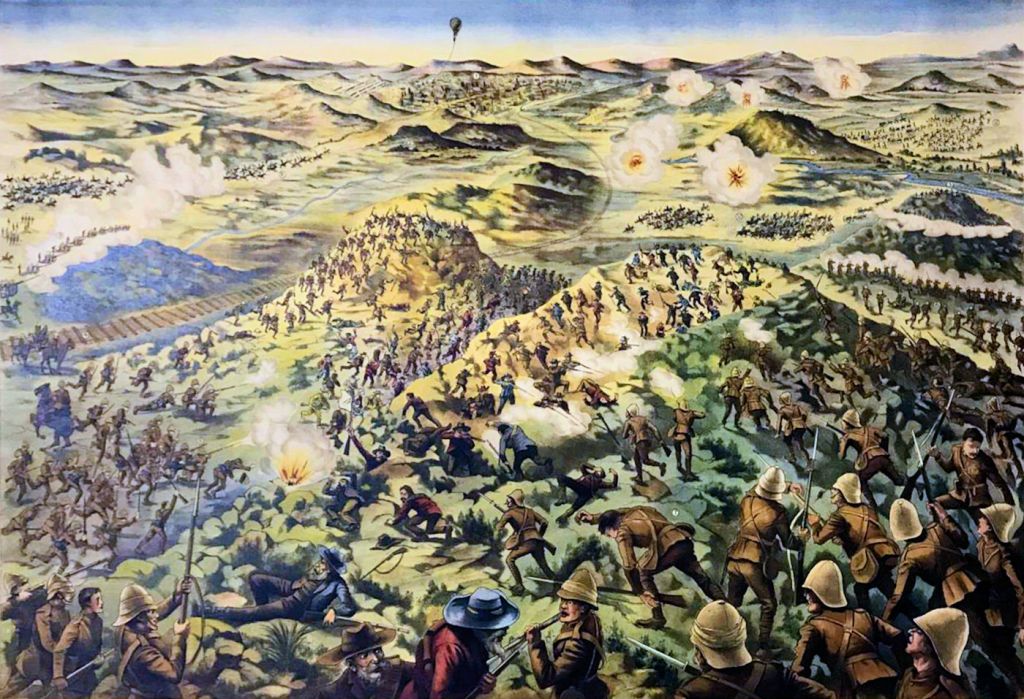
An illustration of the Battle of the Tugela Heights, in which the British can be seen driving the Boers off of Pieters Hill and removing the barrier to relieve Ladysmith. The besieged city can also be seen in the background.
Image is in the public domain due to its age.
The World of the following week wrote: “It would be impossible to exaggerate the feelings of sorrow with which all ranks of the 1st Battalion South Lancashire Regiment will have laid the remains of their much loved commanding officer to rest after the last days fighting for the relief of Ladysmith. Lieutenant Colonel O’Leary was one of the most popular commanding officers of the whole service. He was a trusted friend of every officer, non-commissioned officer and man serving under him, entered into all their sports, and never thought of sparing himself where the interests of his Battalions were concerned.
Though one of the tallest men in the army, he was also the most active, and it was largely due to his encouragement of sport that the 1st South Lancashire had established such a reputation for themselves as cricket and football players, in both of which games they excelled, as Lieutenant Colonel O’Leary needed to say, with true Irish humour, “the old 40th should.”
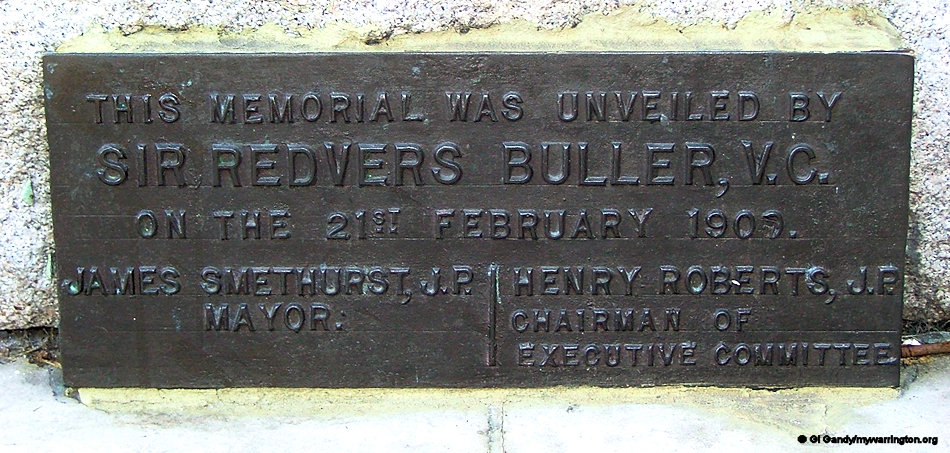
Plaque commemorating the unveiling of the Queens Gardens statue in 1907
Read more about Colonel O’Leary on the Mill Street website.
Lancashire Regiment
Some notes from Wikipedia
The Lancashire Regiment (Prince of Wales’s Volunteers) was an infantry regiment of the British Army that had a very short existence.
The regiment was formed, as a consequence of defence cuts instigated by the 1957 Defence White Paper, by the amalgamation of the 1st Battalion, East Lancashire Regiment and the 1st Battalion, South Lancashire Regiment (The Prince of Wales’ Volunteers) on 1 July 1958.
The regiment was first based in Hong Kong where both of its predecessor regiments had been based when they amalgamated. In 1961 the regiment arrived in Hilden, West Germany as part of the British Army of the Rhine. Shortly after Swaziland’s first-ever elections in 1964, the regiment arrived in there to maintain order. The regiment remained in that country until early the following year when it returned to Britain, being based in Catterick.
In 1967 the Lancashires arrived in Aden in the Middle East a number of months before Aden gained independence from the British Empire. In 1968 the regiment was posted to the garrison in Malta. The following year the Lancashires again returned home to the United Kingdom.
On 25 March 1970, after a relatively brief existence, the regiment was amalgamated with the 1st Battalion, Loyal Regiment (North Lancashire), to form the 1st Battalion, Queen’s Lancashire Regiment.
Lancashire Regiment Crest. This file is licensed under the Open Government Licence version 1.0 (OGL v1.0). Source: Ministry of Defence, Defence Brand Portal via Wikipedia
 mywarrington


