

Contents
- Introduction
- Sankey Green
- Whitecross Company
- Whitecross railway station
- Warrington Hospital
- St Barnabas Anglican Church
- St Barnabas Church of England Primary School
- Sacred Heart Catholic Church
- Sacred Heart Catholic Primary School
- The Pavilion Cinema
- Bennett’s Cake Works
- River View
- Whitecross Community Centre
- Pub Life
- Walkabout Whitecross
- And finally…

Introduction
Whitecross is a district in west Warrington bordering Bewsey, Bank Quay and Old Hall. The area is named after a white cross that once stood at the junction of Liverpool Road and Green Street (Green Lane on the 1844 map). It is said the cross could have been a preaching cross, used by friars from Warrington Friary. This site was marked on a 1772 map and mentioned in the Legh Manuscripts of 1465.
The 1465 manuscript says Henry Bullynge of Warrington held a messuage (a house or dwelling house with outbuildings and land assigned to its use with a garden) and a place called the Folstead lying in the suburbs of Weryngton (an old spelling of Warrington) near to the White Cross, which stands in the way leading from Weryngton as far as the bridge of Sankey between Weryngton Heath towards Little Sankey in the west.
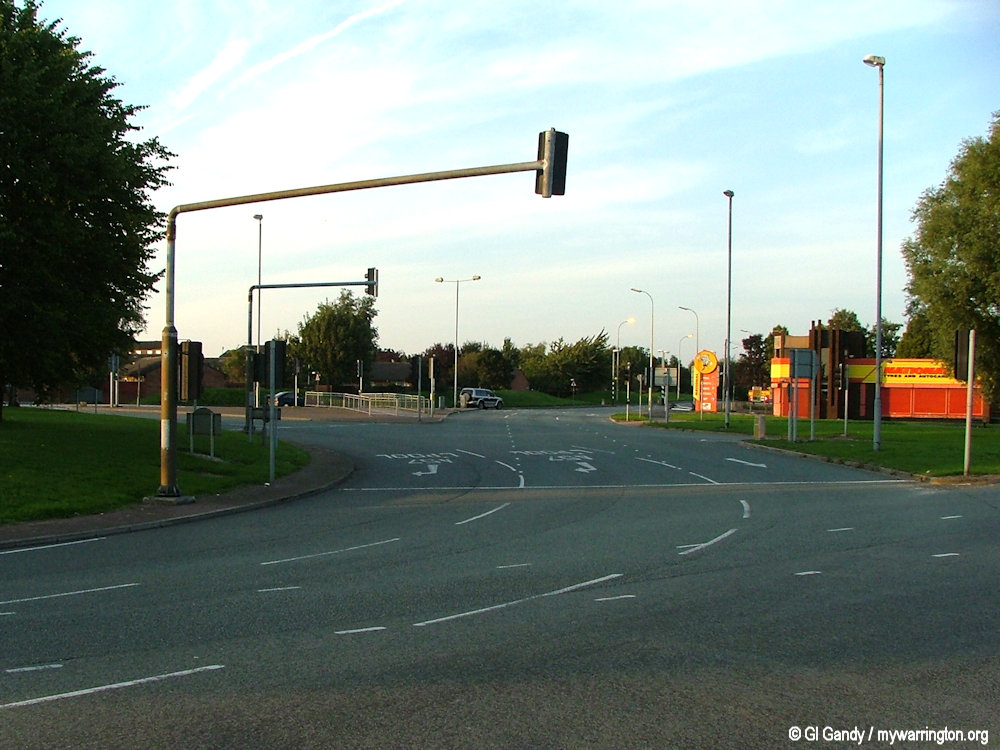
The location of the White Cross was close to Green Street on the centre right of the photo by the red and orange building. Photo taken 10 September 2006.
I found an interesting snippet regarding the name Folstead. The surname Folsted is borne by more people in Denmark than any other country/territory. It is also a Norwegian habitational name from either of two farmsteads in Trøndelag so named, from an uncertain first element + stad (from Old Norse stathir, plural of stathr ‘farmstead, dwelling).
Sankey Green
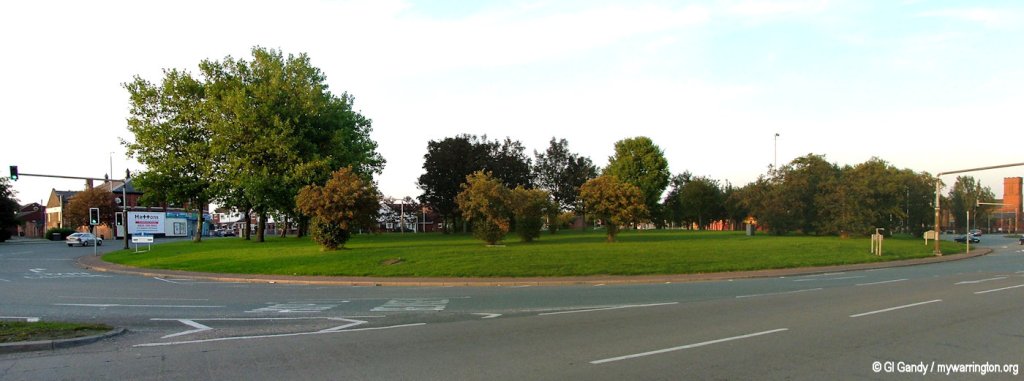
Whitecross borders Little Sankey by the modern roundabout, so, as locals in my younger days called the area The Green, I am including some photos of the area here on the Whitecross page. See a photo of Sankey Hall on the Great Sankey page. North of Baxter Street there was Sankey Hall and Sankey Hall Farm. To the west of this, and marked on the 1905 map, were Mill Cottages, close to Sankey Brook with Buttermilk Bridge crossing the brook itself. To the west was a swing bridge over the Sankey (St Helens) Canal. The rest of this area was farmland in 1905, most of which belonged to Grange’s Farm and Laburnum House Farm. Refer to the 1905 map on the National Library of Scotland website for these and the following notes.
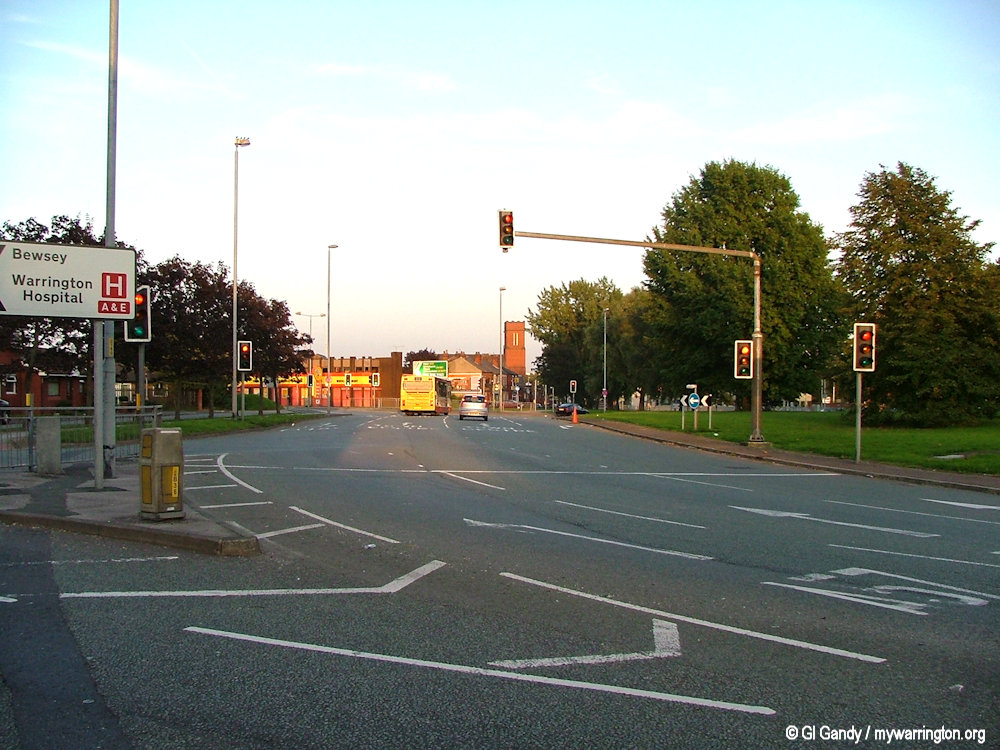
Sankey Green in the southern area of the district viewed east towards town centre. (Photo taken 10 September 2006)
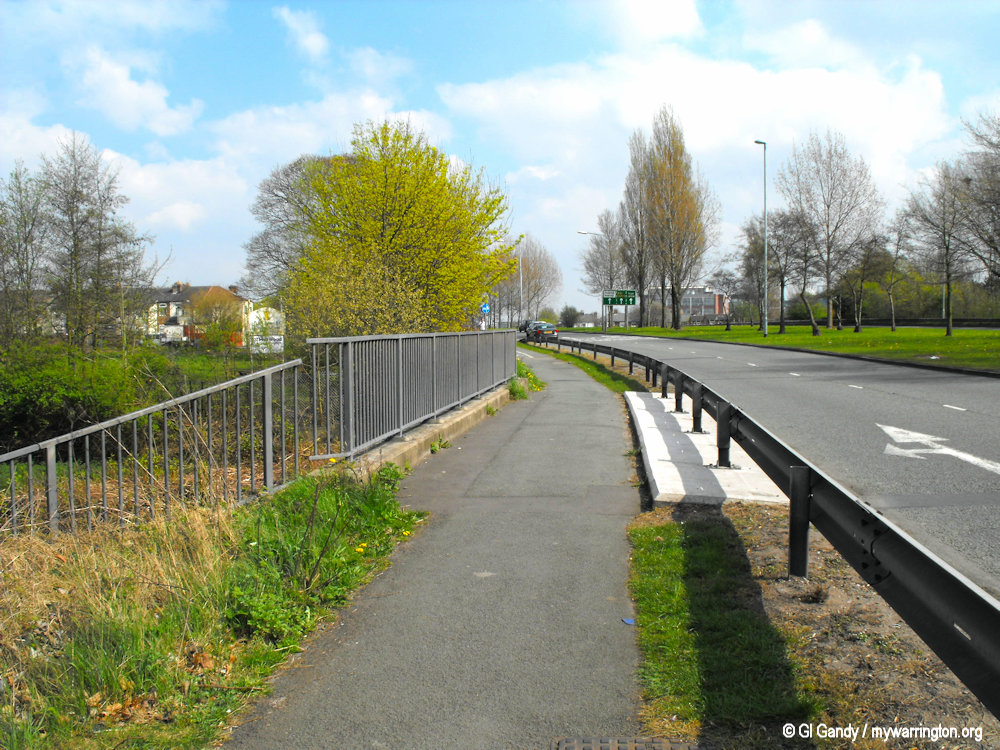
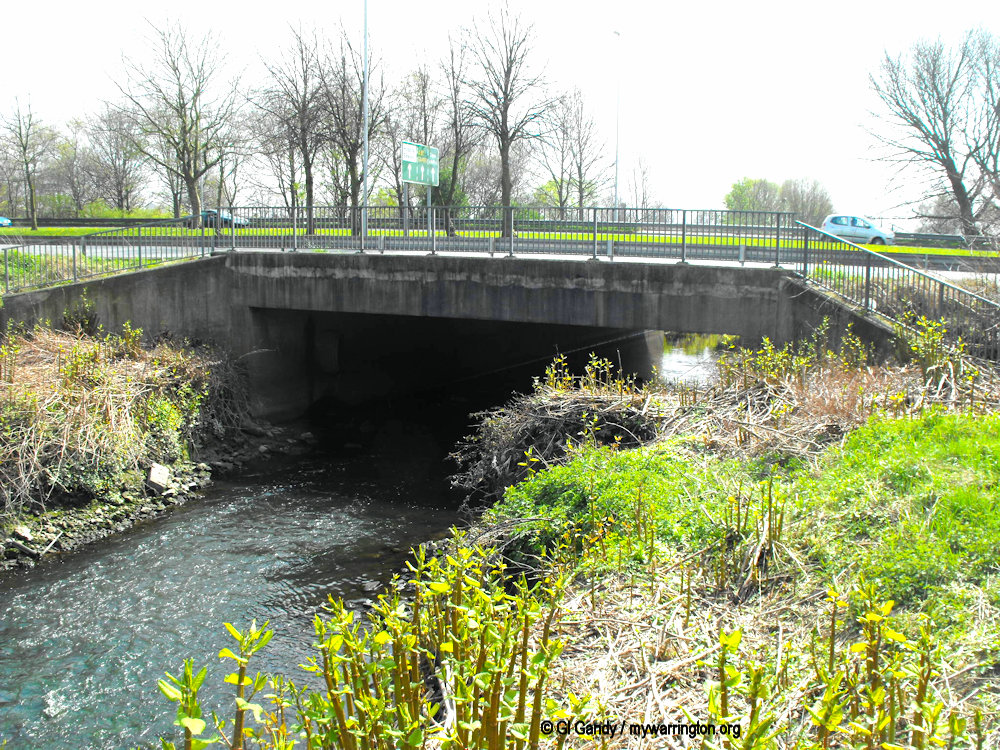
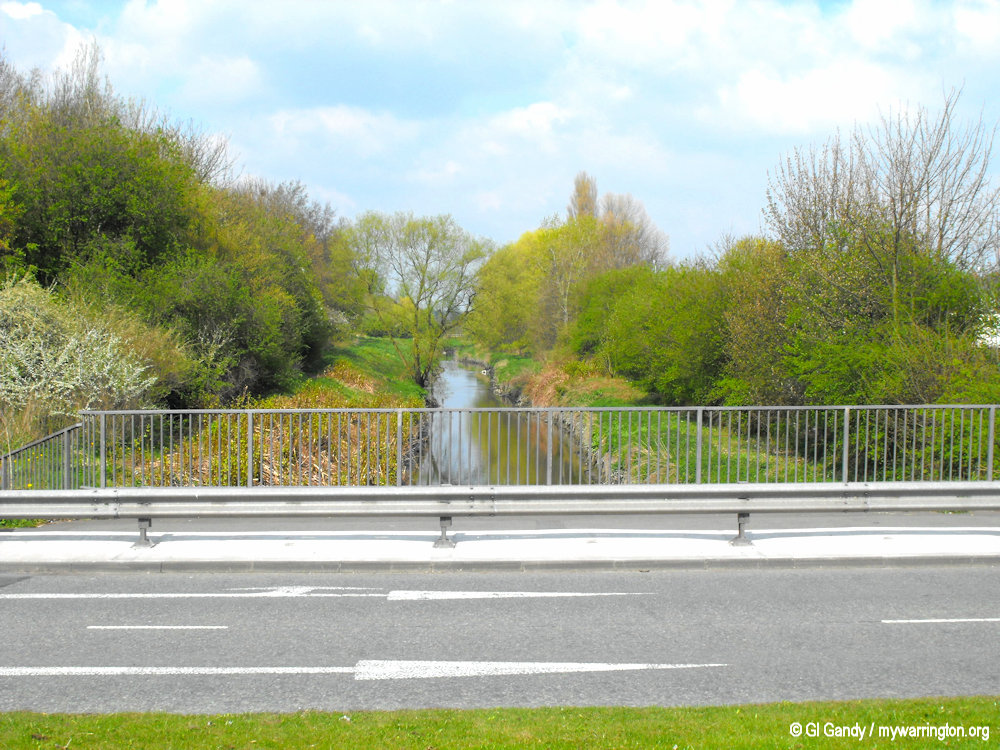
Location of Buttermilk Bridge, now removed as part of the A57 Sankey Way dual carriageway, which opened in 1970.
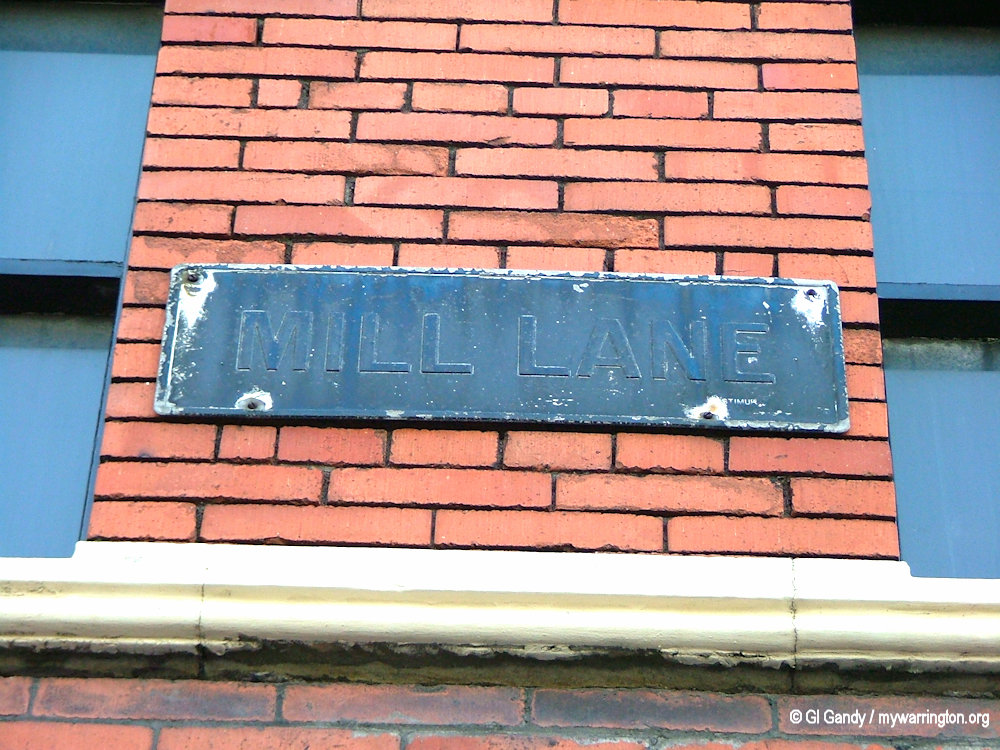
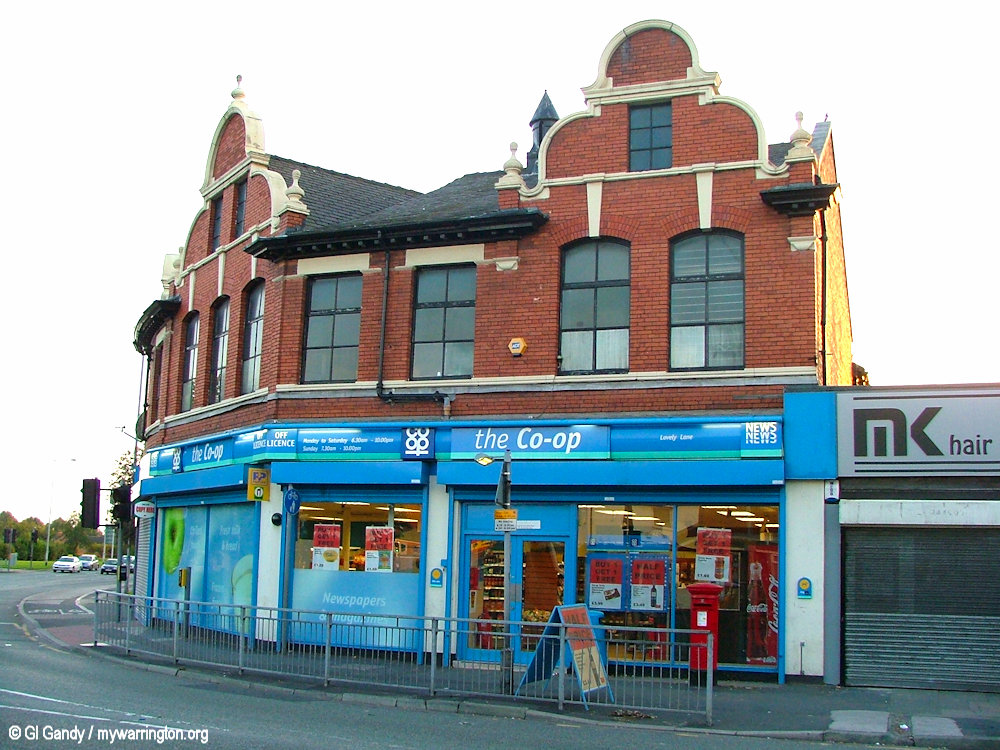
Mill Lane extended along the northern boundary of Sankey Hall Farm from Lovely Lane to Wellfield Street and Mill Cottages. The road sign for Mill Lane is still attached to the Co-op Late Shop on The Green.
Southwest of this was an area of open land called Little Sankey Green which originally had Wellfield Street, Bramhall Street and Pickmere Street running north to south on the west, centre and eastern sides, respectively.
To the east of Sankey Hall, seen on the map, there were houses bound by Thewlis Street, Green Street, Powys Street and Baxter Street, with Atherton Street going east to west through the centre. East of Powys Street was a triangular piece of open land close to where the original White Cross once stood.
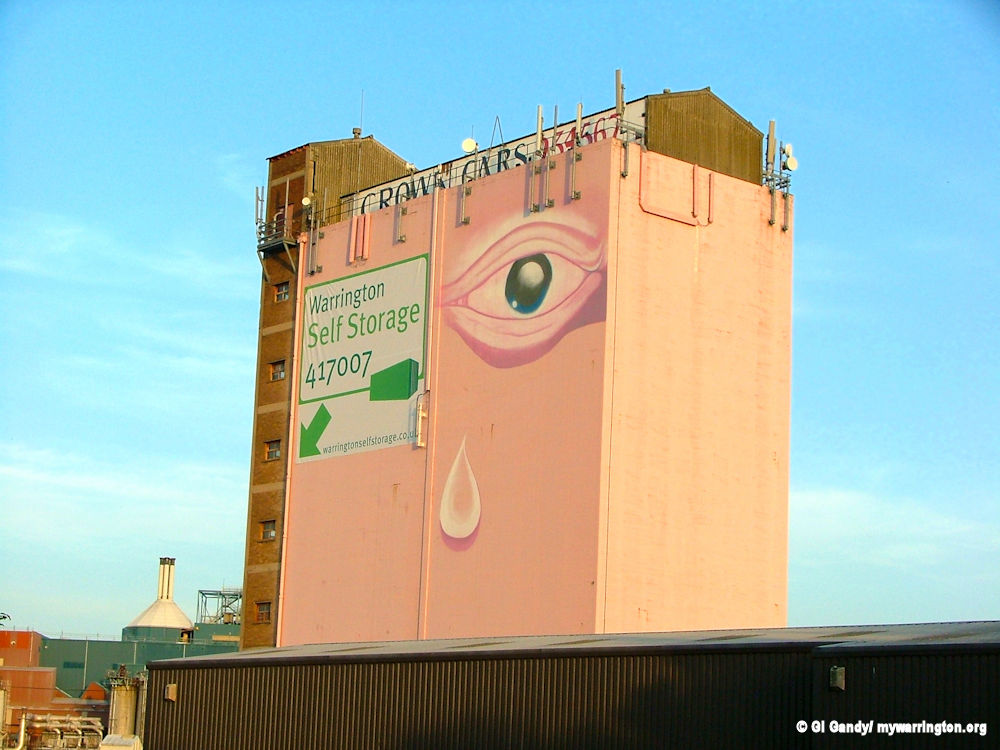
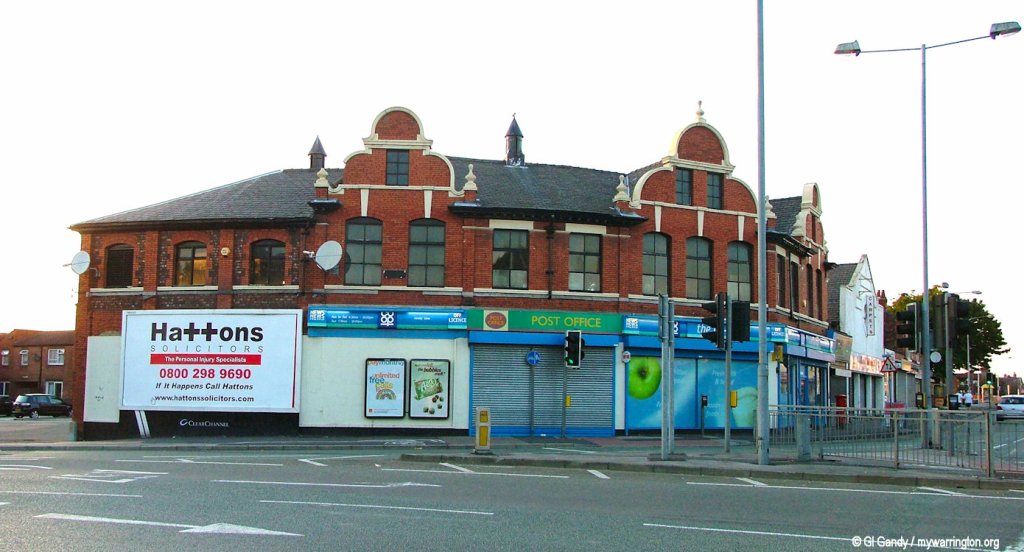
The sites of all the above remained in place until 1970 when a new dual carriageway and roundabout was constructed to ease traffic congestion in the area. The roundabout is known locally as Pink Eye Roundabout, which is named after the former Fairclough’s flour mill building close by, now featuring a painting of a tearful eye on the pink building. The reason for the ‘pink eye’ is because the artist was refused planning permission for a different artwork on the building and painted the eye because he was upset by the council’s refusal.
Whitecross Company
In 1863 the Whitecross Company Ltd was established in the area. The Whitecross Company was based in Milner Street and was incorporated as a limited company in 1864.
The company was known as Whitecross Wire Company in 1882 and renamed Whitecross Company in 1885. At this time the production of wire ropes was undertaken, and the company’s name was changed to The Whitecross Company Limited. Since that time the activities of the firm have changed from time to time, with various products being added whilst the iron furnaces and forges ceased to operate. Amongst the new products, wire ropes were a speciality for the company.
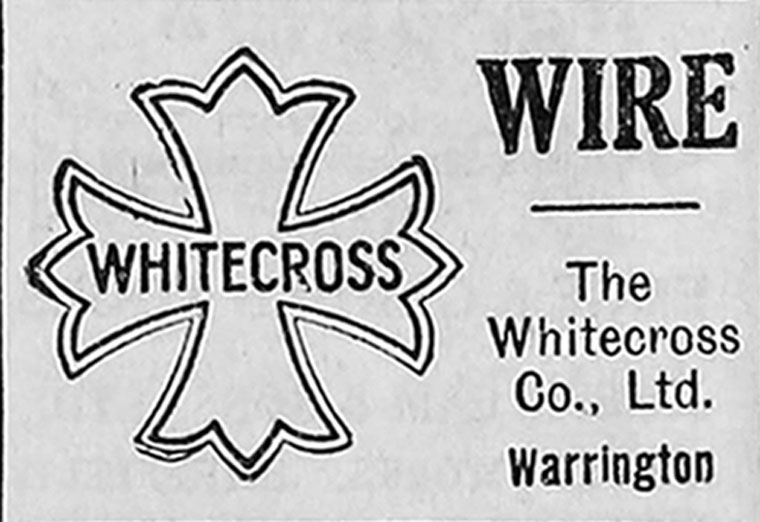
By 1914 they were described as wire manufacturers and galvanizers. Specialities included iron and steel, rolled and drawn wires, patent steel wires, barb wire, wire ropes, wire nails and wire netting. The company employed 1,500 workers at this time.
In 1932 the company was taken over by Lancashire Steel Corporation and in a 1935 review of the company’s operations a report gave the following information:
Today the Whitecross Company employs 1,300 workers, who are engaged in the manufacture of wire ropes of all classes, copper and aluminium conductors, non-ferrous wires, wire rods, cold rolled steel strip, iron and steel wire in a variety of forms, barb wire, galvanized wire, wire netting and “Armco” ingot iron wire with a guaranteed purity of 99.84%.
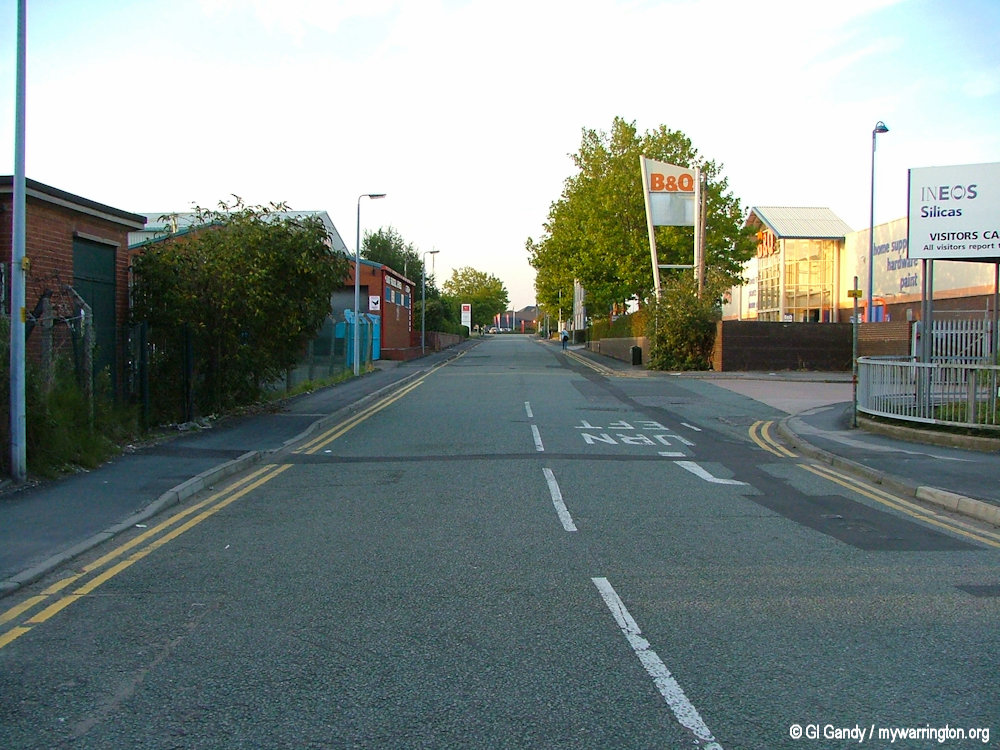
The Whitecross Company occupied both sides of Milner Stret where B&Q is in this view (Selco Builders Merchants today) and the Royal Mail sorting office stands opposite. We are looking north on 10 September 2006. See the map on the National Library of Scotland website.
Owing to imports of the cheaper grades of mild steel wire over a period of two or three decades, the Whitecross Company turned its attention to providing the special classes of wire not catered for by mass production methods. The company operated a highly efficient rod mill, recently improved and brought up to date, for rolling the large variety of high class wire rods required.
In recent years special attention has been given to the manufacture of overhead conductors and cables, and the company was privileged to supply many miles of steel-cored aluminium conductor for various sections of the grid electrification scheme.
Wire rope construction is a particular branch in which the company has been extremely successful. All descriptions of wire ropes are manufactured, including patent round and flat wire ropes for colliery winding gear, highest quality patent and plough steel ropes for mining and engineering purposes, aerial ropeways, tramway, lift, crane, logging, hawsers and other shipping ropes.
A report in The Times newspaper on 15 July 1937 says the company supplied Tru-Lay Ropes. For technical information on this type of wire rope, see The Durham Mining Museum website.
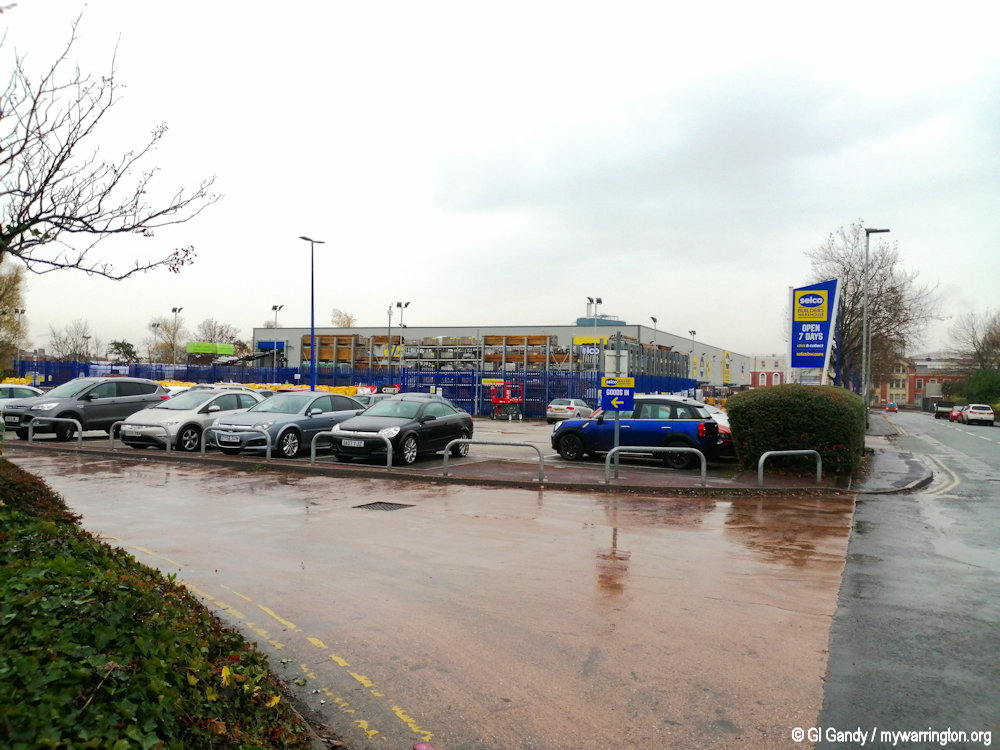
Selco Builders Warehouse now occupies the site of B&Q, the home of the Whitecross Company in the 19th and 20th centuries. Photo taken 27 November 2019.
The 1967 nationalisation of Lancashire Steel saw the company become part of British Steel. In 1973 British Steel sold its carbon- and mild-steel wire-making activities at Warrington (Rylands and Whitecross) and at Middlesbrough (Dorman Long) into a new company Rylands-Whitecross, jointly owned by Tinsley Wire Industries and British Ropes.
Railway sidings linked the factory to the West Coast Main Line and the site occupied about 15 acres of land and around 1,000 people worked there at the turn of the 20th century.
Some information from Grace’s Guide. See another Grace’s Guide report of a visit to the site by the Iron and Steel Institute in 1879.
Whitecross railway station
In the 19th century the St Helens and Runcorn Gap Railway built a branch line to Warrington with a temporary station at White Cross. Read More in Making Tracks. The station was built and operated by the St Helens and Runcorn Gap Railway as a temporary terminus on its line pushing east from Widnes to join with the Warrington & Stockport Railway pushing west from Altrincham. Its exact location is open to debate, as no trace remains.
Tolson cites the line’s inspector, Captain Wynne, as giving the Whitecross to Arpley extension as the very precise 45.75 chains (0.920 km), but as the location of the Arpley datum point is unclear then the location of Whitecross station is also precisely unclear. Tolson concludes that the station was probably ‘just east of Litton Mill Crossing’. Read more in Making Tracks.
Warrington Hospital
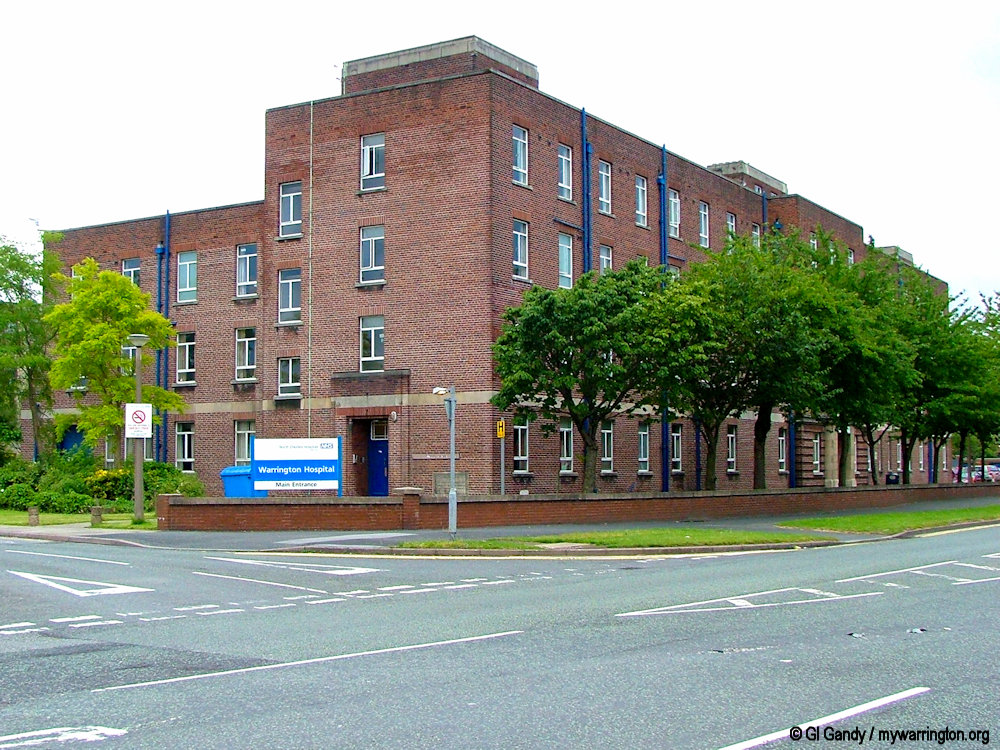
Warrington and Halton Teaching Hospitals NHS Trust is located on Lovely Lane in Whitecross. A Warrington Union workhouse was built on a site between 1849 and 1851. This was a two-storey building with cross wings at each end with a kitchen, dining hall and a chapel located to the rear. An earlier workhouse was established on Church Street between 1727-29. See workhouses.org for more.
The National Archive tells us Warrington General Hospital was erected in 1899 as a Workhouse Infirmary by the Warrington Board of Guardians in 1899. The workhouse itself later became the Whitecross Institution.
The site was occupied by the Whitecross Military Hospital during the First World War. In 1929, it was transferred to the control of the borough council and was re-named the Borough General Hospital (to this day it is still referred to as the Borough by many people). When it was transferred to the National Health Service in 1948, it had 372 beds.
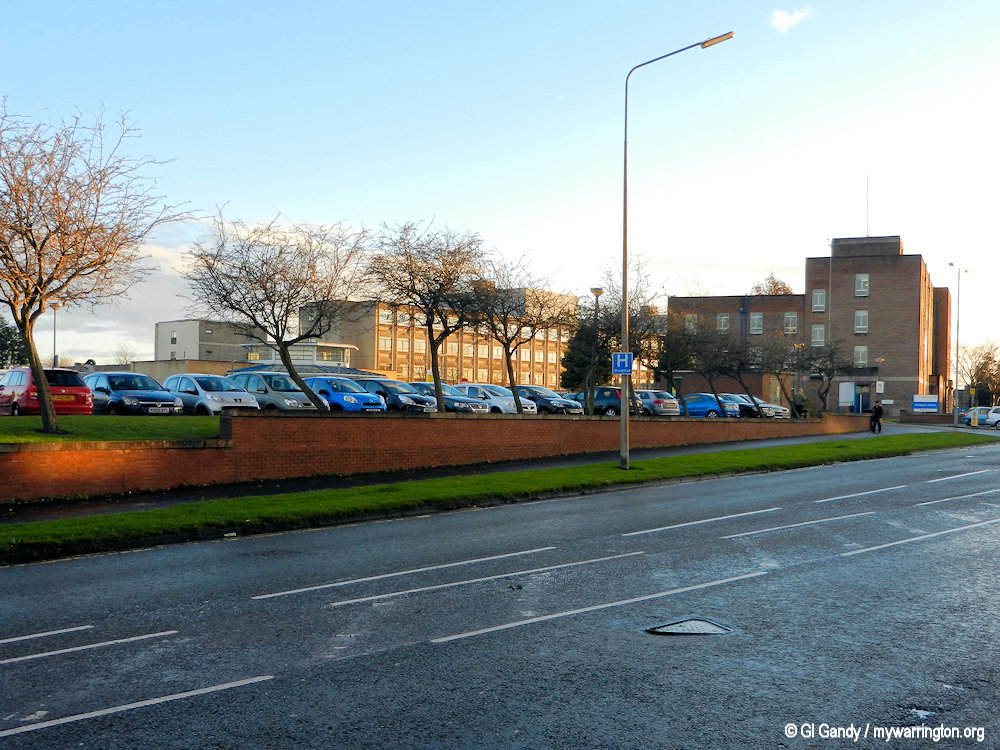
Warrington Hospital and the former nurses’ home, as seen on 23 November 2012.
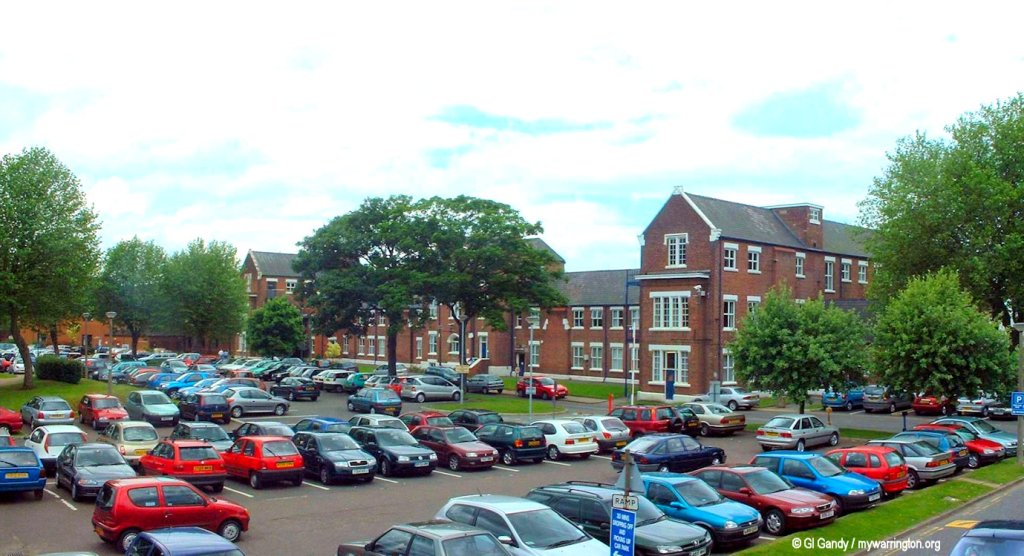
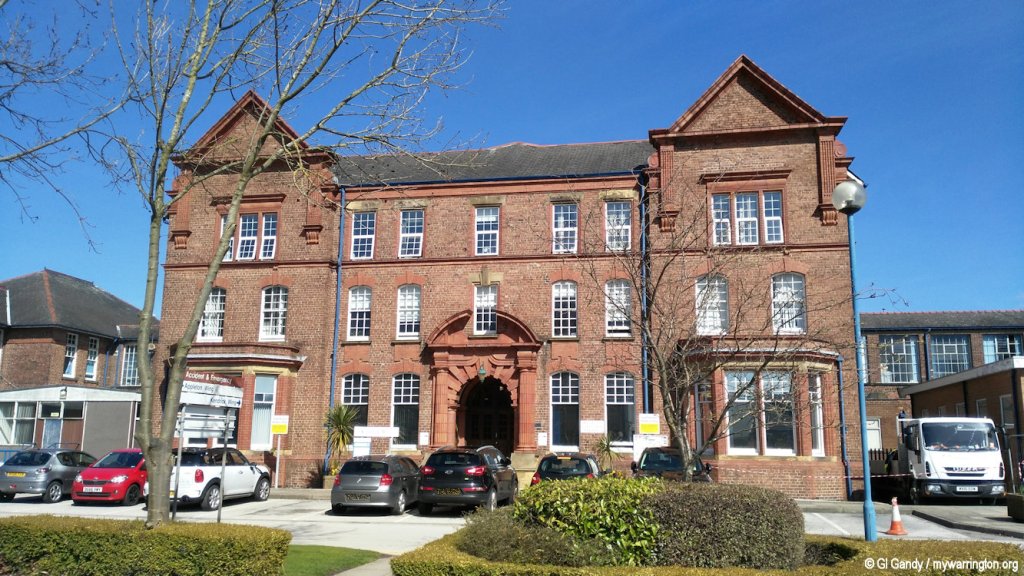
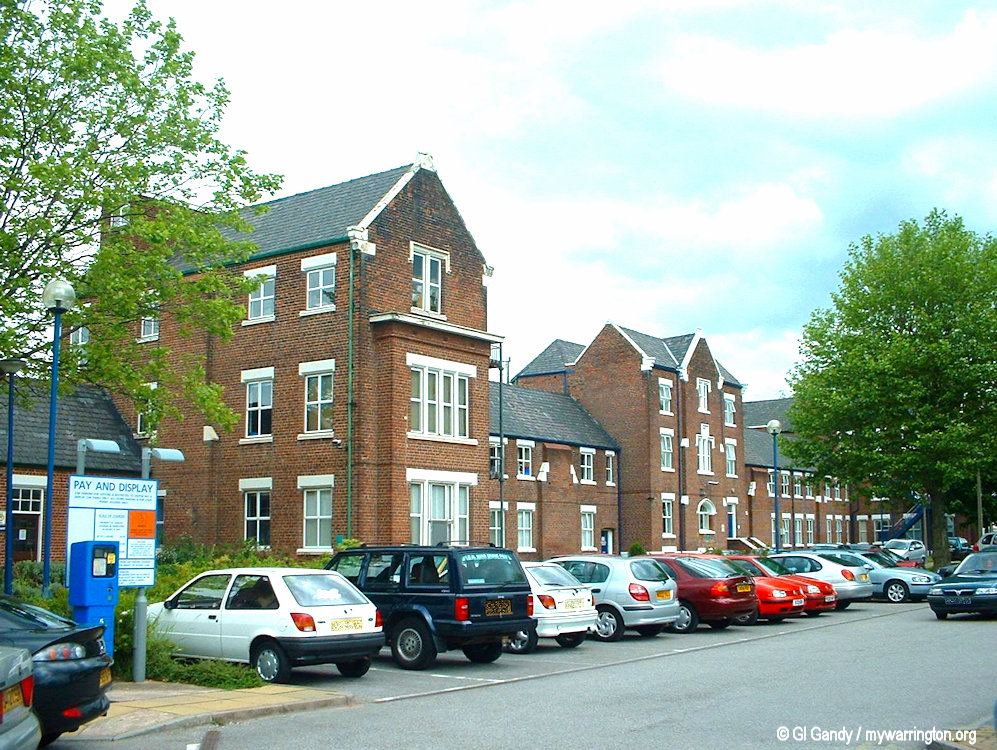
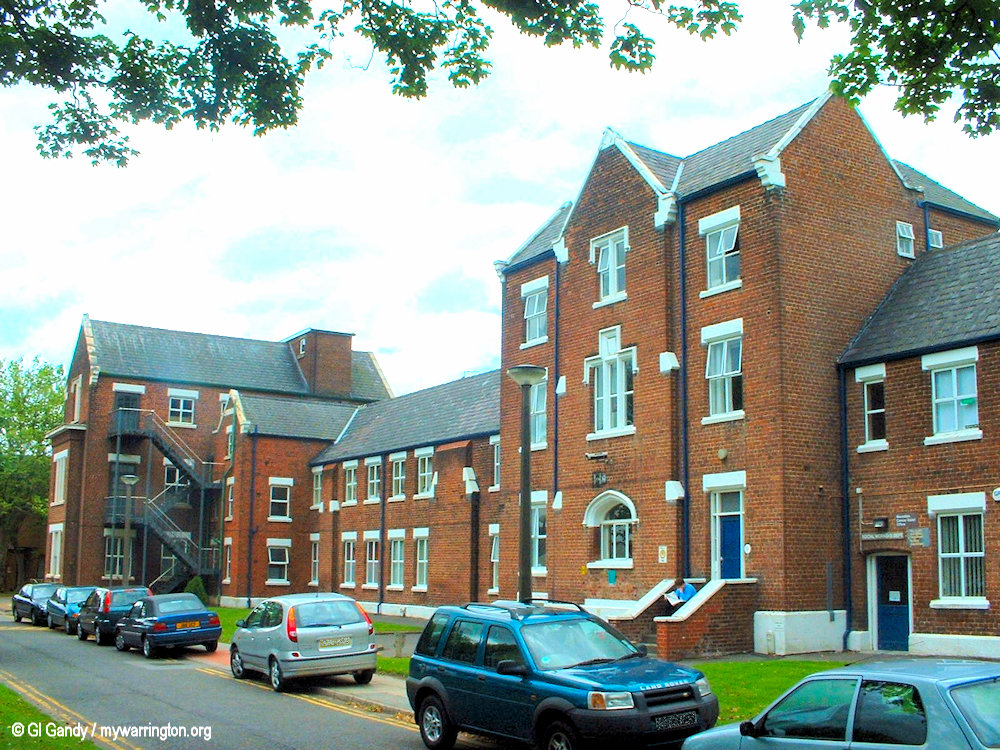
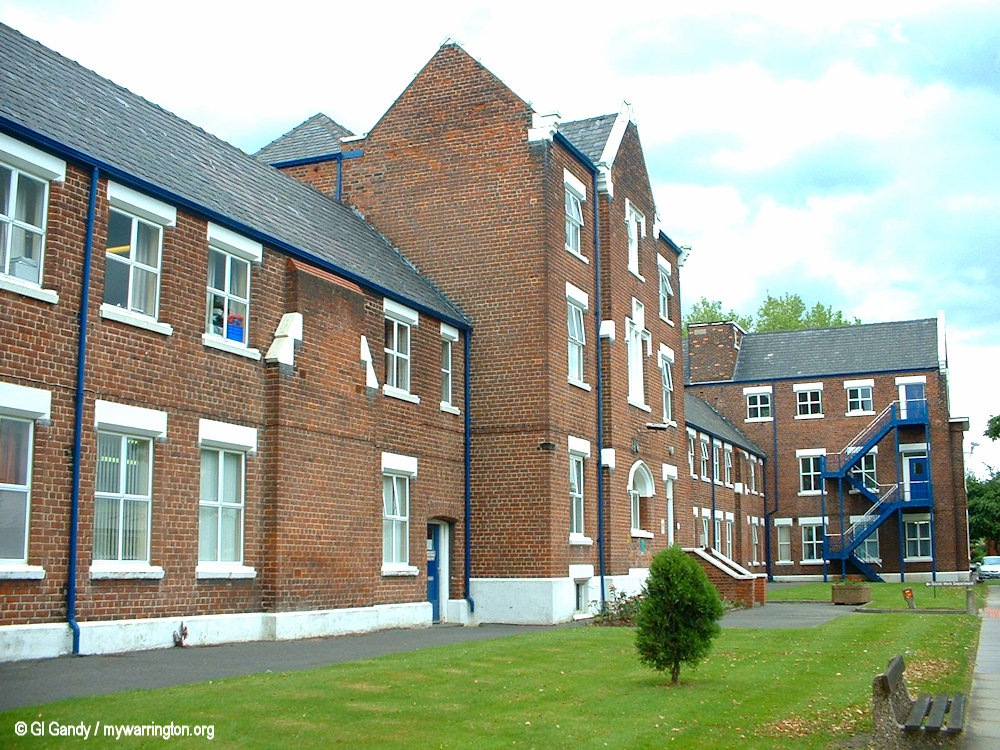
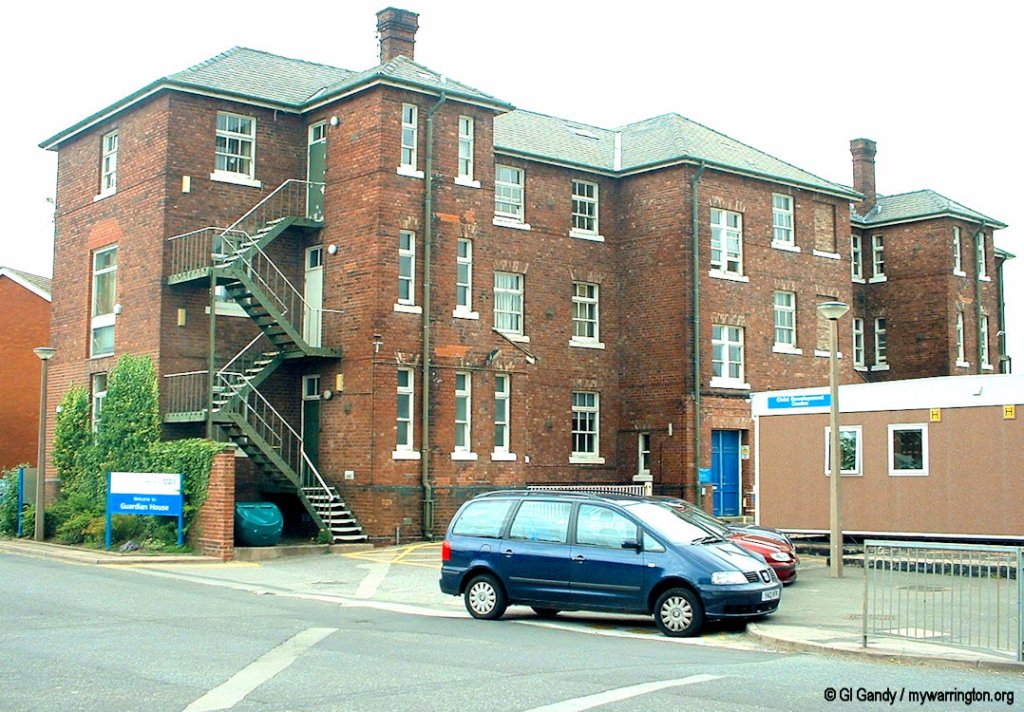
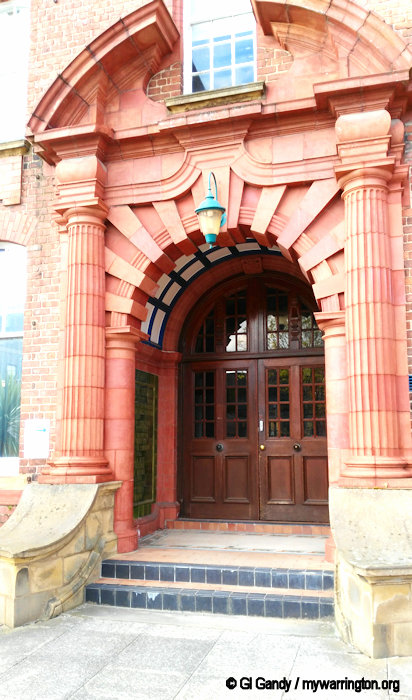
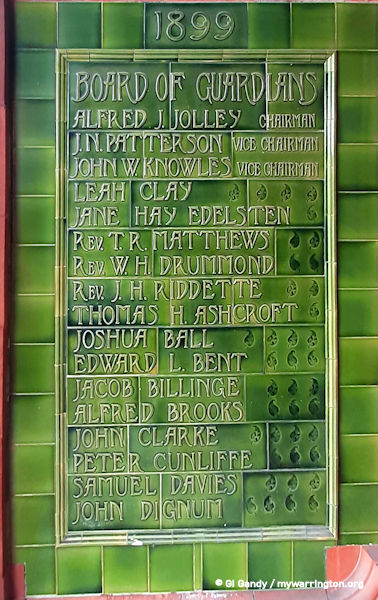
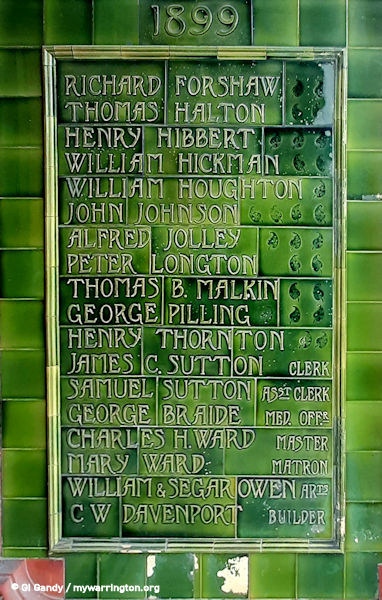
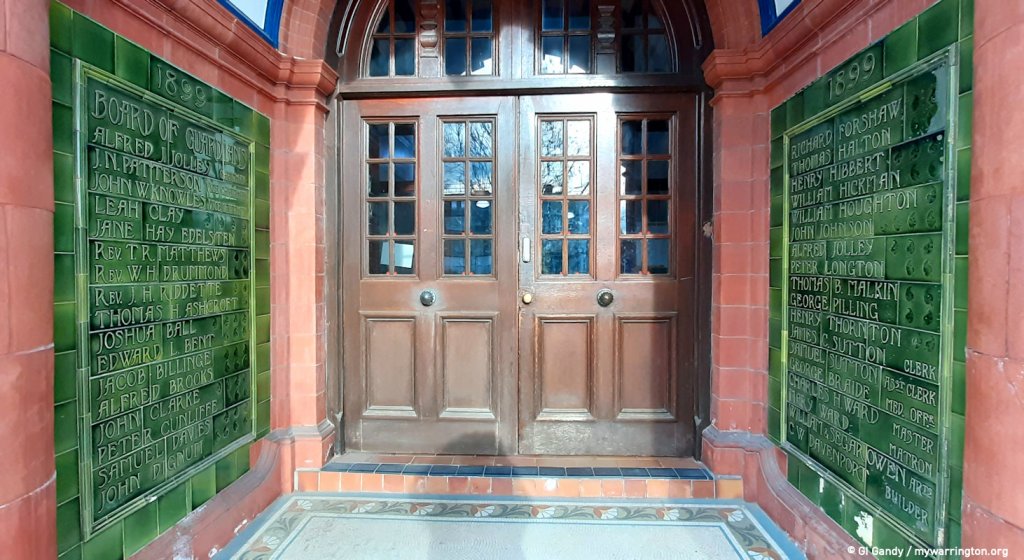
Views of Kendrick Wing, the oldest building still in use. Photographed 11 June 2003 (first seven images) and 14 February 2026).
There were two other hospitals on the site, Aikin Street (an infectious diseases hospital which was originally named the Isolation Hospital – see the National Museum of Scotland map) – and Whitecross Hospital which was run by the military, as stated earlier. The foundation stone of the former nurses’ home was laid on 28 September 1937. In future years the nurses’ home became the Postgraduate Centre and it is now the Education Centre and Library in 2025.
Like most hospitals in the country, the individual hospitals came under the National Health Service in 1948. Spearheaded by Minister of Health Aneurin Bevan, the service was created following the National Health Service Act 1946. It was one of the first of its kind, bringing together hospitals, doctors, dentists, and other services under a single organization. The new system was established to provide care based on clinical need, not the ability to pay.
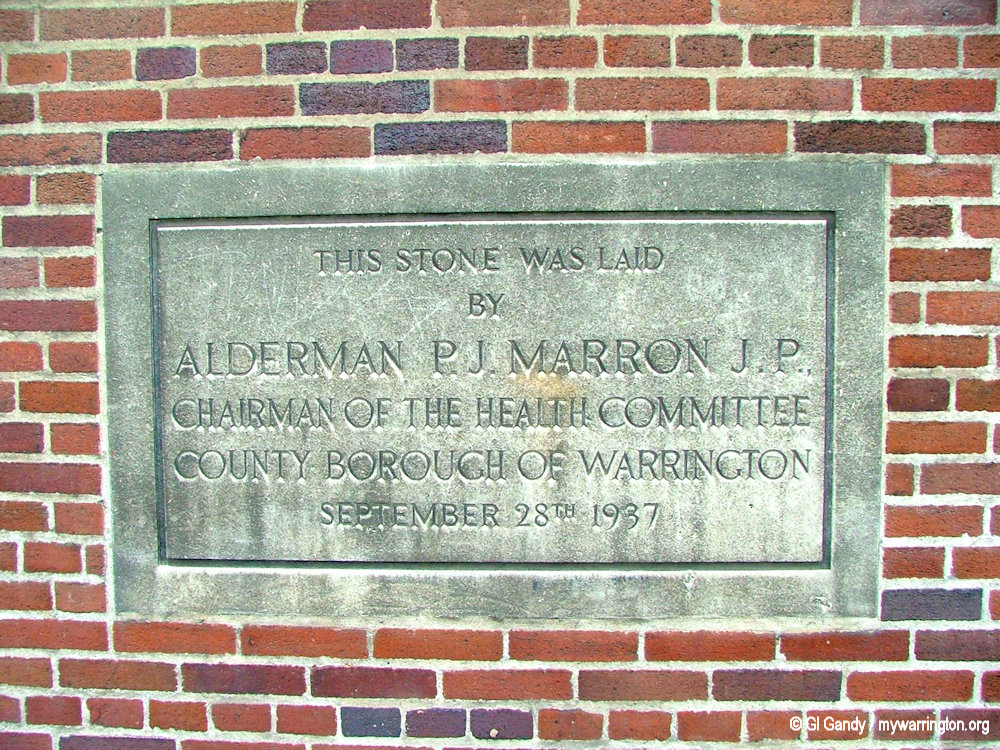
The foundation stone for the new nurses’ home. My photo taken 16 June 2007.
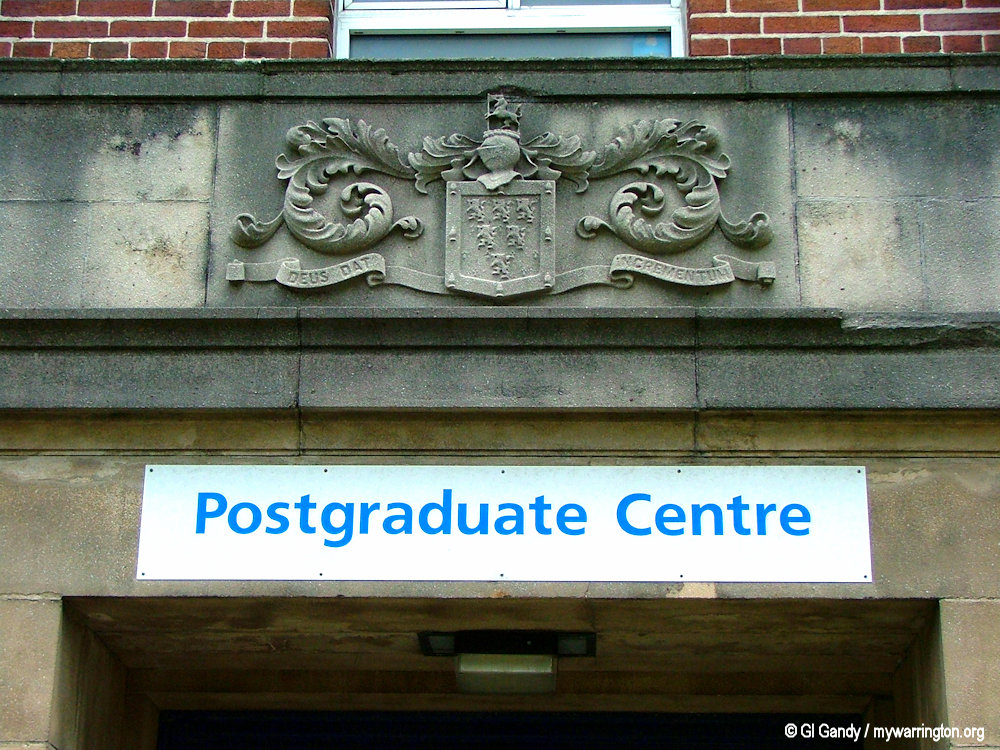
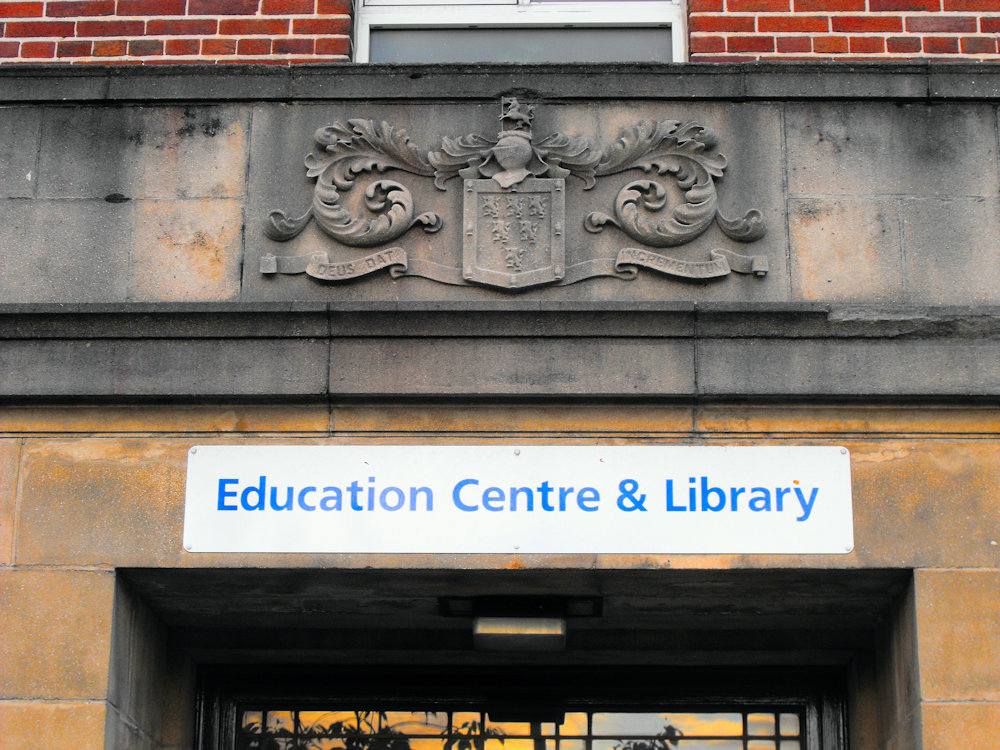
A close-up view of the former nurses’ home (first image above) with the entrance as the Postgraduate Centre and later the Education Centre & Library with the County Borough coat of arms above in the stone work.
In 1973 a decision was taken to merge all three hospitals into Warrington District General Hospital. The current hospital has grown in four stages since then.
The Aikin Street building was demolished in the 1973 to make way for Appleton Wing of the current hospital (where the A&E, medical wards and operating theatres are located), which was phase A of the new General.
Burtonwood Wing opened in 1988 with the stroke, elderly care and children’s wards.
The main building of Whitecross Hospital was demolished in the late 1980s to make way for the Croft Wing which opened in 1994 and houses maternity and women’s services.
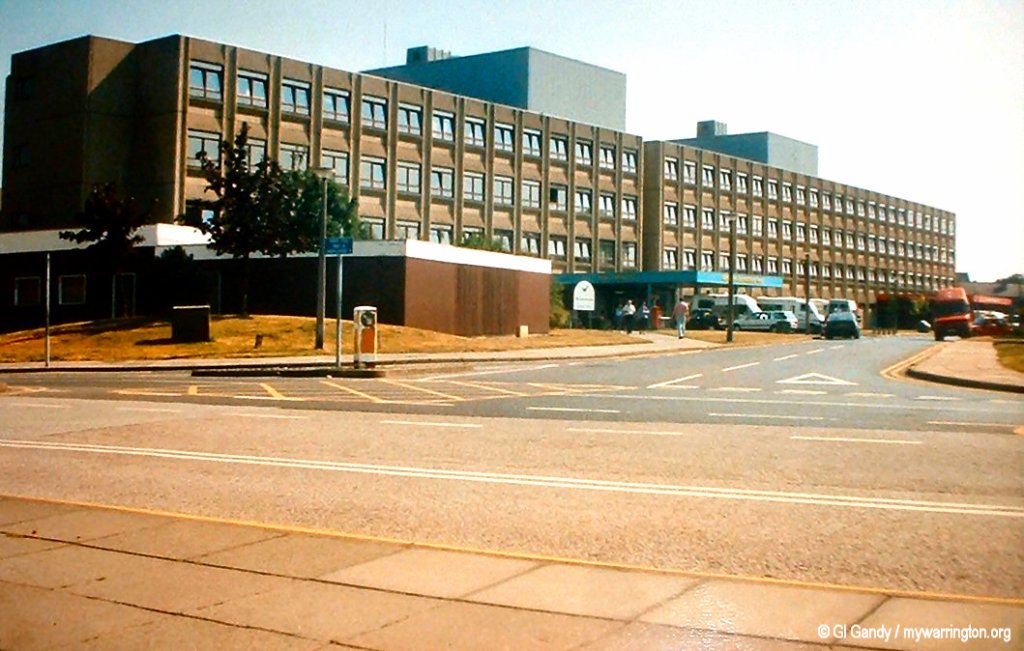
The main entrance to the hospital in the centre of the block as it looked on 10 August 1995.
Management of the hospital passed to the Warrington General Hospital NHS Trust in 1993. A new £6.25 million intensive care unit opened in February 2009. The hospital employs around 3,000 people.
The Daresbury Wing opened in 1998 and is the surgical unit.
In 1993 the government decided to separate the role of health authorities and hospitals and the hospital was handed over from Warrington Health Authority to the newly formed Warrington Hospital NHS Trust. North Cheshire Hospitals NHS Trust was formed by the merger of Warrington Hospital NHS Trust and Halton General Hospital NHS Trust in 2001.
The hospital has undergone significant development over recent years with a rebuilt accident and emergency department, coronary care unit and refurbishment of most of the wards. A new critical care unit costing £6.25 million opened in February 2009 and in late 2009 a new clinical decisions area next to the A&E department was started.
Some information from Wikipedia.
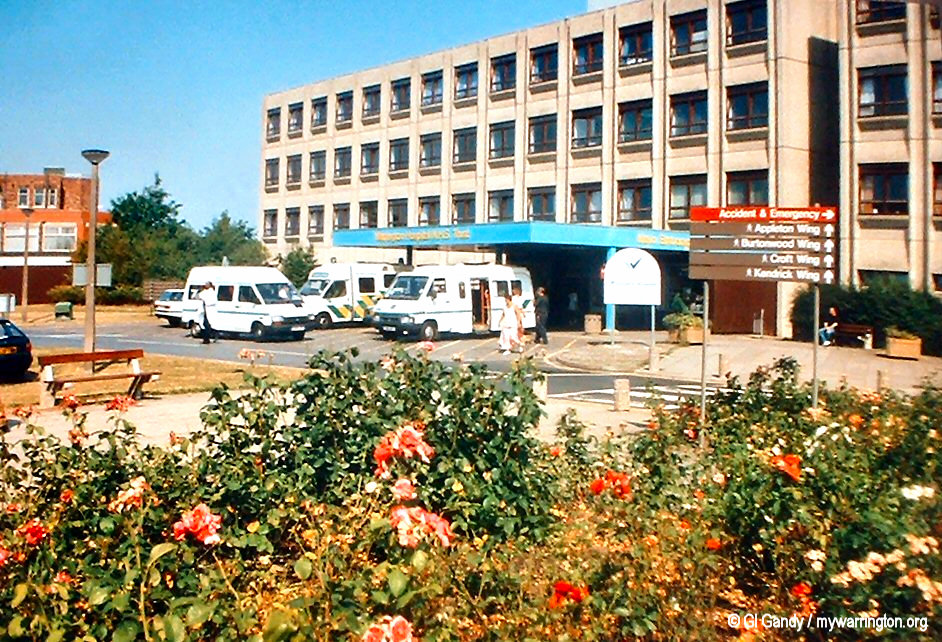
Another view of the main entrance to the hospital as it looked on 10 August 1995. This entrance is now used by ambulance staff with the public entrance now at the far end of the building beyond the ambulances.
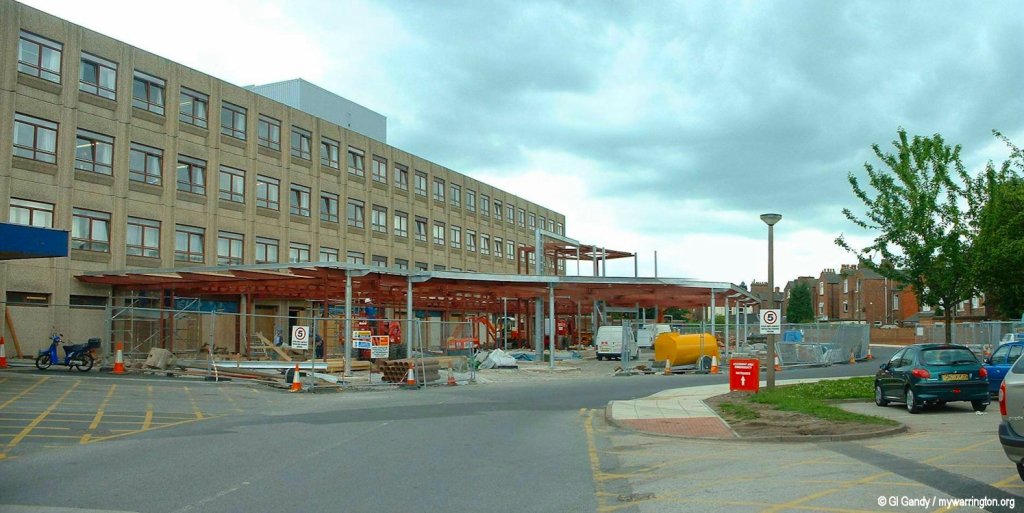
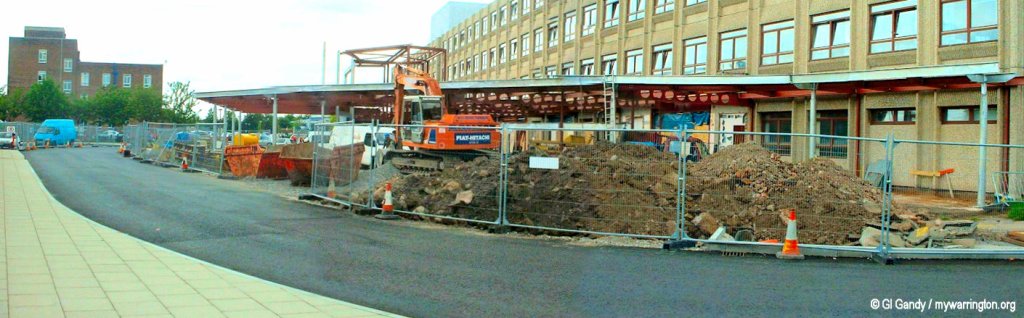
The current entrance to the A&E department under construction on 11 June 2003.
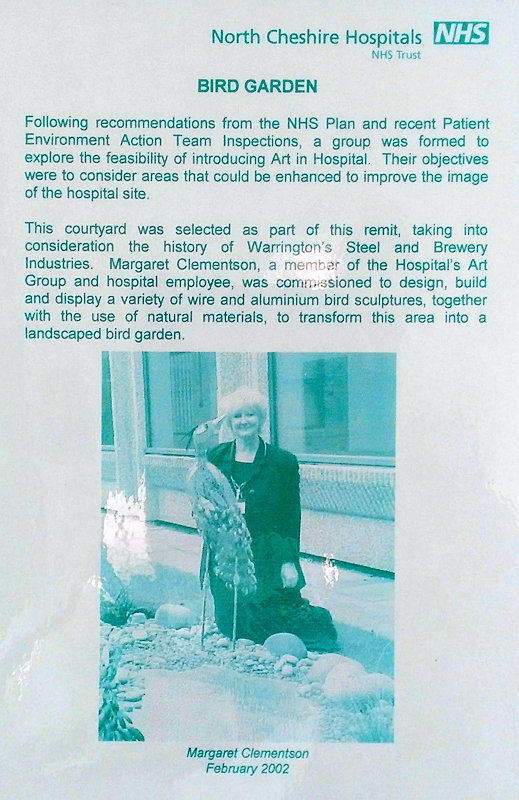
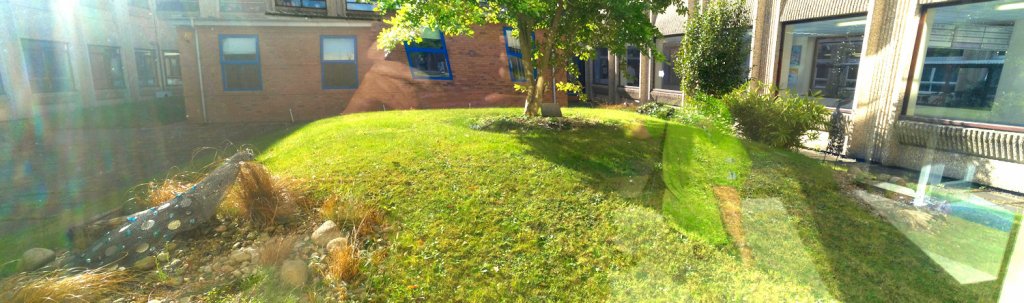
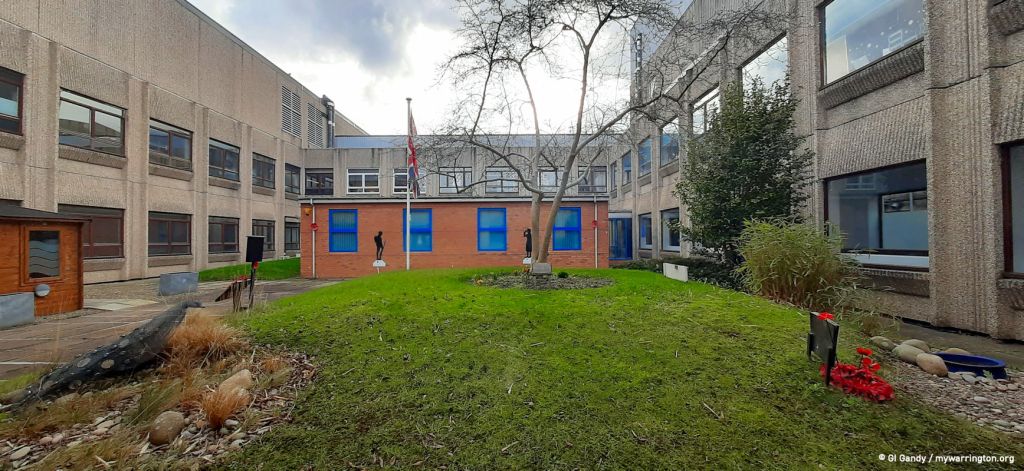
Information and photo of the Warrington Hospital bird garden on 10 October 2016 (above) and 14 February 2026
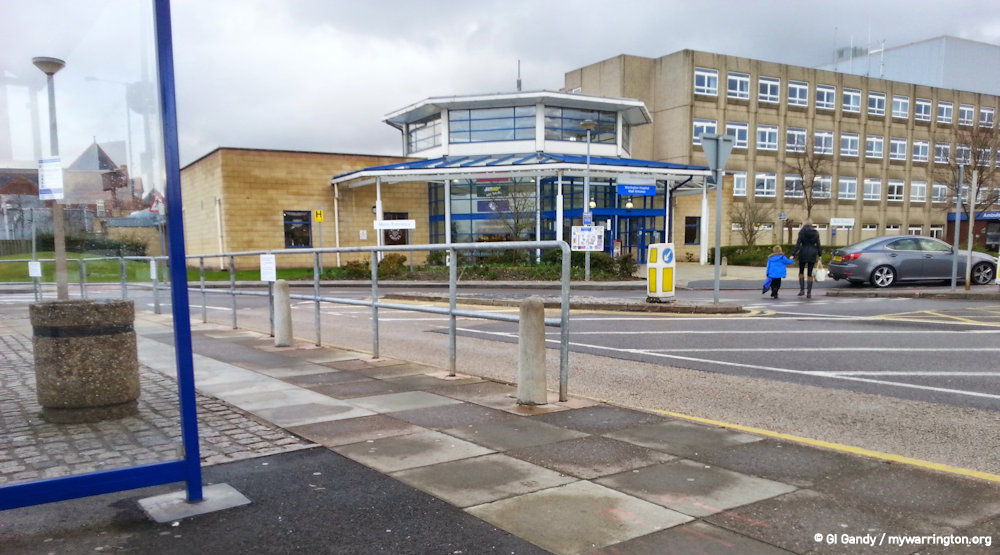
Hospital main entrance (1 Apr 2015)
To finish off on the hospital, and with thanks to the Warrington Guardian, lets look at reporter Adam Everett’s timeline of health milestones since the formation of the National Health Service, published on 5 July 2018.
- 1948 – Warrington’s hospitals, sanatorium and maternity home were transferred to the Hospital Management Committee on 5 July.
- 1952 – Winwick Hospital, which had nearly 2,000 patients and 759 staff members, celebrated its 50th anniversary.
- 1953 – Warrington Hospital’s League of Friends was formed to supply patients with items such as toiletries and pressure cushions during their stays.
- 1955 – Warrington MP Dr Edith Summerskill made a speech in Parliament regarding the issue of air pollution in the town, and the damage it was causing to the health of residents.
- 1957 – Radio General was launched at Warrington Hospital.
- 1967 – The Smoke Act encouraged industries to reduce the amount of pollution they emit, and Warrington becomes the first town to bring in smoke control over a 10-year period.
- 1973 – Three hospitals were amalgamated under the new Warrington District General Hospital. Aitken Street Hospital was demolished to make way for the Appleton wing of the current Warrington Hospital.
- 1974 – Construction work on the new Warrington District General Hospital began. Winwick Hospital established its community psychiatric nursing service to follow up on patients who had been discharged.
- 1979 – Warrington General Hospital’s new radiology and outpatients departments opened.
- 1980s – The main building of Whitecross Hospital was demolished to make way for Warrington Hospital’s Croft wing.
- 1980 – The new Warrington District General Hospital opened on 1 January, with Warrington Infirmary on Kendrick Street then closing on 3 January. The last baby was born at Victoria Park Maternity Home, with the building later to become Park Manor home for the elderly and then the Spirit restaurant.
- 1987 – The number of resident patients at Winwick Hospital was reduced to around 1,000.
- 1988 – The £5.2m Burtonwood wing was opened at Warrington Hospital.
- 1992 – Graham Copeland, assistant medical director and general surgeon at Warrington Hospital, devised the possum equation to predict the likely outcome of a surgical procedure. This is now used by medical professionals around the world.
- 1994 – Princess Anne officially opened the Croft wing at Warrington Hospital on June 10.
- 1995 – A new medical centre was opened on Guardian Street, at the back of the hospital, in April. In September, the hospital’s new ophthalmic centre opened.
- 1997 – Winwick Hospital was closed in March.
- 1998 – The £18m Hollins Park Hospital opened as a replacement for Winwick Hospital. The Daresbury wing was opened at Warrington Hospital.
- 2000s – Warrington Hospital received a new main entrance and A&E unit.
- 2001 – Warrington and Halton hospitals merged to form North Cheshire Hospitals NHS Trust.
- 2002 – A fire broke out on Warrington Hospital’s A2 ward, with around 90 patients evacuated.
- 2006 – Warrington Hospital announced plans to cut 180 beds and 3,000 jobs in an effort to address an £8.5m deficit. In March, Pete Waterman opened a new £2.9m cardiac catheter suite at the hospital.
- 2008 – On 1 December, North Cheshire Hospitals NHS Trust became Warrington and Halton Hospitals NHS Foundation Trust.
- 2009 – A new £6.25m intensive care unit opens at Warrington Hospital.
- 2012 – The Bath Street Health and Wellbeing Centre opened on the former site of Warrington Baths in December.
WHEN the NHS was first formed on 5 July 1948, Warrington was a very different place.
- During the year, 1,527 births and 875 deaths were recorded in the town.
- The most common causes of death included heart disease and cancer, which were attributed to 23 per cent and 16 per cent of deaths respectively.
- Warrington General Hospital was extended in 1948 to cope with the 5,000 admissions it received every year.
- Warrington Infirmary was the next busiest hospital in the town with more than 3,000 admissions per year.
- Winwick Hospital employed 16 full-time medical staff and had 20 visiting consultants – as well as chiropodists, a social worker and a professional dancing master who was tasked with giving dance lessons.
- Only four ambulances were in operation in Warrington in 1948 – an Austin 1932, an Austin 1934, a Ford V8 1934 and an Austin 1940. Three of these were stationed at Warrington General Hospital, with the other based at the health department on Sankey Street in the town centre.
- Other hospitals in operation in the town at the time and in the 1950s included Newchurch Hospital in Culcheth, the 37-bed Thelwall Grange Hospital offering post-operative treatment and Whitecross Hospital, which treated the elderly and mental illnesses, and had 236 beds.
- Meanwhile, Aiken Street Hospital had 110 beds and treated infectious diseases such as tuberculosis as well as the elderly, while Victoria Park Maternity Home had 23 beds.
See more photos from the Warrington Guardian report here.
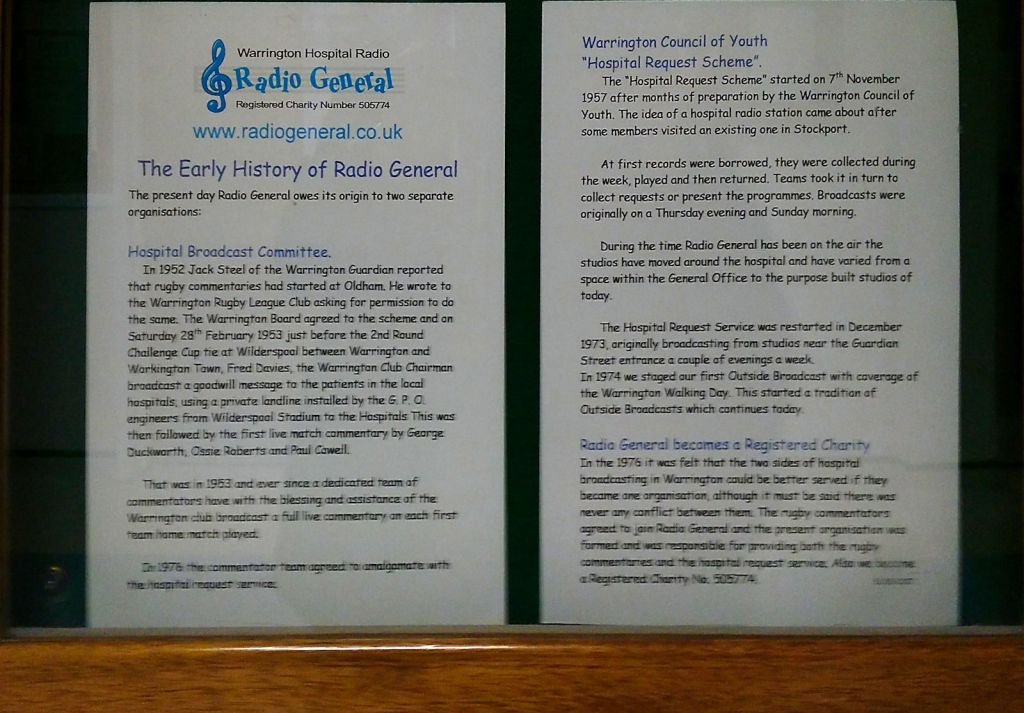
Radio General
Radio General, founded in 1957, is a registered charity run by volunteers that provides music, entertainment, and information to patients at Warrington Hospital.
- 1957: Started by the Warrington Council of Youth as the “Warrington Hospital Request Broadcasting Scheme,” with two live request shows per week.
- 1960s: Changed its name to the present “Radio General”.
- 1973: Relaunched in December after a period of inactivity.
- 1974: Conducted its first outside broadcast at Warrington Walking Day.
- 1979: Provided live coverage of a visit by Queen Elizabeth II to the town.
- 2001: Moved into its current location, the Keith Inman Studios, in the main entrance of Warrington Hospital.
- 2004: Began broadcasting on the hospital’s patient bedside entertainment system.
- 2017: Launched an online service, making its broadcasts available to a wider audience.
- 2022: Celebrated its 65th anniversary and hosted an open day for visitors.
- Today: Continues to operate 24/7, providing request shows, local interest programs, and live commentary on Warrington Wolves rugby games.
From AI research.
St Barnabas Anglican Church
St Barnabas is a Church of England fellowship and was founded in 1879 on Lovely Lane. The foundation stone was laid on 31 August 1878 and the building was consecrated on 18 October 1879. St Barnabas was built as a daughter-church to St. Paul’s Bewsey Road, which is now demolished.
St Barnabas was designed by local architects, William & Segar Owen, and consecrated on St Luke’s Day (18th October), 1879, by the Rt. Reverend William Jacobson, Lord Bishop of Chester. The church became a parish in its own right in 1884. Six new windows were dedicated at St Barnabas Church on 12 January 1964. The church does not have a graveyard.
The current vicar is Rev. Karen Timmis has served since May 1988 and officiated at both my parent’s funerals. And very nice services they were too.
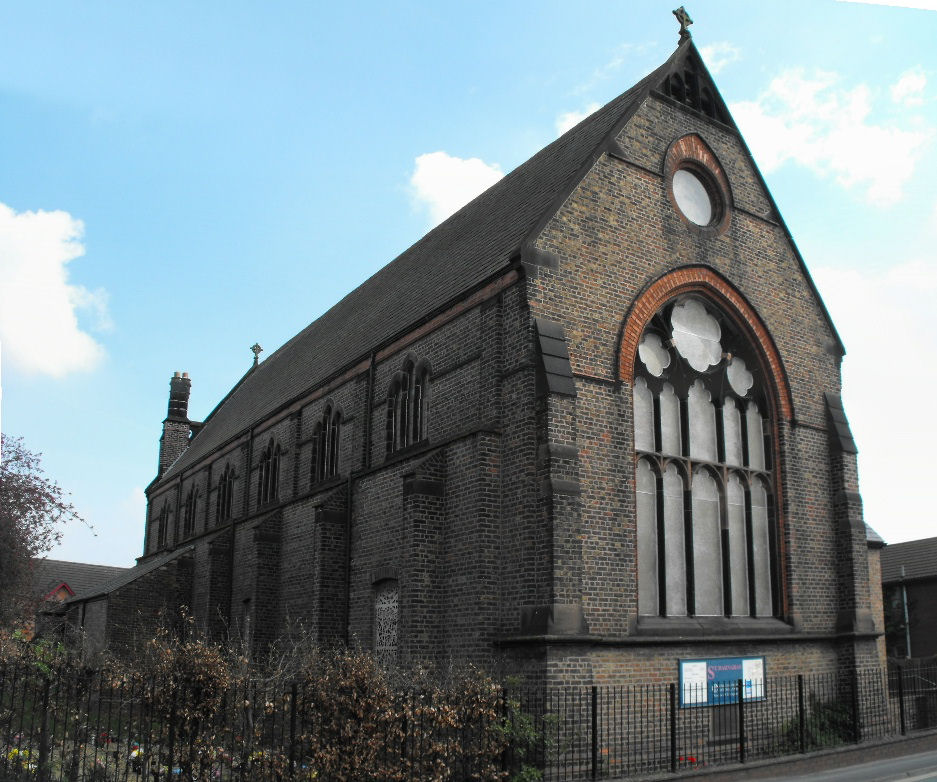
St Barnabas on 13 Apr 2009
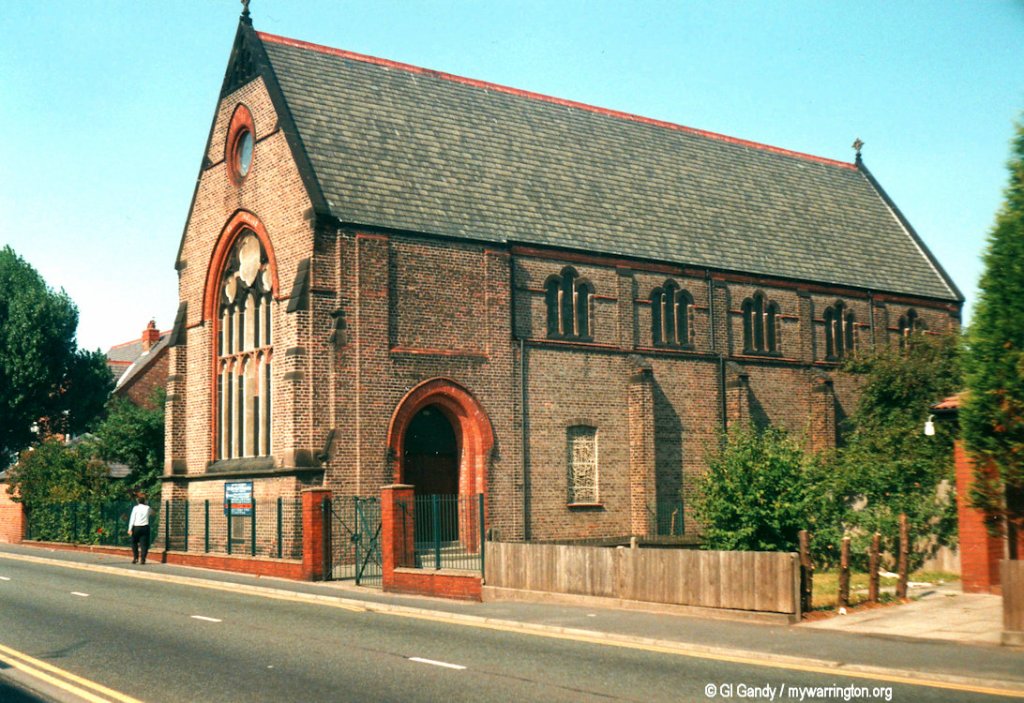
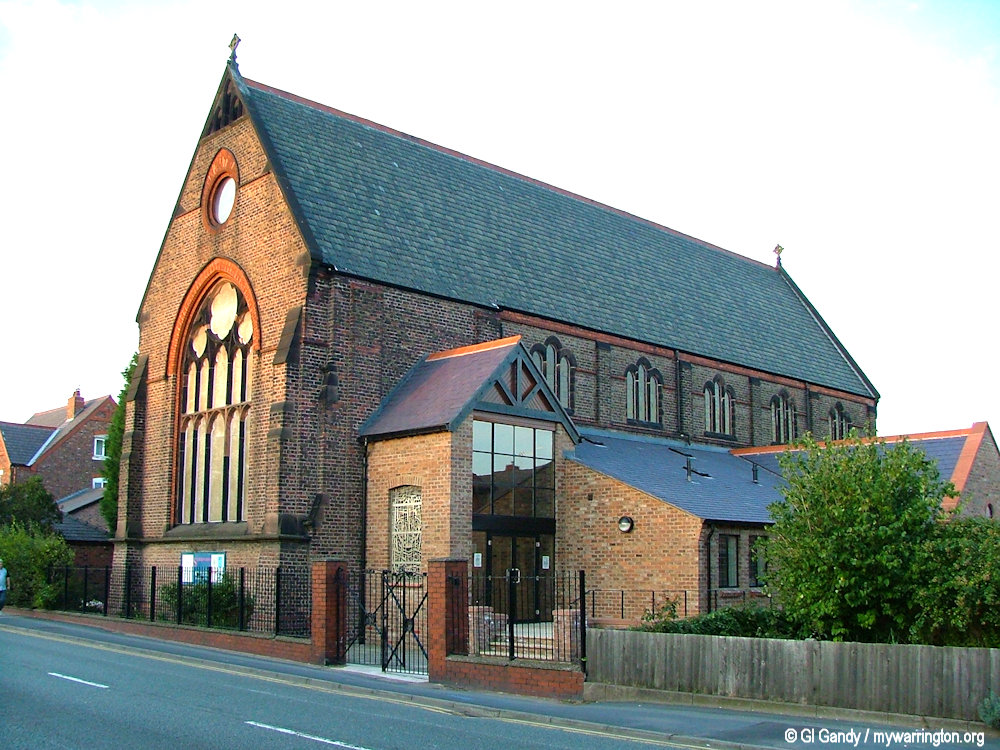
St Barnabas church on 10 August 1995 (first image) and with a new entrance on 10 September 2006.
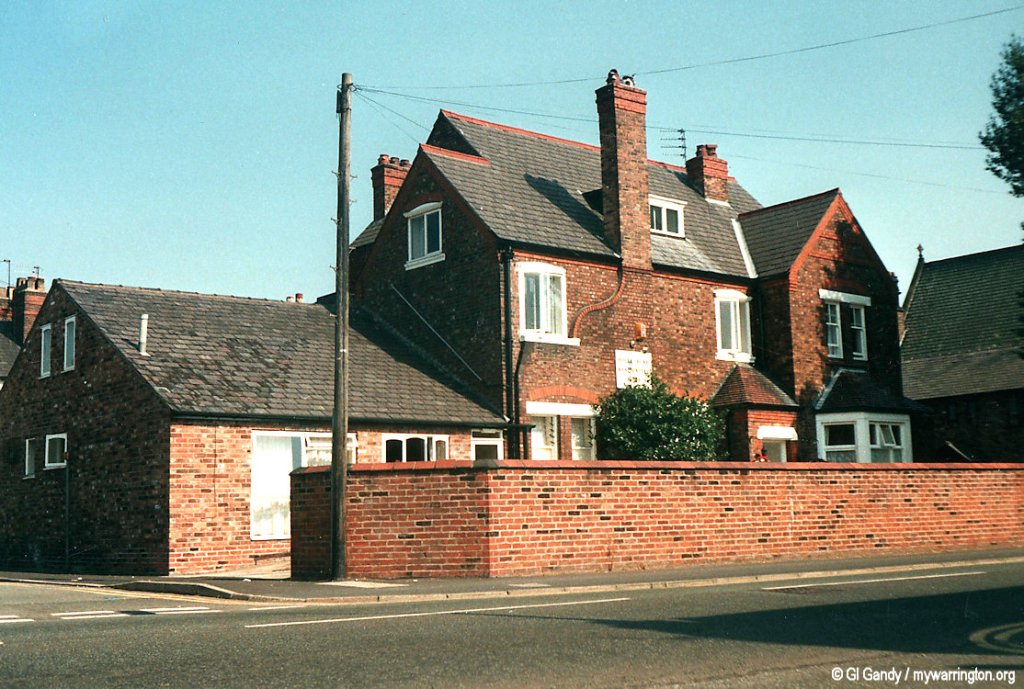
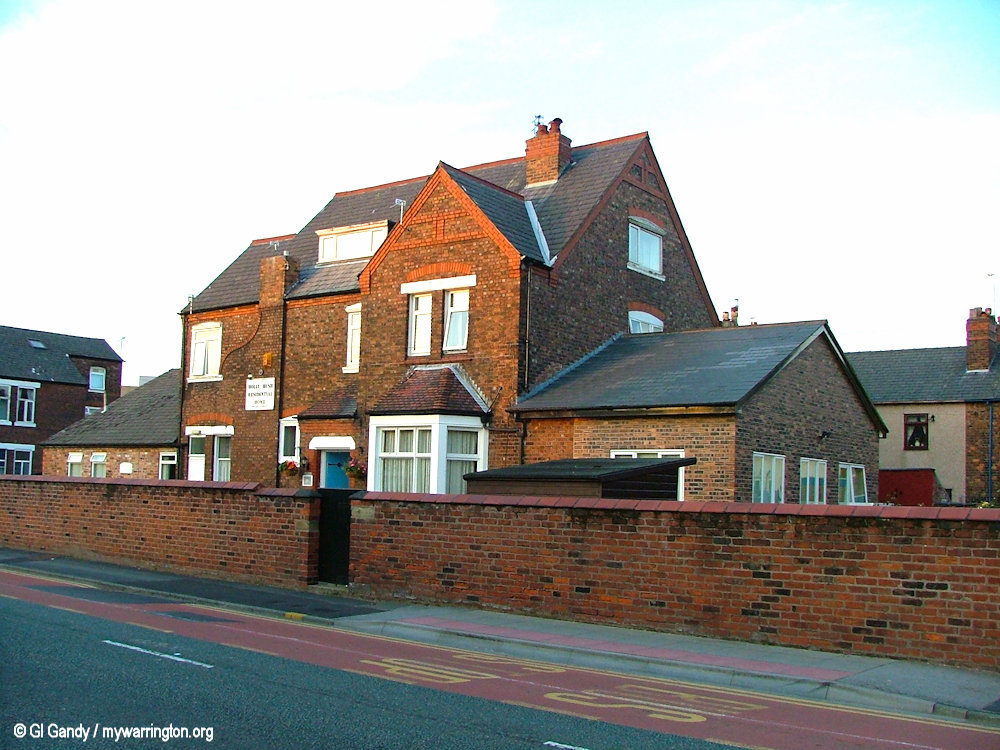
Holy Bush Nursing Home closed in 2011 after reports from Warrington Borough Council and the Care Quality Commission found patients were not being cared for properly. Read more in the Warrington Guardian.
St Barnabas Church of England Primary School
St Barnabas Church of England school is located close by on Collin Street. The possible year of opening of the first St Barnabas C of E School was 1890 (the records have been lost). The second St Barnabas C of E Primary School officially opened in Collin Street on 19 May 1972. St Barnabas school children took part in “Big Dig” for Channel 4 television on the weekend of 28-29 June 2003. A new nursery opened at St Barnabas school on 5 December 2003.
Sacred Heart Catholic Church
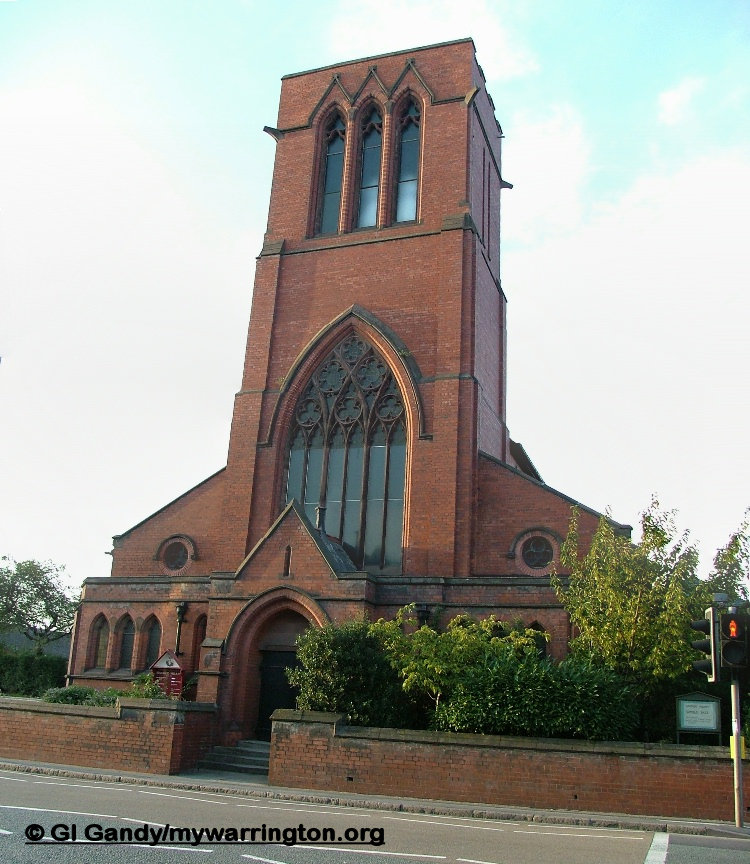
Sacred Heart Church on Liverpool Road as seen on 10 Sep 2006
Sacred Heart Catholic church was built on Liverpool Road opposite the Crosfield’s works in 1894 to cater for the needs of families living in the area at the time.
The foundation stone bears a Latin inscription which translated into English means “To the honour of the Holy Trinity and in the name of the Sacred Heart of Jesus’. The stone was laid on 3 June 1894 by the Most Reverend James Canon Carr, Vicar Capitular. Reverend Michael Ryan was the Rector. Money for the building of the church – but not for its furnishing or the land on which it was built – was provided by two priests – Frs John and James Lennon. Built to the designs of Messrs Sinnot, Sinnot and Powell of Liverpool, the church was constructed in red brick with sandstone edgings to the windows and the builder was Mr Winnard of Wigan. The total cost was around £6,000 and it replaced a smaller chapel on the same site.
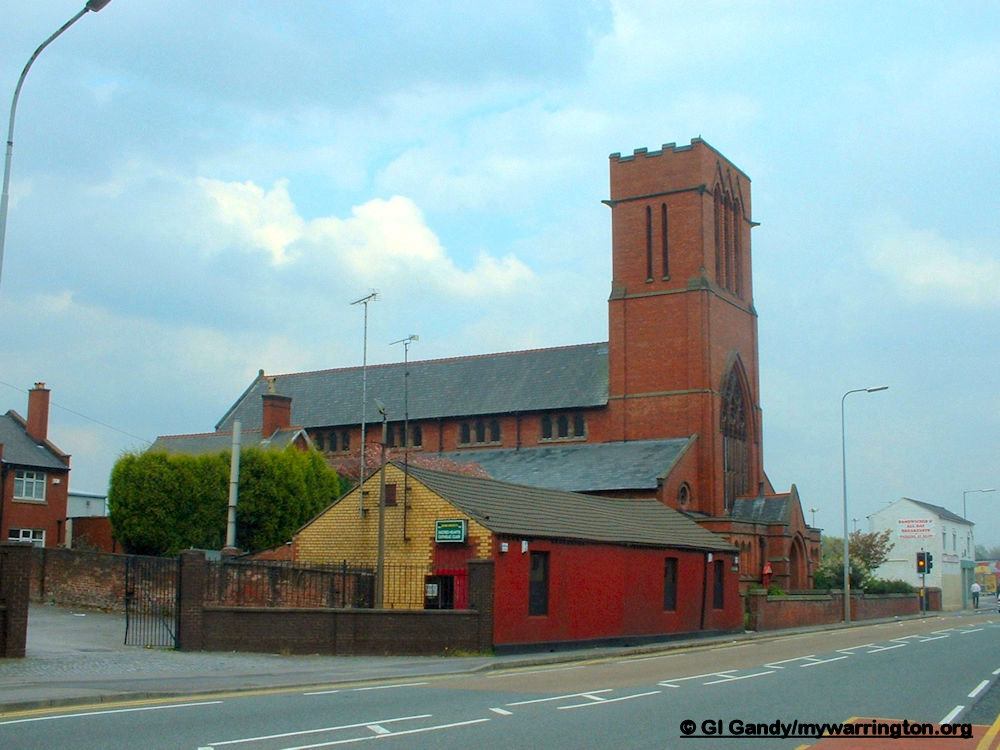
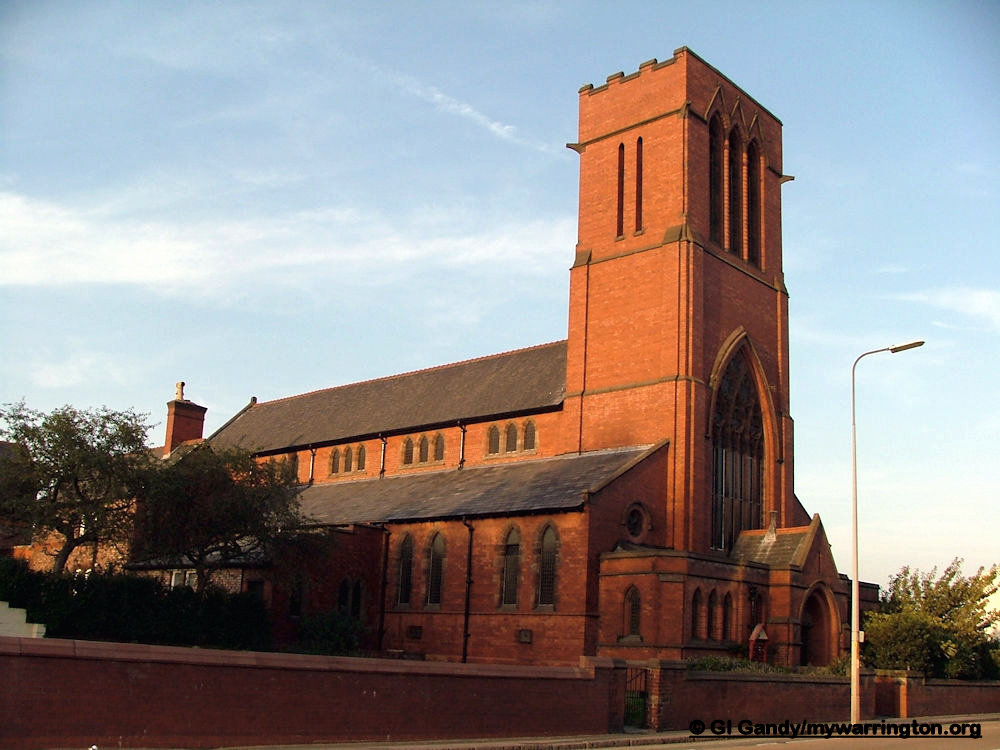
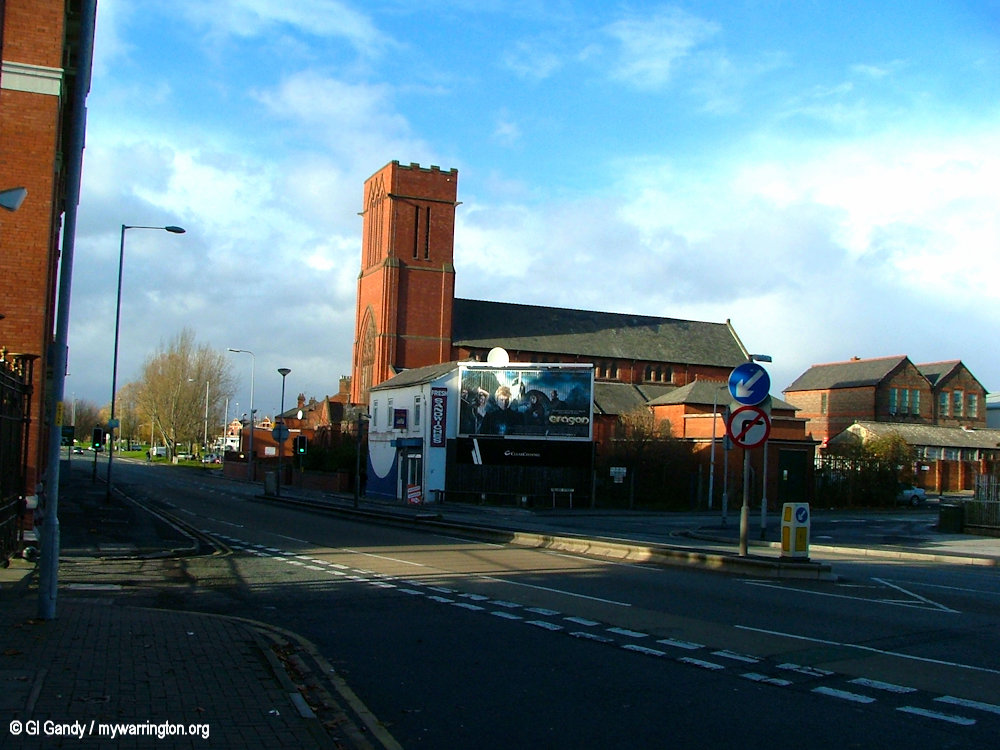
Spot the difference. The social club is seen in the view from 22 April 2003, which had been demolished by the time of the second scene from 10 September 2006. The third image shows the church from alongside Crosfield’s soap works.
Sacred Heart Catholic Primary School
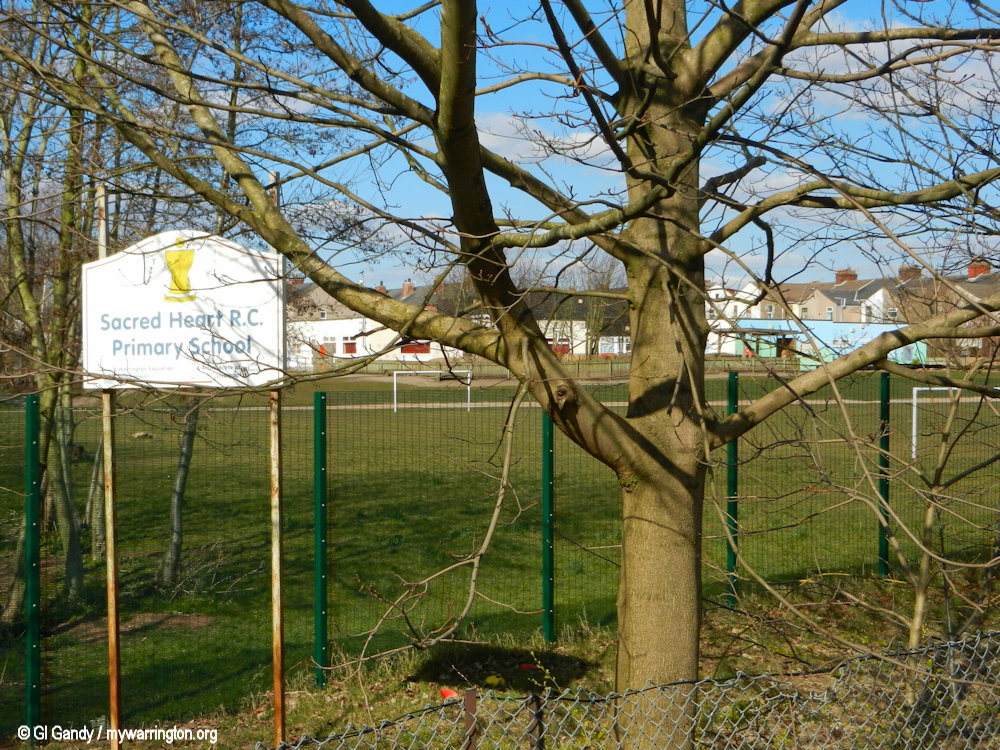
Sacred Heart Catholic Primary School is near Wellfield Street and Selby Street with the playing fields next to the dual carriageway. Sacred Heart R C School opened on 10 July 1972.
The Pavilion Cinema
Located on Lovely Lane near the corner of Green Street in Whitecross, The Electric Pavilion was opened in early September 1912. It had a 22 feet wide proscenium.
Last operated by the Liverpool-based chain of W.J. Speakman, it was closed around 1957, and became a timber merchants. In later years it serves as a motor showroom, a Trident electrical store, Bike City cycle shop and, in the 1980s, a J.H. & E. Robinson carpet store. At the time of writing (2025) it was used as Porcelain Twenty Two.
For a more detailed story of the town’s cinemas, see At The Flicks section.
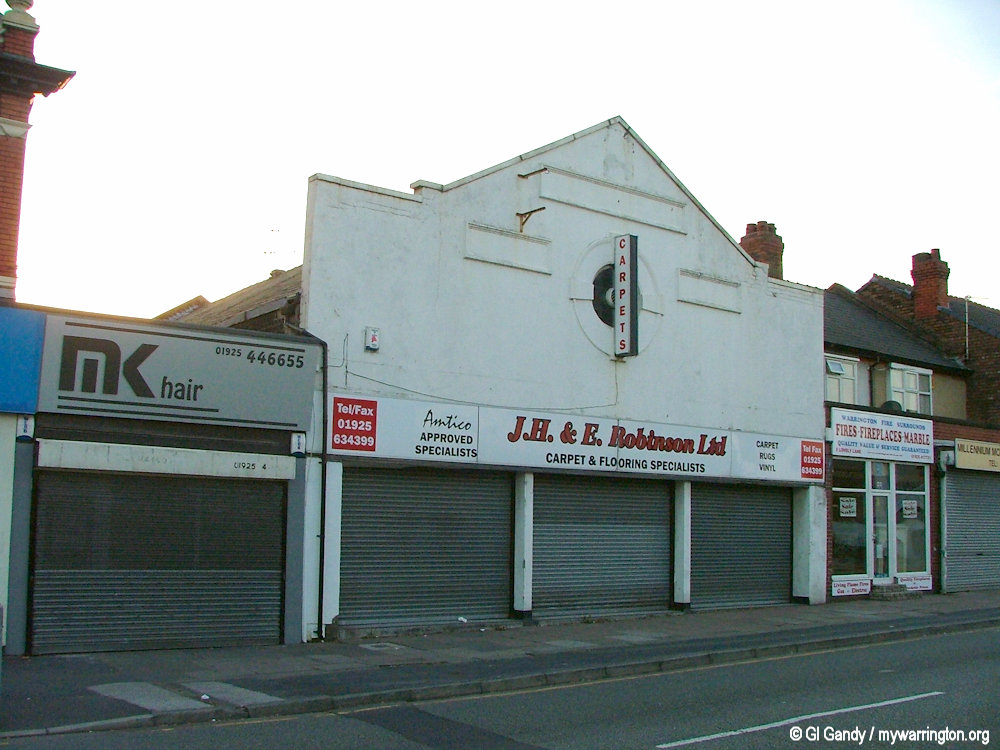
The Pavilion cinema in later years as Robinson’s carpet shop on 10 September 2006.
Bennett’s Cake Works
“Bennett’s was founded by Henry and Herbert Bennett around 1932 and was originally sited just off Lovely Lane in Goulden Street.
“They moved to Delamere Street in 1938/9.
The company was taken over in later years and was known as Memory Lane from 1978 onwards until its closure in 2000 after a decrease in sales.
Grace’s Guide tells us the company also had a site in Cardiff. In 1980 it became part of Dalgety Spillers Foods. In 1990 the company was acquired by Grand Metropolitan making Grand Met one of the largest cake businesses in Europe. Later still it became part of Finsbury Food Group.
Do you have memories of working there that you would like to share on the mywarrington website? If so, get in touch.
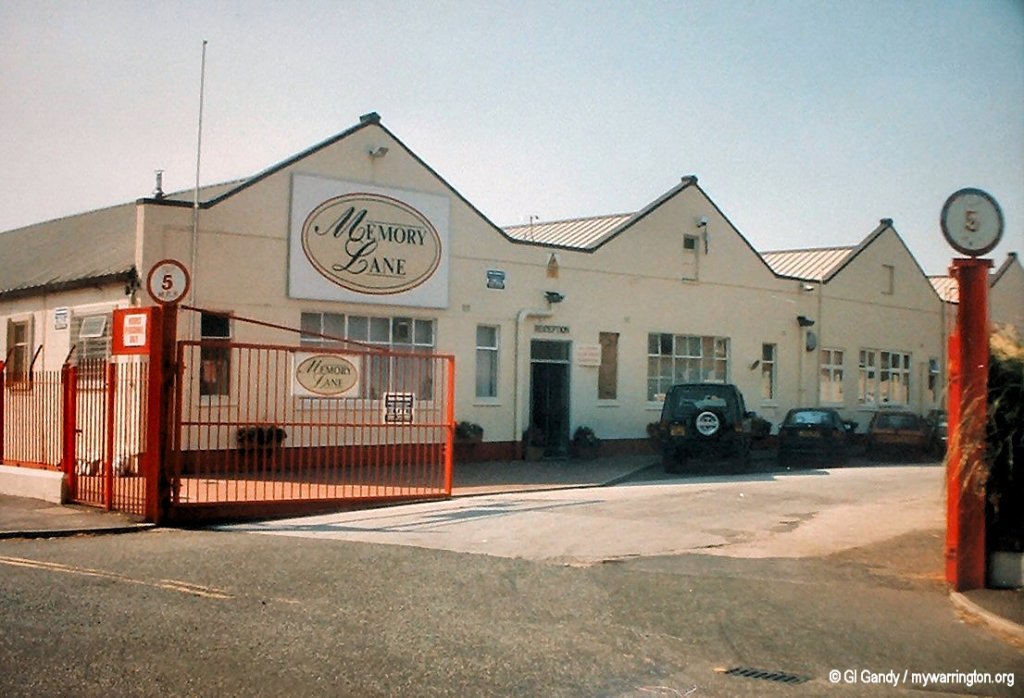
Memory Lane cakes as it looked on 10 August 1995.
River View
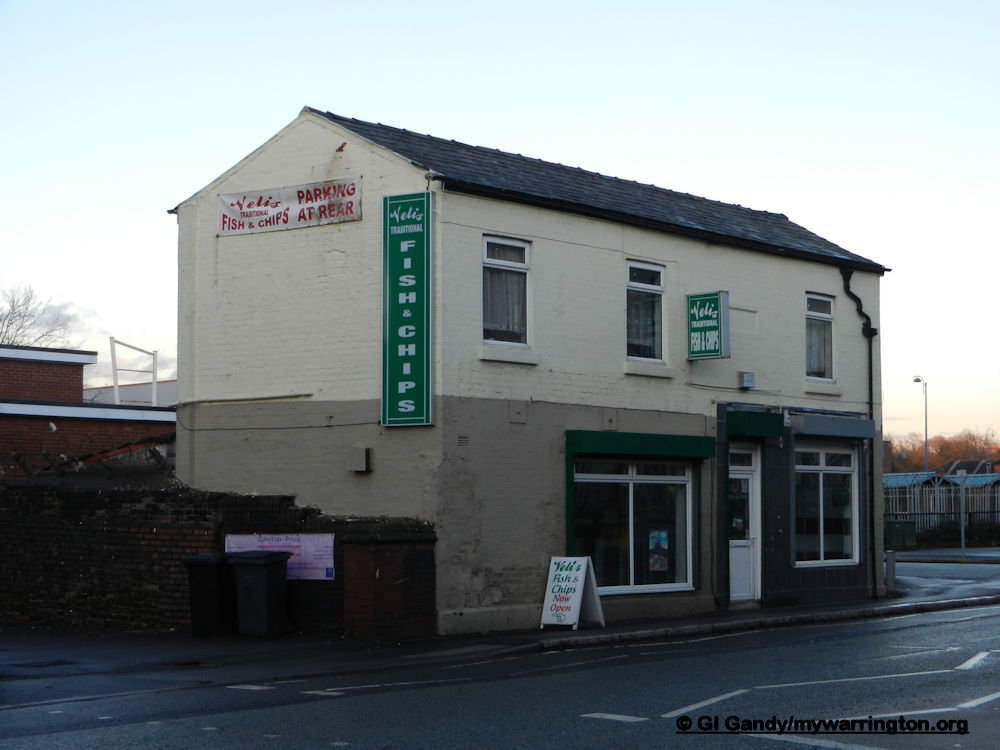
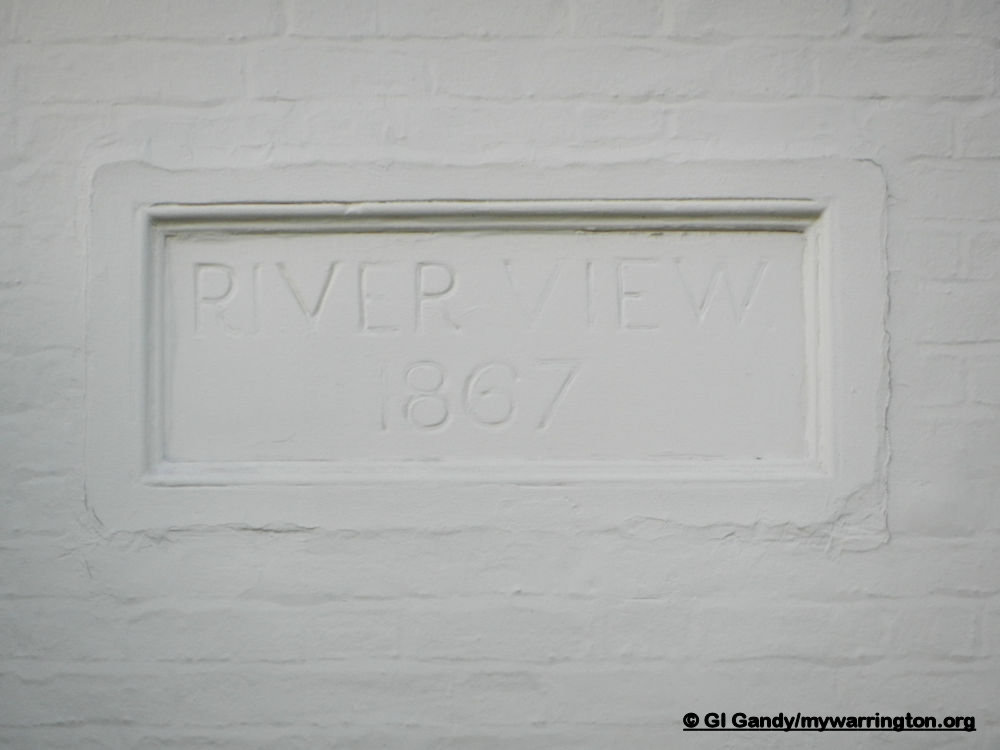
Alongside Sacred Heart church is River View dated 1867. Imagine the owner being able to see the River Mersey and the fields beyond from their home before the industrial site opposite grew in size. It is seen here on 23 November 2012.
Whitecross Community Centre
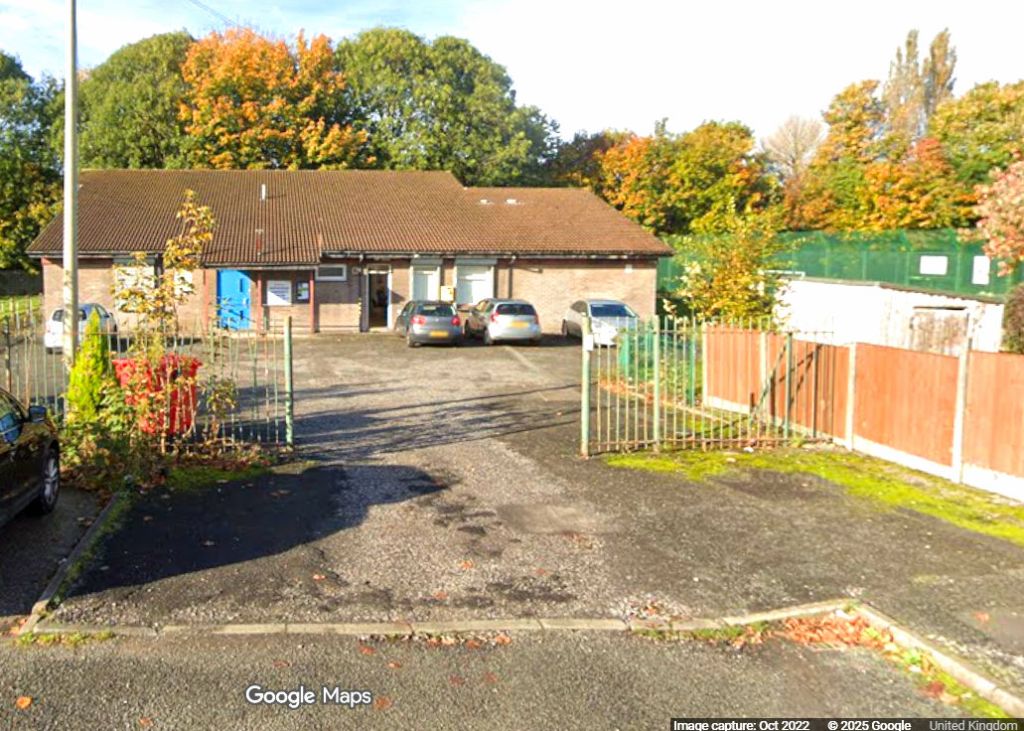
Whitecross Community Centre is on Lexden Street. I helped to run Help the Needy Over 60s Club from there in the late 1980s and early 1990s. The centre is run by Warrington Borough Council.
The Centre has a large multi-function room suitable for almost any activity and can accommodate 30+ people seated & 60+ theatre style. In addition there is one medium sized room which can accommodate 10-20 people, one small room which can accommodate up to 10 people and a fully equipped IT suite. The centre also boasts a floodlit multi-use games area with shower and team changing facilities.
The photo shows the centre in a Google Maps view from October 2022.
Pub Life
The Mad Hatter / The Hatter
In 1979 the Warrington Guardian held a competition to name a new pub at Whitecross. The winner, Christine Morrall, chose the name The Mad Hatter after the Alice In Wonderland character created by Daresbury author Lewis Carroll.
In later years somebody felt the word ‘mad’ should be dropped from the name. Why? Probably because Lewis Carroll never used the name in his stories. The character was called Hatta in Through the Looking Glass. The phrase “mad as a hatter” predates Carroll’s works. The Hatter and the March Hare are described as “both mad” by the Cheshire Cat, in Alice’s Adventures in Wonderland in the sixth chapter titled “Pig and Pepper”.
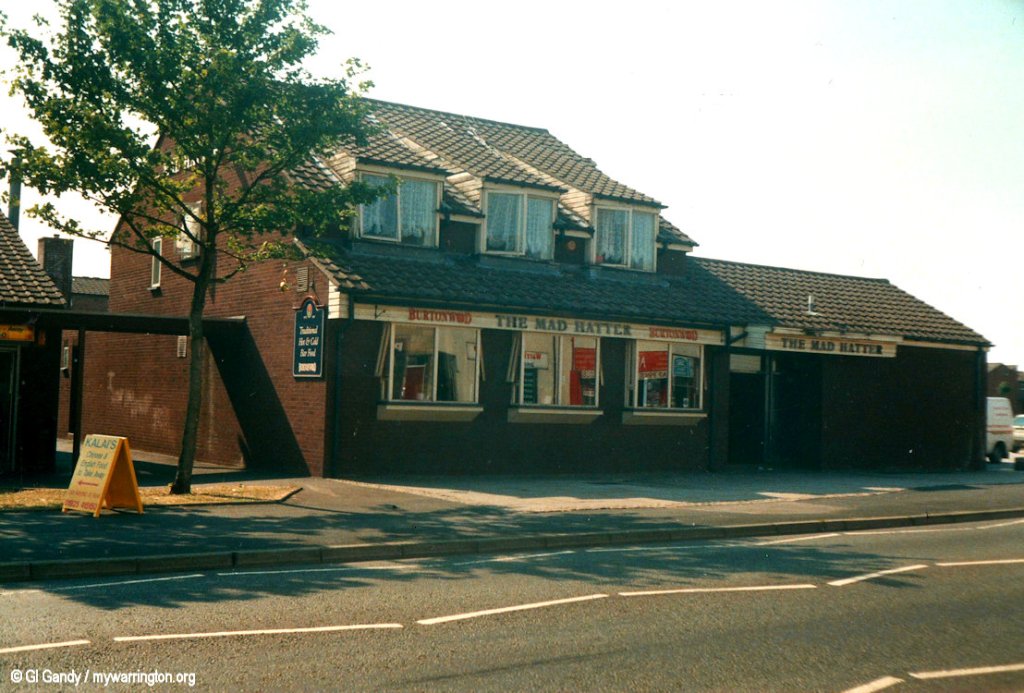
So why The Mad Hatter, Hatter and Lewis Carroll for a Warrington pub in the first place? It is because Charles Lutwidge Dodgson, who used the pen name Lewis Carroll, was born in Daresbury, just outside the southern boundary of Warrington.
Apparently, he did visit the town on occasions and it is said he was a friend of the Greenall family who owned Walton Hall in former times. As far as I know though, he never actually lived in the town, so he doesn’t get the accolade of inclusion in the Warrington People section. His career also included poet, mathematician, photographer and reluctant Anglican deacon. For the record, he was born on 27 January 1832 and died on 14 January 1898. so there you are, he gets a mention on the mywarrington website!
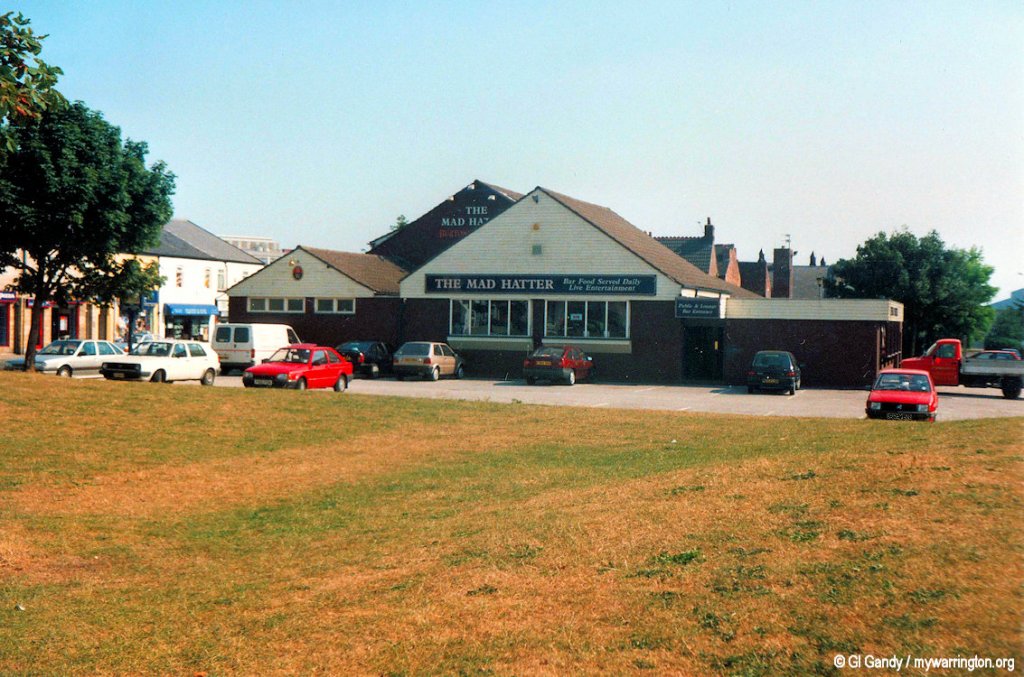
The Mad Hatter on 10 Aug 1995
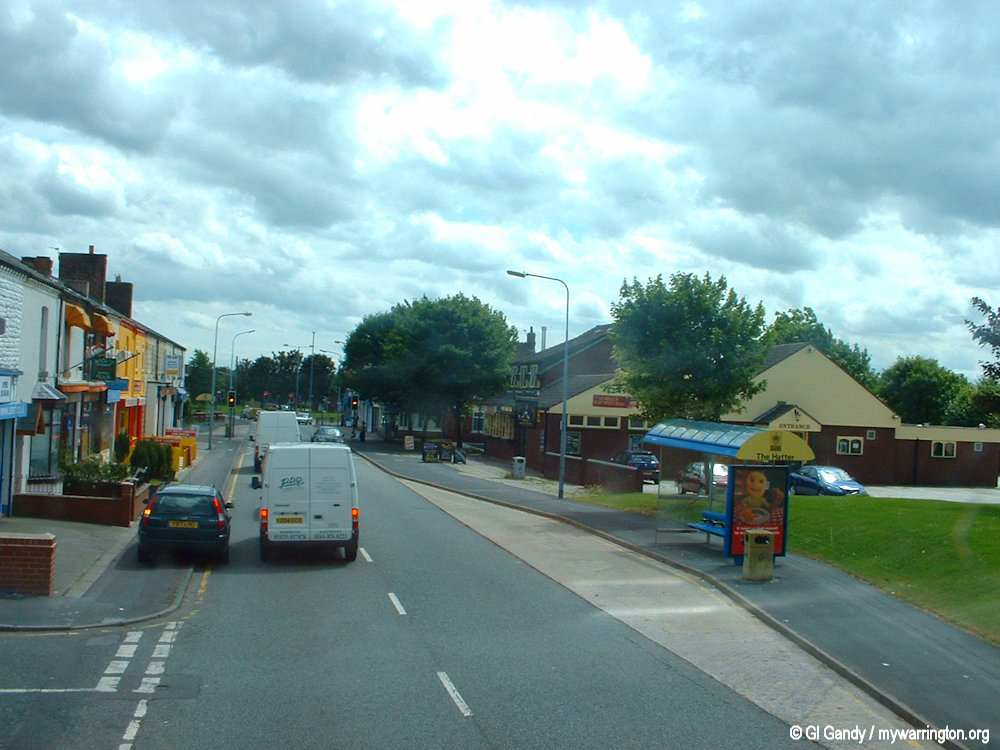
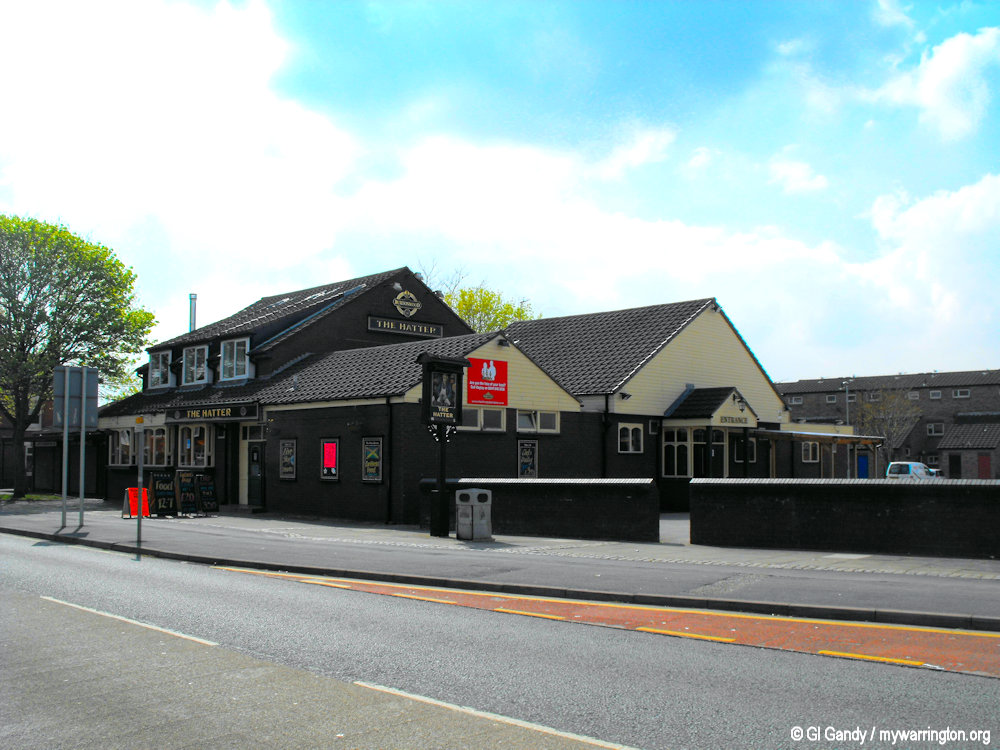
Two photos of the pub in later times as The Hatter.
The Brooklands Hotel
The Brooklands Hotel is named on the 1907 map, but I don’t know when it was built. I also don’t know why it is called the Brooklands, but I’ll have a guess and say the Sankey Brook is close by. If you can fill in the blanks, I’d love to hear from you. Lovely Lane was originally a country land, so it might have been used as a coaching house to exchange horses on long journeys.
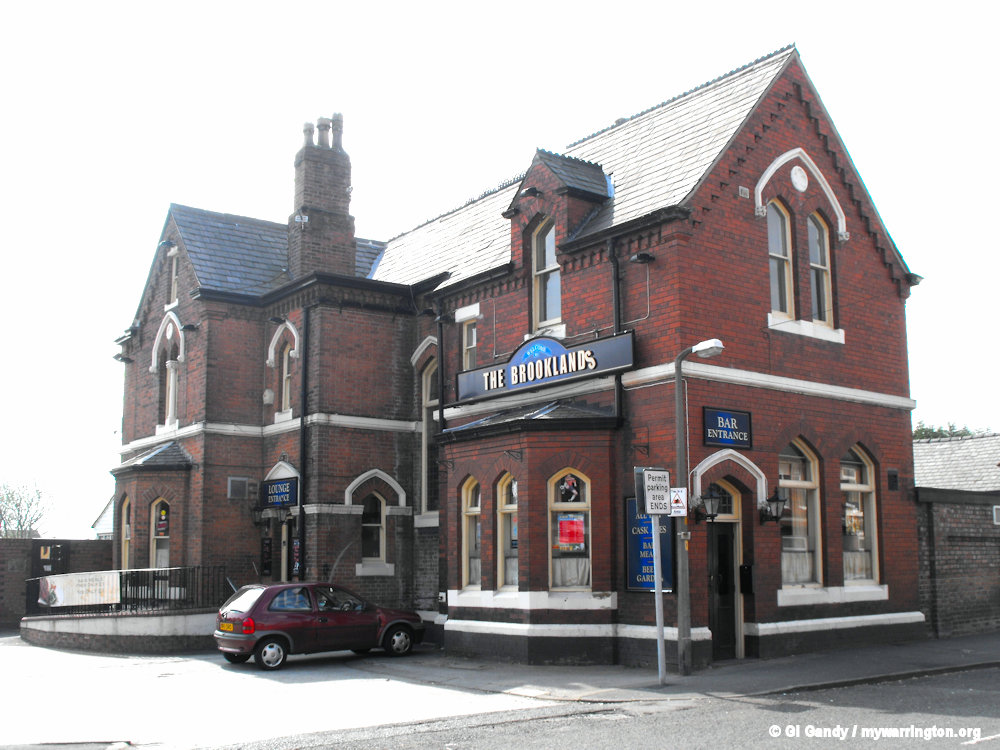
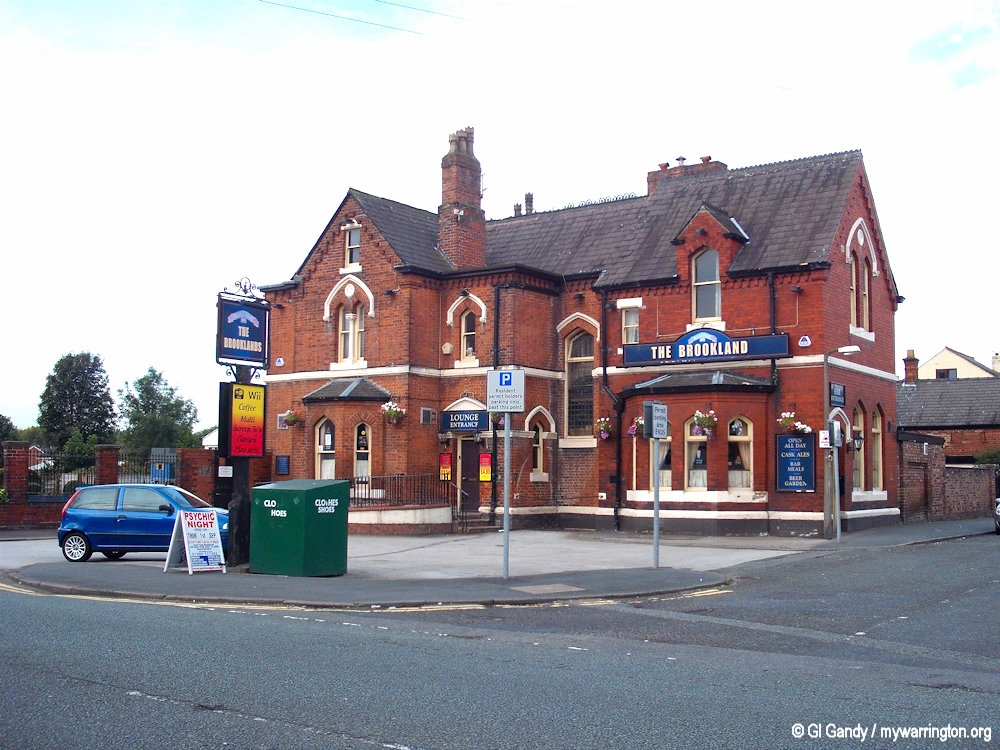
Two views of the pub today when it is known as The Brooklands
Pubs No Longer here
Bank Quay Social Club on Green Street was where my dad did a lot of his compering in his day. The building is no longer in use as a club.
Next to it and set back from the road was Roosters club, again no longer here. I used to go in here with dad on a Friday night to watch Super League rugby.
The photo shows Bank Quay Club on 3 October 2014.
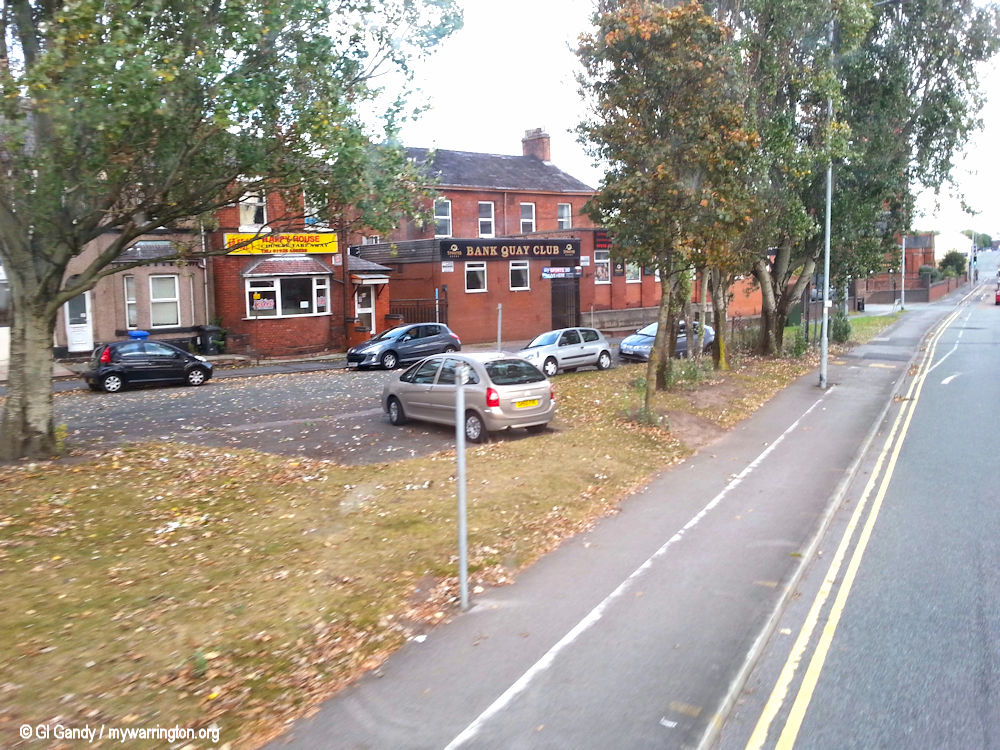
Walkabout Whitecross
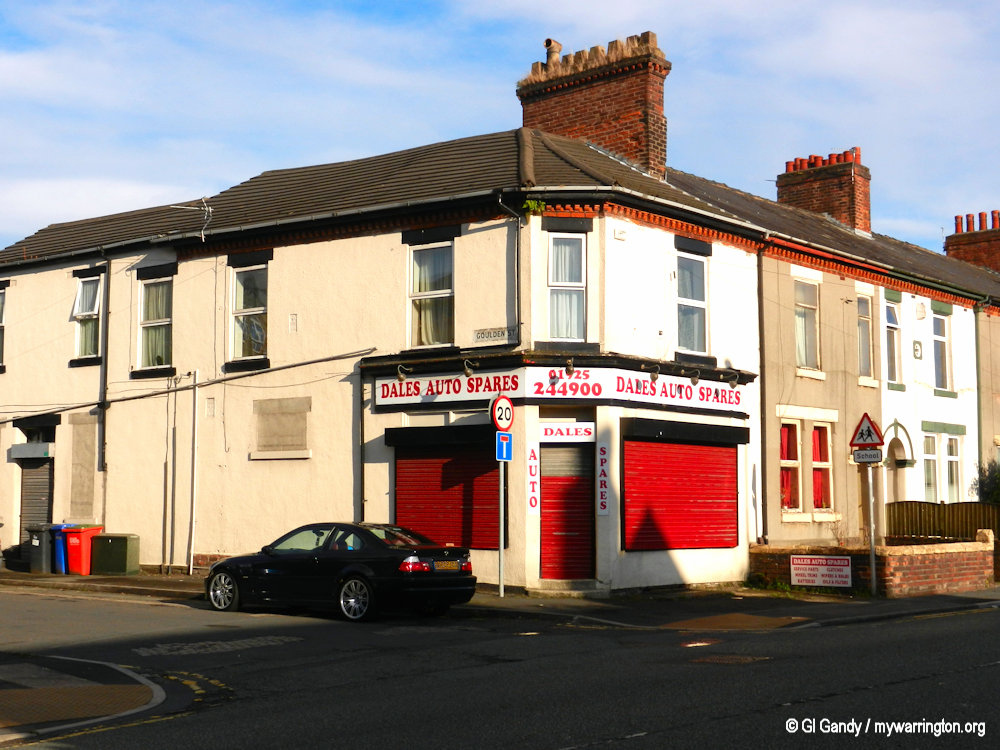
Dales Auto Spares 16 Jul 2014. I went to school with the owner of this shop. Hi Dale!
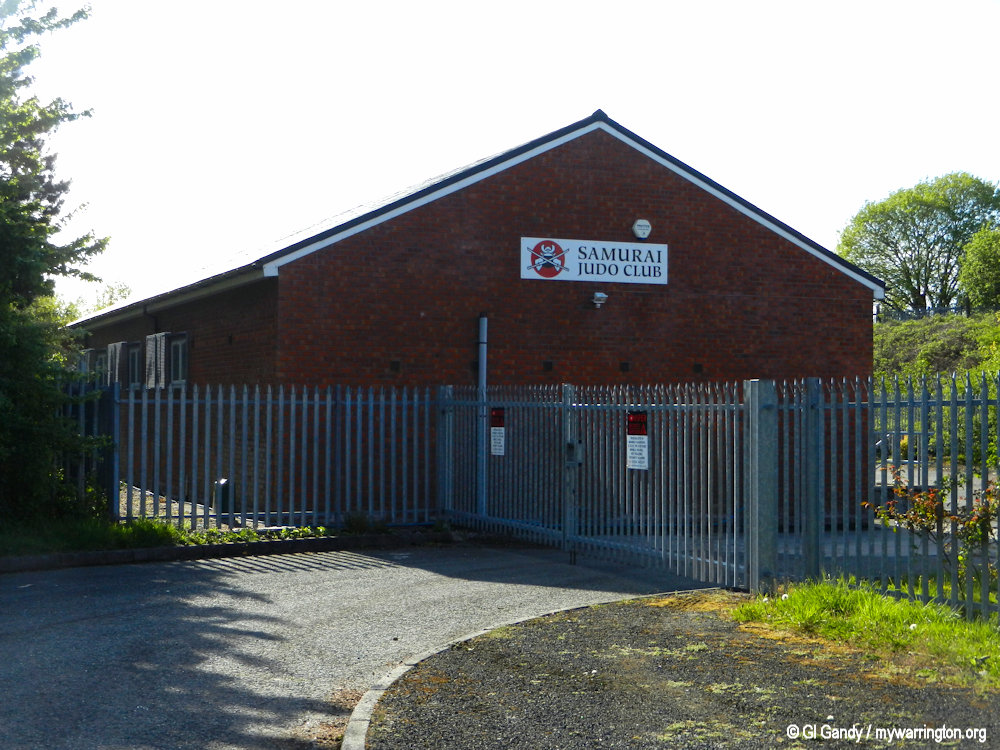
Warrington Samurai Judo Club officially opened in Wellfield Street, Whitecross on 16 April 2005.
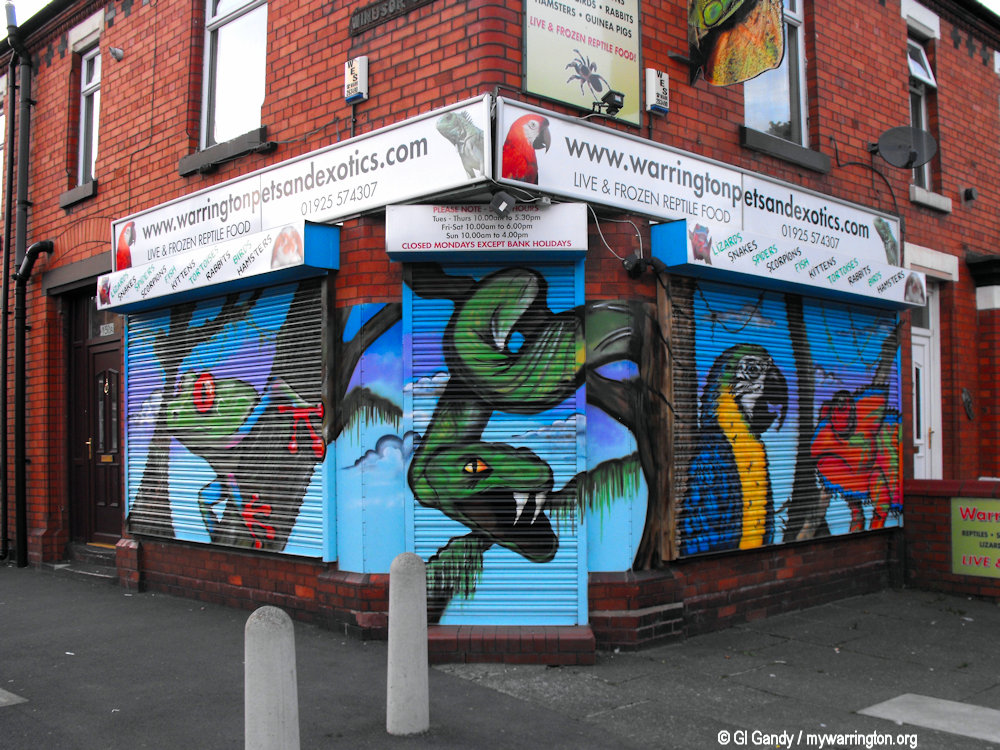
Warrington Pets and Exotics on Lovely Lane 28 Aug 2012. The artwork is no longer on display.
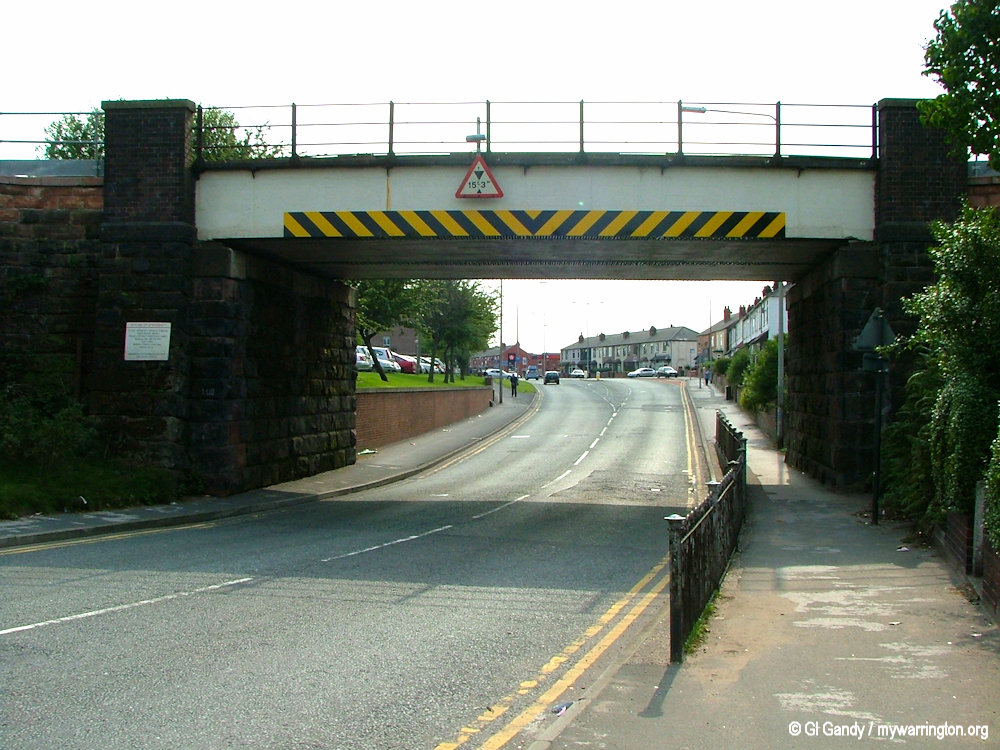
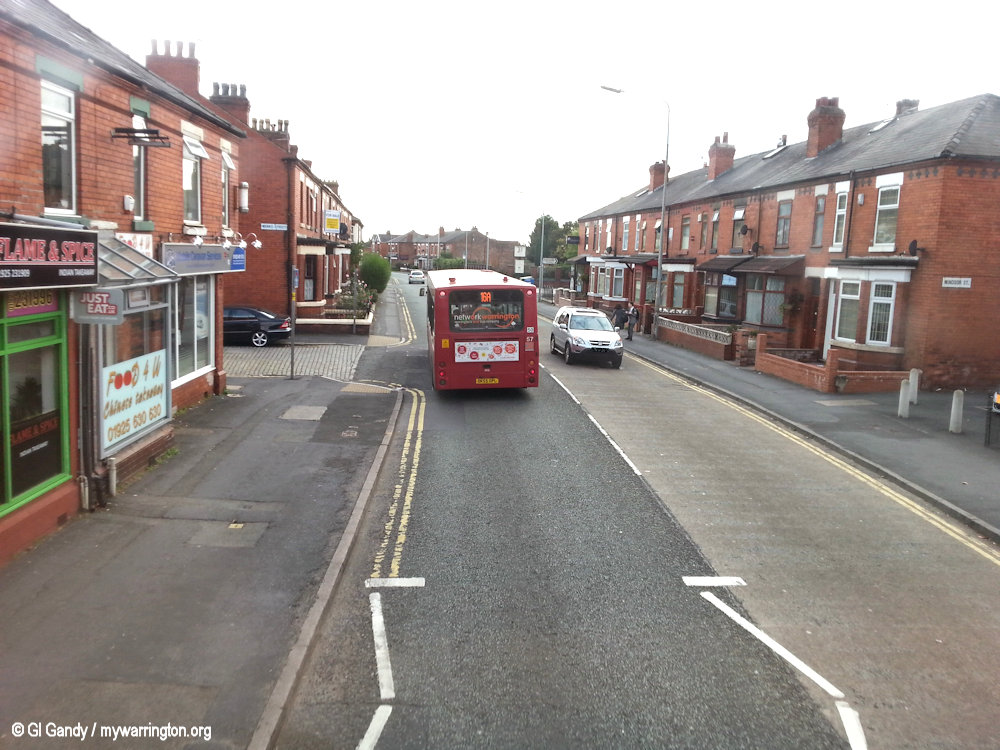
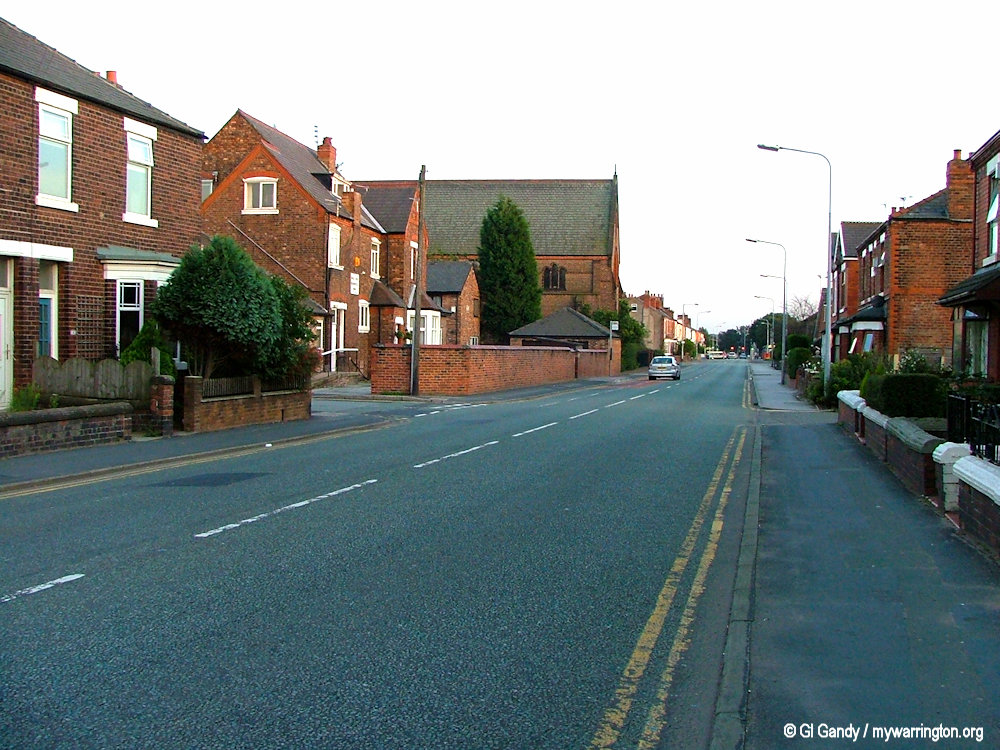
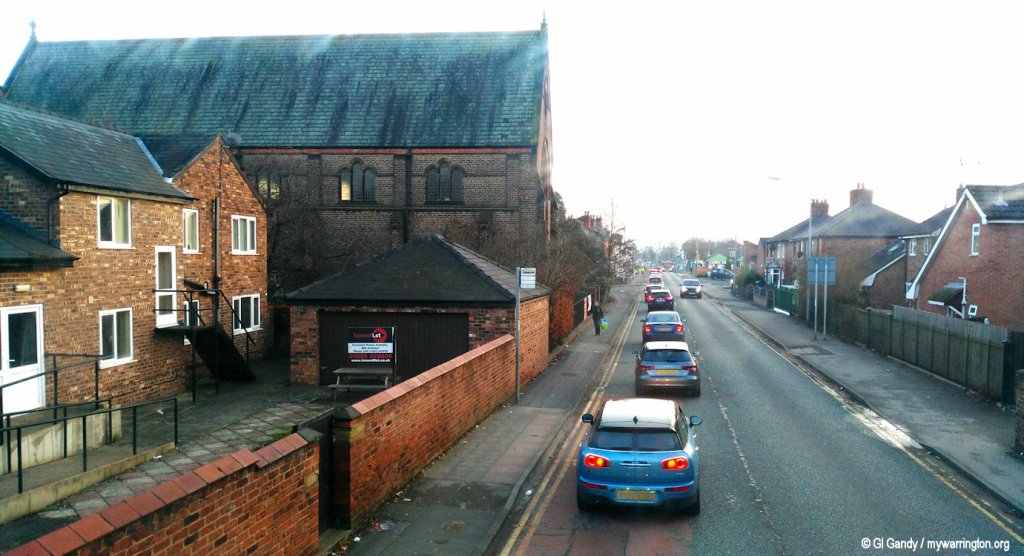
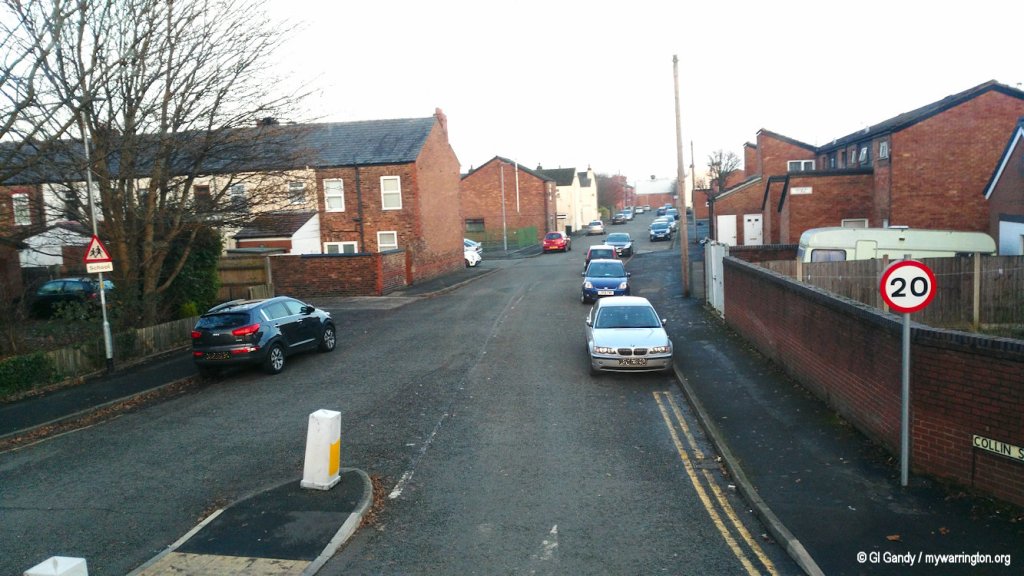
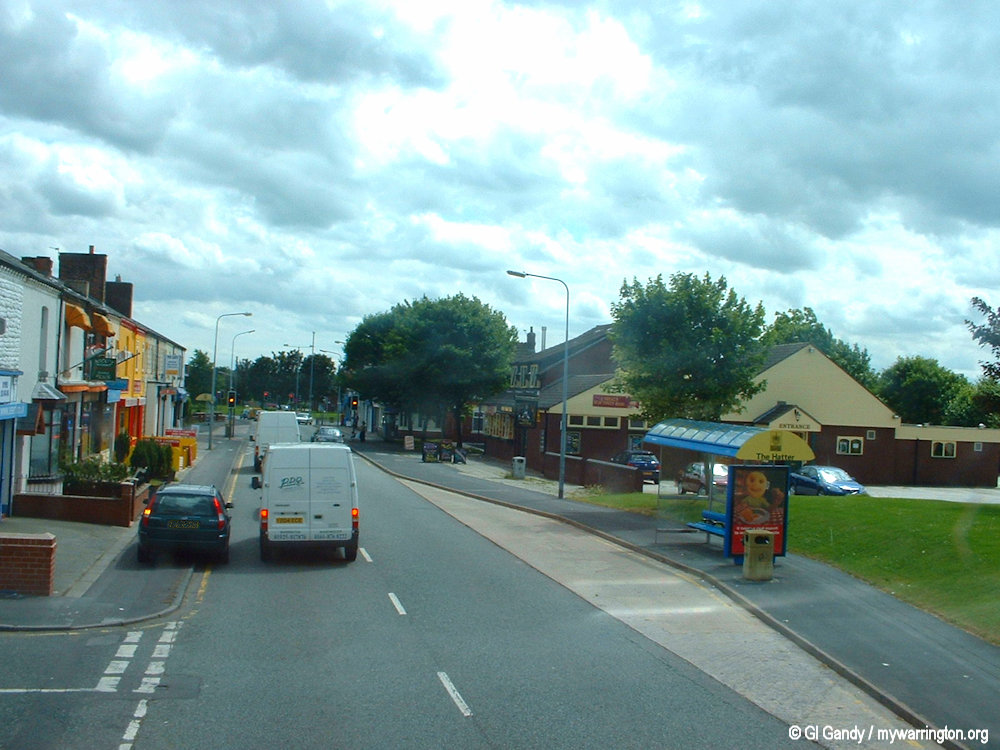
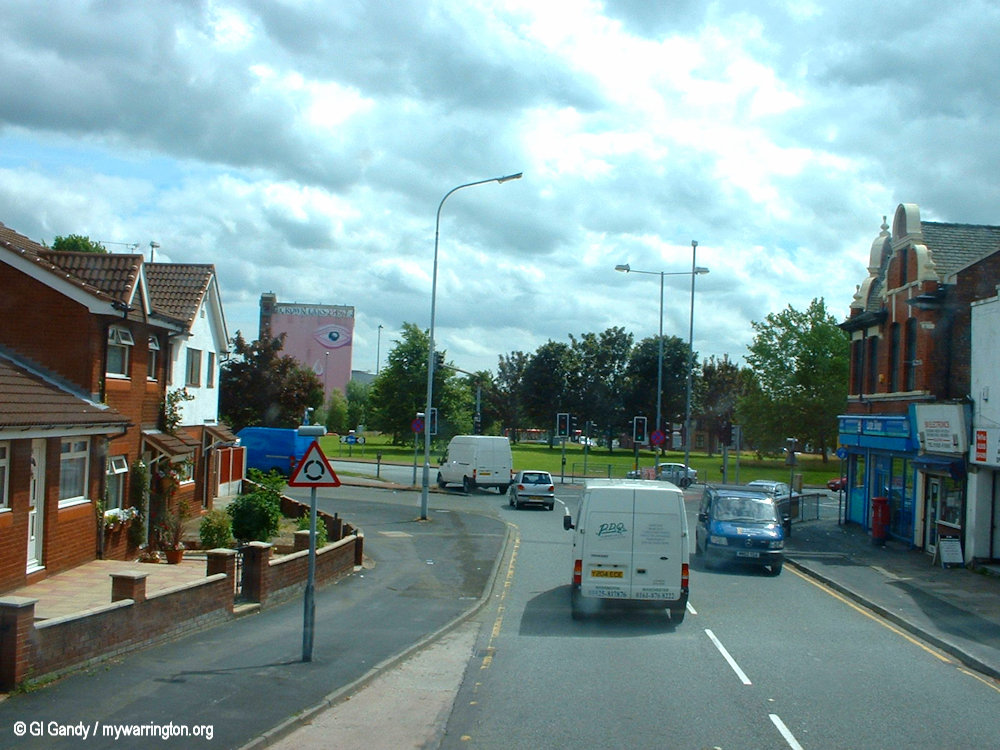
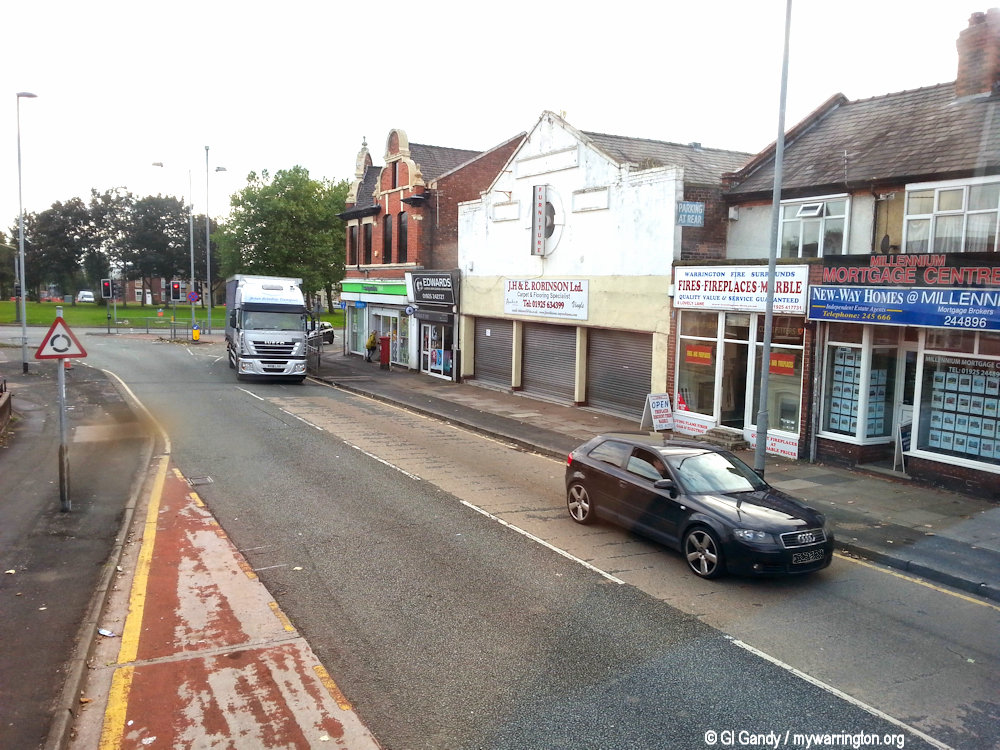
Now follows a series of photos taken along Lovely Lane. Some are taken from the top deck of a double decker bus and some are on foot. I’d like to say we stopped the bus for me to get out and take the ground shots (like they do in TV documentaries), but the dates give it all away!
And finally…
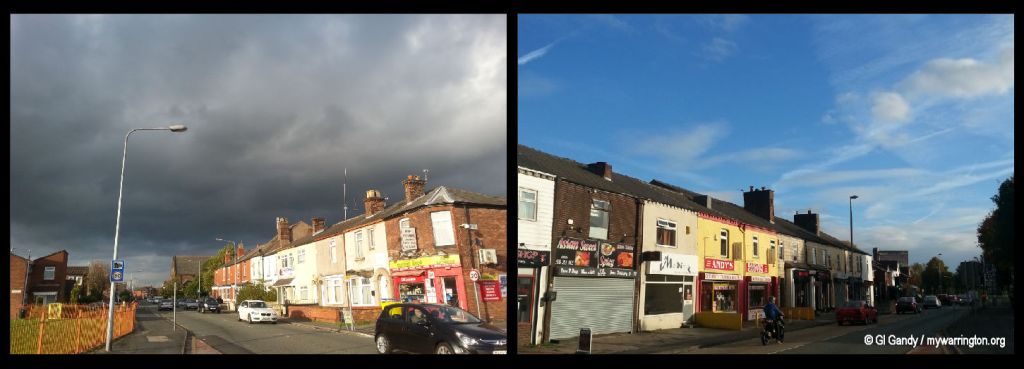
The two images below are from the same spot a few seconds apart, one viewed north (on the left) and the other viewed south. They were taken on 21 October 2014 from the bus stop outside The Hatter pub.
 mywarrington