

Contents
- Introduction
- The Wilderspool Name
- Roman Wilderspool
- Greenall Whitley Brewery
- Saracens Head Pub
- The Causeway Hotel
- China Lane
- Bridgewater High School Artwork (2010)
- Wilderspool Stadium
- Church Life
- St James Former Vicarage
- Fletcher Russell & Co. Ltd. (Radiation)
- Priestley College
- Bus Depots
- Wilderspool Bridge
- Causeway Park
- Wilderspool Park
- St James Business Centre
- A Final Walkabout

As you can see from my AI generated image, Wilderspool was famous for a brewery and the town’s rugby league club, neither of which are present in the district today.
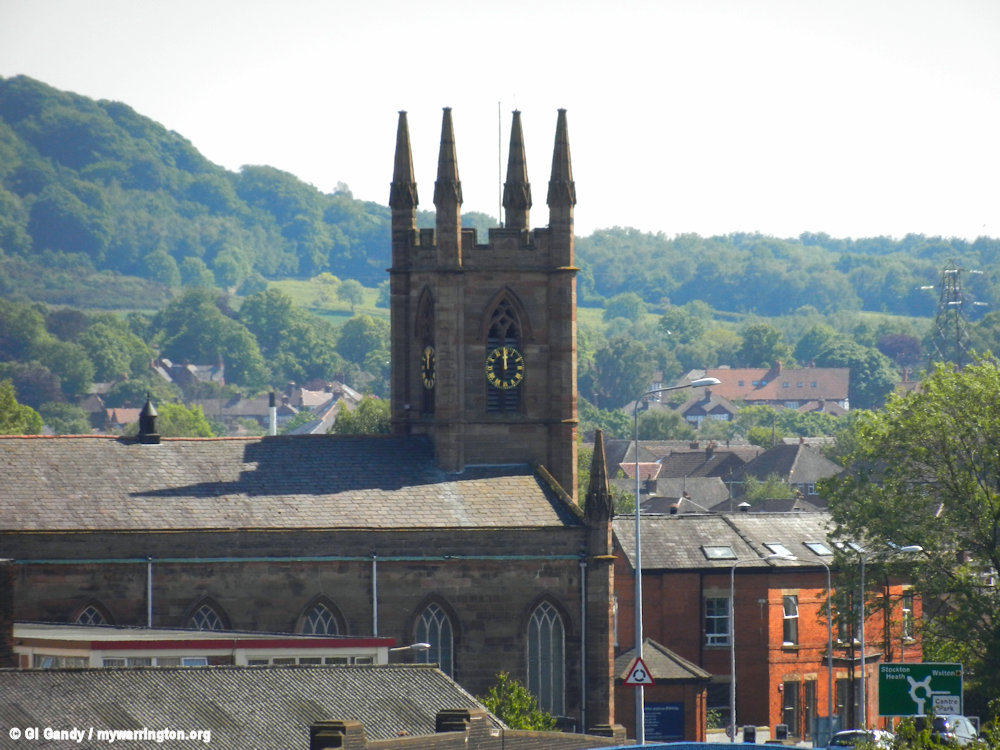
View to Wilderspool and south Warrington from town centre (11 June 2015).
Introduction
In 1870-72, John Marius Wilson’s Imperial Gazetteer of England and Wales described Wilderspool like this:
WILDERSPOOL, a hamlet in Great Budworth parish, Cheshire; ¾ mile S of Warrington.
Wilderspool is a district in south Warrington close to the town centre. Its area is basically Wilderspool Causeway and Chester Road and the streets coming off them; the boundary being the River Mersey in the north and the Manchester Ship Canal near Stockton Heath. River Road in the area is so named because this is next to where part of the original course of the River Mersey flowed.
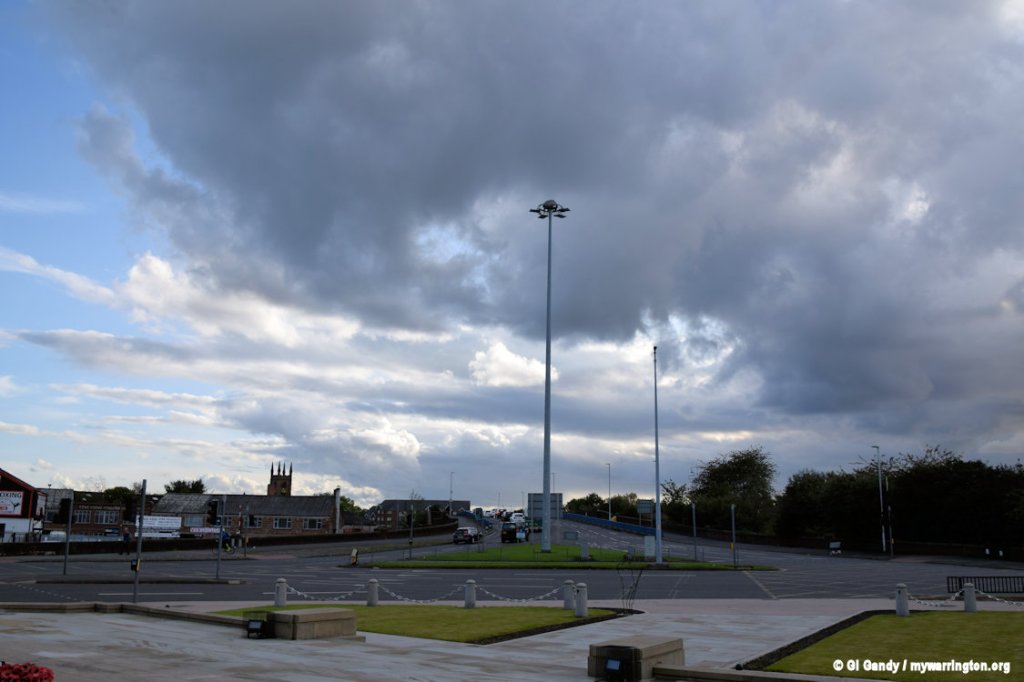
View to Wilderspool Causeway from the Cenotaph on 1 October 2020
The Wilderspool Name
The name Wilderspool was spelt ‘Wildrespul’ at the beginning of the 13th century. The first part of the name is the Old English “Wild deor” meaning “a wild beast, a deer” and the second part means “a pool, pond, a pool in a river, a creek or a stream”. So therefore its name means “the pool of the wild beast”.
Roman Wilderspool
The Romans were in Britain from AD 43 to AD 410, a period of almost 400 years, following the invasion led by Emperor Claudius. The Romans were drawn to Britain’s natural resources like silver, gold, and iron, and established the province of Britannia. Their legacy includes building roads, towns, forts, and villas, and introducing a centralized government and language, Latin. Roman rule ended when troops were withdrawn to defend the empire in mainland Europe.

AI-generated image of “the pool of the wild beast”.
In the north west of England region, the Romans sites near to Warrington were Deva (Chester), Mamucium (Manchester), Condate (Northwich) and Coccium (Wigan).
Excavations in the area have shown that a Roman settlement existed here from around 100 AD, notable for its bronze, iron, and glass working industries. The settlement stood on the land now occupied by Morrison’s supermarket and parts of Stockton Heath before the Manchester Ship Canal was constructed. See the Archaeological Overview for more details. The site was built alongside the River Mersey which was an excellent source of water for washing and cooking. The map here shows the location of the site. The Manchester Ship Canal did not exit at the time of the Roman establishment. Neither did St Thomas’s Church in Stockton Heath or the brewery, although brewing was a task undertaken by the Romans.
The first evidence for the Romans living in the Wilderspool area was revealed during the construction of the Bridgewater Canal in 1770 and in the cutting of the Old Quay Canal (also known as the Runcorn and Latchford Canal and the Black Bear Canal) in 1800.
The Roman Name for Wilderspool
Although earlier suggestions name the area as Condate (including from Kendrick in 1871), one antiquary, Mr W. Thompson Watkins, who’s book called Roman Cheshire published in 1886 (and still available for purchase or from the Google download service), contains the complete story of all the discoveries at Wilderspool before Thomas May conducted an archaeological dig between 1895 and 1903, proved that the name could not be associated with Wilderspool. Instead, the unappropriated name of Veratinum was said to be the most likely as its name meant “ford town”.
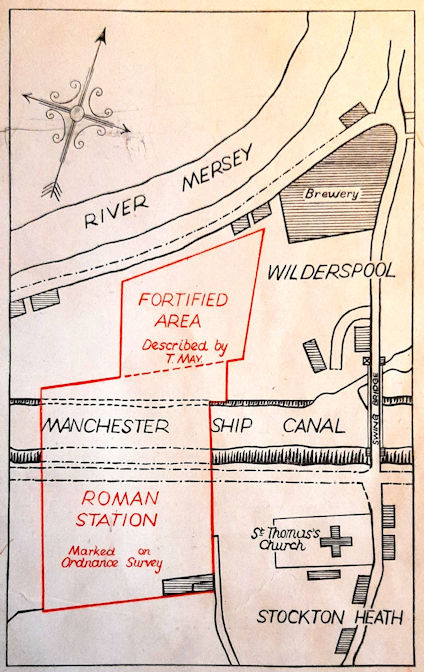
A map from Warrington Hundred, a book published by Warrington Borough Council in 1947 to mark its first century as a local authority.
The town’s first mayor, William Beamont, put forward the notion that the name of the town of nearby Warrington came from the British word ‘werid’, a ford, and that the word meaning ford town, originated with the Britons, and assumed its present form from the process of transfusion through the Saxon tongue.
Life at Roman Wilderspool
Between 1895 and 1903, Mr Thomas May conducted an archaeological dig at Wilderspool on behalf of Warrington Museum. His findings concluded that part of the site referred to as Veratinum covered an area of three acres (1.21 hectares) enclosed by a four-side fortified rampart, which was surrounded by a ditch, and lying between the south bank of the River Mersey and the north bank of the Manchester Ship Canal, with the eastern boundary being about 100 yards (91.44 metres) from Wilderspool Causeway. The rest of the site stretched into Stockton Heath where the primary school is today.

AI-generated scene showing what the locality of Wilderspool would have looked like. Farming was a major industry and the area was chosen because it was alongside the River Mersey.
In his work, May discovered the foundations of dwellings and workshops, ore smelting and crucible furnaces, more than eight glass maker’s double furnaces, bronze founder’s and enamellers, or jewellery workshops. Other discoveries included floors, hearths and ovens for heating caldrons of massive boulder clay and pottery kilns, iron keys and fire dogs, bronze brooches, large quantities of Samian ware and specimens of Roman glass.
Watkin, in his Roman Cheshire book, said, “There can be no doubt whatever from the profusion of local ware found, that the station was the seat of an eminent colony of local potters”, and May said “It is a matter of congratulations to our local glassmakers that the earliest glass furnaces in Britain should have been discovered within the borough.
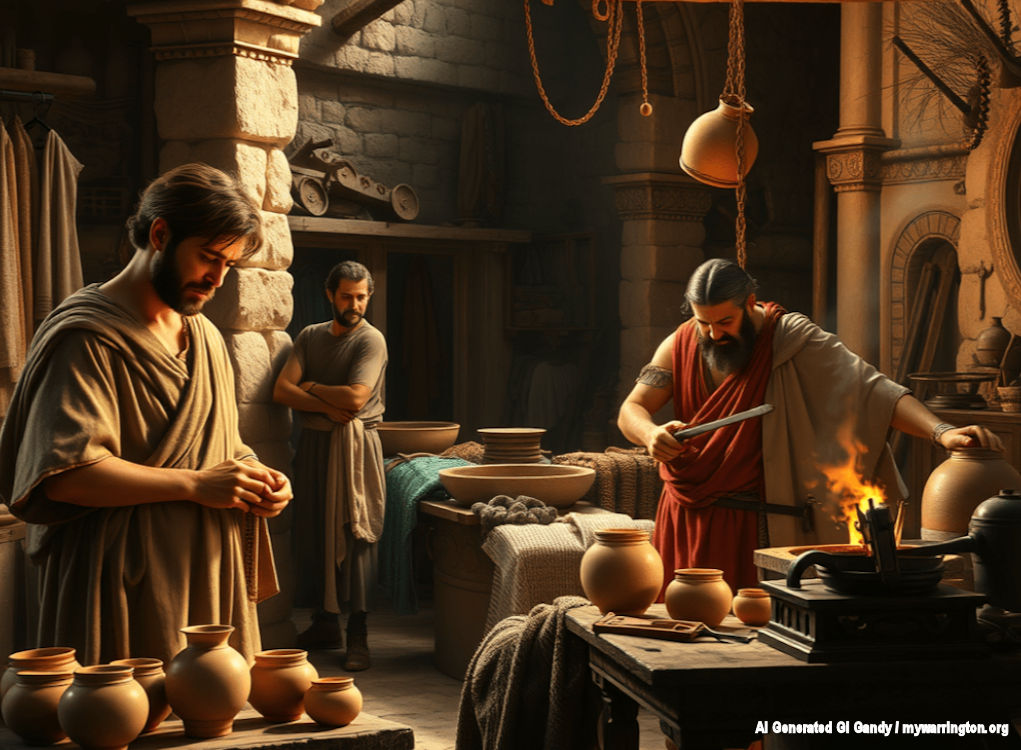
AI-generated image of pottery workers in a setting that would be typical of a place like Wilderspool.
The settlement’s location on the River Mersey made it a significant point for both trade and transportation. The area was a source of rich river foods like cockles and salmon, and a market for local products such as gooseberries.
Roman fashions were adopted, with brooches becoming common dress accessories. People wore hobnailed shoes for the first time and women gained access to Roman cosmetics and fashion jewellery.
Local farmers were involved in activities like spinning wool, and the skills of bronze casting and blacksmithing were learned and adapted from the Romans.
Over time, local residents adopted Roman customs, with new farms being established by retired soldiers and others from further afield.
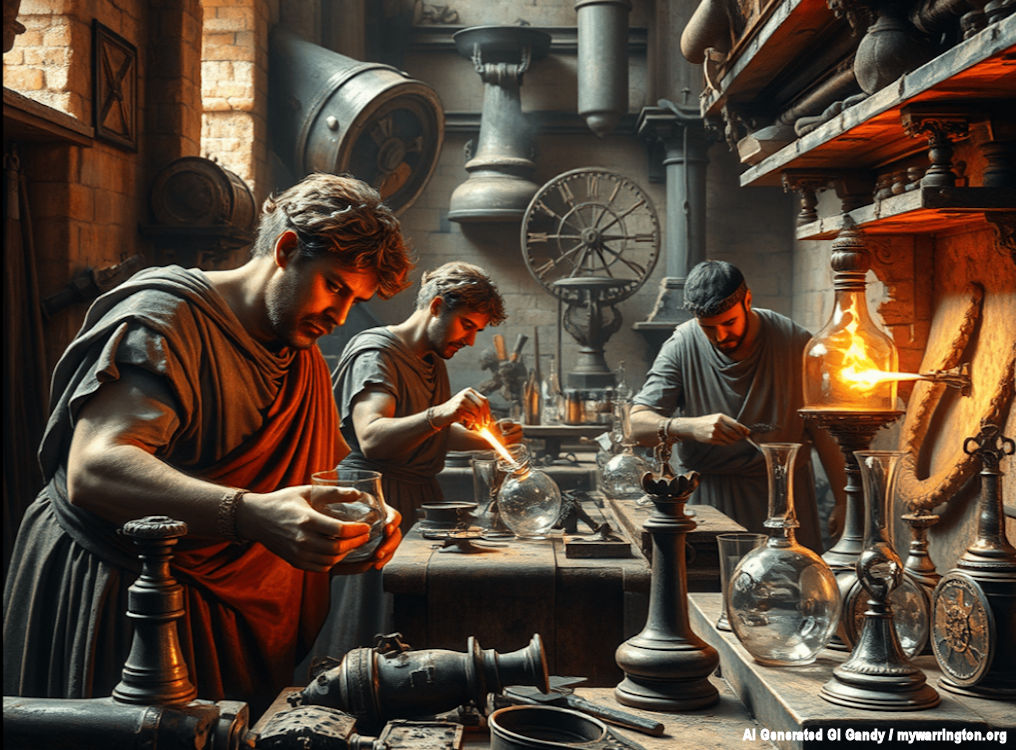
AI-generated scene of Roman manufacturing of glass products. Roman Wilderspool was also a site where items were made from iron and bronze.
Some information from Warrington Hundred (1947) and On Recent Discoveries at the Roman site at Wilderspool, near Warrington by James Kendrick, M.D. (1871).
.
Food in Roman Times
Many of the pottery products made at Wilderspool, particularly “grinding bowls” known as mortaria, have been found across the Northwest of England and into Southern Scotland. The item shown here was made at Verulamium, a town south-west of St Albans, and found in London.
Types of food in Roman times included celery, garlic, some flower bulbs, cabbage, lettuce, onion, leek, asparagus, radishes, turnips, parsnips, carrots, green beans, peas, olives and cucumber.
Meat, fish and bread was also part of the Roman diet. The River Mersey was abundant for fish, especially salmon. and cod.
Fruit was eaten fresh when in season, and dried or preserved over winter. Popular fruits included apples, pears, figs, grapes, quinces, strawberries, blackberries, elderberries, currents, damson, plums, dates, melons, rose hips and pomegranates.
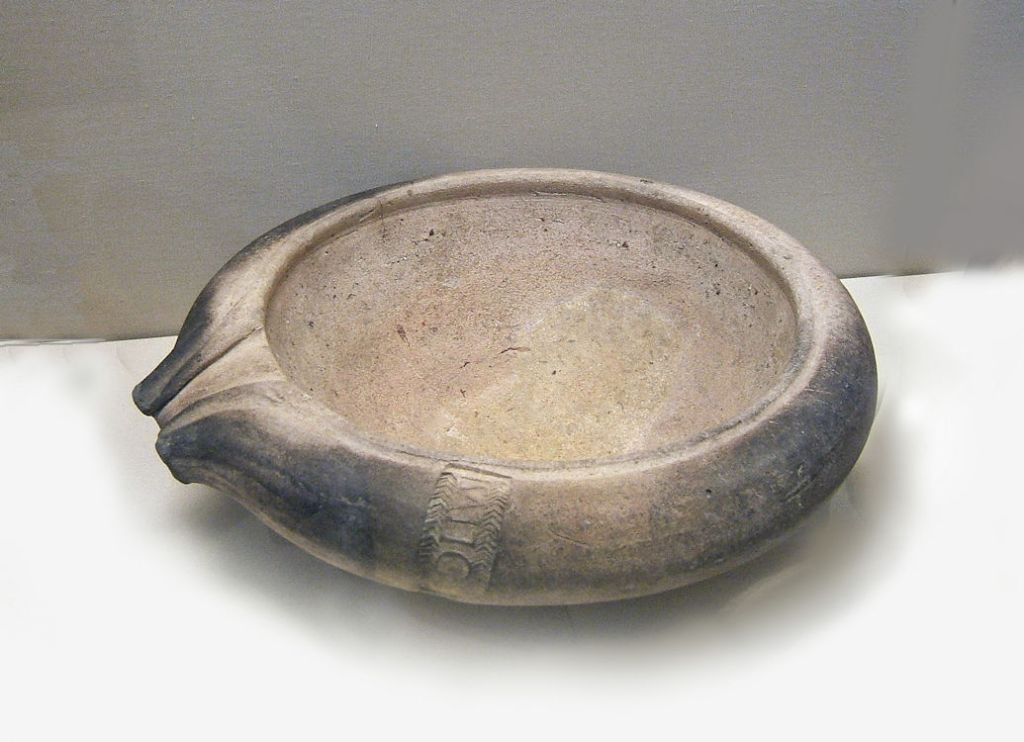
Roman pottery mortarium, used for food preparation, found in London. It was made in Britain, and is stamped on the rim with the name of the manufacturer, Sollus. 1st century AD. Diam. 29.7 cm. Image used under Creative Commons Attribution-Share Alike 3.0 Unported license.
Wikipedia was used to build this report.
Warrington’s Roman Actor’s Mask
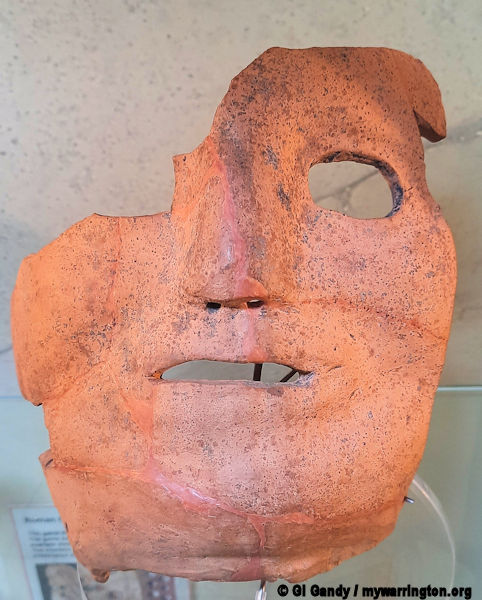
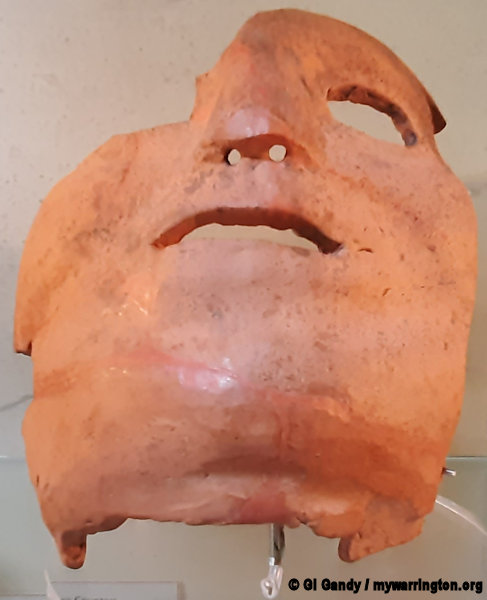
This actor’s mask was found near St Thomas’s Church in 1869 by local historian Doctor Kendrick. It is believed to be from the 1st or 2nd centuries.
At first it was thought that it was worn by an actor on stage, tied to the face by leather thongs, but it is now suggested that would be too heavy for the actor to wear. Instead they now believe it might have been hung outside a venue to indicate a performance was taking place. It was described by W. Thompson Watkins in 1886 as “the only object of its class found in England”.
It is now on display in Warrington Museum.
The Decline of Roman Wilderspool
The Roman settlement at Wilderspool flourished for centuries, but like many Roman towns in Britain, its prosperity eventually waned.
The settlement is thought to have survived into the 5th century.
Archaeological evidence shows a final abandonment sometime after AD 318.
Contrary to earlier theories of a catastrophic destruction, evidence suggests the town simply faded away without a violent end.
The Roman Empire itself collapsed soon after they split it into two kingdoms and it became a weaker force.
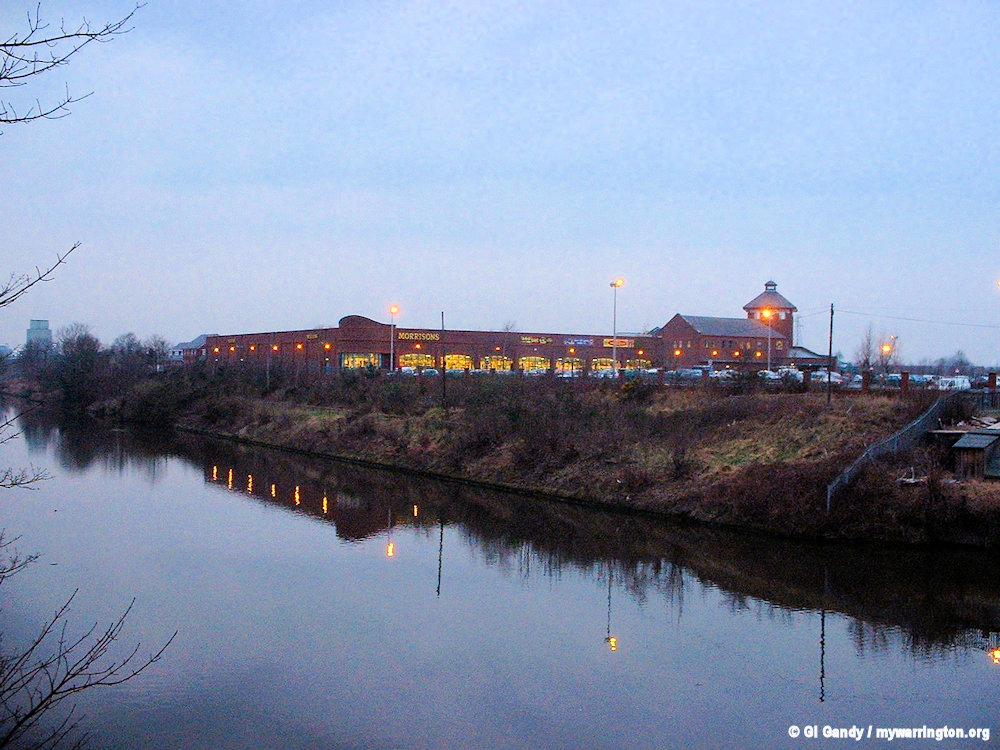
Morrisons supermarket now stands on the northern section of the Roman site alongside the Manchester Ship Canal in this photo from 27 Feb 2003
Greenall Whitley Brewery
The first brewery was built by Thomas Greenall at St Helens in 1762, having acquired his skills from his wife’s family of brewers in the 1750s.
In 1786, Thomas went into partnership with William Orrett, the owner of several inns, and Thomas Lyon, a landowner and business partner with Joseph Parr and Walter Kerfoot in a banking business. This partnership started brewing in Warrington and built a new brewery at Wilderspool in 1793.
Eventually, the company joined up with John Whitley to form the company Greenall Whitley, although Warrington people, especially the employees, referred to the brewery as Greenall.s.
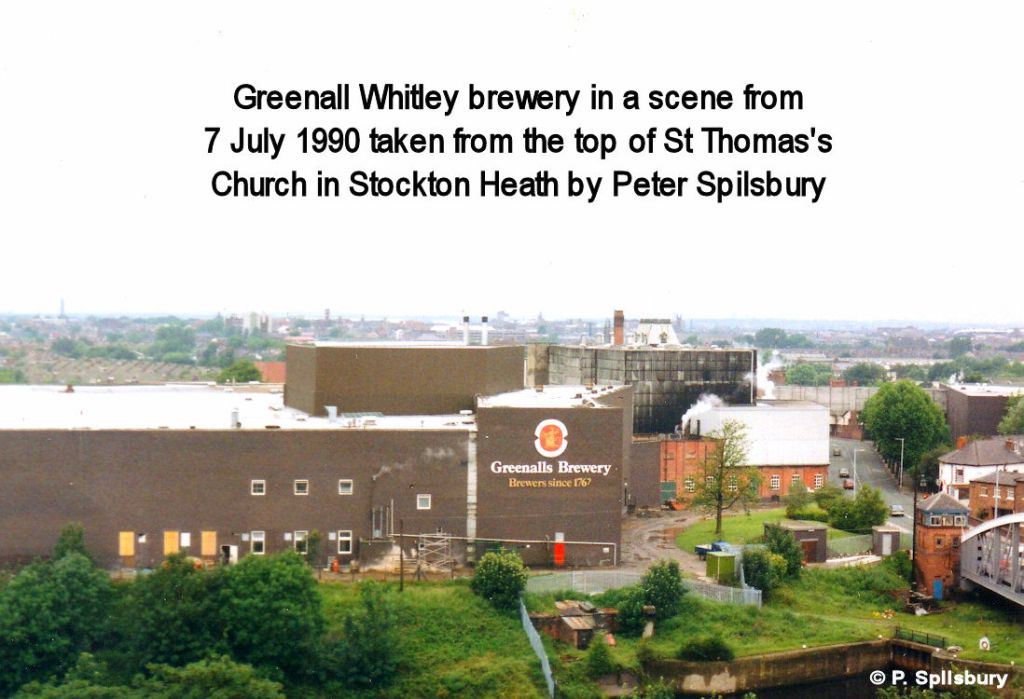
The brewery closed down in 1991 and the company concentrated on hotels under the name of De Vere Group. The gin distillery moved to Birchwood and still trades as G&J Distillers.
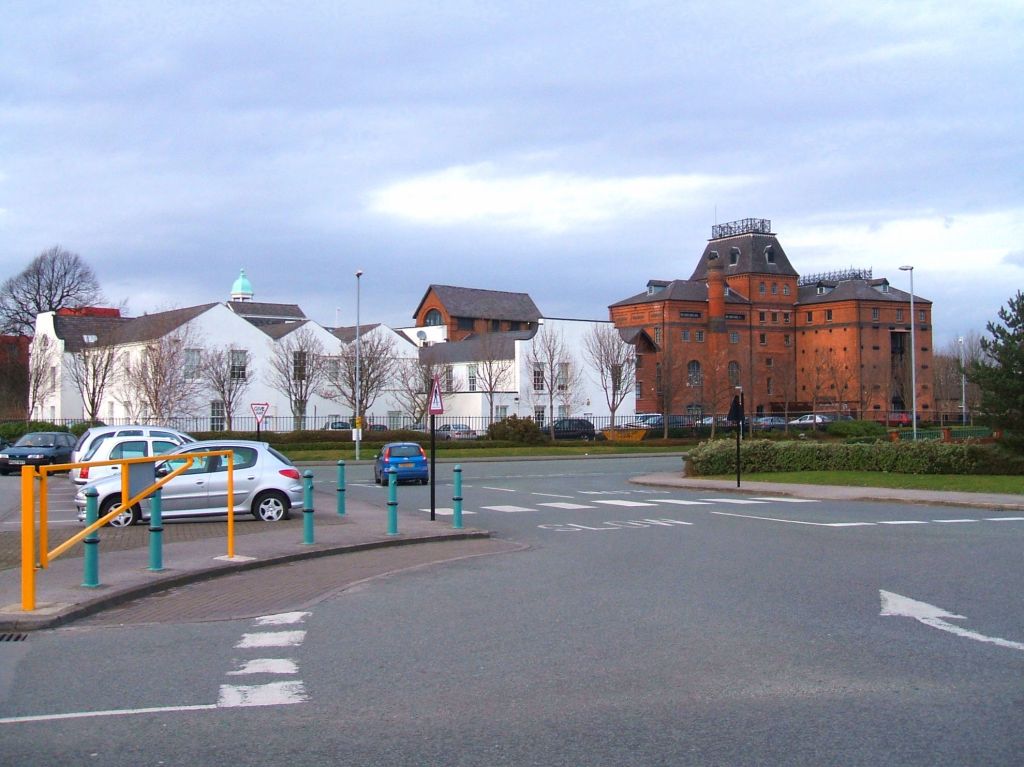
The White House was built in 1787 for the Greenall family. The Grade II listed building is now an office space within Wilderspool Business Park.
The Brew House and Malt Building: Some of the old brewhouse and malt building were converted into offices. These are also Grade II Listed.
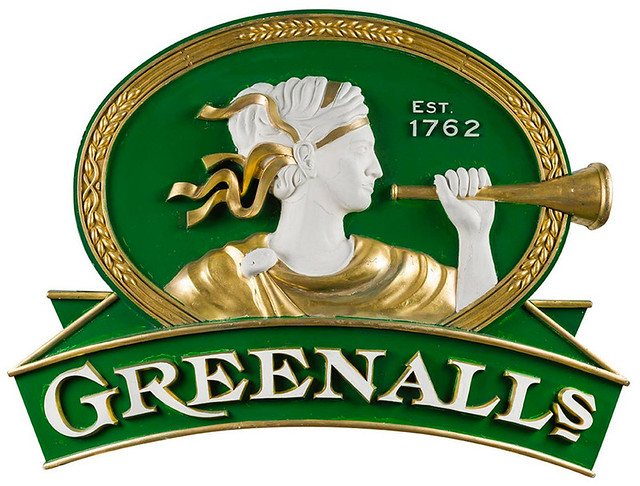
The original trumpet logo of Greenall’s
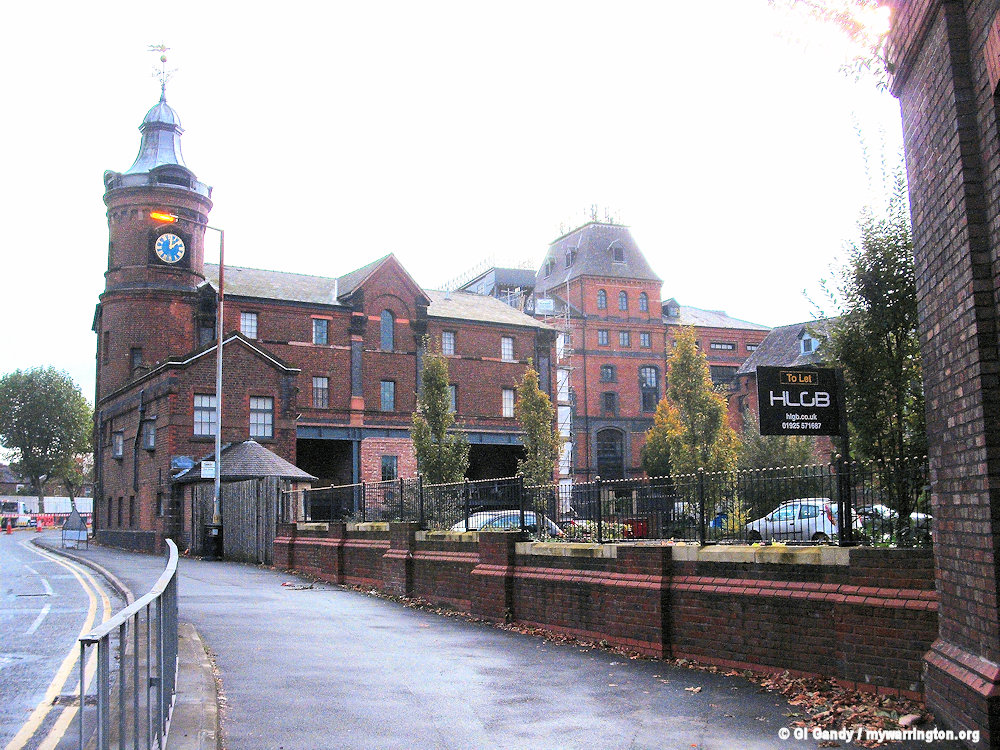
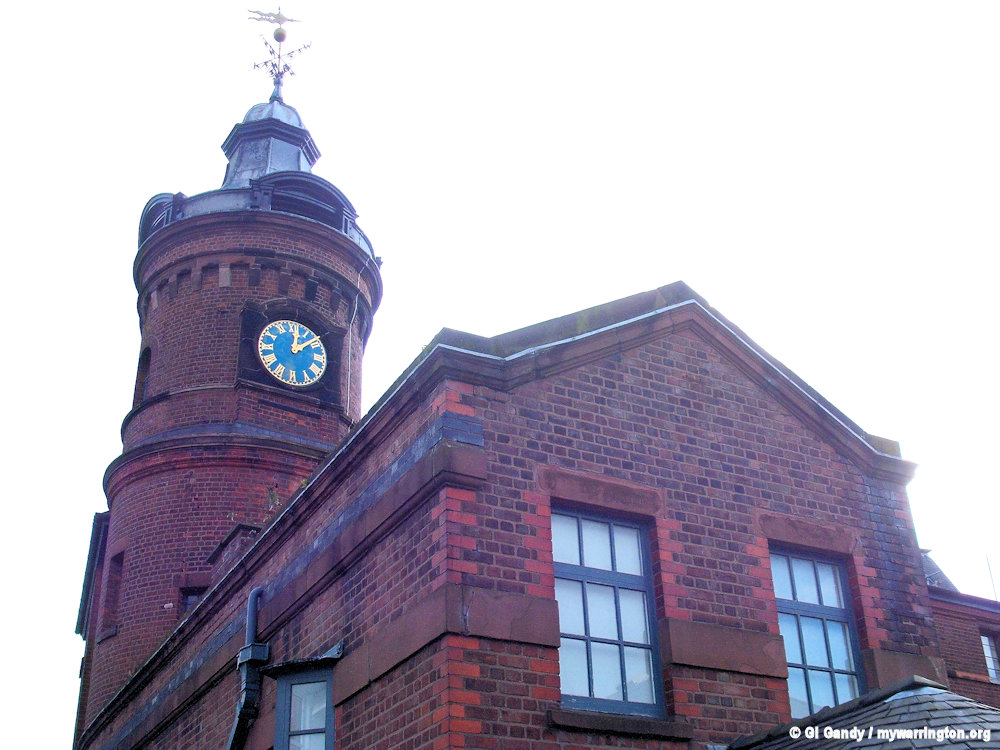
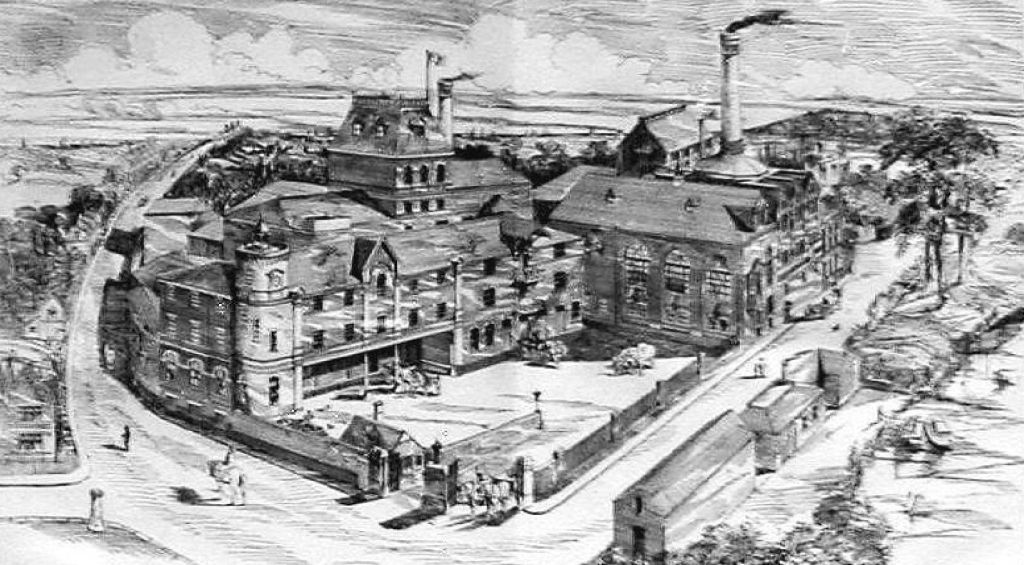
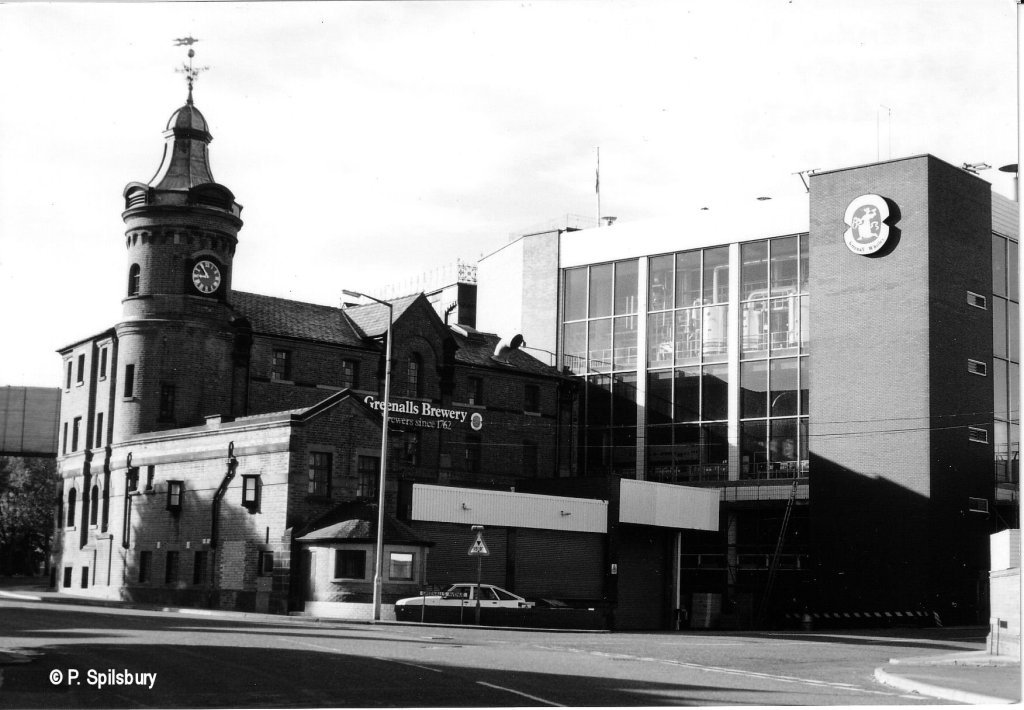
Below we can see a drawing of the Greenall’s Brewery as it looked in November 1887. Next to it we see Peter Spilsbury’s photo of the brewery on 9 September 1990. See much more of Peter’s work in Peter’s Gallery.
The old distillery on Loushers Lane (below) was demolished and the gin business moved to Birchwood.
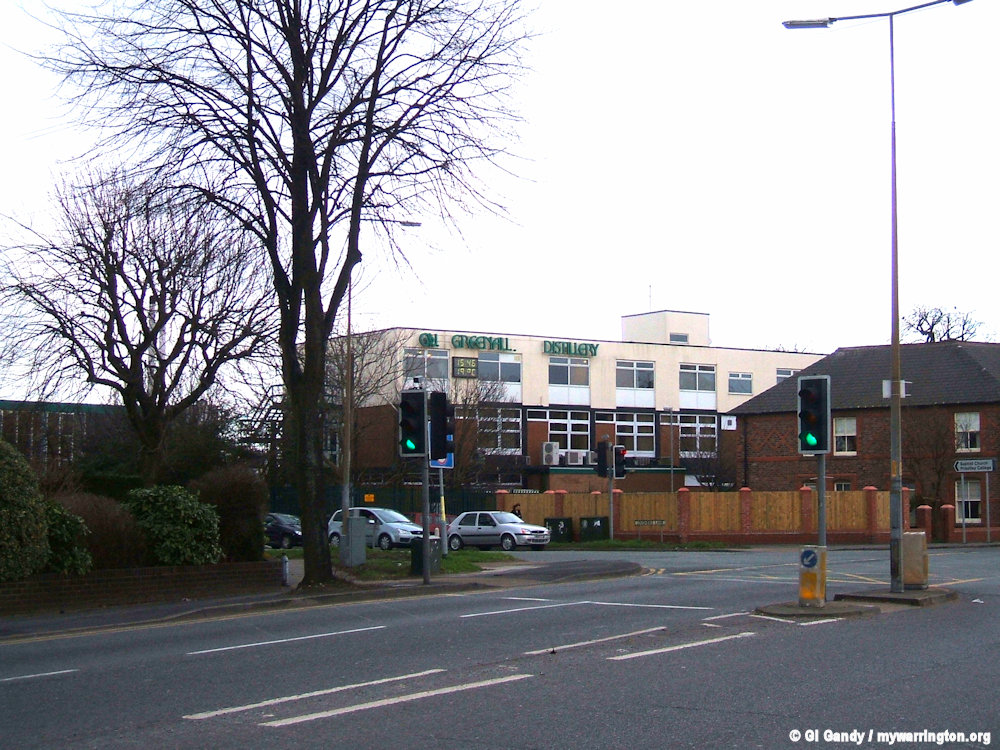
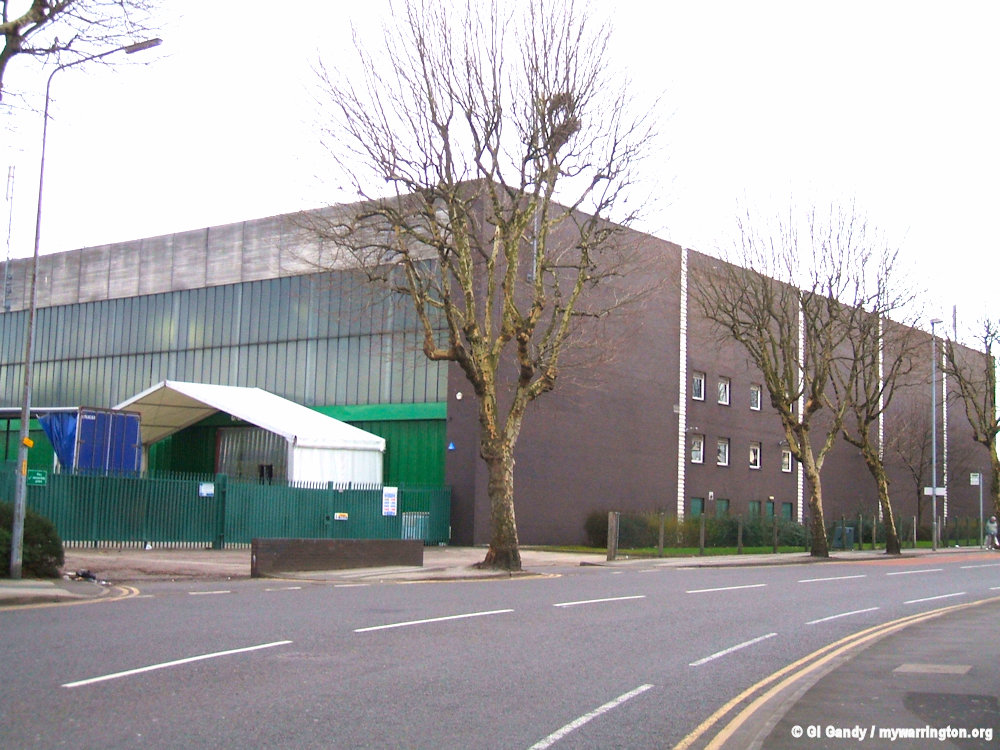
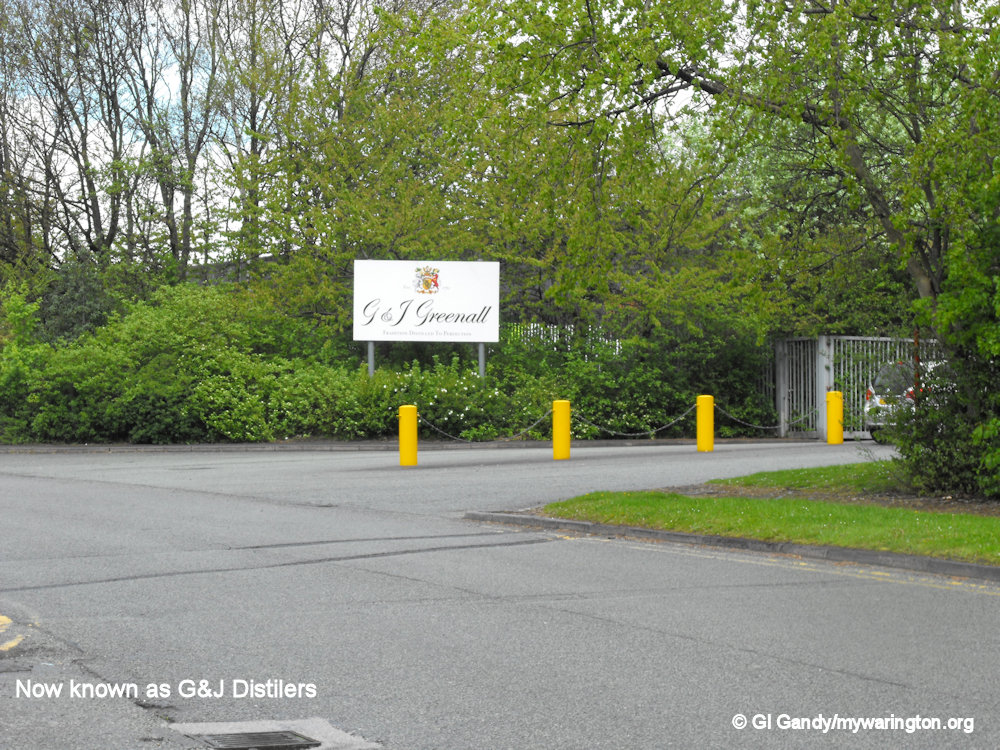
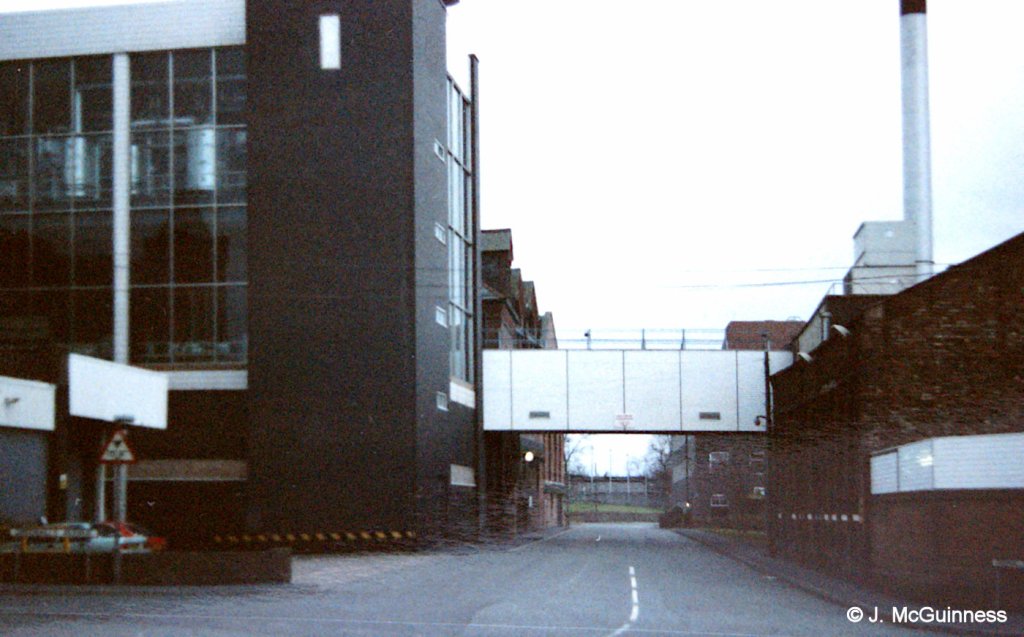
The two photos below showing the brewery from alongside the Saracens Head pub and a view of the main entrance to the brewery were kindly supplied to the mywarrington website by John McGuinness. Many thanks.
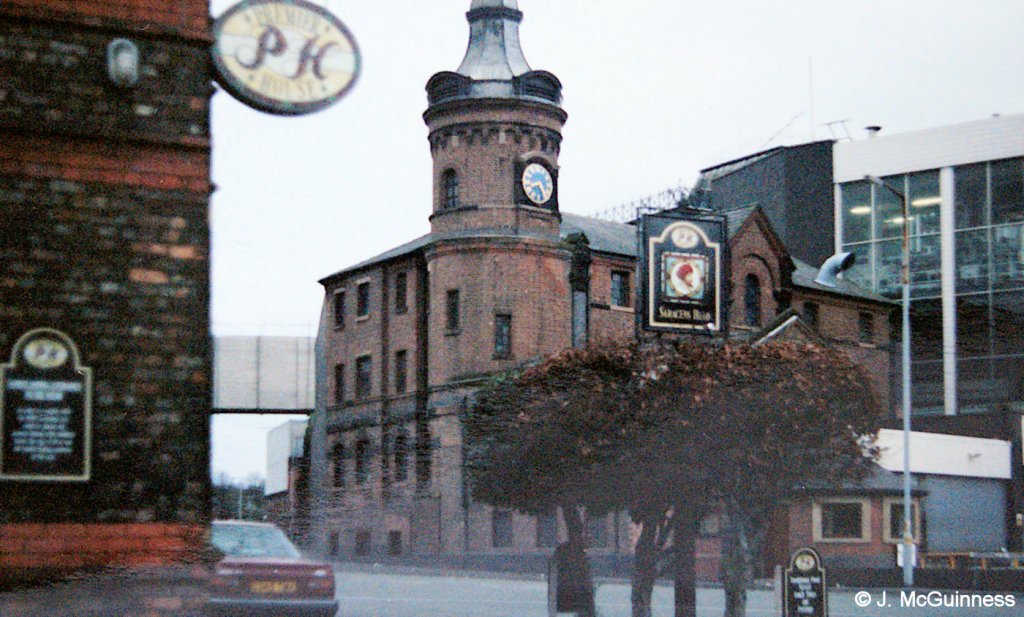
Saracens Head Pub
The current Saracens Head pub on Wilderspool Causeway was built in 1885 and is directly opposite the old Greenall’s brewery. It is constructed in dark brick with dressings in red brick. The windows are sashes with stone mullions, and bay windows. The interior includes mosaic flooring. It is a Grade II listed building. It was on the site of the original Saracens Head that Edward Greenall built his first brewery in 1757. The current Saracens Head was rebuilt on the opposite side of the road so that the brewery could expand.
The pub name “Saracen’s Head” originated during or after the Crusades in the Middle Ages. The term “Saracen” was a historical name used by the Greeks and Romans, and later by Europeans during the Crusades, for nomadic people of the Arabian desert, generally meaning “Arab” or “Muslim”. The name on a pub sign has two main historical contexts:
- Heraldry: Noble families whose members had participated in the Crusades often included a Saracen’s head as part of their coat of arms, and this symbol was then transferred to their local inn signs.
- Crusader Trophies: A common legend states that crusading knights aimed to bring back the head of an “infidel” or Saracen as a battle trophy. Displaying such a gruesome relic at an inn was believed to attract visitors, establishing the pub name.
During a time when most of the population was illiterate, inns used distinctive signs rather than names for identification. The sign would typically depict a bearded, turbaned head, which was a recognizable, if sometimes fearsome, image associated with the east and the conflicts there.
Many “Saracen’s Head” pubs were historic coaching inns, using the prominent and well-known sign to attract travellers and coaches.
The name has persisted for centuries, though its original, often bloodier, meaning has faded for many people.
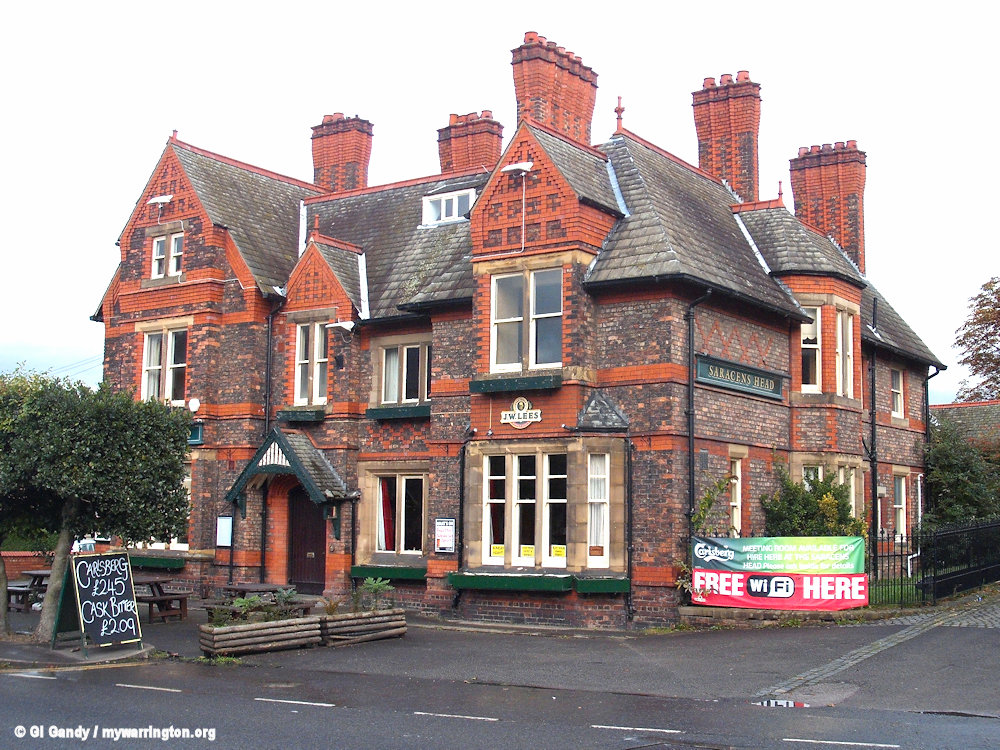
Saracens Head Pub, Wilderspool Causeway (15 Oct 2012)
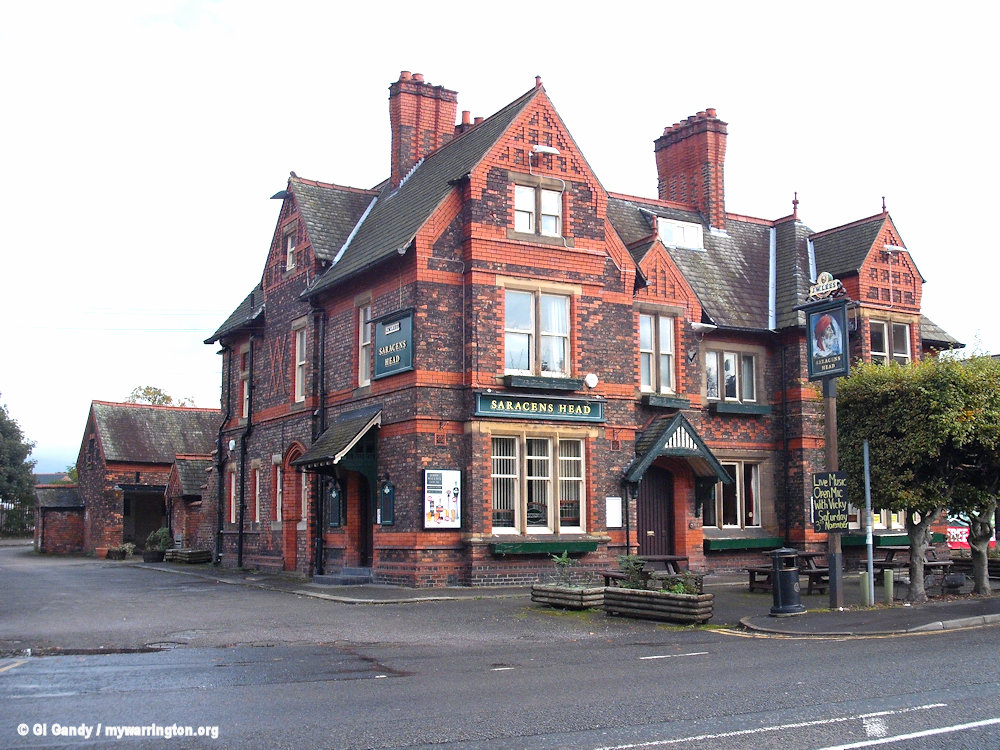
Saracens Head Pub, Wilderspool Causeway (15 Oct 2012)
One of the trading names of the company was Wilderspool Ales. There were a few brands of beer under this name, including Bitter Beer, Brown Ale, Extra Stout, Family Ale, Festival Ale, Old Ale, Old Chester Ale, Pale Ale, Strong Ale and Tenpenny. Link here for some beer mats promoting those brands.
Many Warrington Pubs sold Greenall’s and Wilderspool Ales, including the White Hart on Sankey Street in Warrington town centre. In my combined photo here you can see the former sign which was on the wall by the Sankey Street entrance (you can just make it out on the white wall). Also here is a trade advert for Greenall’s when they operated at both St Helens and Wilderspool (remember, Wilderspool wasn’t part of Warrington when the company started in 1757).
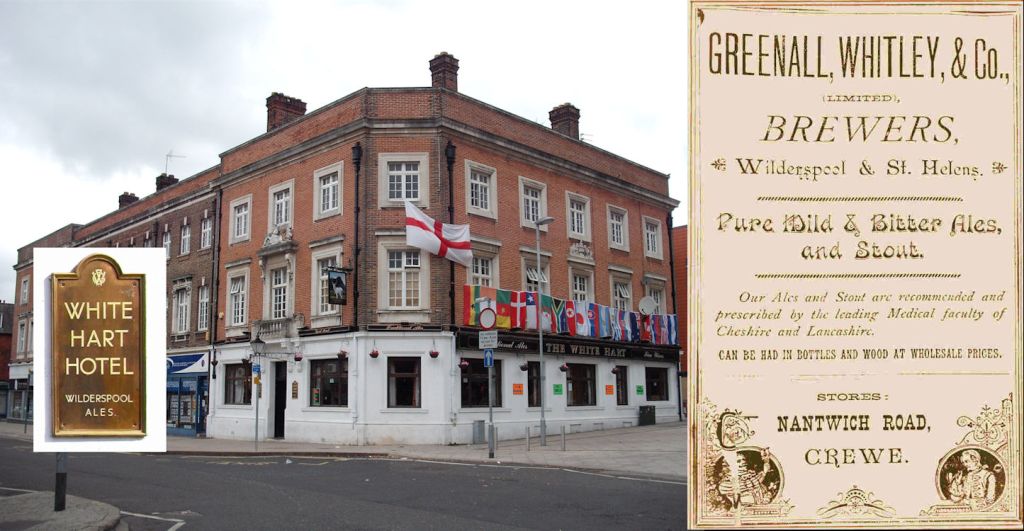
My combined photo here shows the White Hart pub on Sankey Street, Warrington, the Wilderspool Ales sign and a trade advert for Greenall Whitley.
The Causeway Hotel
The Causeway Hotel is on the east side of Wilderspool Causeway and stands on the site of a previous pub called the Pleasure Boat Inn. As well as the Shacklady family (who ran the pub from the beginning of the 20th century and Harry Sutton from 1930s to the 1960, the pub was run by former Warrington rugby league player Austin Woolvine.
Information from Causeway Connections by Latchford History Group.
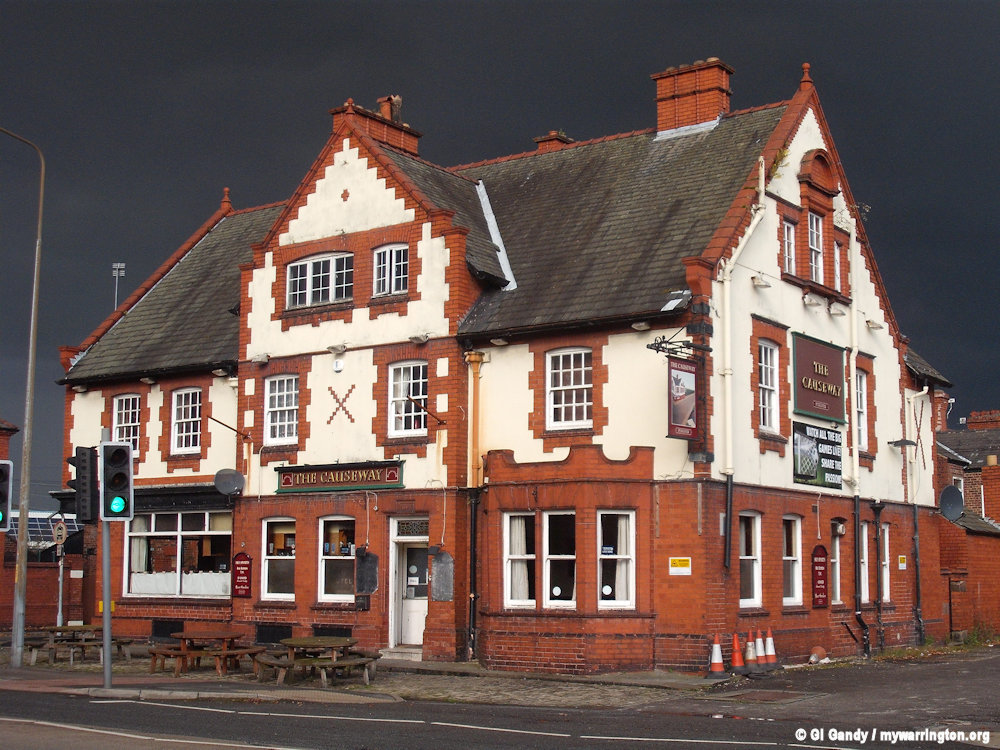
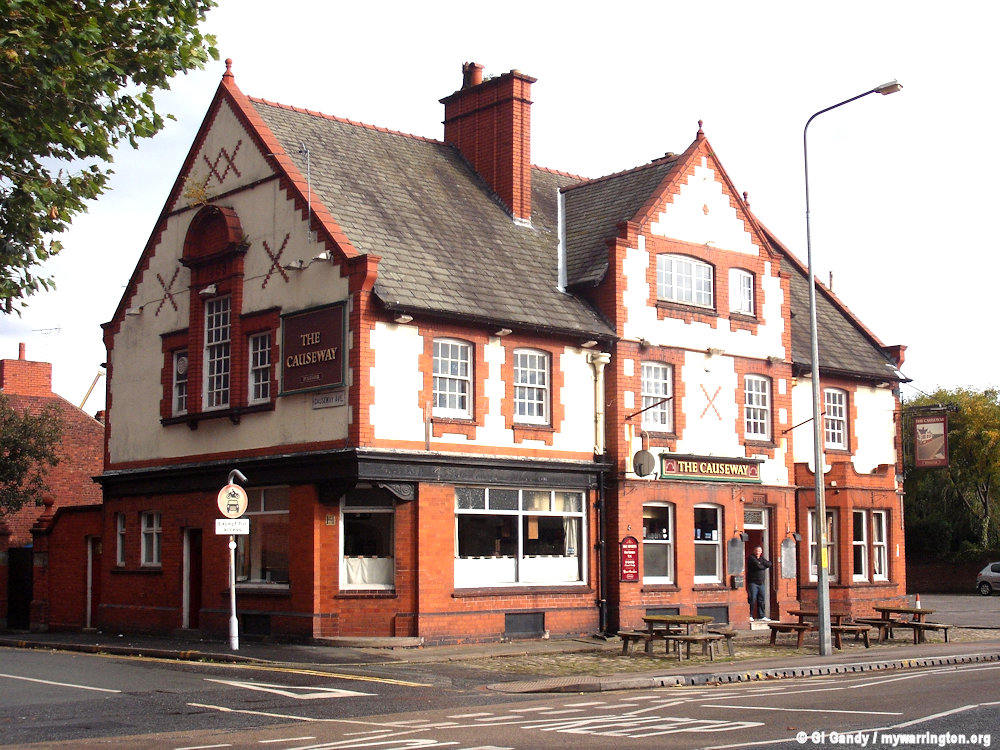
There is no editing whatsoever in my first image above. The very dramatic sky led to a massive downpour over Wilderspool and Latchford on the day I took the photo, which was 15 October 2012. The second photo was taken earlier on the same day.
China Lane
To the right of the Saracens Head pub, there is China Lane. Until 1899 the road provided the most convenient route to Latchford Village from Wilderspool. This was the year that Loushers Lane bridge opened once the Runcorn and Latchford Canal was constructed (the road crossed a wooden bridge at this time). The road can be seen immediately south of the Saracens Head marked on the Royal Library of Scotland map.
So why was it called China Lane? According to the excellent book The Streets Where You Live by Latchford History Group, a footpath on an 1870 map is known as Occupation Road rather than China Lane. Dealers in chinaware used the route to transport their goods to Warrington and Stockton Heath and via the canal, hence the name being changed to China Lane.
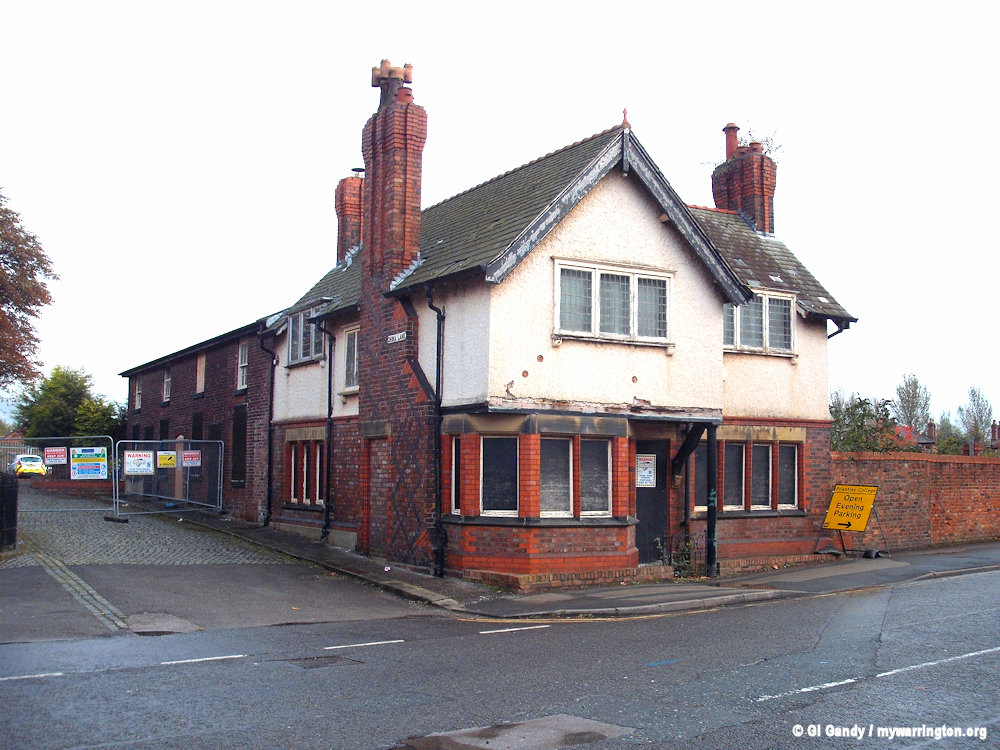
China Lane is now closed but once led to Latchford village. Photo taken 15 Oct 2012.
Bridgewater High School Artwork (2010)
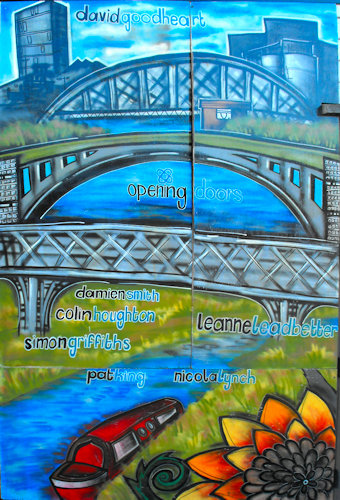
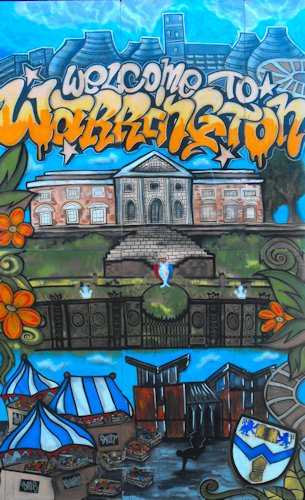
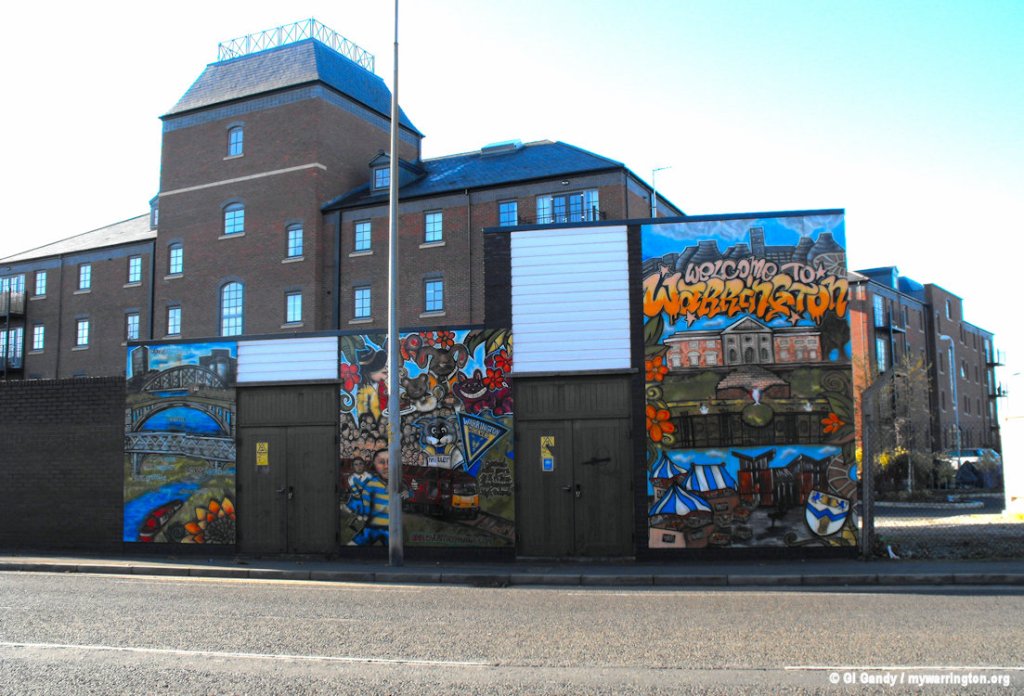
While we are in the area, these artworks were created by Bridgewater High School in November 2010 to show scenes of Warrington.

Wilderspool Stadium
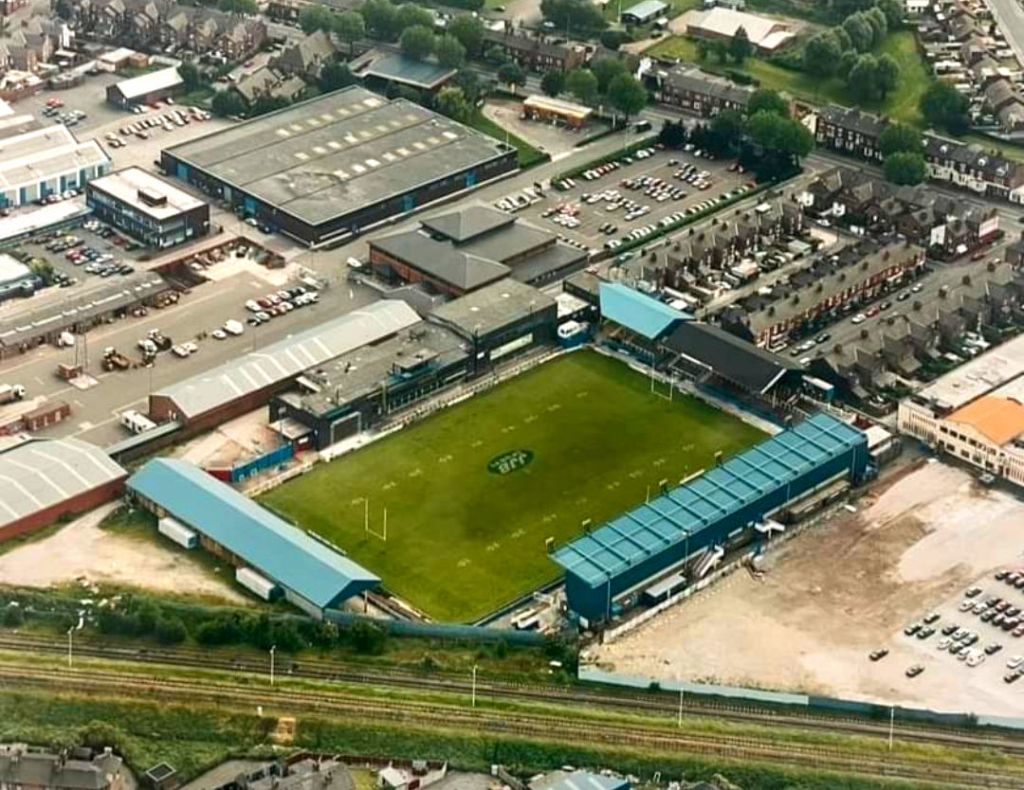
Wilderspool Stadium from the air. I don’t know who took it or when. If you know the copyright owner, please contact me so I can give a proper credit.

Wilderspool Stadium was the former ground of Warrington rugby league team for over 100 years, before they moved to the Halliwell Jones Stadium for the 2004 Super League season.
It held just over 9,000 spectators, after substantial decreases for crowd safety. During the 1994 Kangaroo tour, Australia defeated Warrington 24-0 at Wilderspool before a crowd of 11,244 in the Kangaroos’ last ever game at the ground. The record Kangaroo Tour attendance at the stadium was on the 1948-9 tour when 26,879 saw Warrington defeat the Kangaroos 16-7.
The move to the new ground was widely considered long overdue. It was scheduled for demolition when the club moved out in 2003, but the council kept it open for some years after. Warrington Woolston Rovers and Warrington Wizards played their home games there until 2014.
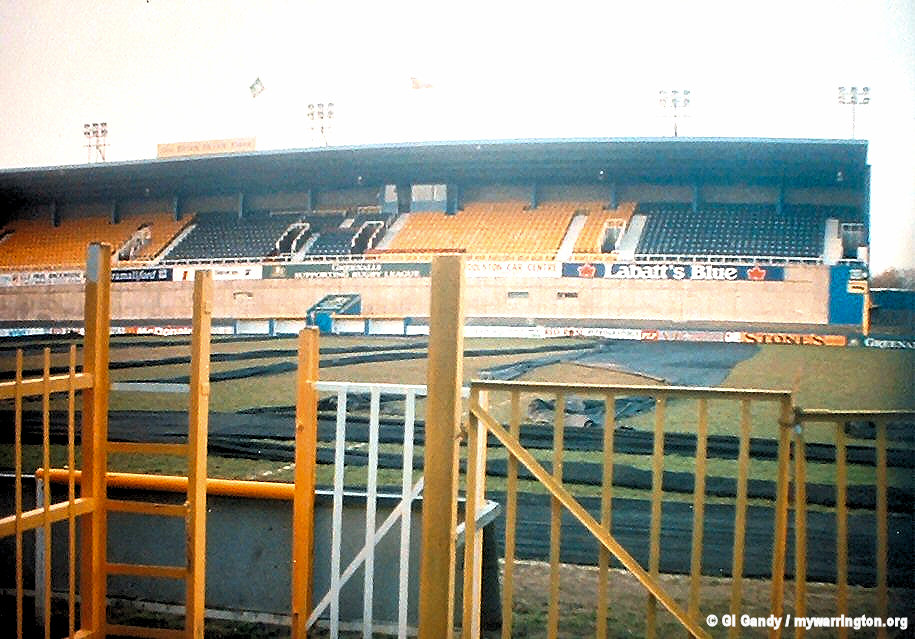
Wilderspool Stadium in my image from 12 February 1996.
Brian Bevan Stand
In the early 1980s a fire gutted the north stand, causing £300,000 of damage. The stand was rebuilt in 1983 and in 1991 it was named The Brian Bevan Stand in honour of the winger who played for the club between 1946 and 1962.
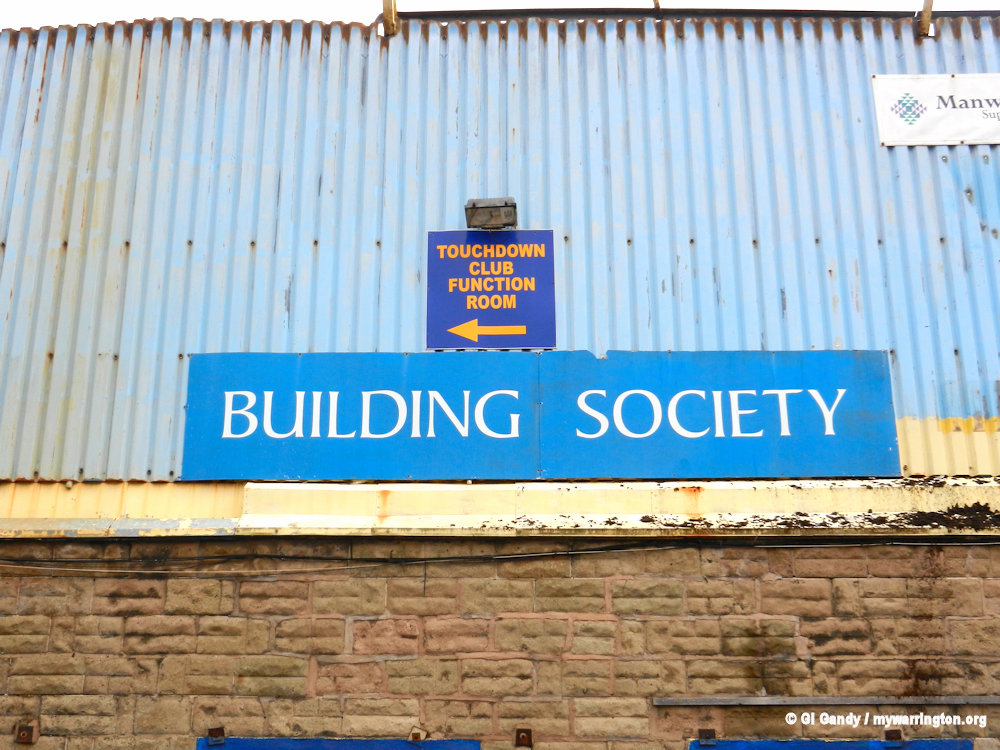
The stand housed many of the stadium’s amenities such as the Touchdown Club and members’ bar. It was also the location of the players’ dressing rooms and the club’s gym. The stand has seating for 500 people (reserved and unreserved).
There is a statue of Brian Bevan outside the Halliwell Jones Stadium, which formerly stood on Brian Bevan Island near Wilderspool Stadium. It was designed by Philip Bews and is four metres tall and mounted on three steel masts, taking the overall height to 38 feet (11.5 metres).
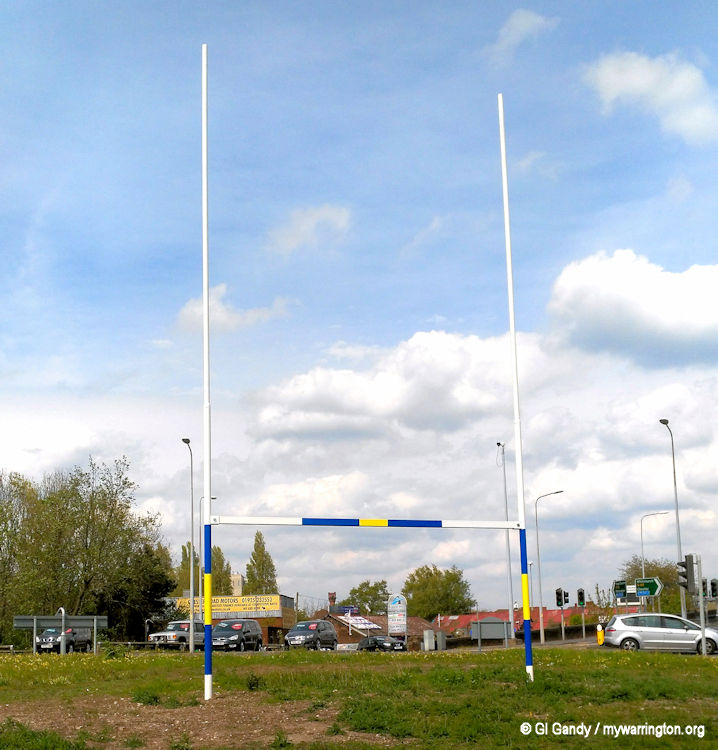
My photo here shows the rugby posts on the renamed Brian Bevan Island alongside St James’s Church.
Fletcher End
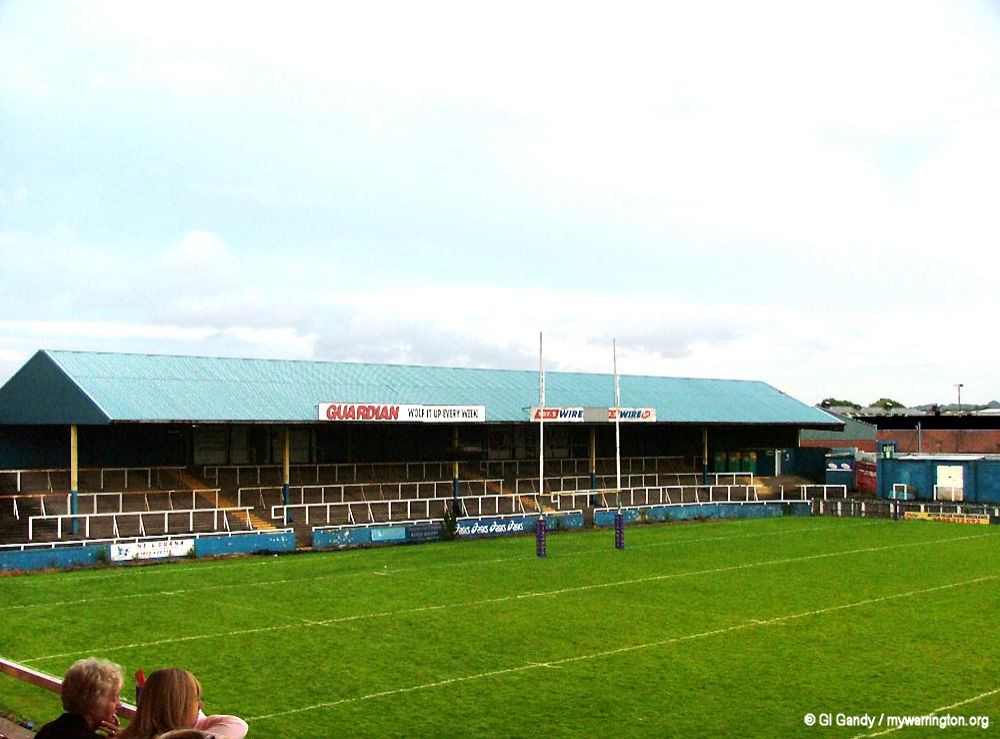
The Fletcher End is named after Fletcher Street on the west side of the stadium behind the goal posts. It didn’t have a roof until the 1950s. The stand housed the club shop and offices as well as some match day hospitality.
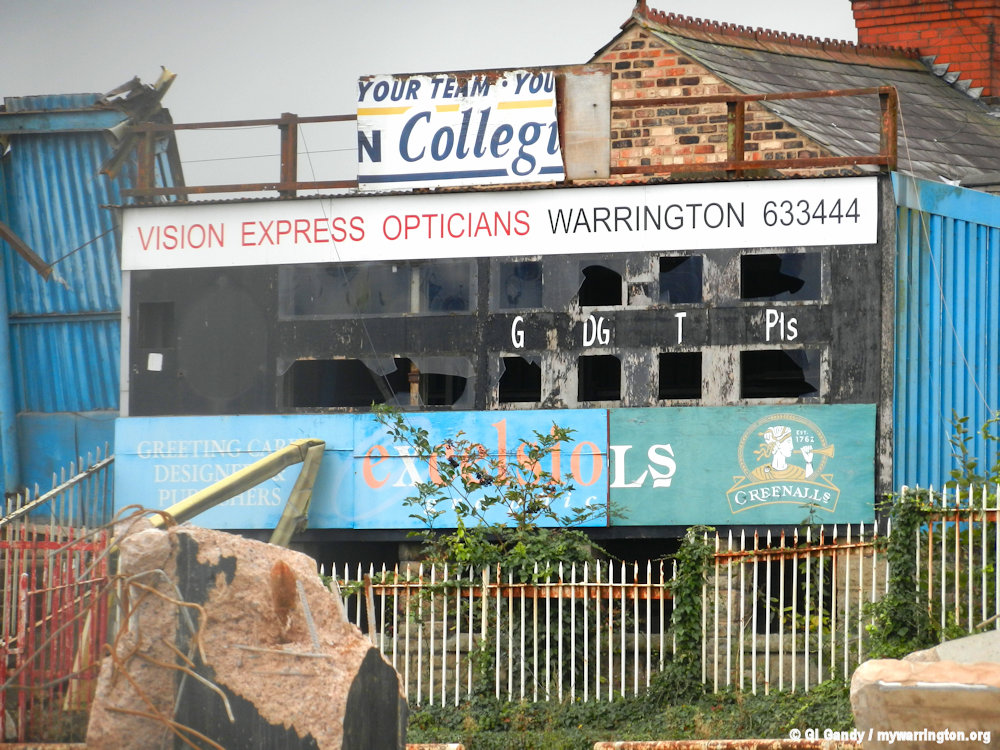
The Fletcher End, commonly known as The Fletch to the home fans, was where the ‘Wire’ fans would congregate during a game. The Fletcher End also housed the stadium’s scoreboard.
My photo was taken on 7 August 2008.
Railway End
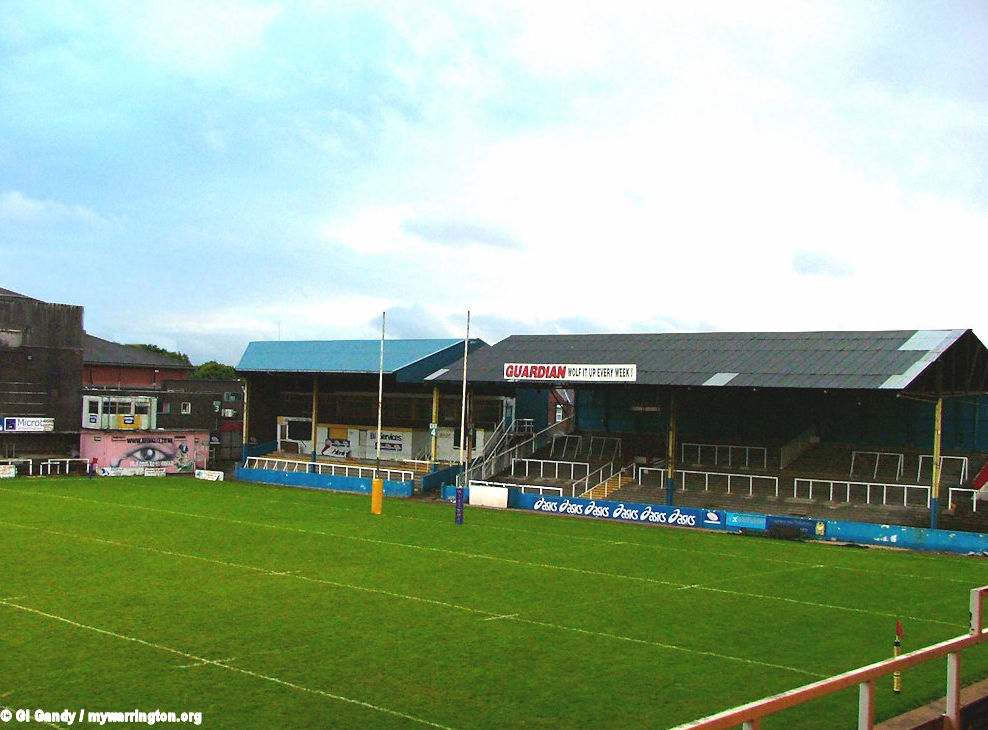
The Railway End was where the home fans originally congregated. The stand was a large open terracing stand which was later downsized and the roofing from what was previously the Popular Stand was placed over it.
In 2000 the crush barriers were improved so that the authorities would allow the capacity of the stand to be increased.
My photo was taken on 7 August 2008.
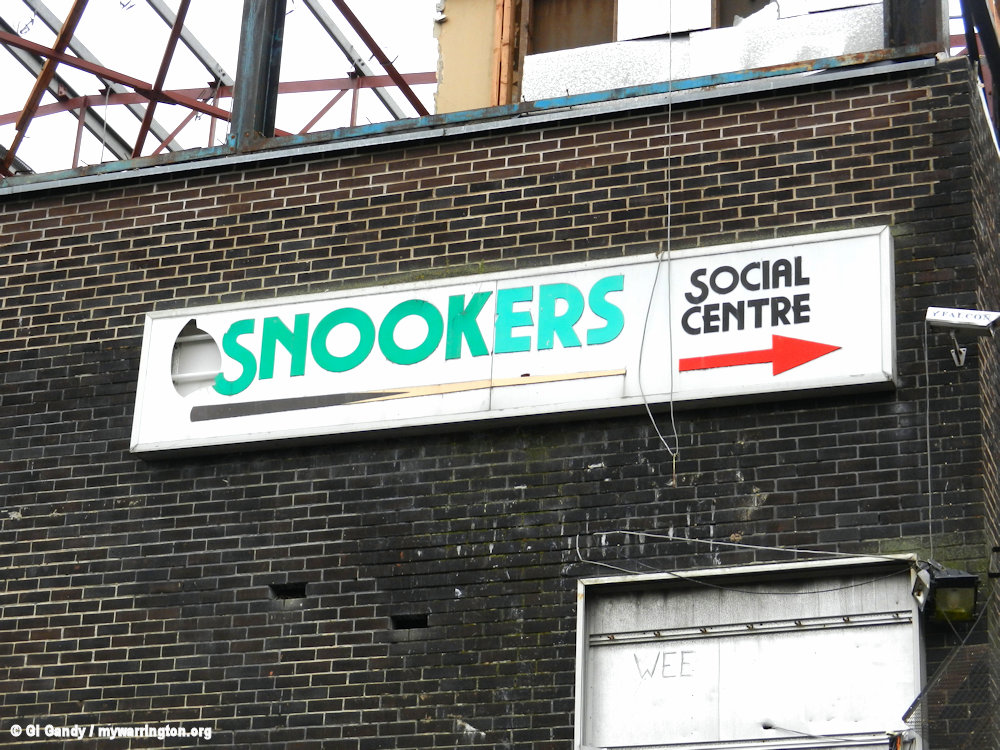
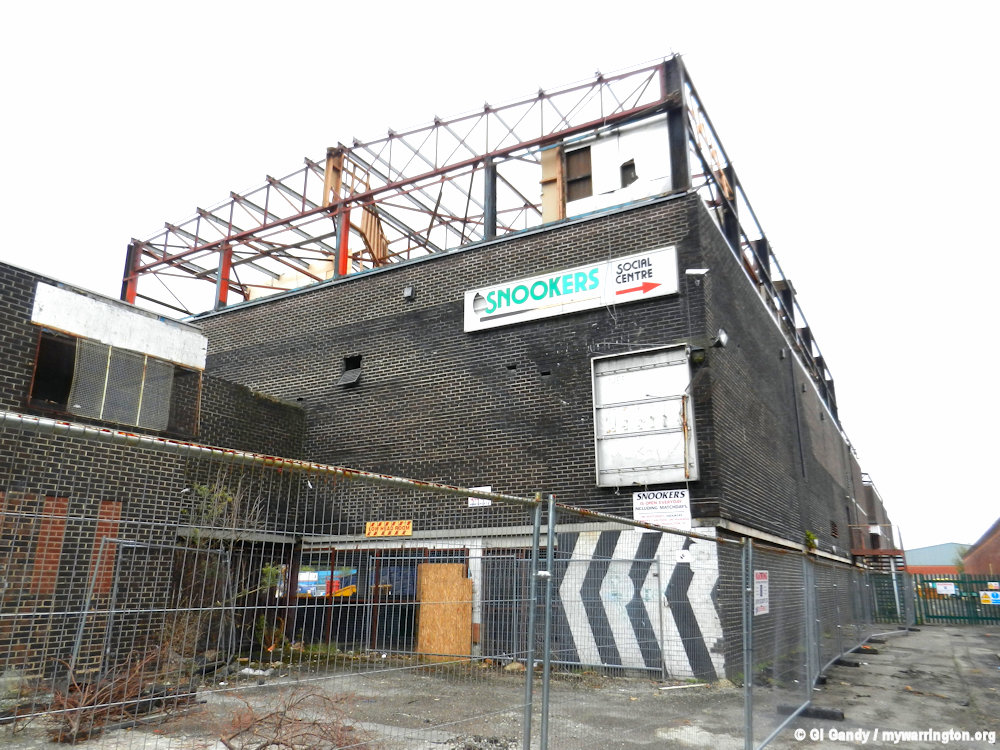
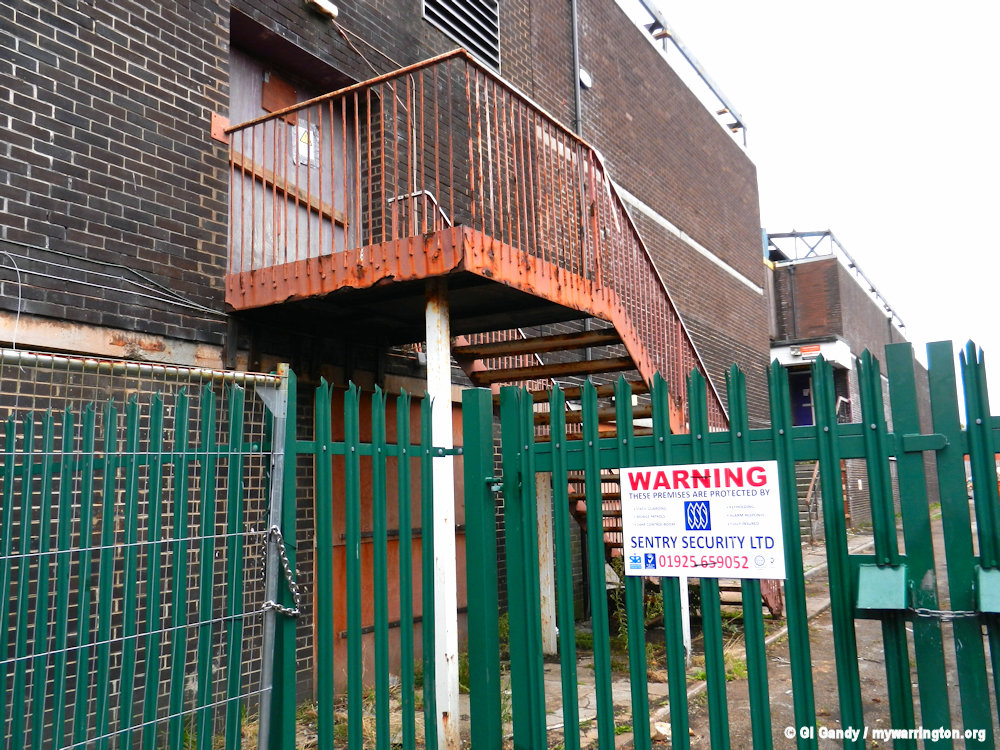
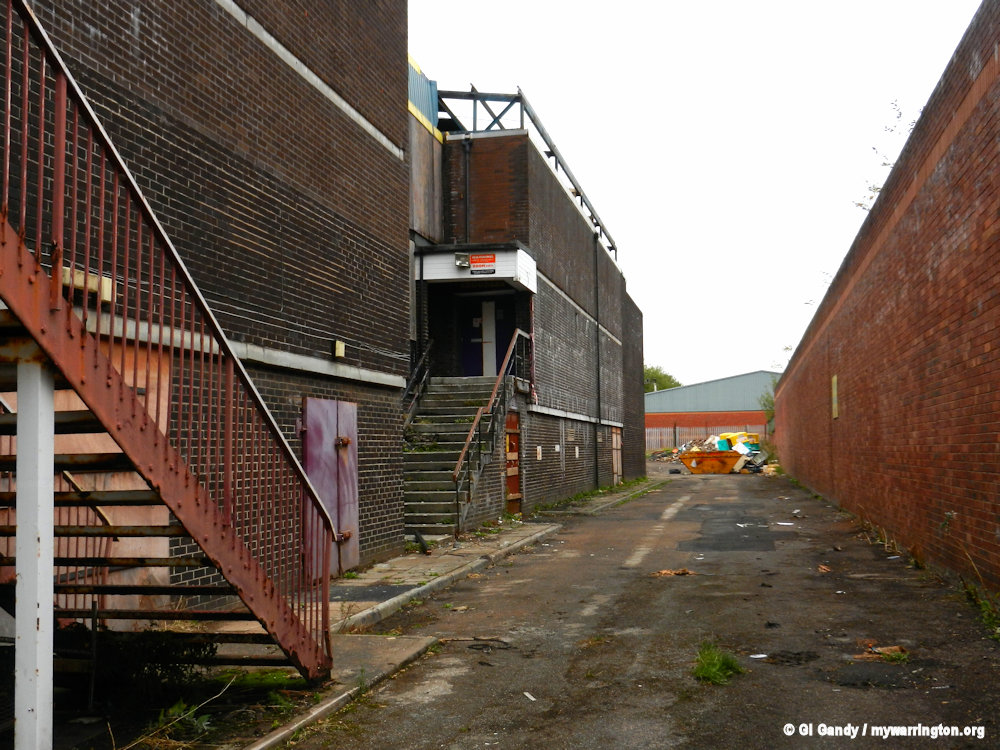
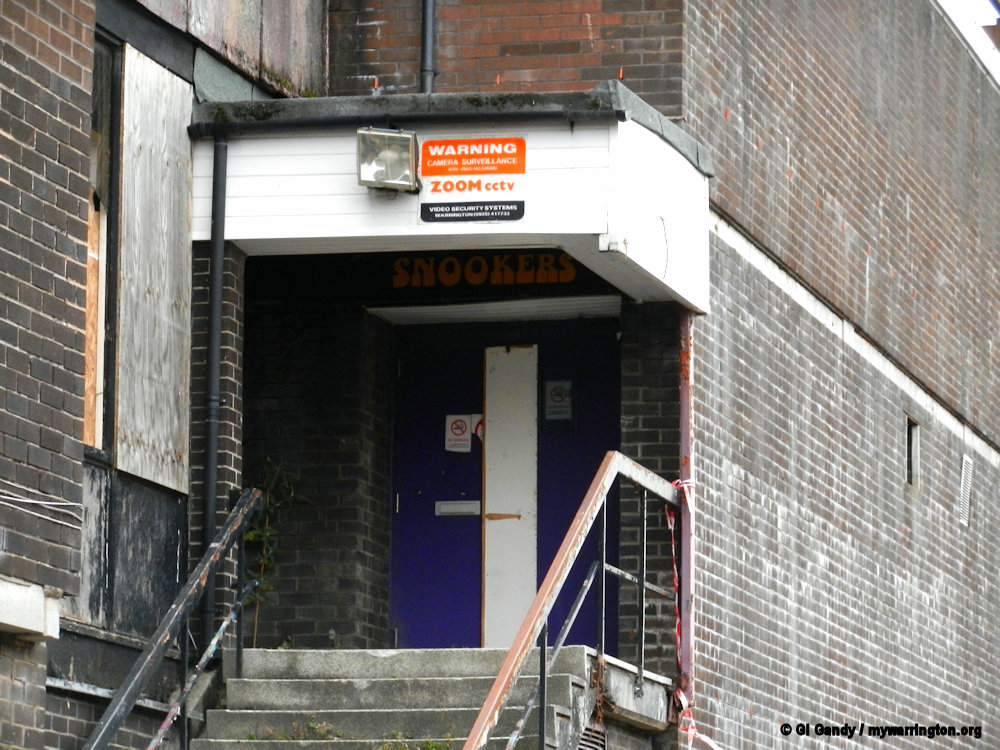
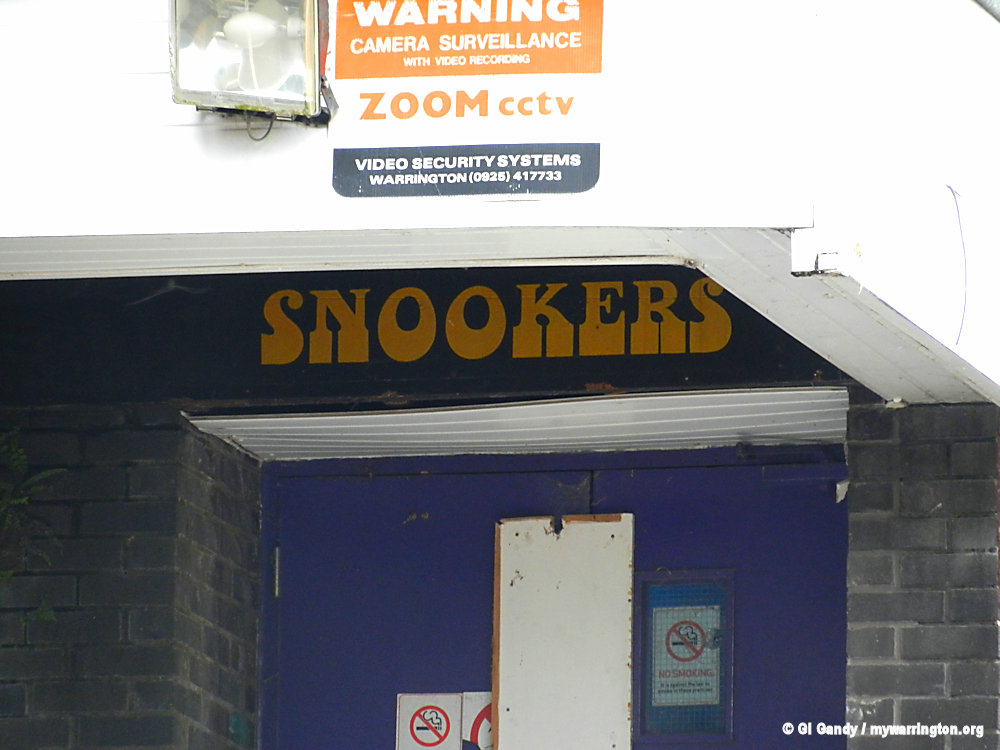
Snookers (formerly the Popular Stand)
The Popular Stand was on the south side of the stadium, opposite what was later named the Brian Bevan Stand. It was demolished in the 1970s, and its roof was later used on the Railway End Stand. Snookers club was built on the site of the Popular Stand and featured a large glass façade where fans could watch the game from inside the complex. Originally there was seating in front of the snookers building, which became standing-only in the 1980s. The terracing was closed in 1997 for health and safety reasons. When the club moved from Wilderspool, Snooker’s remained open for a number of years. Some notes from Wikipedia.
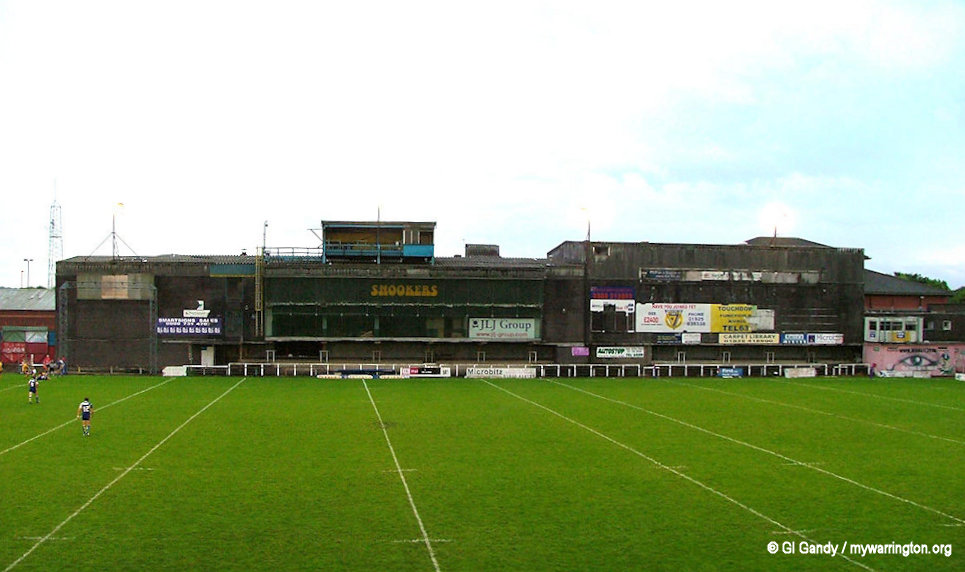
My photo was taken on 7 August 2008.
The following photos were taken on 15 October 2012.
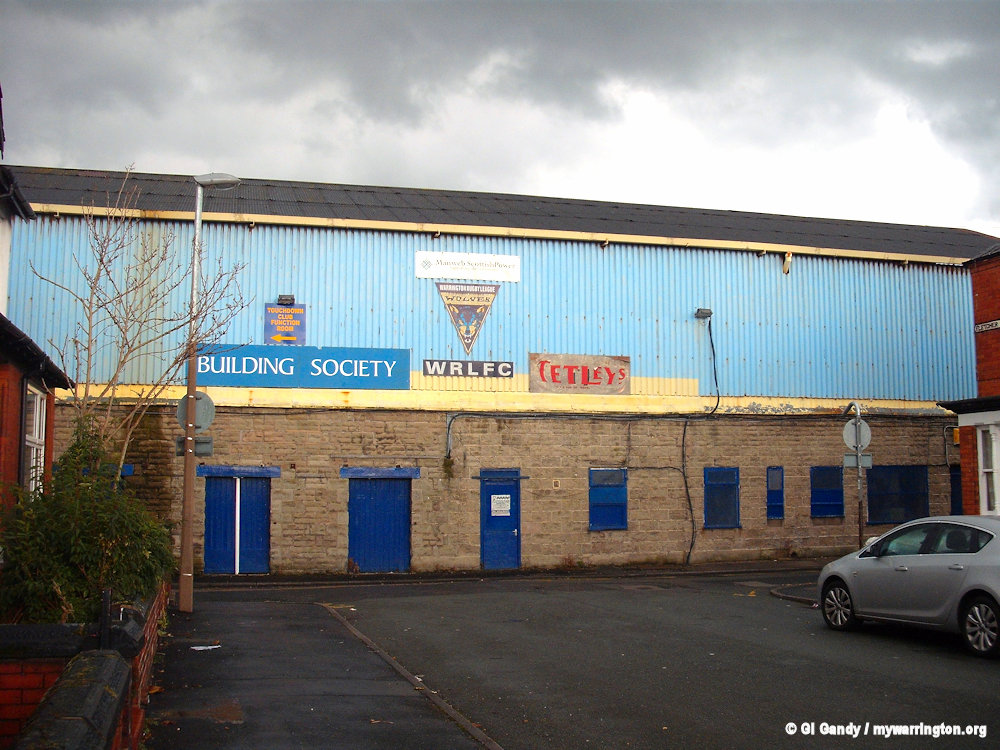
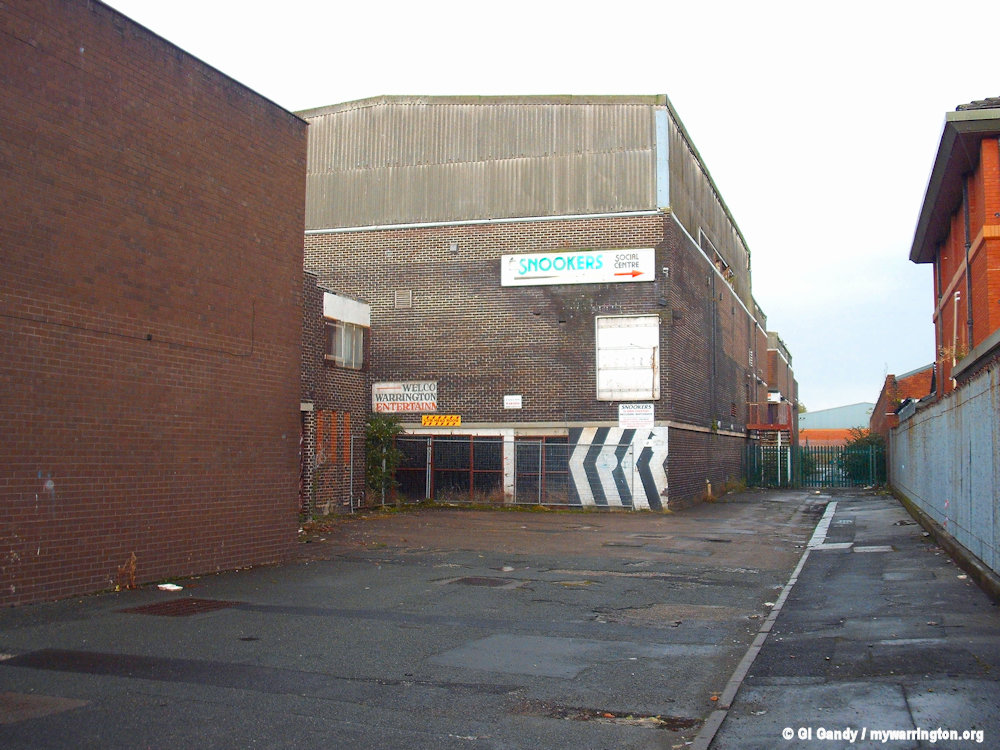
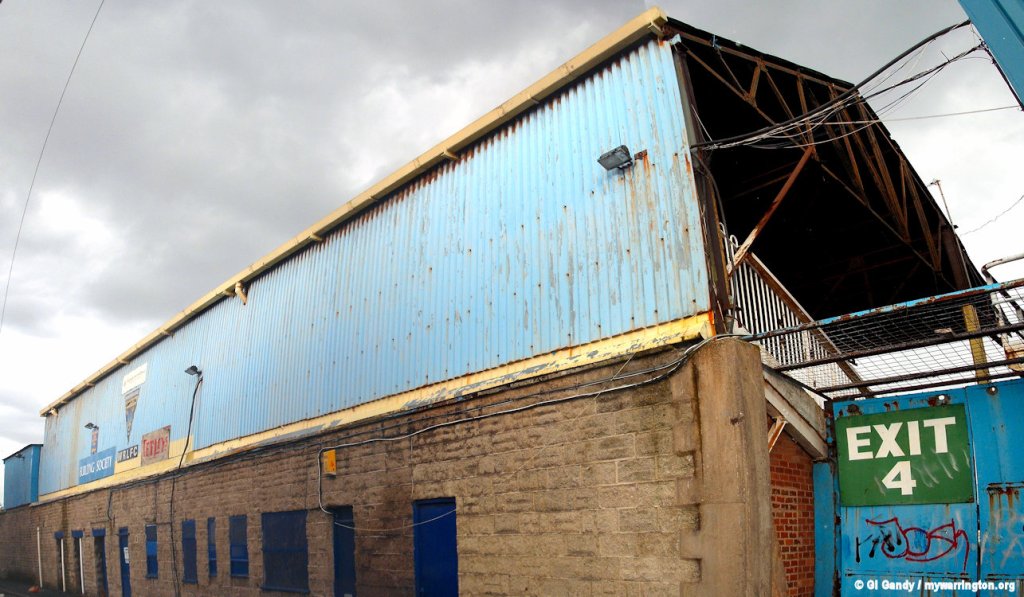
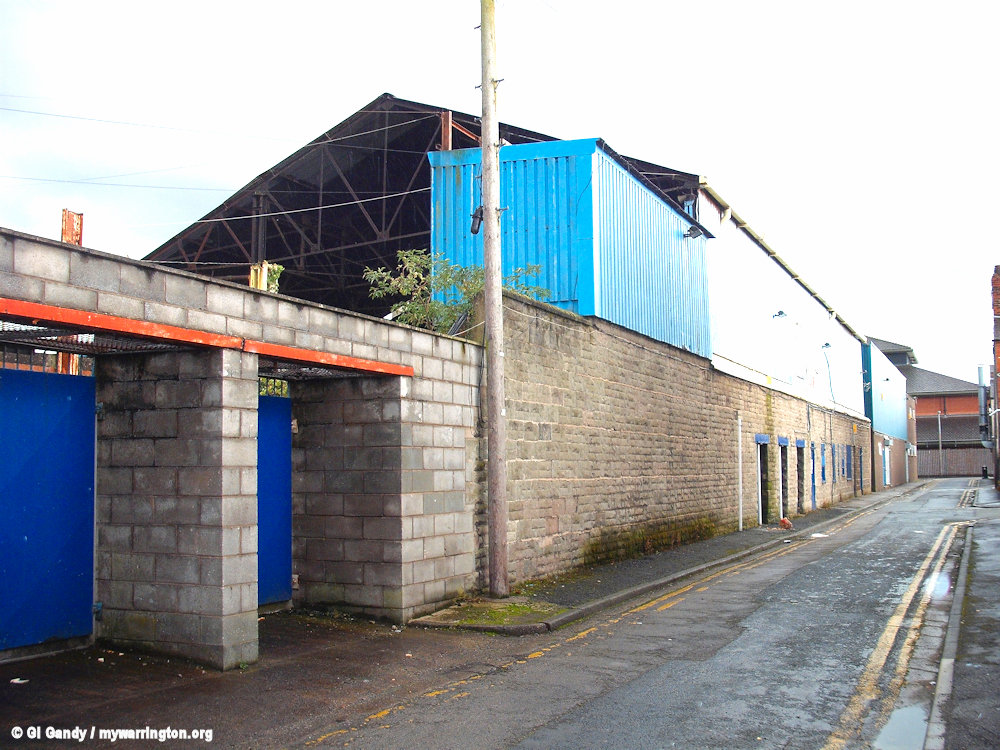
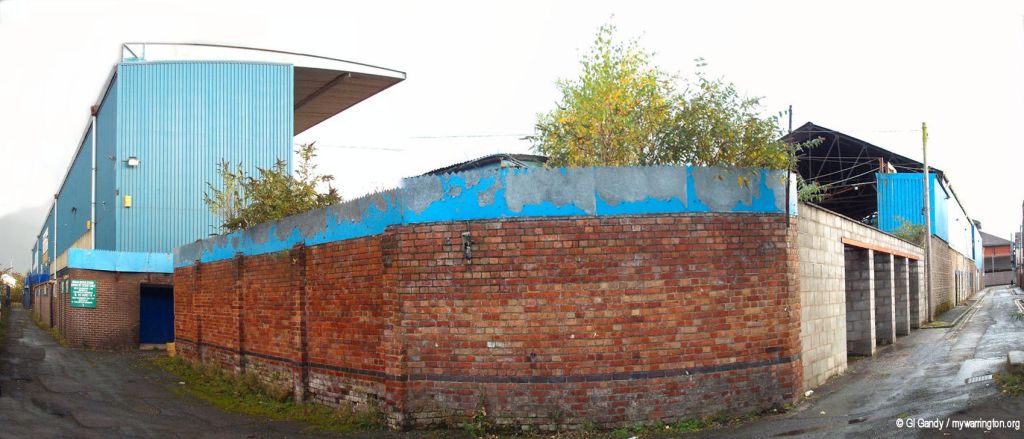
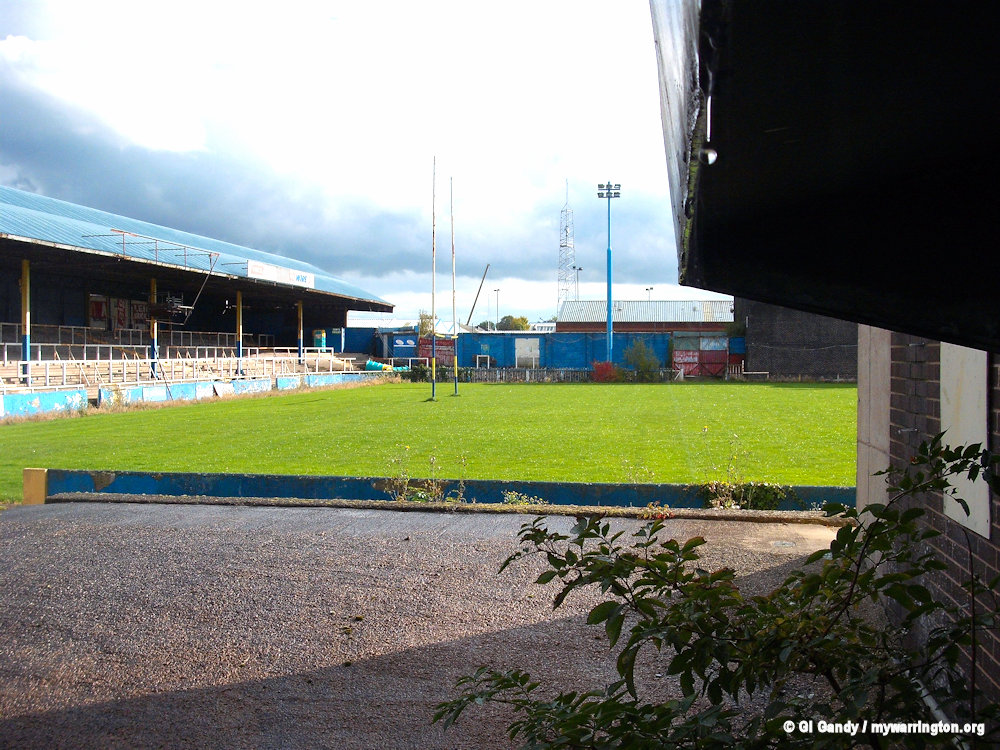
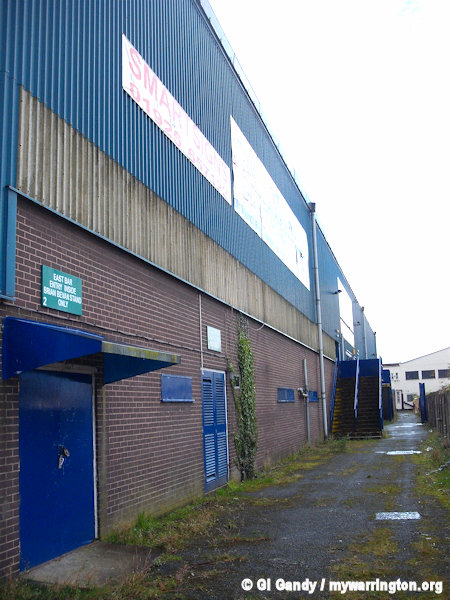
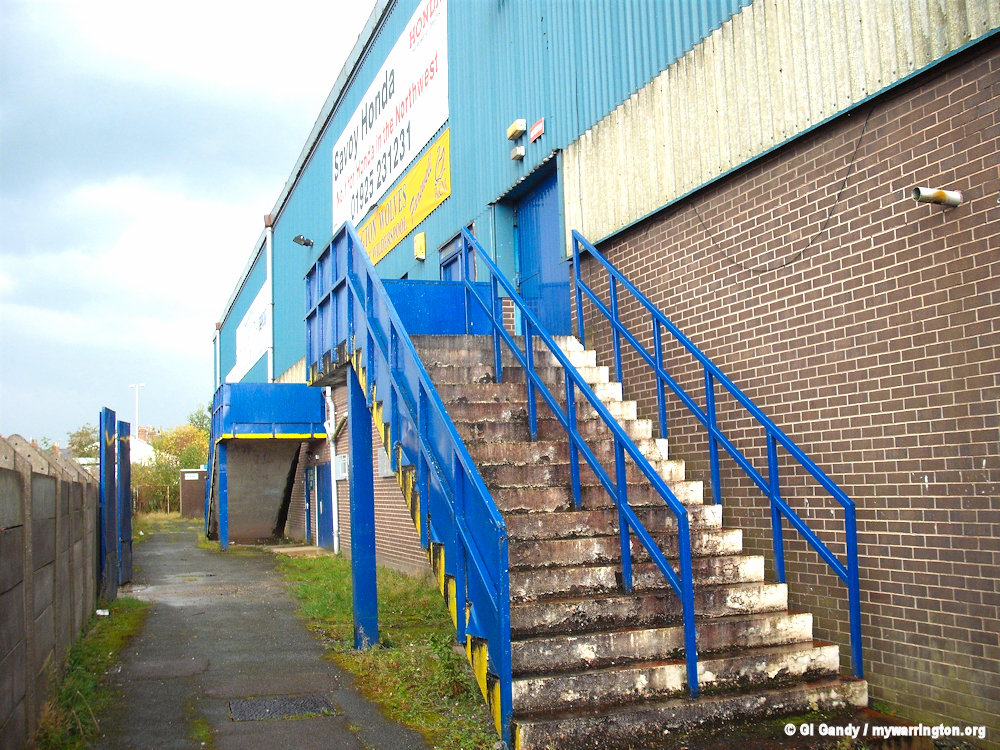
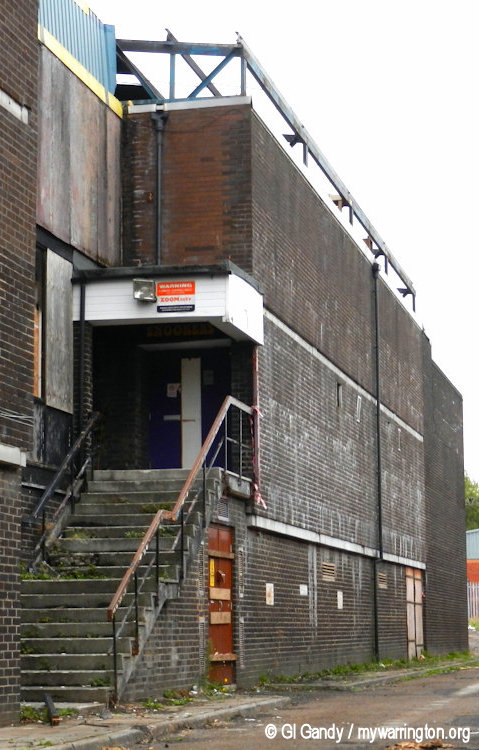
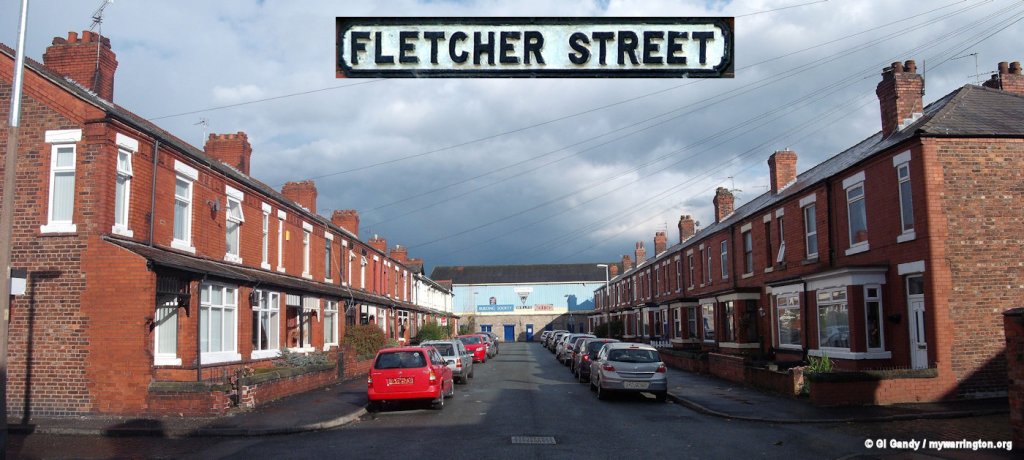
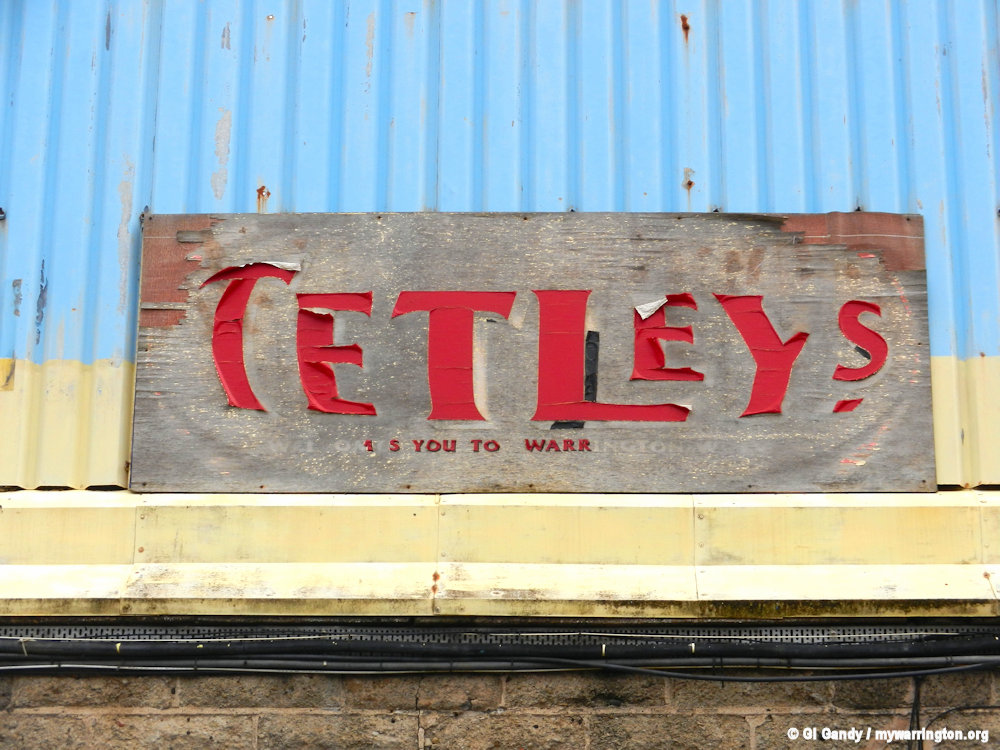
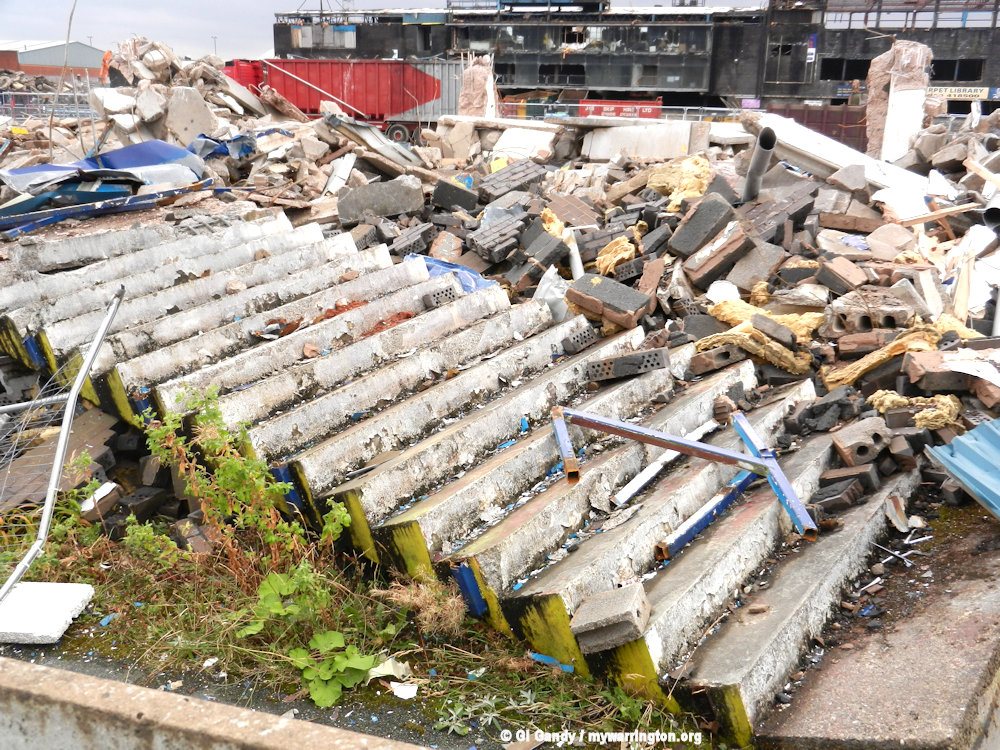
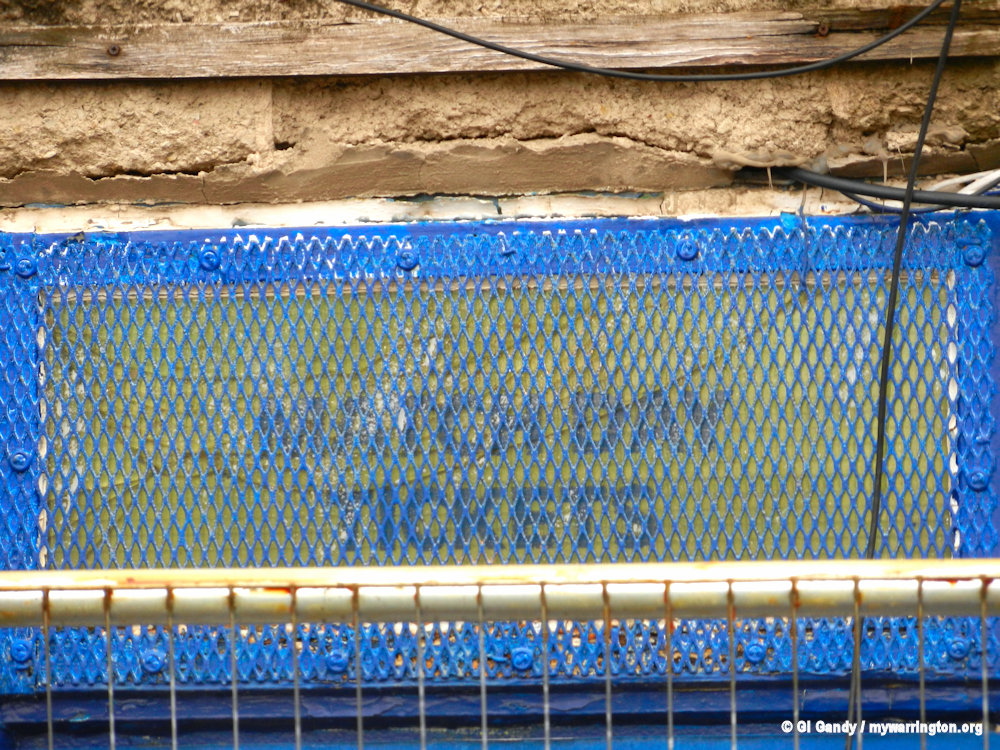
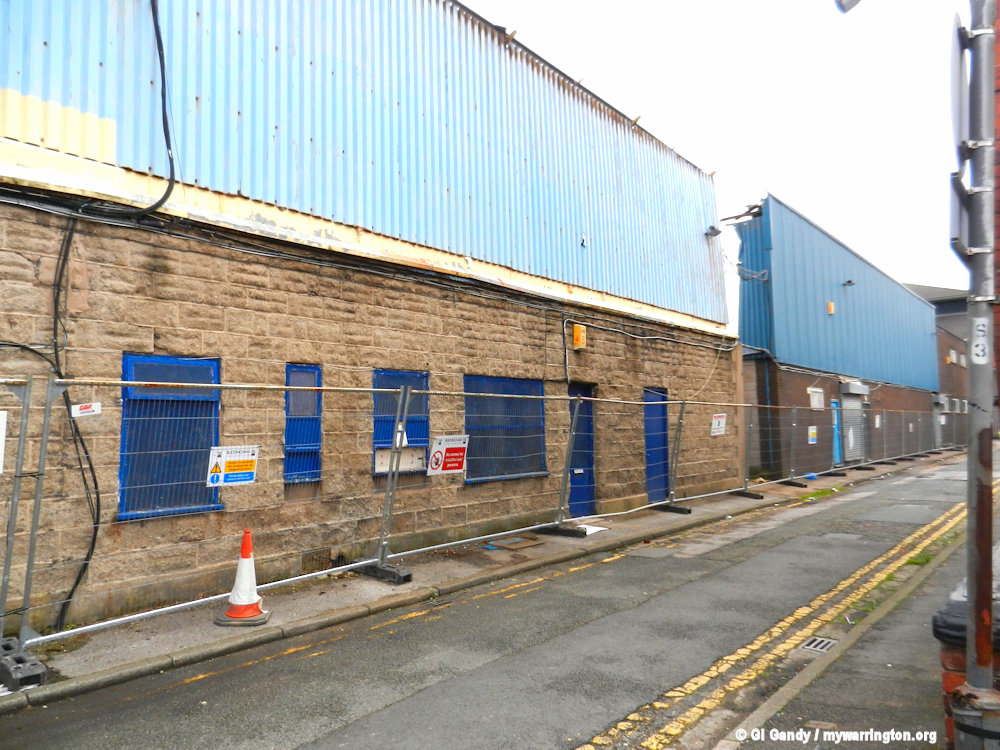
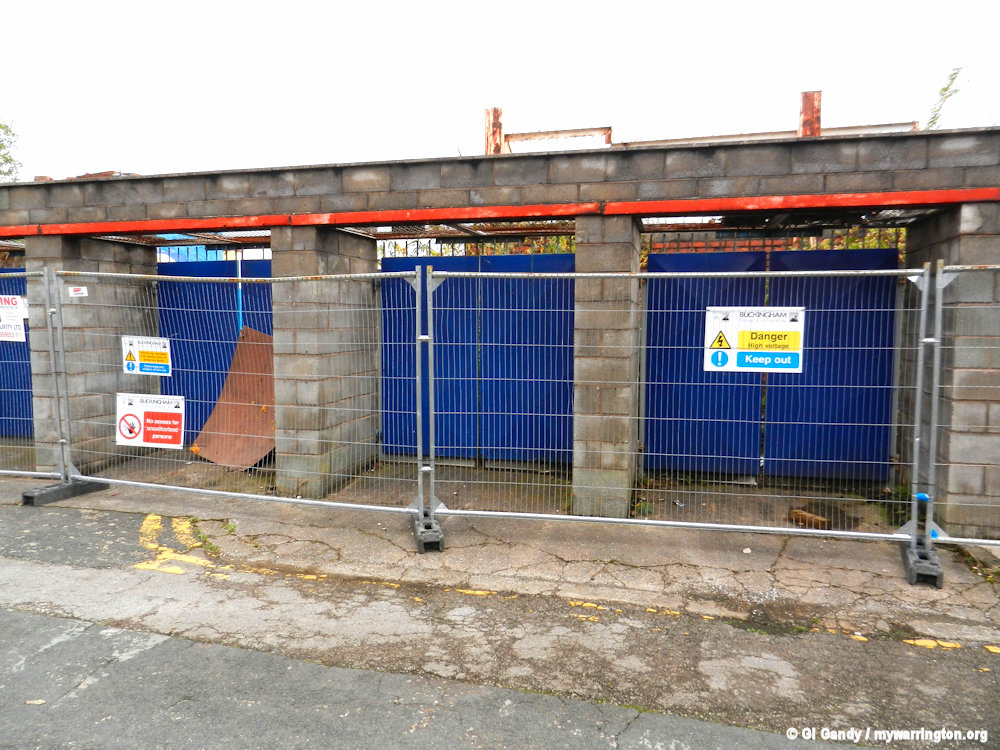
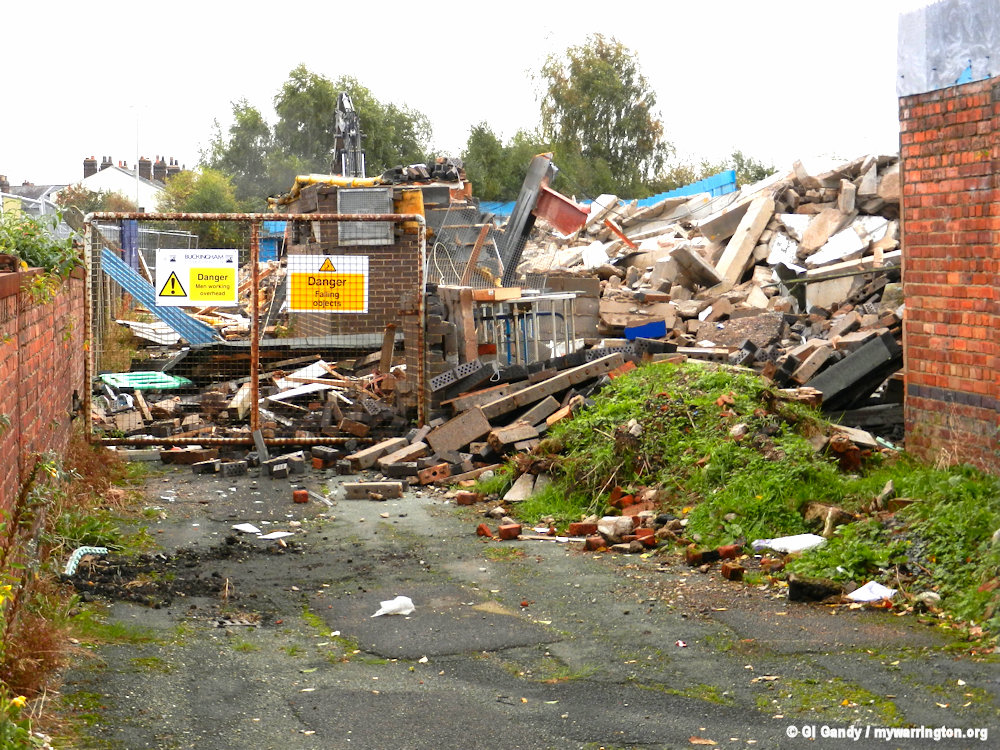
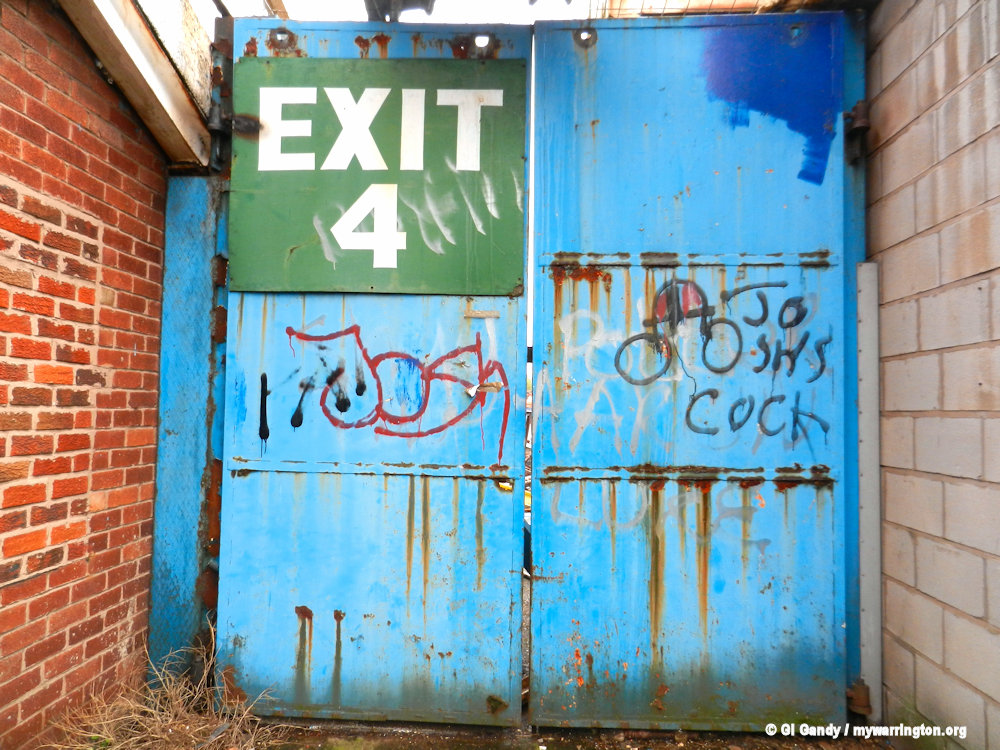
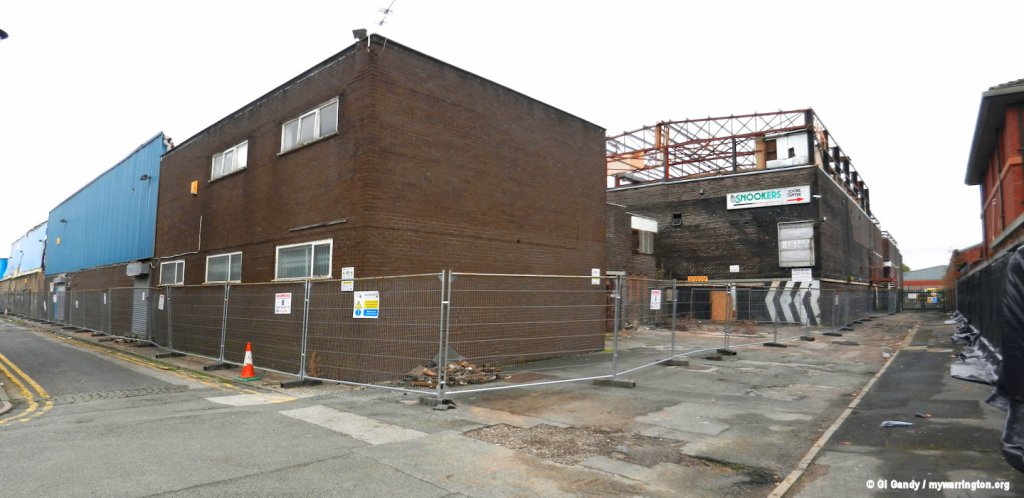
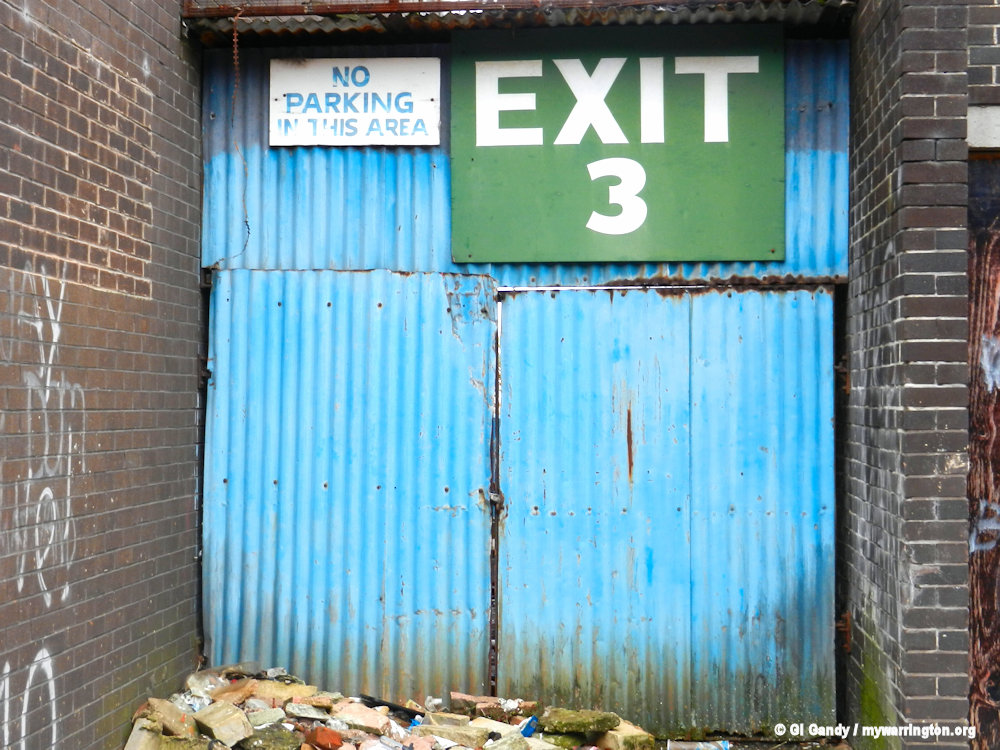
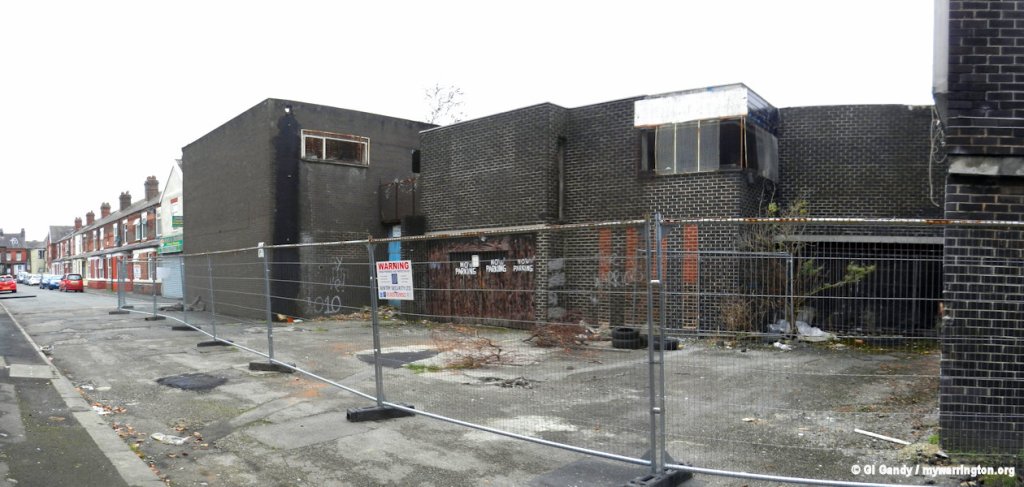
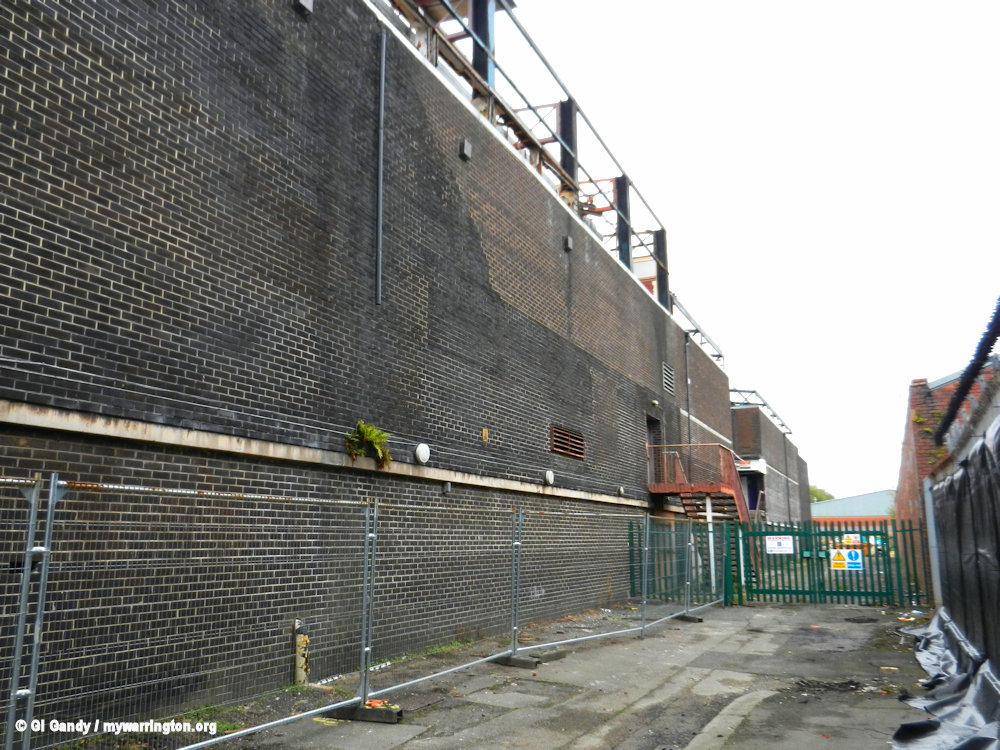
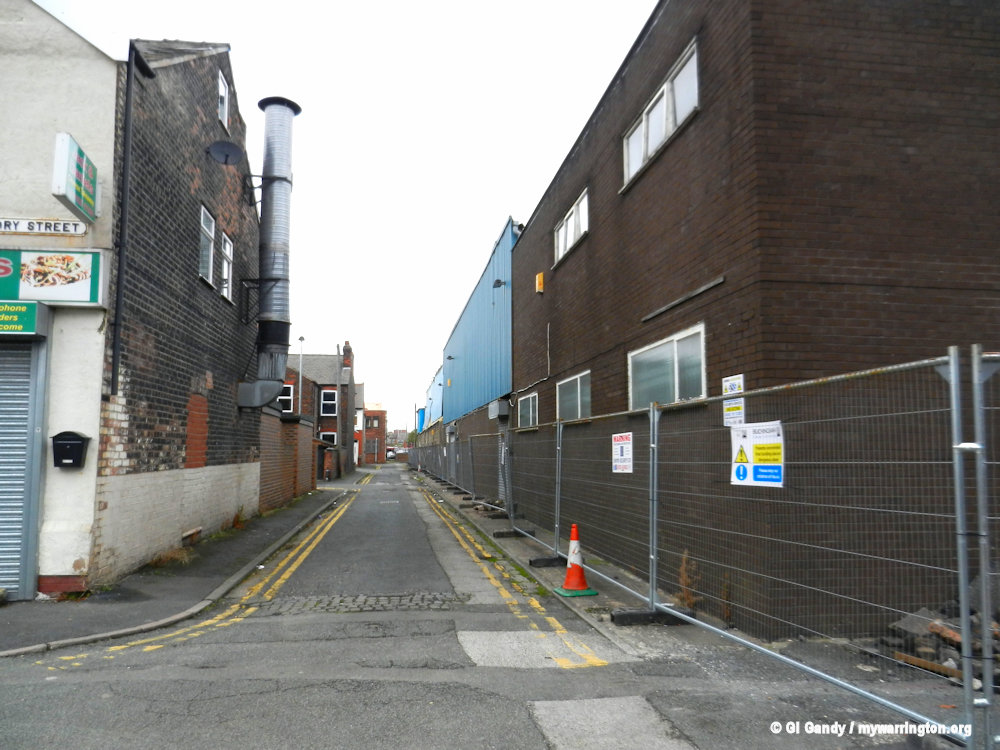
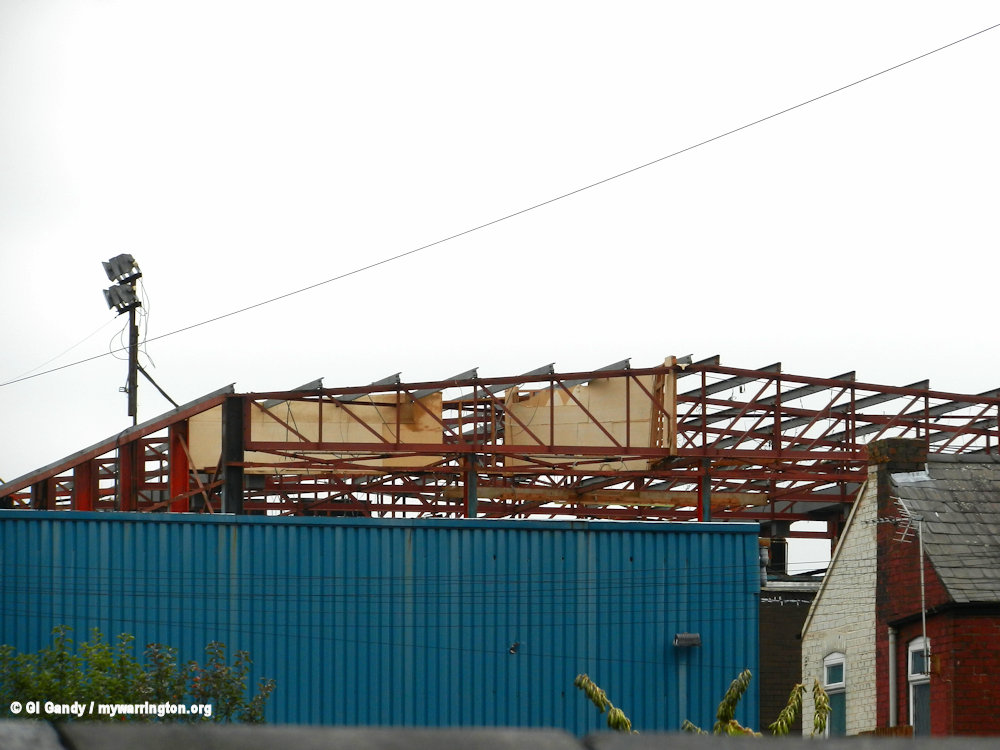
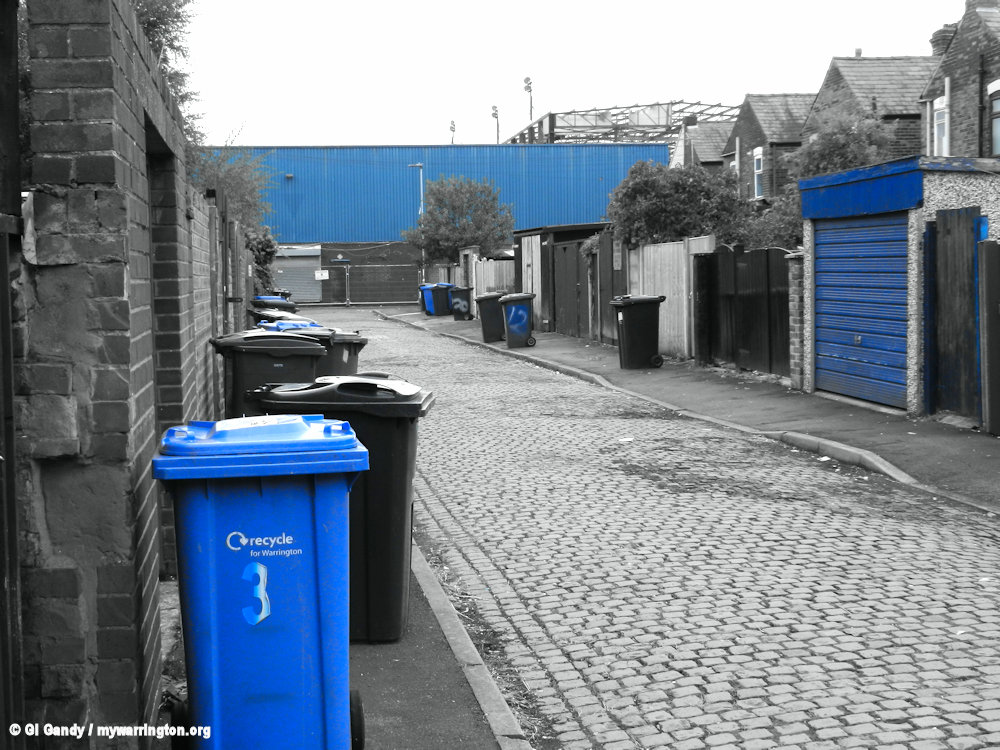
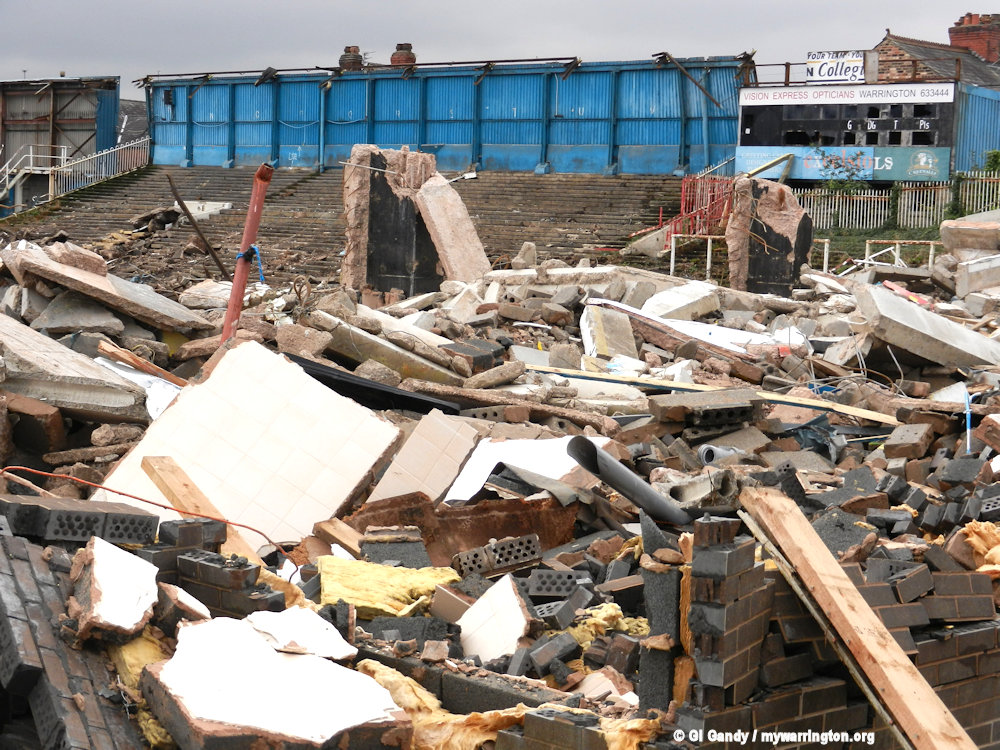
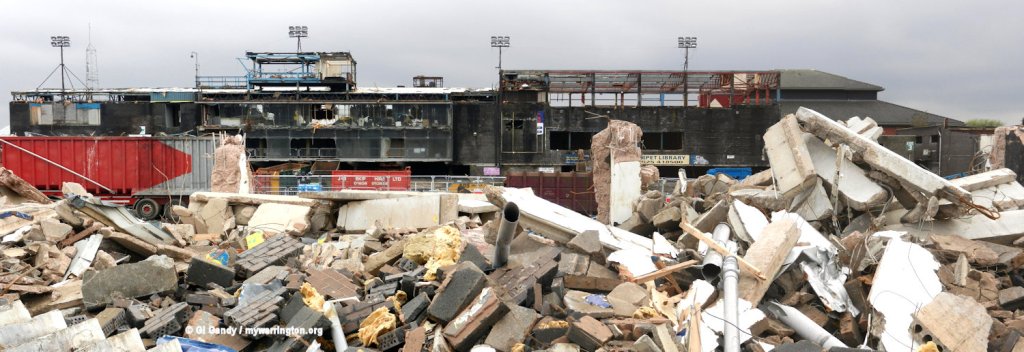
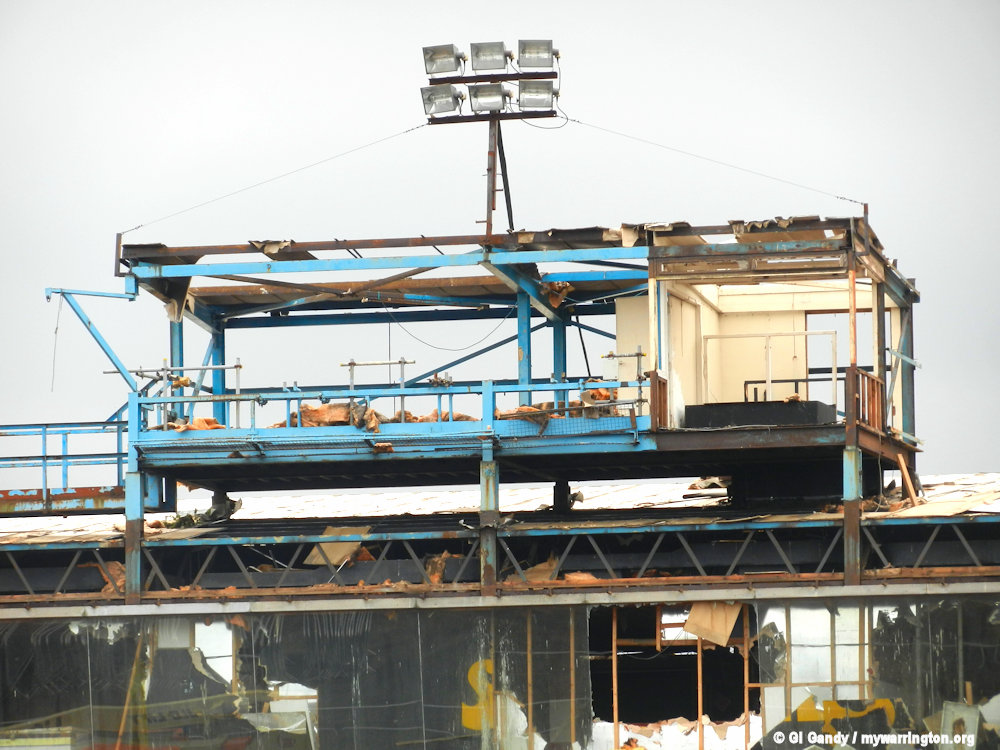
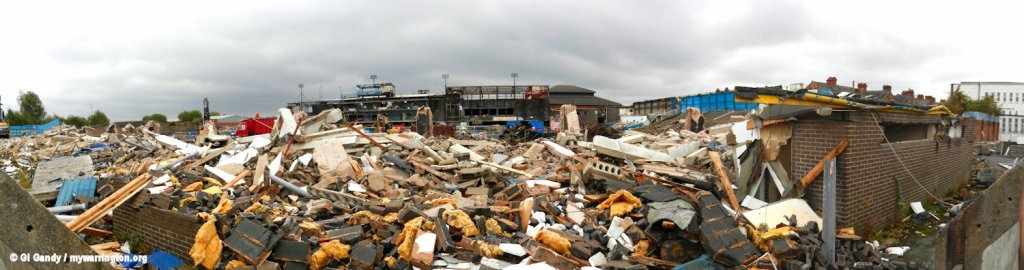
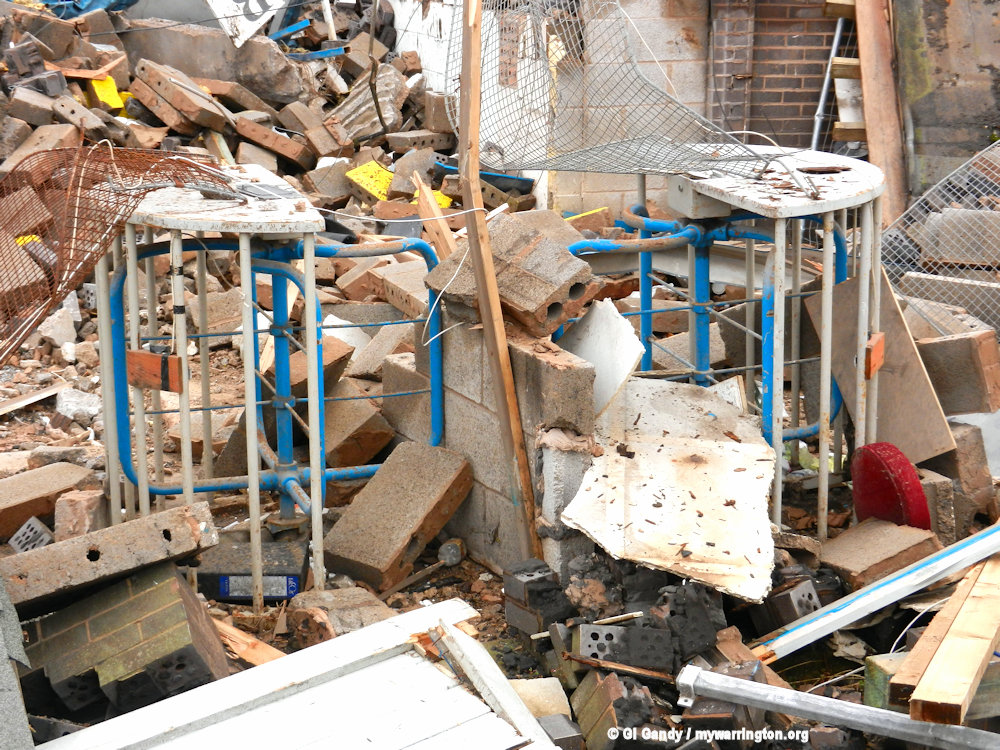
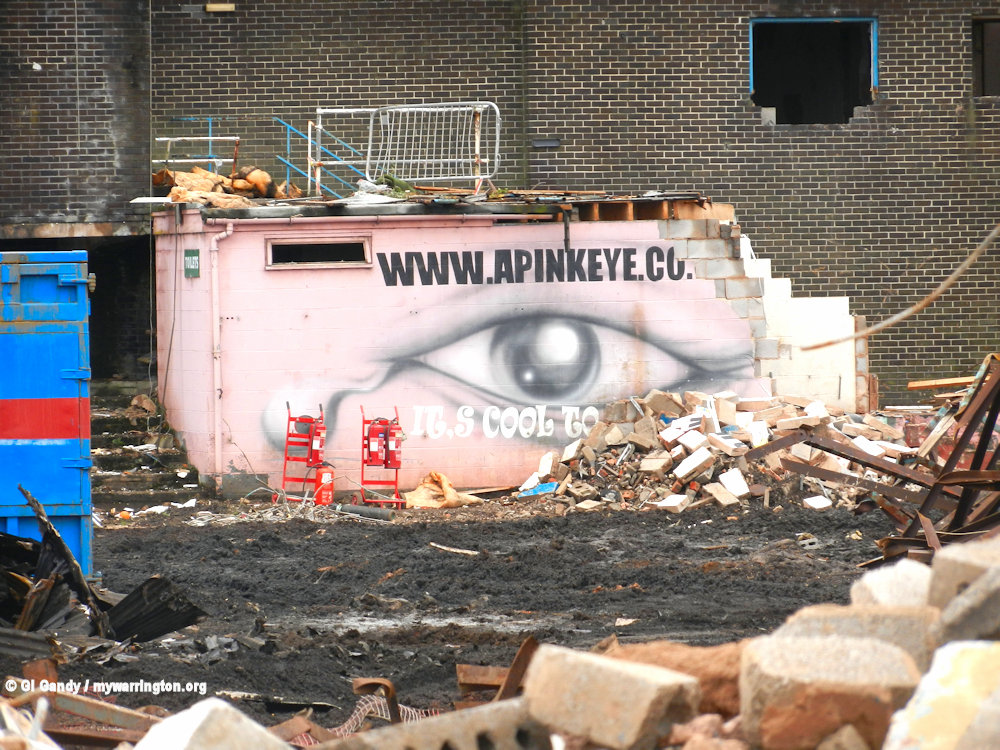
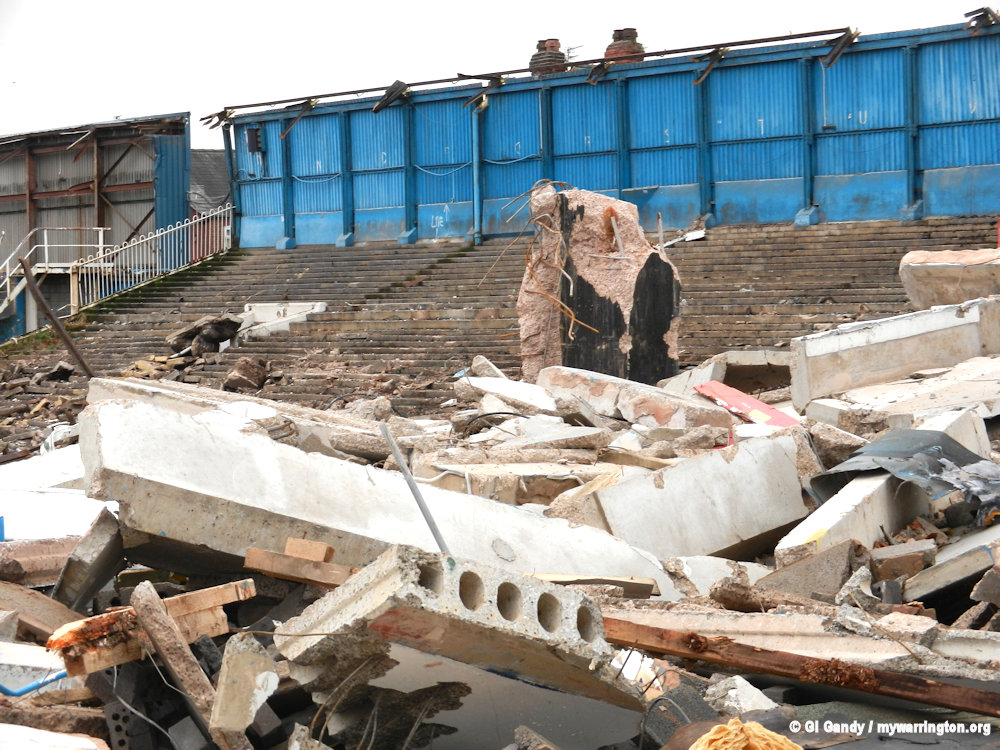
The following slideshow highlights some of the photos I took on 8 October 2014. during the demolition of the stadium.

Church Life
St James Church of England
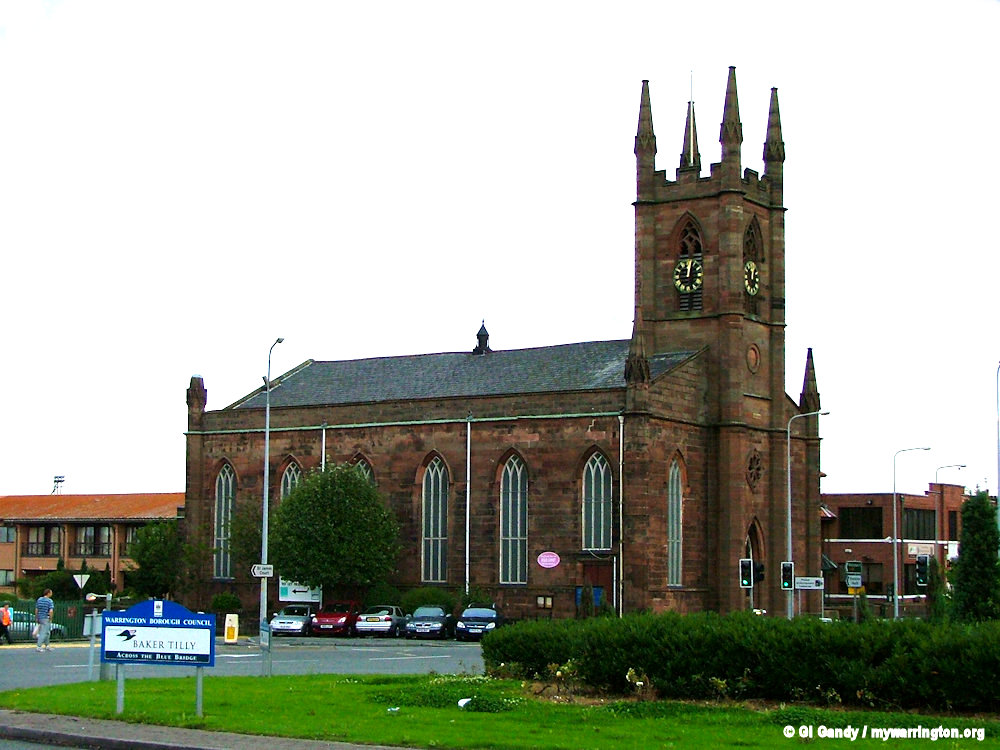
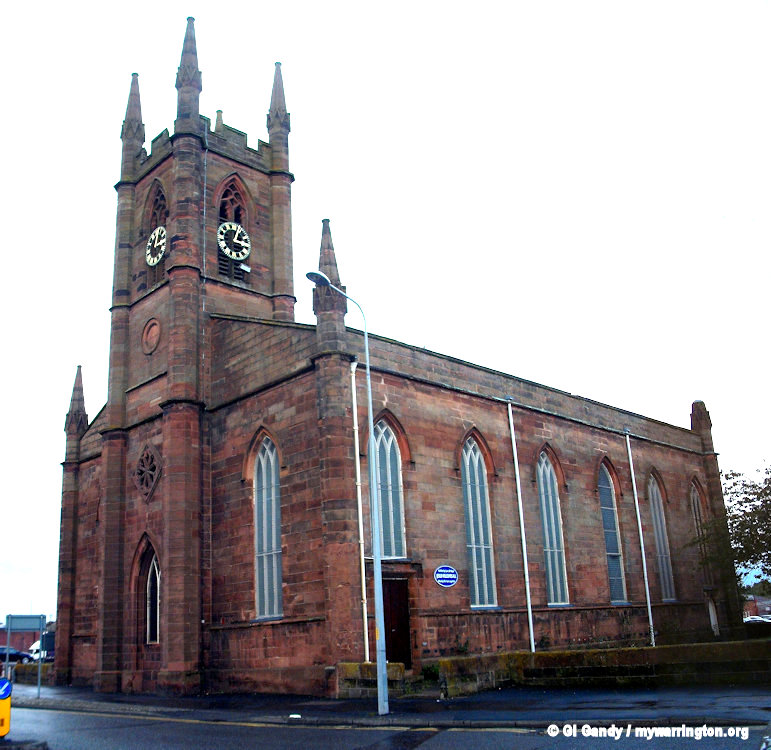
St James Church, now rebuilt on Wilderspool Causeway, originally stood close to Warrington Bridge on Knutsford Road, Latchford (known as Chapel Street at the time) opposite the Royal Oak Branch, and was opened on 2 June 1777. The current building in Wilderspool was built in 1829-30 by Samuel Rowland (d 1844), architect of Liverpool. The contractor was Robert Haddock of Warrington.
The church received Grade II listing status on 4 September 1975. The reason for the listing was because the church has a well-preserved exterior in a prominent location, and demonstrates well the simple Gothic style favoured for churches in the early 19th century. The wide and tall proportions of the nave (incorporating vestibules for gallery stairs), the original porch beneath the tower, and the short chancel are characteristic of Georgian church planning. The chancel retains 20th century fittings of consistent quality.
See also the Latchford section for additional notes. For further reading see the following: Historic England, Genuki and Tinstaafl Transcripts.
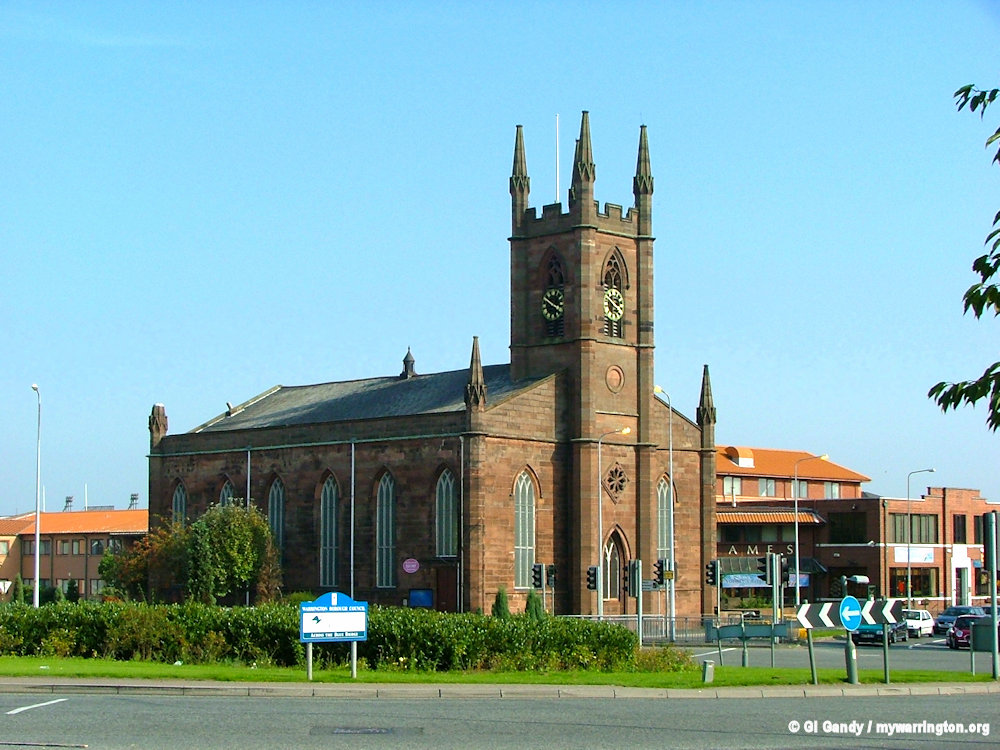
St James Church on Wilderspool Causeway. Photo taken 10 September 2006.
St James Former Vicarage
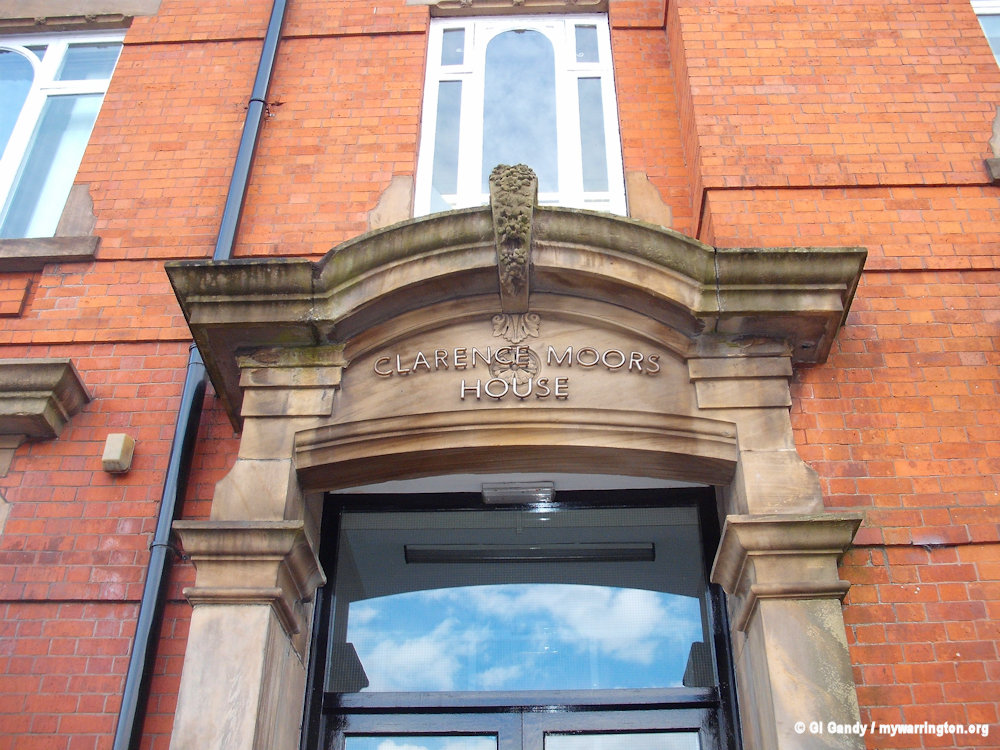
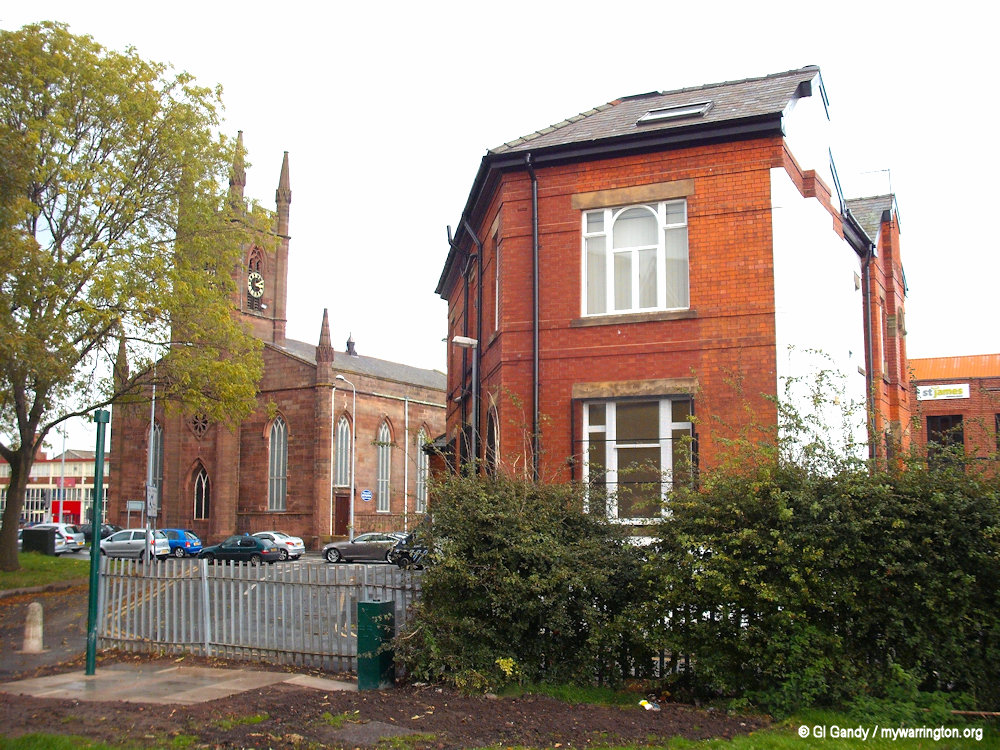
St James Vicarage opposite the church is now called Clarence Moors House and used as offices. It once belonged to Mr George Artingstall (1809-1882). Later, Gilbert Greenall bought the building and gave it back to St James for their vicarage. In the time as a vicarage some strange things happened there. In 1900 a lady died after a meal there. Her husband was so shocked at this that he took his own life in the bedroom. The next vicar heard strange noises in the premises and called for a bishop to perform an exorcism. And that’s just some of the goings-on.
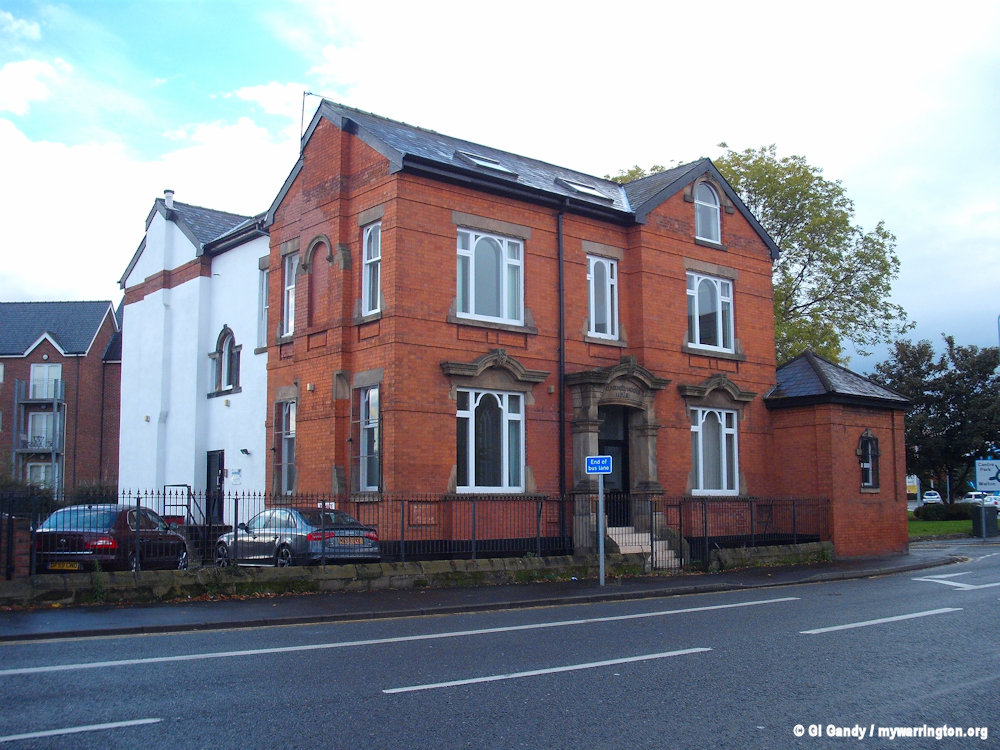
The former St James church vicarage has seen some strange goings-on in its time. Here are some more. Later another vicar lost his sight in a traffic accident. And one more shooting incident: a manservant of a later vicar took his wife’s life and then his own. I have never set foot in the place, and no intentions to do so! (My photos taken 15 October 2012.) Some information: Causeway Connections by Latchford History Group.
St John’s United Reformed Church
St John’s traces its roots back to 1796 when the former minister of St James’ Church in Knutsford Road set up a new church, owing to a split in his previous congregation over the teachings of his successor. The new congregation initially met in Stepney Independent Chapel on King Street in the town centre.
The new church’s congregation grew very quickly and larger premises were sought. A new church was founded in Winwick Street in 1808, with the first minister being the Reverend Alexander Hay. St John’s Chapel was opened on Thursday, January 7th 1808. Over the years, financial problems meant the church had to be sold. The final service was held on 7th January 1909. The building has since been used for a variety of business purposes, and is currently known as “The Boultings”. But the congregation were not downhearted. They moved to Cairo Street Unitarian Church for the next 15 months.
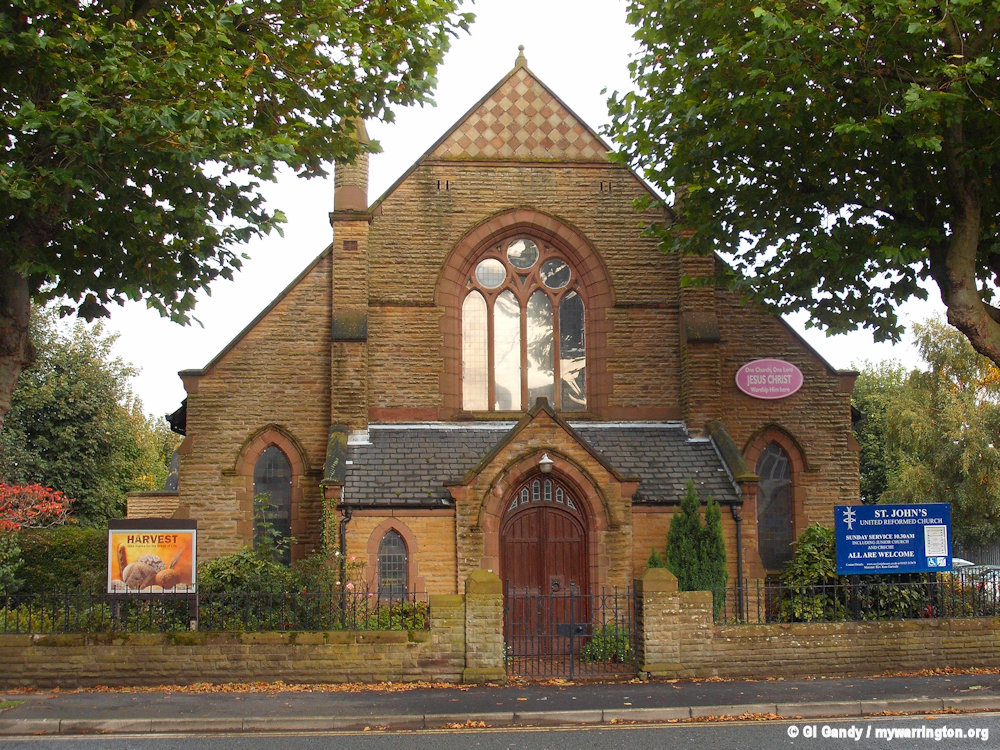
The current St John’s on Wilderspool Causeway in a photo from 15 Oct 2012.
In 1910, the building of a new church – the current St John’s URC – commenced on Wilderspool Causeway. St John’s remained within the Presbyterian Church of England until 1972, when the Presbyterians merged with the Congregational Church of England and Wales. St John’s was received into the new denomination, which was named the United Reformed Church.
See the church website.
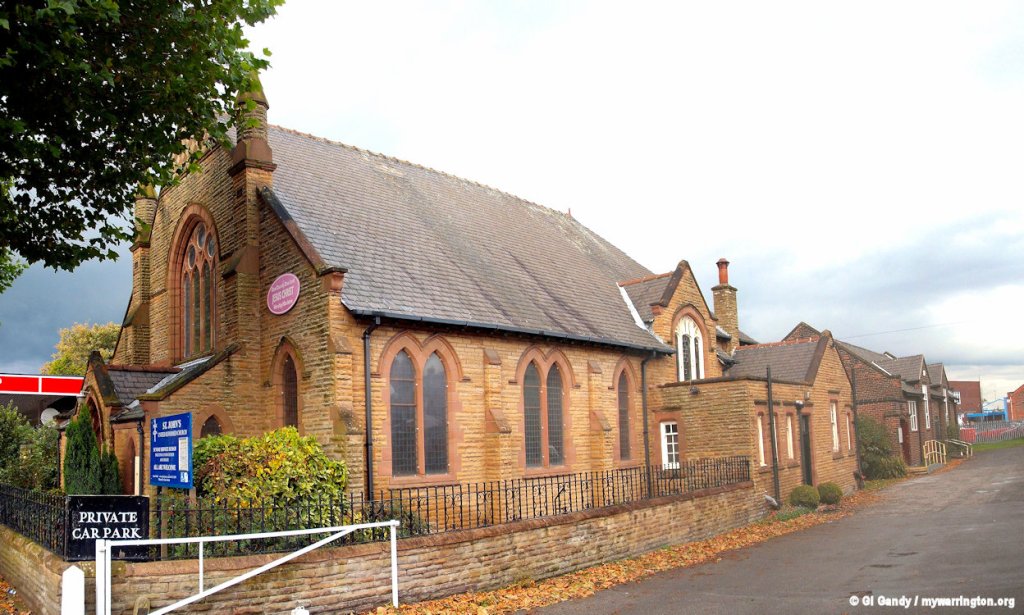
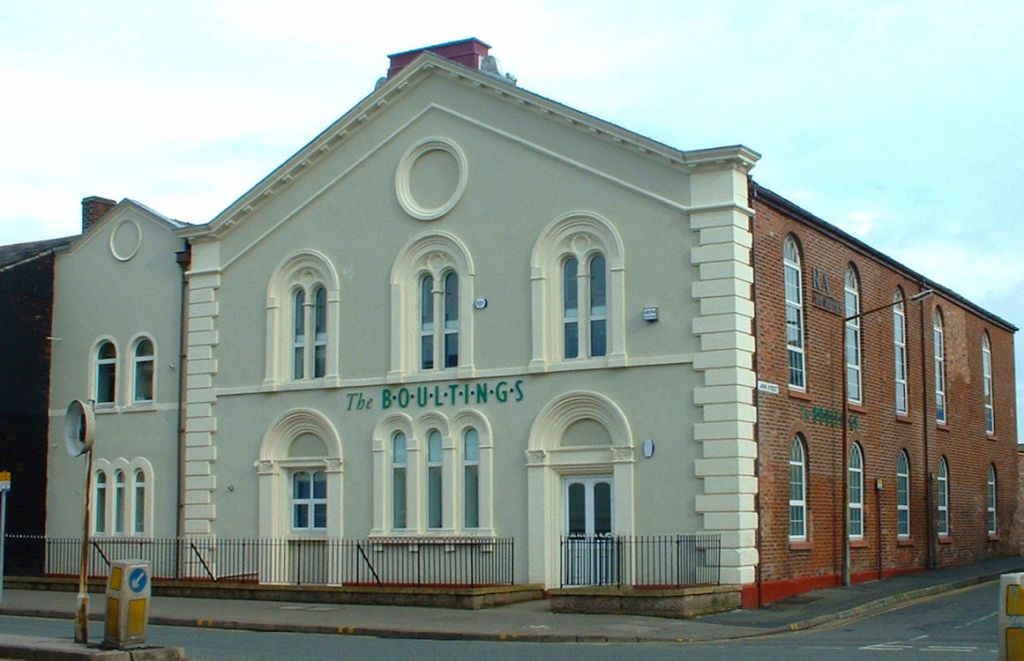
The current building on Wilderspool Causeway (15 October 2012) and the original Winwick Street building, now known as the Boultings and used as offices (1 March 2003).
Peter Stubs Filemakers
Peter Stubs (1756-1806) started in business in 1773 and was manufacturing files on a small scale by 1777. By 1788 he had acquired the White Bear Inn in Bridge Street, Warrington, and was combining file manufacture there with his business as an innkeeper, brewer and malt maker. He gave up the White Bear concerns in 1803.
In 1802 the file business moved to a larger site at Scotland Road, in the Cockhedge area of Warrington, where a works including file cutting shops and forging shops had been built.
After Peter Stubs’ death in 1806 the business was developed by his sons, John, William and Joseph Stubs. The firm sold files made from steel – principally saw-files, watch and clock files and, from 1815, larger machinery (engineers’) files. It also sold a wide variety of other tools, clock engines, small machines and wire, including pinion wire, for making toothed wheels for watches and clocks, and steel wire.
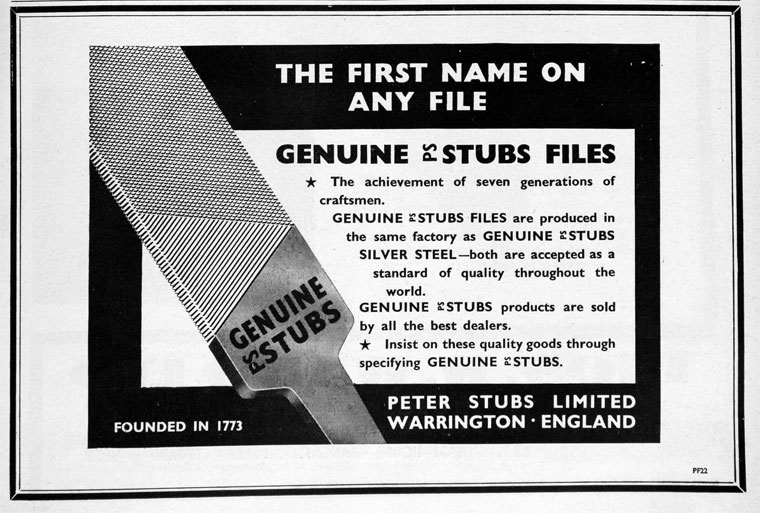
A trade advert for Pete Stubs from 1958
The Stubs workshop produced files, carrying out the basic processes of forging, cutting and hardening, and all the attendant subsidiary processes.
1826 was the year Stubs began producing steel themselves, at a newly acquired works in The Holmes, Rotherham, Yorkshire. The works in Rotherham supplied the file works in Warrington with steel and produced other types of steel for sale in England and Europe.
In 1842 the steel works was expanded at a cost of £20,000. Steel for re-melting was imported from Sweden. By 1841 the file works had a work force of 200. To cope with demand, some file cutting was done by out-workers. All the other Stubs products were made by cottage industry out-workers and small firms, mainly in south-west Lancashire. Stubs products were sold throughout the UK and were also exported. Significant overseas markets included Russia, America, France and what is now Germany.
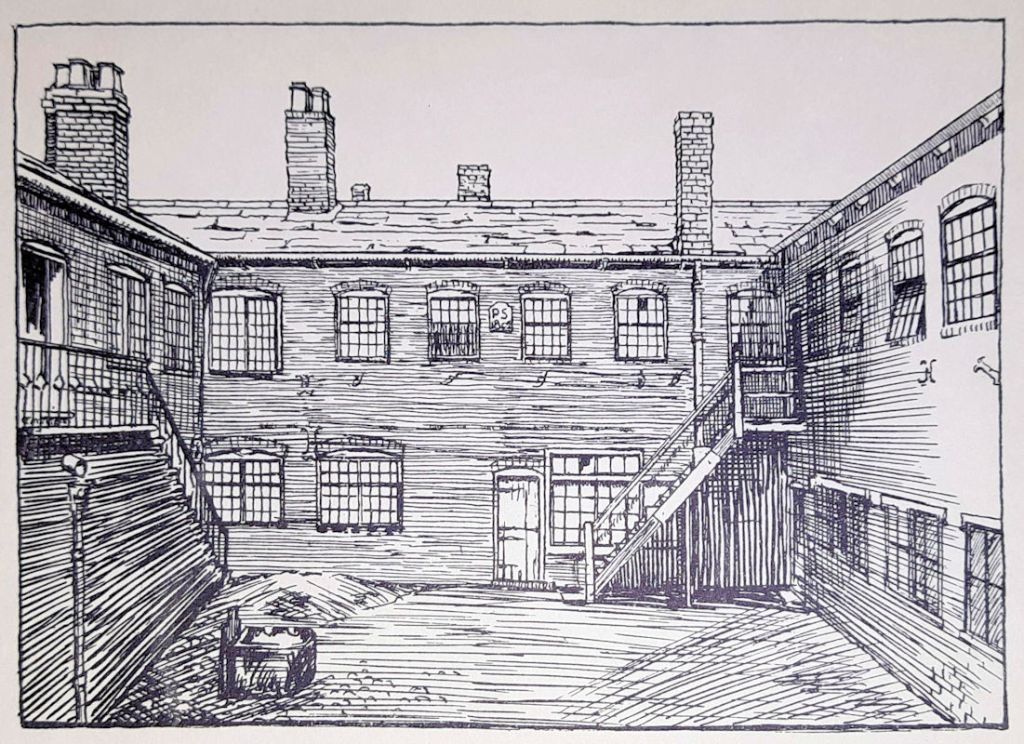
The file works erected by Peter Stubs in 1802.
The company later expanded into steel production at Warrington and became a major world manufacturer of silver steel. The modern firm produced silver steel, steel wire, key steel and a wide variety of other specialist steel products.
In 1884 a partnership change took place.
‘… the Partnership heretofore subsisting between the undersigned, at Warrington, in the county of Lancaster, as File and Tool Manufacturers, and at Rotherham, in the county of York, as Steel Manufacturers, under the style or firm of Peter Stubs, expired, by effluxion of time, on the 1st day of July instant, when the undersigned, James Marson, retired therefrom; and that the said businesses have been since that date, and will in future be carried on under the same style or firm as heretofore, by the undersigned, Peter Stubs and Henry Appleton…’
In 1890 the company took limited status and was described as mechanical engineer, tool and boiler maker.
By 1914 the company was manufacturing steel, files, Lancashire tools and steel wire. And in 1958 the steel works was sold to J. J. Habershon and Sons.
Into 1961 and Stubs was described as manufacturers of files and steel; engineers, saw, precision and needle files, broachers, gravers, scrapers, tool holder bits, silver steel and stainless steel. They had 290 employees.
In the 1960s they acquired by James Neill Holdings Ltd and in 1988 the company was bought by James Wilkes plc, except for the bi-metal strip business which would stay in the hand and cutting tool business which Neill would expand.
In the 1990s Stubs withdrew from file manufacturing altogether and became a subsidiary of the Ascot Group in 1996 while still at its site on Causeway Avenue, Warrington.
The company was later known as Erasteel Stubs and in 2022 they closed down the Warrington site, bringing to an end almost 250 years of manufacturing in Warrington.
Information: Grace’s Guide.
Fletcher Russell & Co. Ltd. (Radiation)
Fletcher, Russell and Co Ltd. of Palatine Works, Warrington, Lancashire; and 4 Berners Street, London, W1. Telephone: Warrington 1170. Telegraphic Address: “Gaseries, Warrington”. (1937).
Radiation of Thimble Mill Lane, Aston, Birmingham, 6. Telephone: Central 2169. Telegraphic Address: “Raditherm”. Also at North Circular Road, London; Warrington; Leeds and Luton. (1937).
Thomas Fletcher (1840-1903) began work as a dentist in Warrington. In 1865 He was listed in Cairo Street and in 1871 He was listed at 15 Bold Street.
By 1876 he had moved to 4-6 Museum Street and was manufacturing dental apparatus. By the early 1880s he had added a gas appliance manufactory in Thynne Street. The census records of 1881 show him employing 10 men, two boys and a girl.
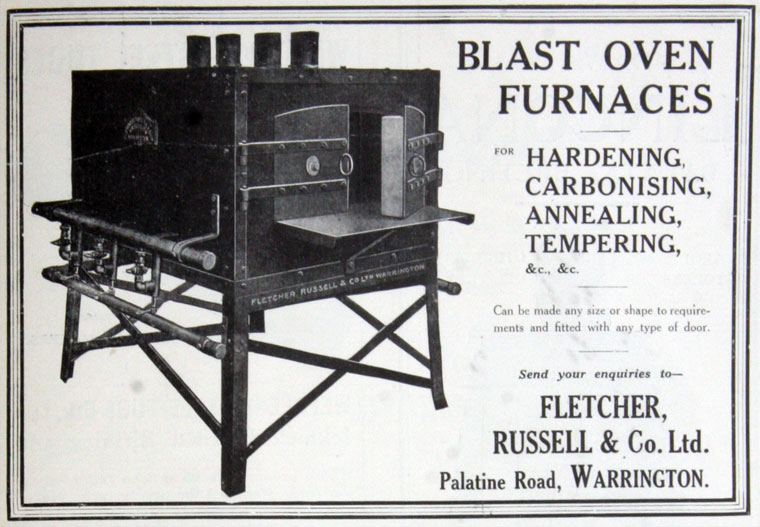
A trade advert for Fletcher Russell from January 1920
In 1892 the company was registered on 16 February, to acquire the business of gas engineers and iron founders of the firms of T. Fletcher and Co and W. and A. C. Russell and Co.
By 1895 the company had become Fletcher, Russell and Co Gas Engineers, his firm having merged with Alexander and William Russell of Pendleton Iron Works.
The 1901 directory gives their address as Palatine Works, Wilderspool Causeway, Warrington, manufacturing all types of gas equipment including fires, cookers and water heaters as well as laboratory equipment.
By 1914 the company were manufacturers of gas apparatus, kitchen ranges, registers, theatre chairs etc. Specialities: gas cookers, fires, furnaces and geysers, oil and air gas cookers, fires, furnaces and geysers, greenhouse boilers, dental goods, gas governors, blow pipes, kitchen ranges, mantles, restaurant tables, garden chairs, theatre chairs, curb fenders. They employed 900 workers.
In 1919 a public company was formed to acquire any or all of the shares of John Wright and Eagle Range, Richmond Gas Stove and Meter Co and carry on the business of gas stove and gas appliance makers and dealers. They also acquired Davis Gas Stove Co.
1923 was the year the company introduced the New World gas cooker, which had a new design of burner for the hob which should be economical to use, and would have the option of an automatic regulator of oven temperature. In the same year Regulo thermostats (said to have been invented in 1915) were first fitted by Radiation as standard to its gas ovens.
In 1925 the Fletcher Russell company became a subsidiary of Radiation Ltd. Other subsidiaries were Arden Hill and Co and Wilsons and Mathiesons Ltd.
A year later, 1926, the company disposed the industrial section of their furnace business, hitherto carried on at Grappenhall Works, Warrington, together with the business of Brayshaw Furnaces and Tools to Messrs. S. N. and E. R. Brayshaw. Fletcher Russell and Co, Warrington, continued to manufacture and supply dental laboratory and general technical apparatus and appliances, which were its own furnace specialties, and the Davis Furnace Co, Luton, continued to manufacture and supply its “Revergen” furnace in its various forms. The Brayshaw Company acquired additional works to deal with its furnace trade. Its milling cutter and small tool products were from now on manufactured at its Mulberry Street, Manchester, works.
In 1937 Radiation were a listed exhibitor at the British Industries Fair. They showcased gas apparatus for domestic use, including the Kingsway New World Regulo-controlled cooker (Radiation Patents), High “Beam” gas fires and water heaters, also cooking plant for hotels, boarding houses and large Institutions. (Stand Nos. Ca.603 and Ca.502)
In 1944 Nautilus Fire Co Ltd became a subsidiary of Radiation Ltd. Four years later, in 1948, Radiation offered a number of solid-fuel appliances – the Siesta stove, the Yorkdale range, and the Sutton coke grate. They had also developed a cooking range for railway use that could use locomotive fuel, in addition to the normal range for this use which burnt “oil gas”
Into 1950 and Radiation began providing commercial large-scale cooking equipment to hospitals, institutes, hotels, restaurants and industrial canteens, including ranges, hot cupboards, grills, ovens for roasting, steaming and pastry-making, fish fryers, boilers and service counters, etc.
In 1952 the company designed the Parkray solid fuel convector fire in response to the proposal of the 1952 Ridley Committee. Two years later, in 1954, they designed the Parkray convector solid-fuel fire to fit into existing grates, in response to the proposal of the 1952 Ridley Committee.
By 1958 the business had acquired Jackson Electric Stove Co (which changed to Jackson Industries the following year) – the Luton factory was totally devoted to electric appliances. Gas appliances were made by the gas division and by subsidiary Bratt Colbran, makers of space heating equipment; plus they had introduced further Ductair warm air heating equipment.
Also in 1958 the company acquired Parnall (Yate) Ltd, which broadened the company’s range of domestic appliances, especially washing machines and gas water heaters, as well as the supply of castings. Parnalls included Ascot Gas Water Heaters.
The 1960s brought even more progress. In 1961 Radiation consolidated its central heating equipment under the Parkray brand, whether working on gas, oil or solid fuel. The domestic appliances included New World gas cookers, Ascot water heaters and Parnall washing machines.
Also in 1961 they were manufacturers of gas, electric and solid fuel appliances. Other group activities include light engineering products, light alloy castings, specialised products in vitreous enamels, etc.
In 1967 Radiation Ltd was acquired by Tube Investments and subsequently various parts of the combined group have undergone further changes and mergers up to the present day.
And in 1981 Glow Worm Boilers and Radiation-Ascot, both part of Tube Investments, were two of six boiler makers investigated for collusion in raising prices.
For more trade adverts, see Grace’s Guide (Fletcher Russell and Radiation sections).
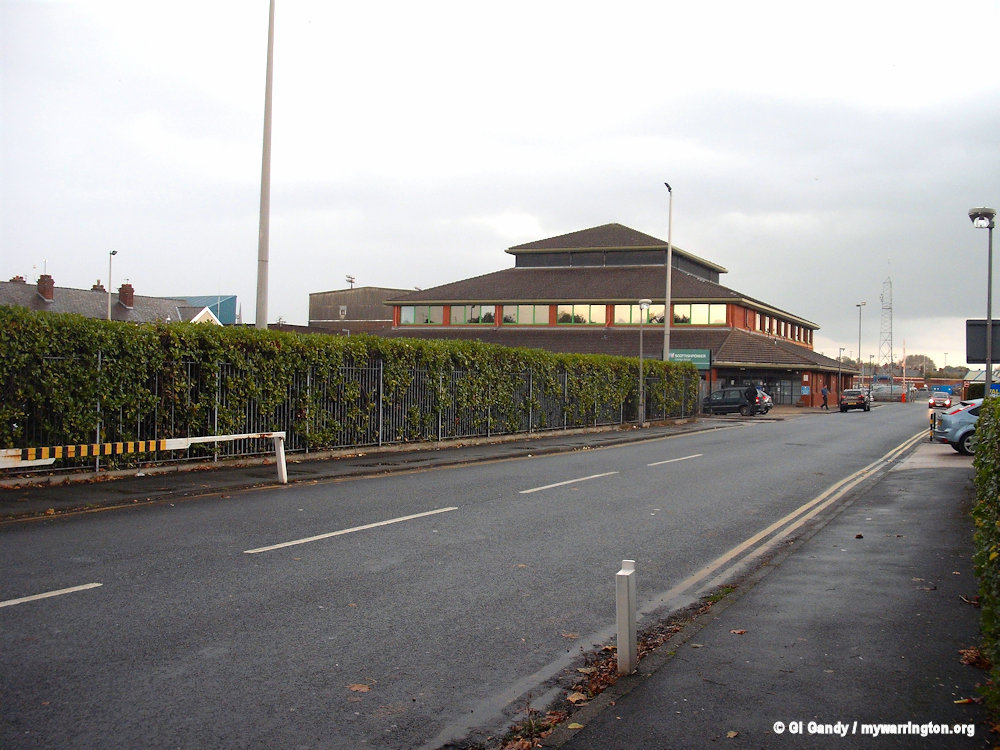
Access to the works was along what is now Central Avenue and was located at the far end beyond the Scottish Power offices in this photo.
Thomas Fletcher (1840-1903)
Began works as a dentist in Warrington.
1865 He was listed in Cairo Street.
1871 He was listed at 15 Bold Street.
By 1876 he had moved to 4-6 Museum Street and was manufacturing dental apparatus.
By the early 1880s he had added a gas appliance manufactory in Thynne Street.
1881 The census records show him employing 10 men, two boys and a girl.
1872 Developed furnaces to use gas. T. Fletcher and Co.
1881 Established new works at Thynne Street, Warrington.
1892 Amalgamated his business with W. and A. C. Russell.
Obituary (extraction)
“…last Mr. Thomas Fletcher, whose inventions in connection with the use of gas have made his name a household word throughout this country, died after a tedious illness. He was born in 1840 and received his elementary education at Manchester Grammar School. In due time he entered the medical profession, but, finding physical surgery little to his taste, he turned his attention to dentistry, becoming first pupil of, and then partner of, Henry Planck, formerly dean of the dental school connected with the Victoria University. Here he found scope for the inventive faculties which were so strong in him, and here he commenced those experiments on the use of gas for all sorts of furnaces, which met with such success that he early in the seventies quitted dentistry to devote himself entirely to their development. He started manufacture…”
Part of a trade advert for Radiation. See Grace’s Guide for the full version.
Priestley College
The site was previously home to Warrington High School for Girls, an all-female grammar school, until 1974, with its entrance on Menin Avenue.
Priestley College opened in 1979 as a merger of the sixth forms from Boteler Grammar School and Warrington High School. named after Joseph Priestley (1733–1804), a clergyman, chemist, and educator who discovered oxygen and who was associated with Warrington Academy. Originally a female-only grammar school called Warrington High School for Girls, the site had a long history of education before becoming a sixth form college. Over the years, the college has grown significantly, becoming a self-governing independent corporation in 1991 and introducing adult education classes in the mid-1990s. Adult evening classes were introduced in the mid-1990s.
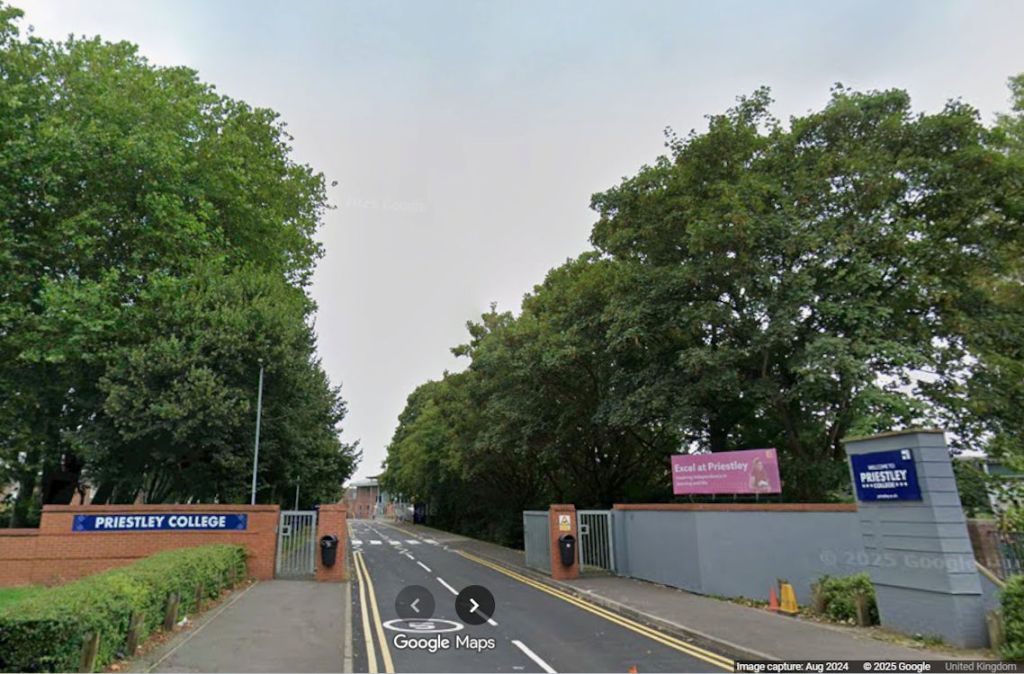
Priestley College on Loushers Lane (Google Maps 2025)
The college has undergone significant growth, with its student population increasing to just over 1,000 by 2002, leading to the opening of the Sports Centre opened complete with basketball court and gym.
In recent years, significant campus investment has occurred, including a new £1.5 million technology centre. The Crescent Building was extended to provide more café and study space, and Performing Arts facilities were modernized. In 2014 the £1.5million Lewis Carroll Building was opened by guest of honour Dr David Whan, a trustee of the New Engineering Foundation. It became the centre for Priestley’s IT and Computing courses.
By 2015, the college had grown to approximately 2,200 sixth form students and has a successful track record of academic performance and student progression.
Priestley became the first college in the country to be awarded STEM (Science Technology Engineering and Maths) Assured Status and also received the Matrix accreditation in honour of the quality of its advice and guidance. The college became an academy in 2017 and is now part of The Challenge Academy Trust. Priestley landed a place on the Warrington Monopoly board. Priestley occupies one of the prestigious green squares with players having to pay out 320 Monopoly dollars to buy the ‘property’.
Bus Depots
In the Wilderspool area were two bus depots 500 metres apart.
Crosville
On 27 October 1906, Crosville Motor Company was formed in Chester by George Crosland Taylor and his French business associate Georges de Ville, with the intention of building motor cars. The company name was a portmanteau on the names of the founders. In 1909, Crosville commenced its first bus service, between Chester and Ellesmere Port. By 1929 Crosville had consolidated an operating area covering the Wirral and parts of Lancashire, Cheshire and Flintshire. Services in Warrington ran from Arpley Bus Station alongside the River Mersey. They had a depot at Wilderspool by the roundabout.
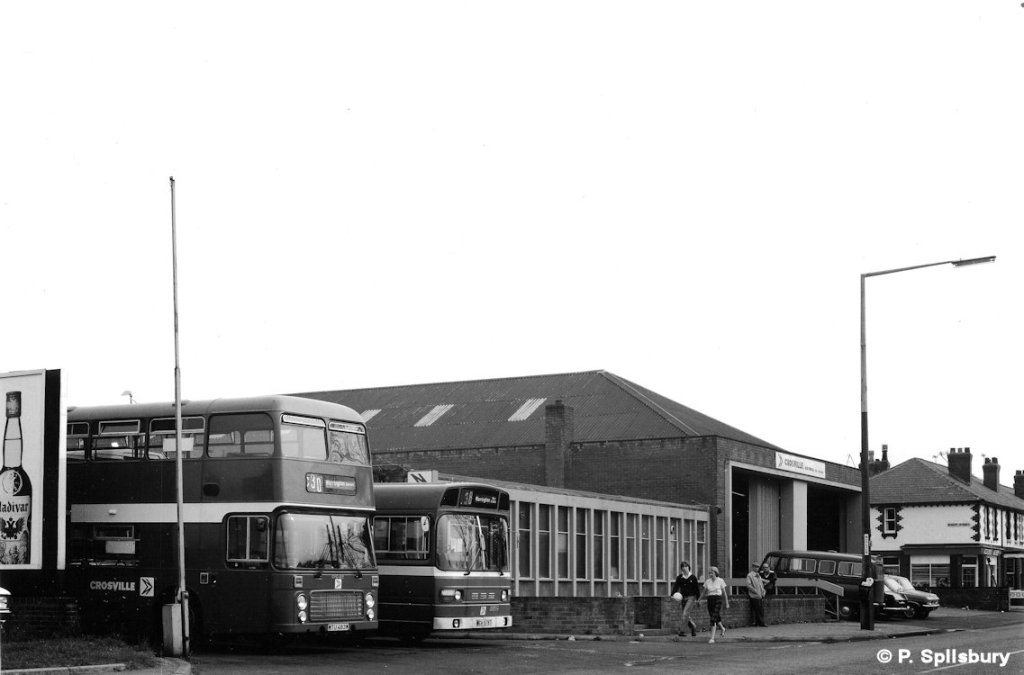
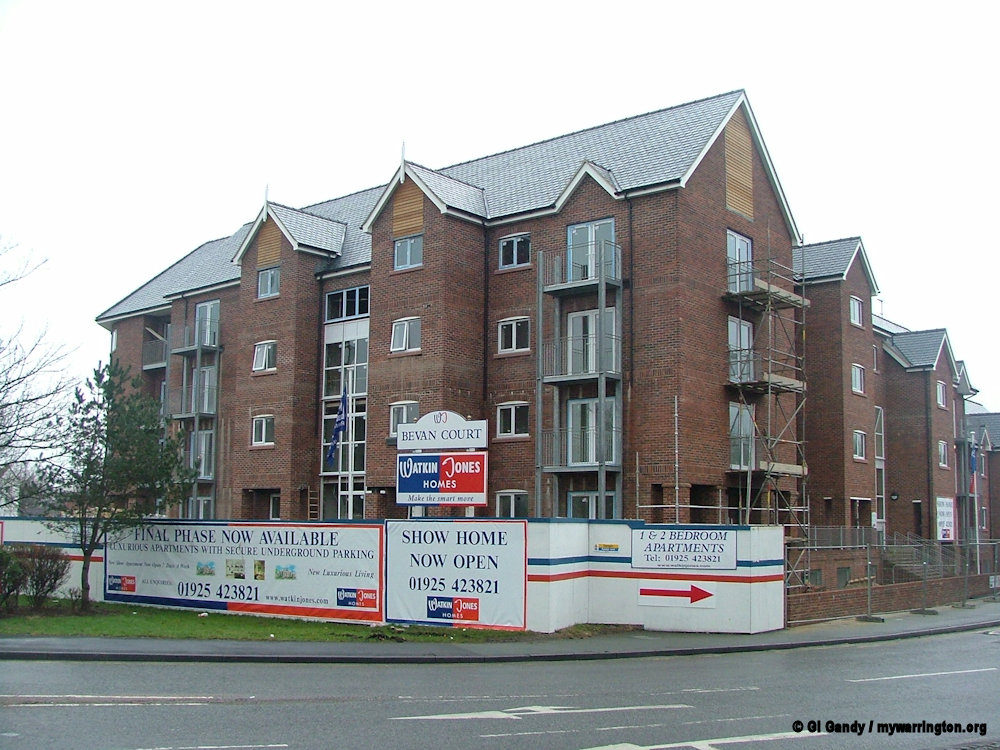
The Crosville depot at Wilderspool in Peter Spilsbury’s photo. Sadly, it is undated, and Peter has now passed away. The second image is Bevan Court under construction on the same site on 14 March 2006.
Warrington Borough Transport
Warrington Borough Transport is the council’s own bus company. It was formed in 1902 to run trams across five routes in the town. In 1935 trolleybuses took over and services expanded rapidly after the Second World War as new housing estates grew in areas such as Orford and Great Sankey. The two main sheds to the rear of the site were originally built in 1943 for Fairey Aviation, and used to assemble wings for their Fulmer Bomber, before being bought by Warrington Corporation in 1947 as a place to park buses. In 1964 an extension was built onto the garages, consisting of a reception area and vehicle inspection bays at ground level, with offices above. On 6 April 2023 a new bus depot was opened on Dallam Lane near town centre and the Wilderspool site was demolished. Read more in On the Buses.
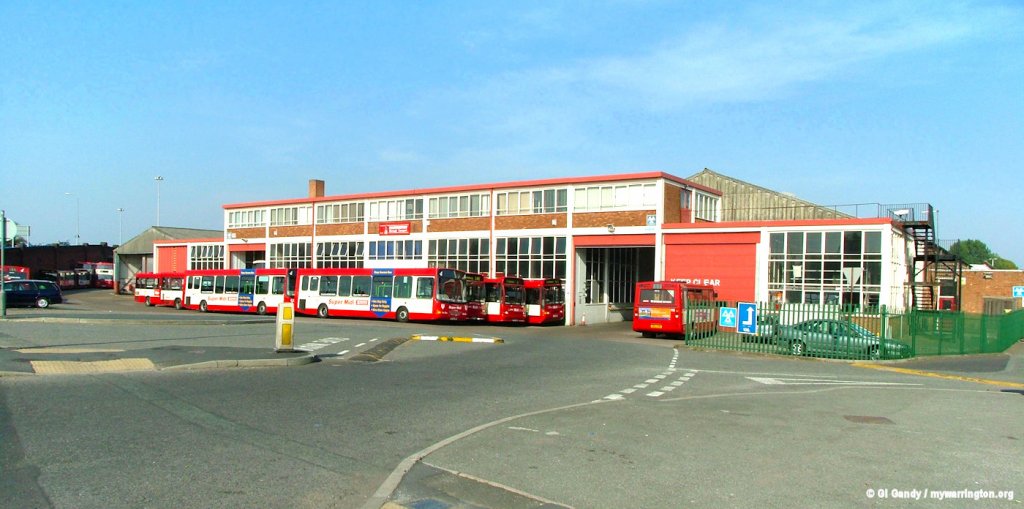
Warrington Borough Transport depot on 10 September 2006.
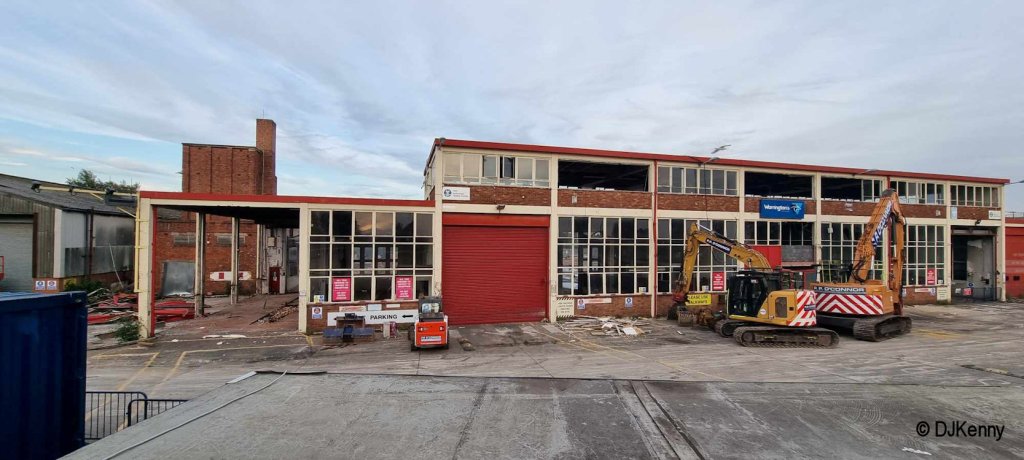
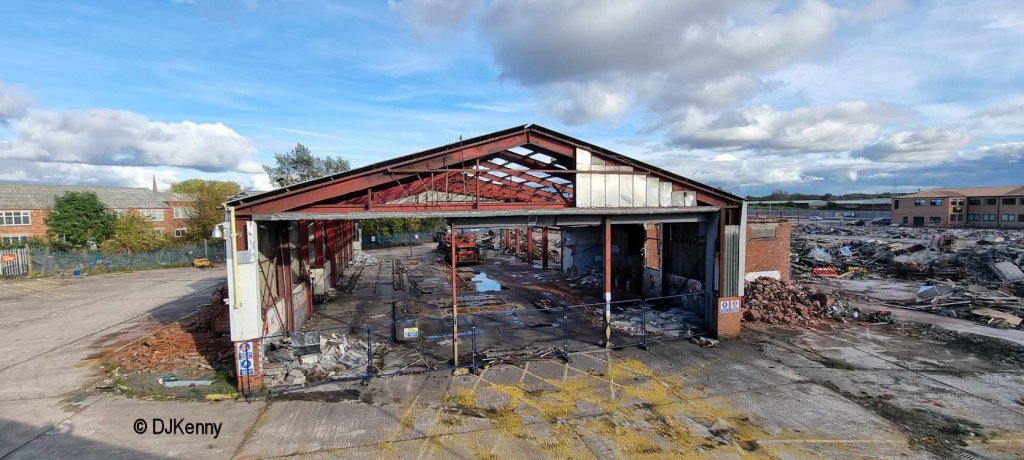
Photos of the demolition by DJKenny (22 October 2023)
Wilderspool Bridge
Wilderspool bridge was opened on 16 May 1957 to end the problem of crossing the Warrington and Altrincham Railway level crossing. There was also a railway station at Wilderspool on the east side of the bridge. The image further down the page is an engraving of what the scene looked like before the bridge was constructed. For practical reasons the bottleneck it created on the original single carriageway was in desperate in need of attention. In recent years, since plans were unveiled to demolish the bus depot and add apartments to the site, it was also suggested that since the railway line is no longer required to transport coal to the now-demolished Fiddler’s Ferry power station, that the bridge should now be demolished again.
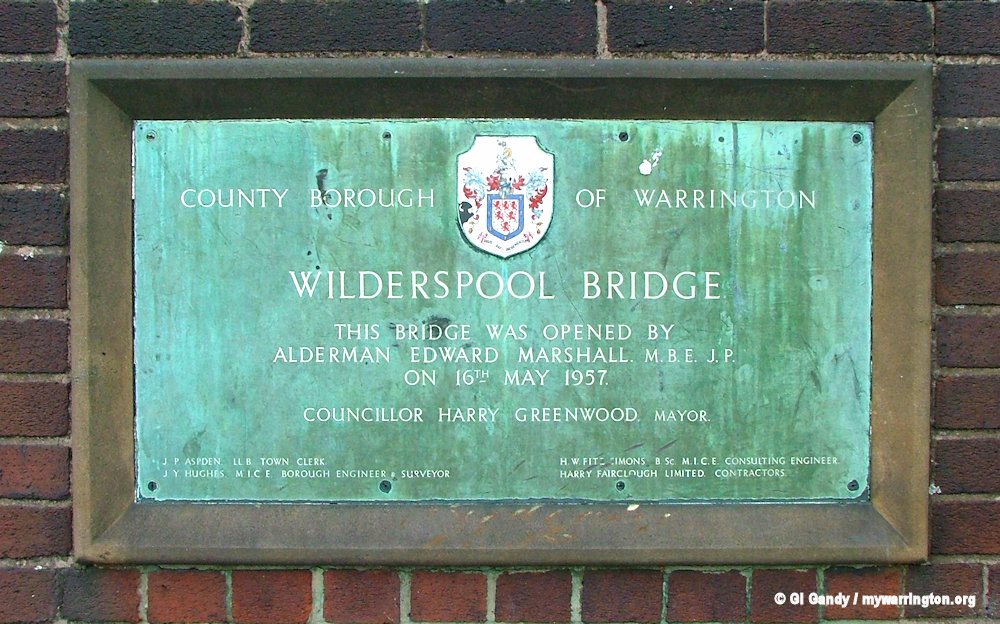
The plaque for Wilderspool Bridge was laid by Alderman Edward Marshall. Marshall Gardens alongside are also named in his honour.
See this interesting story from the Warrington Guardian.
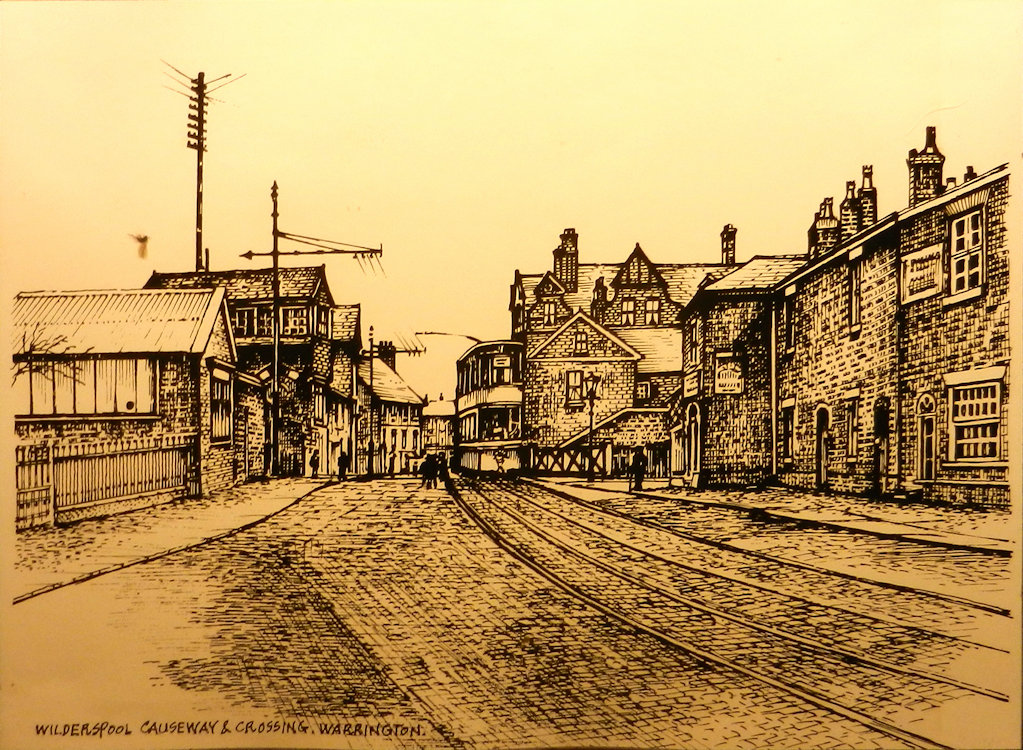
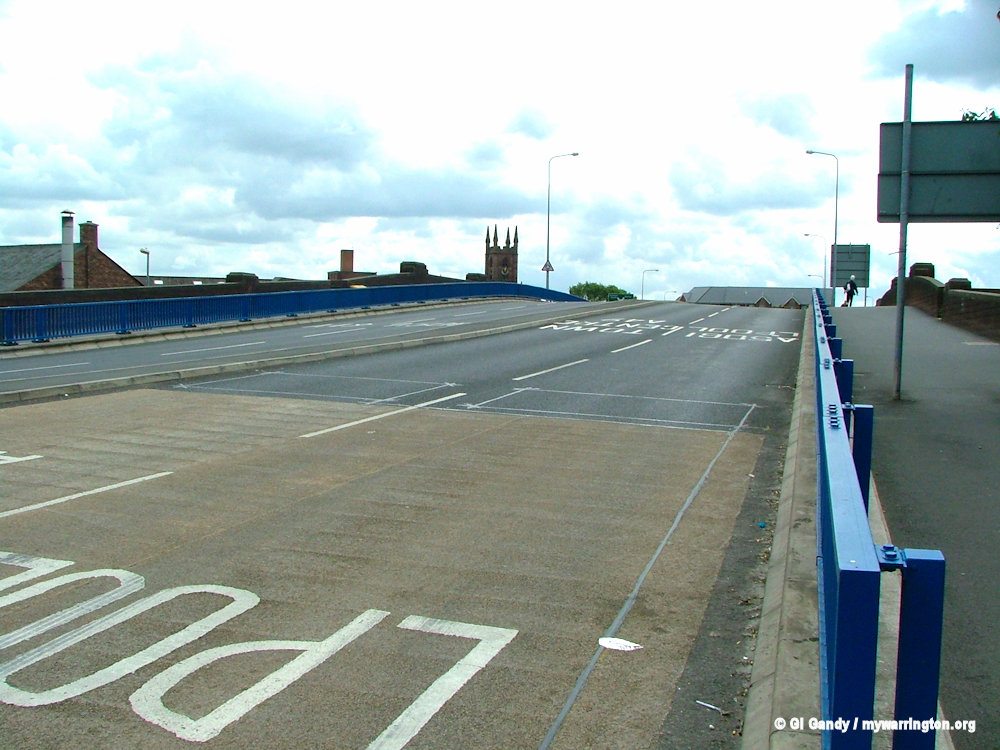
Wilderspool crossing artwork, above, left (copyright unknown) and Wilderspool Bridge viewed towards Wilderspool showing St James Church (11 June 2008).
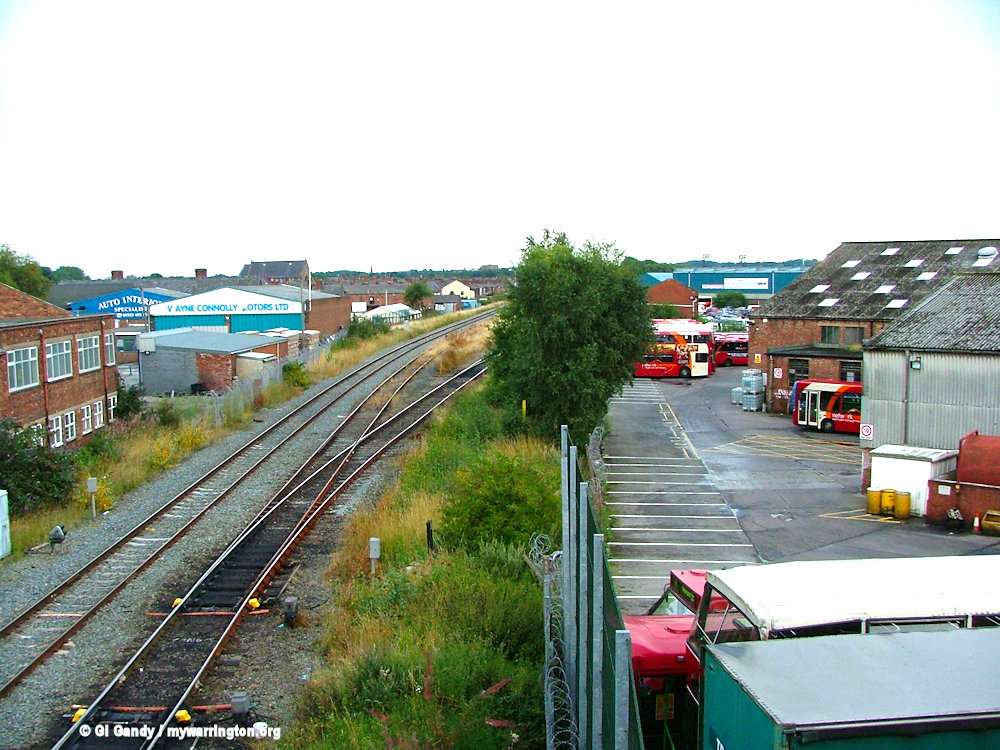
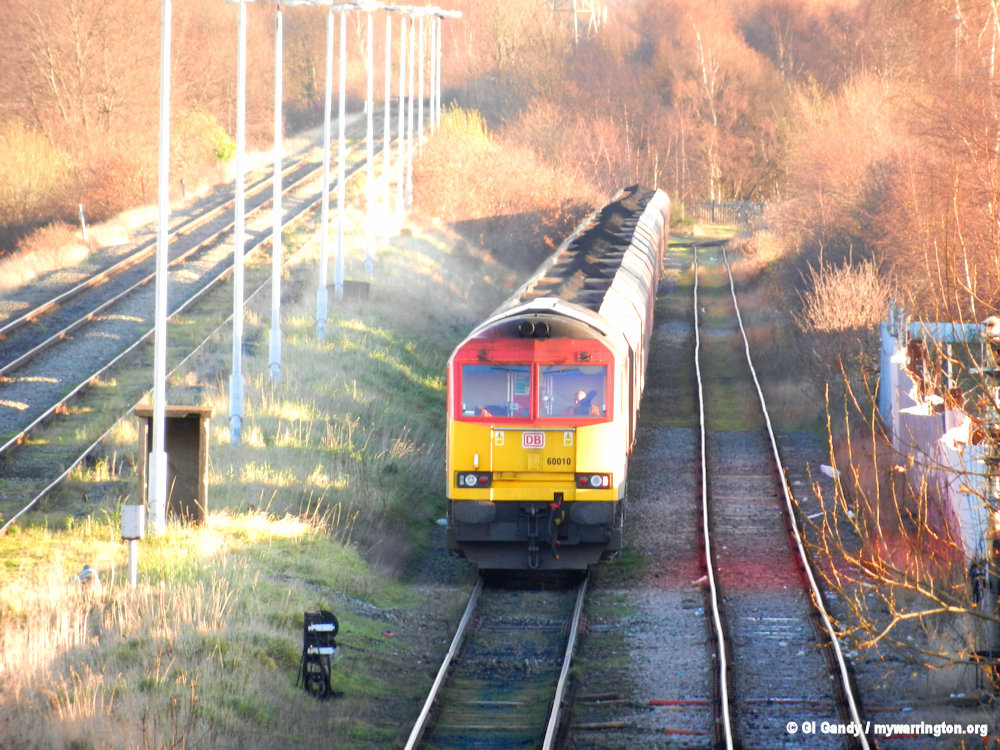
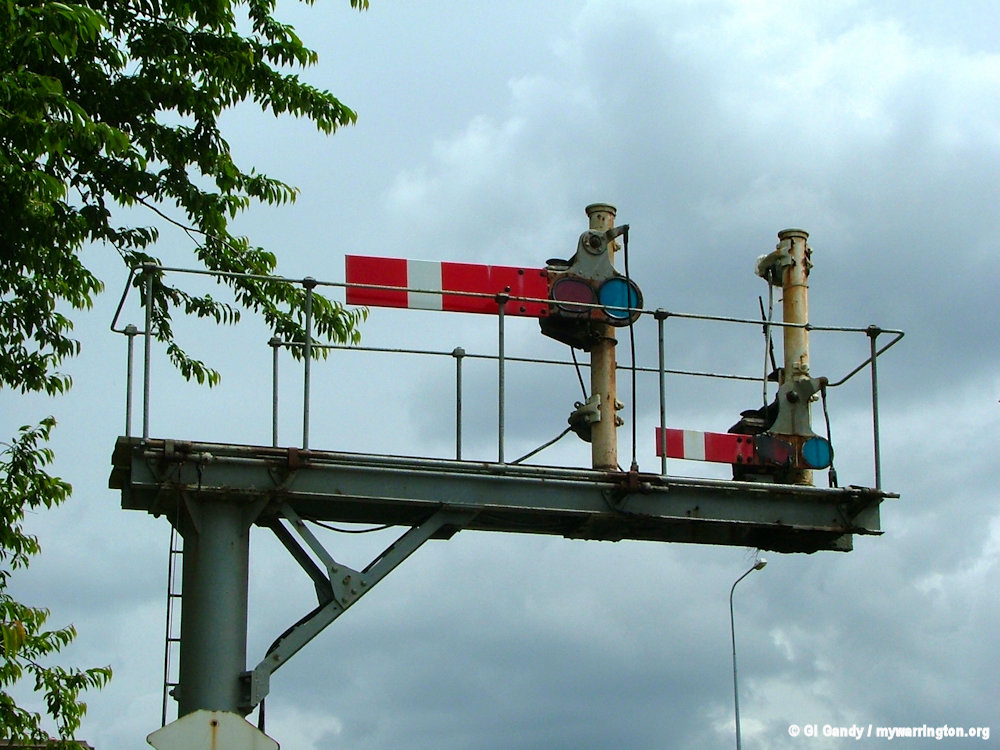
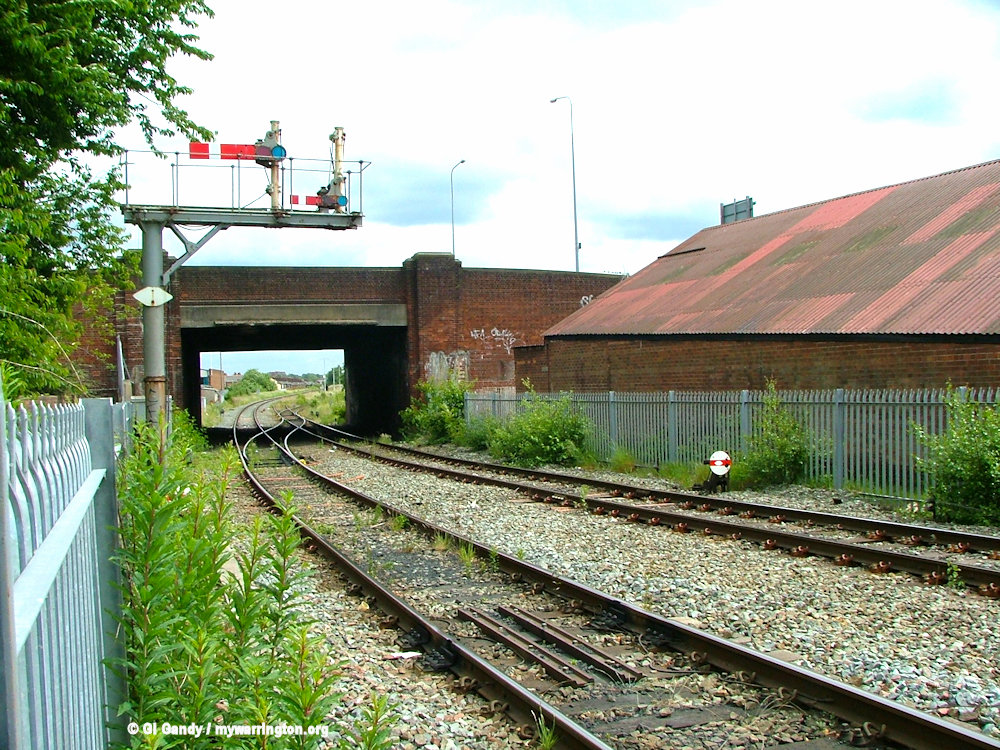
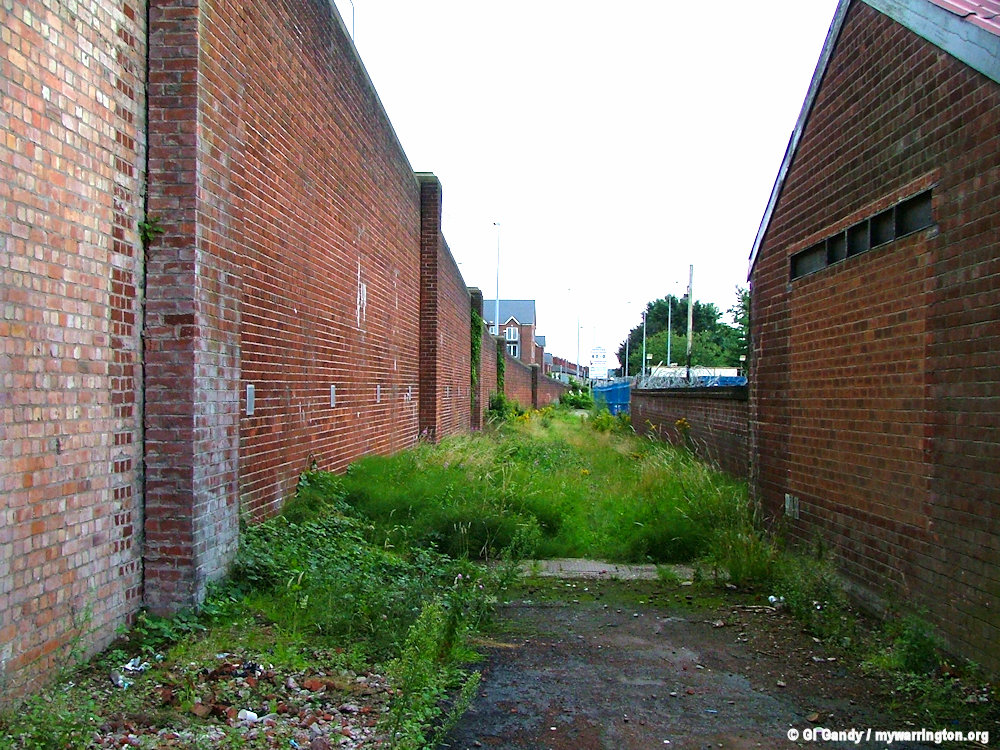
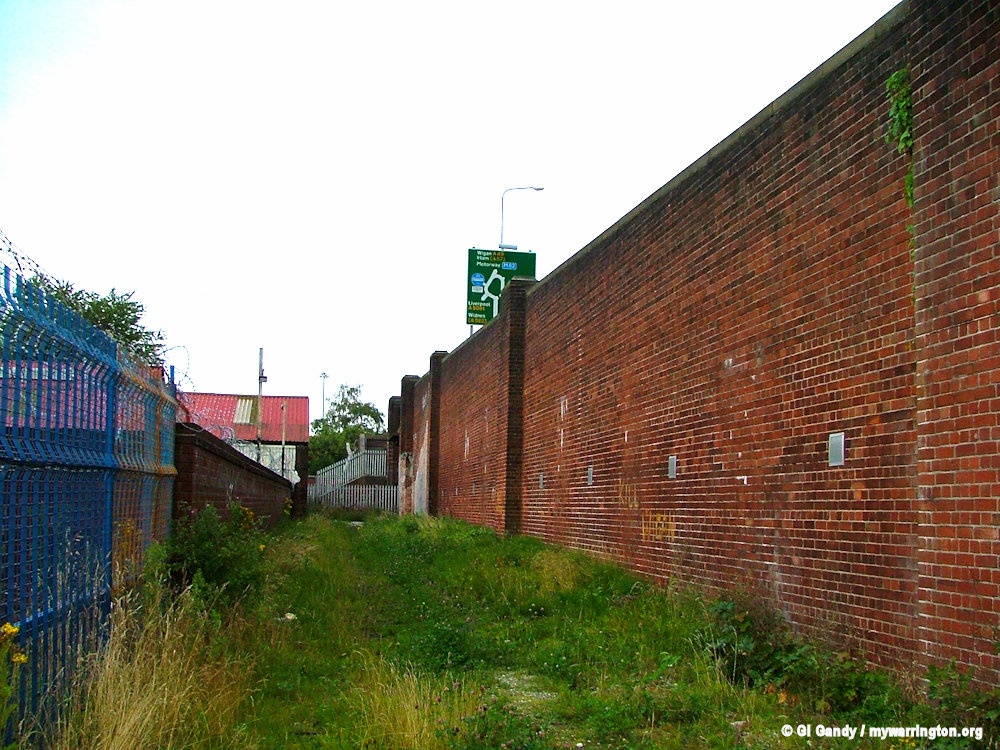
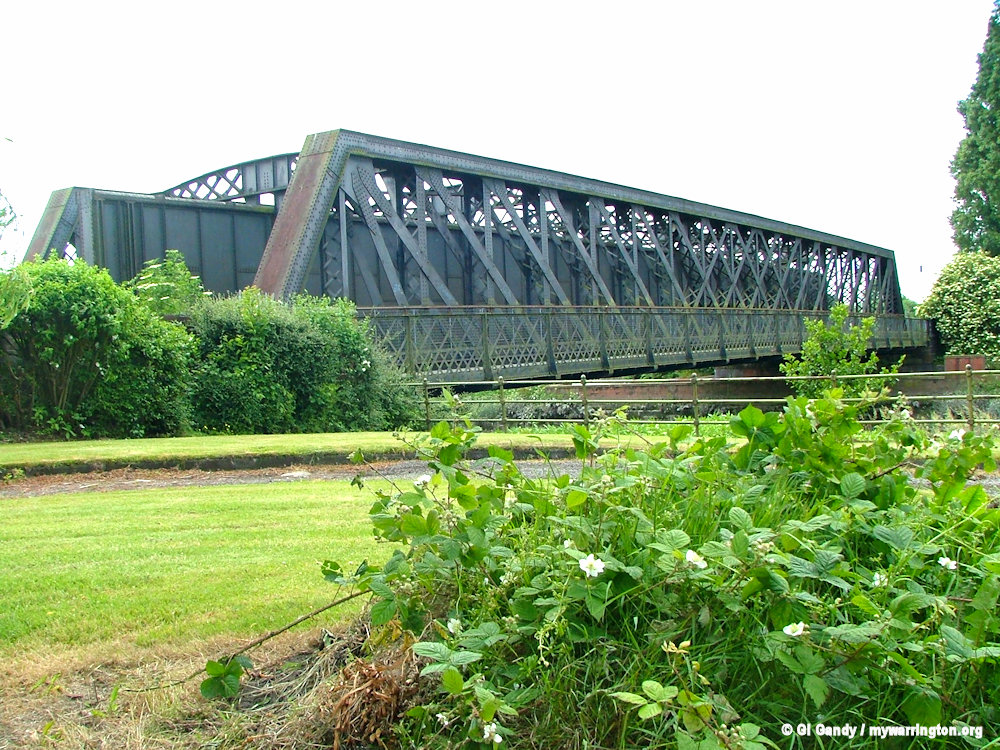
Scenes around Wilderspool Bridge and the Warrington and Altrincham Railway. See Making Tracks for more on the railway.
Causeway Park
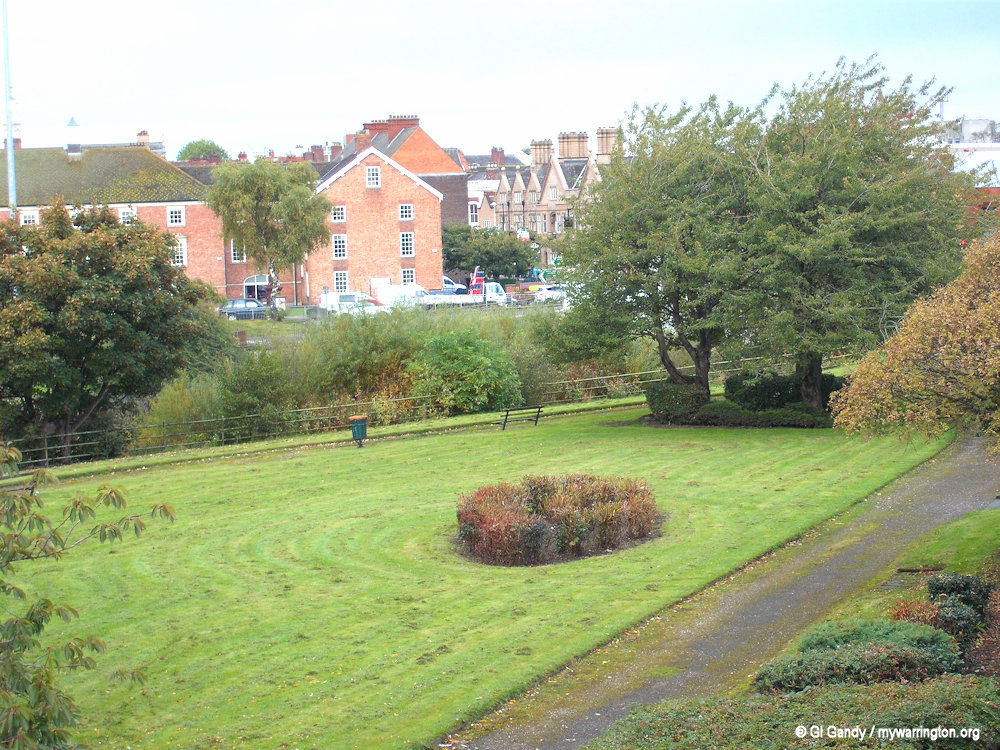
Causeway Park in the centre of the district with River Road running alongside. So why River Road? It’s because the location of the park was the original route of the River Mersey through the district with River Road alongside. The Mersey now runs alongside Chester Road, which was diverted in the late-1950s. If you look on the National Library of Scotland map you can see where it was flowed. I have chosen the OS 1:25,000, 1937-61 for clarity.
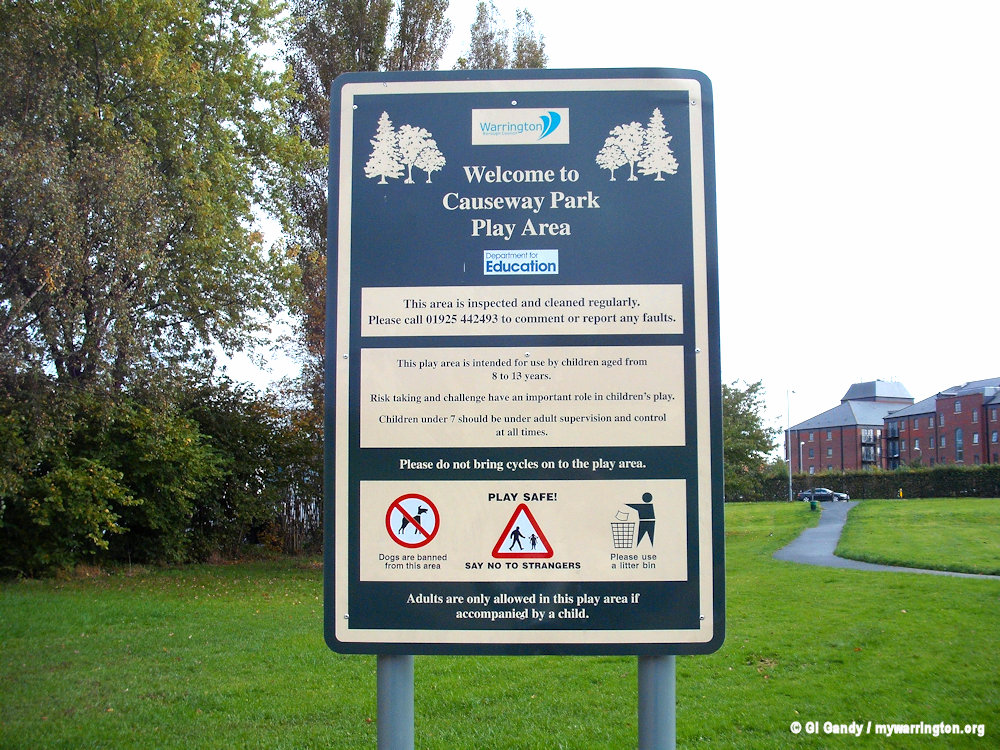
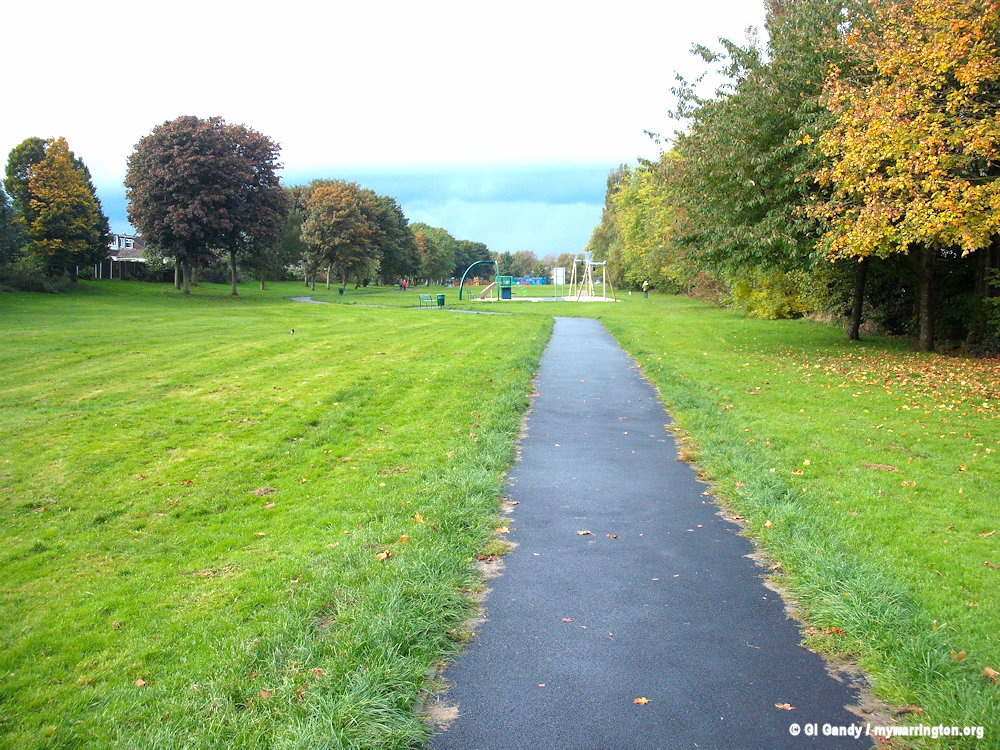
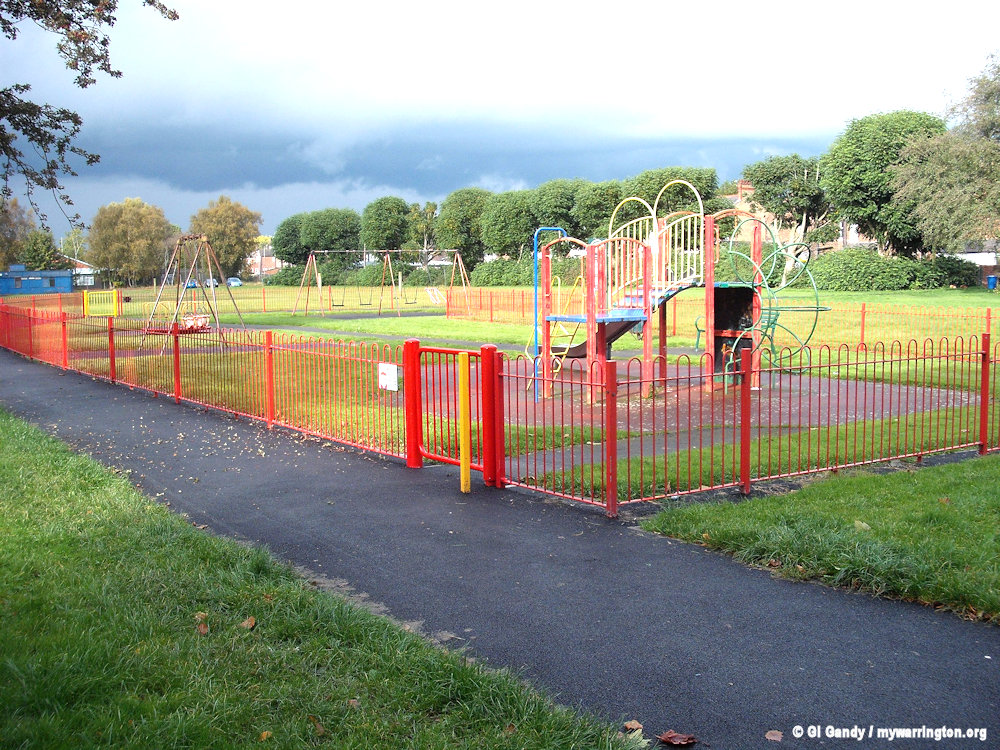
Causeway Park on 15 October 2012. If you have a copy of Causeway Connections, published by Latchford History Group, you can see photos of the old section of the river route in photos.
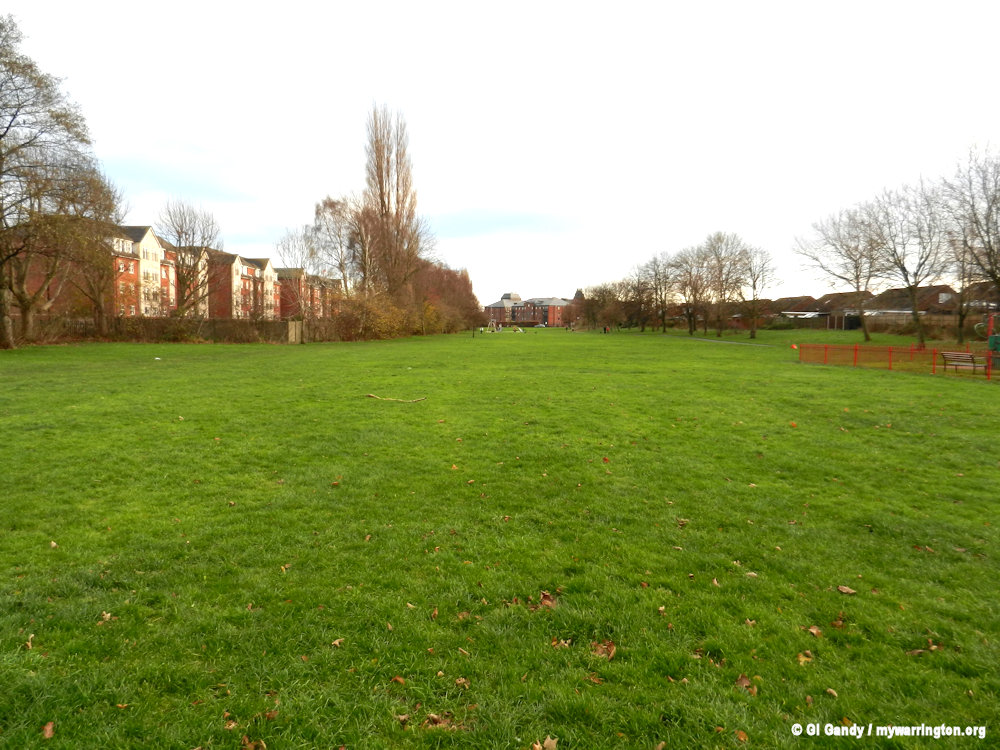
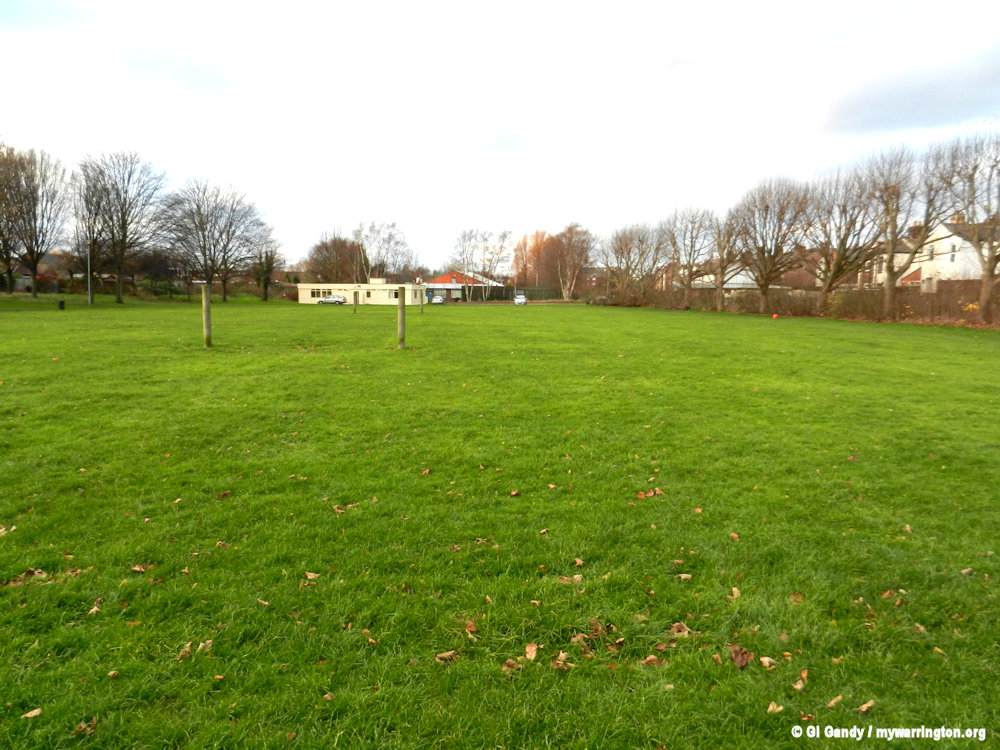
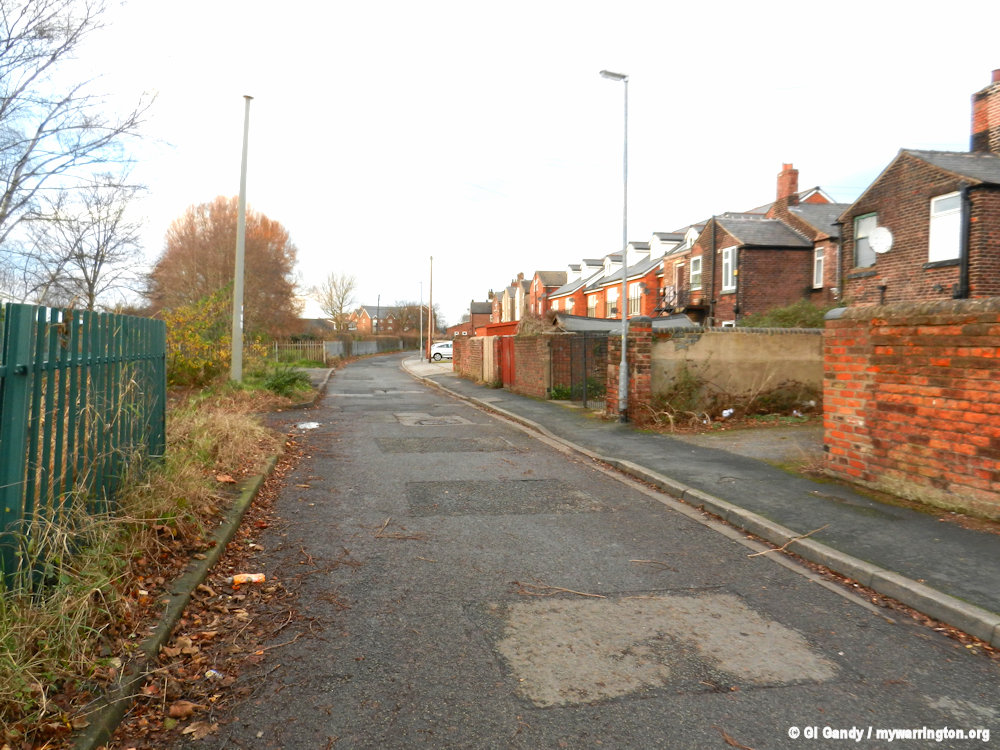
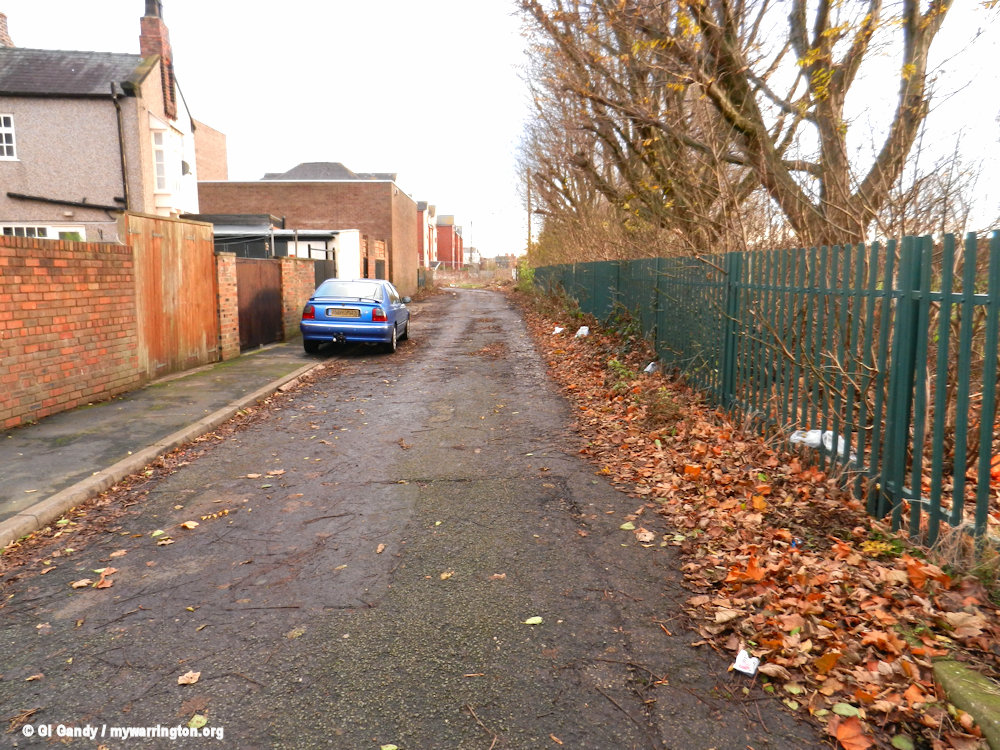
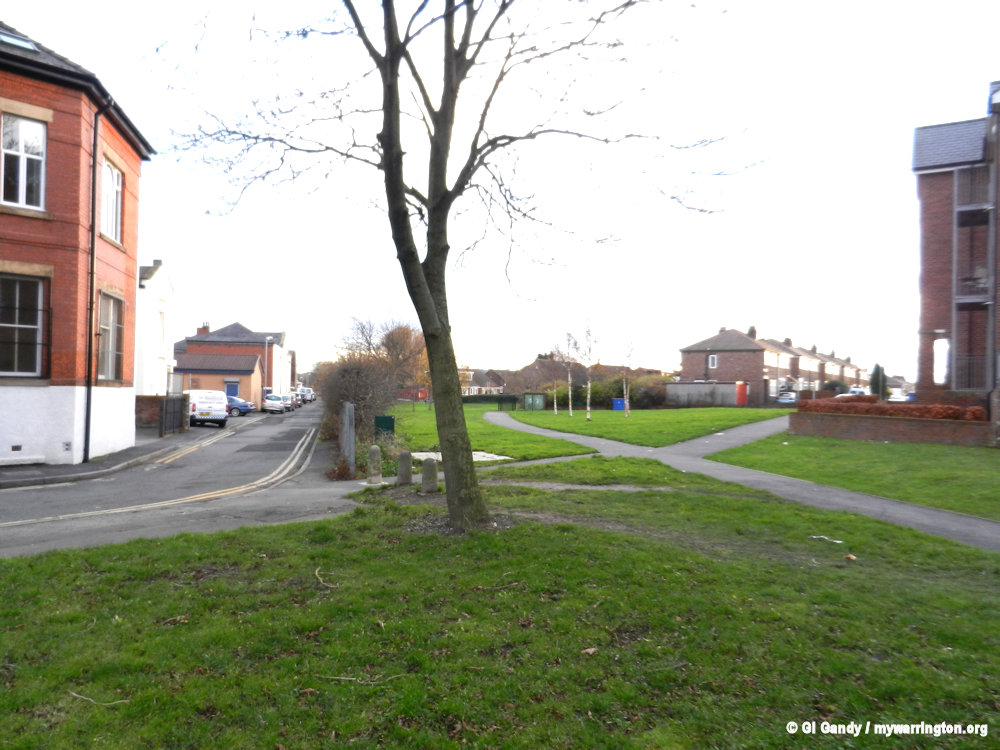
River Road, so named because the River Mersey used to flow alongside it on the other side of the fence (viewed north and south on 9 Dec 2013)
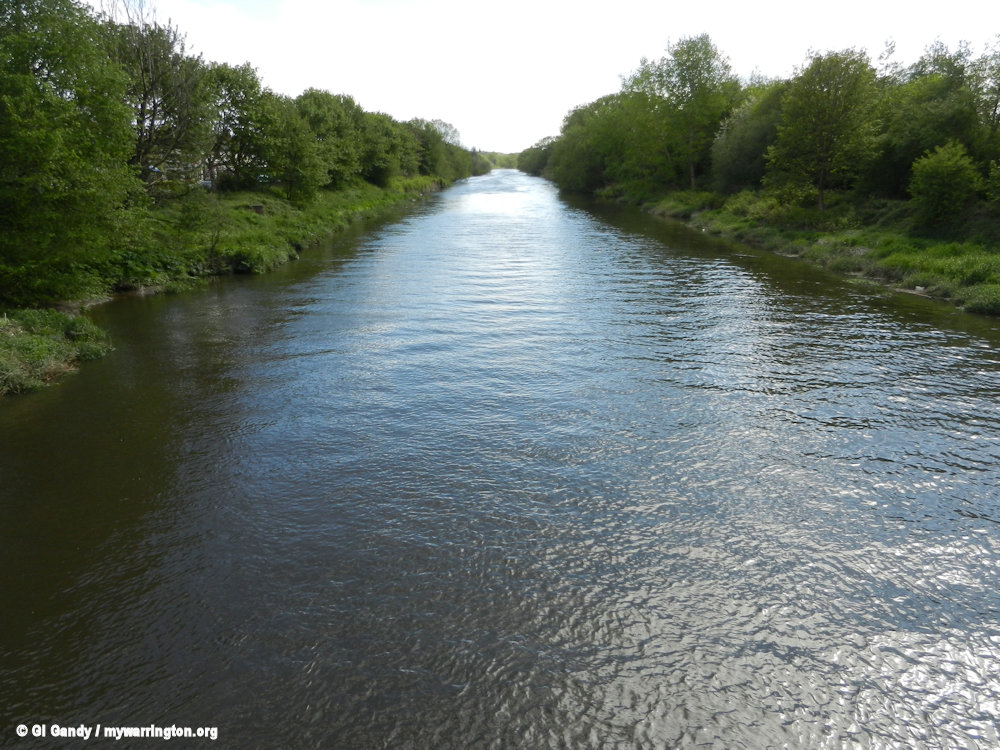
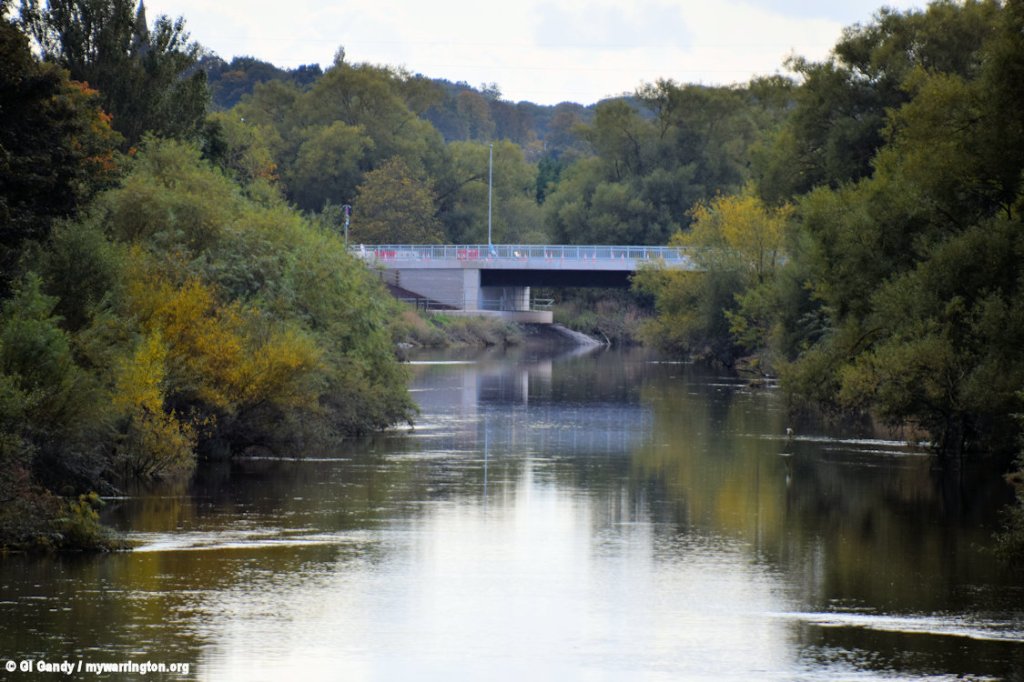
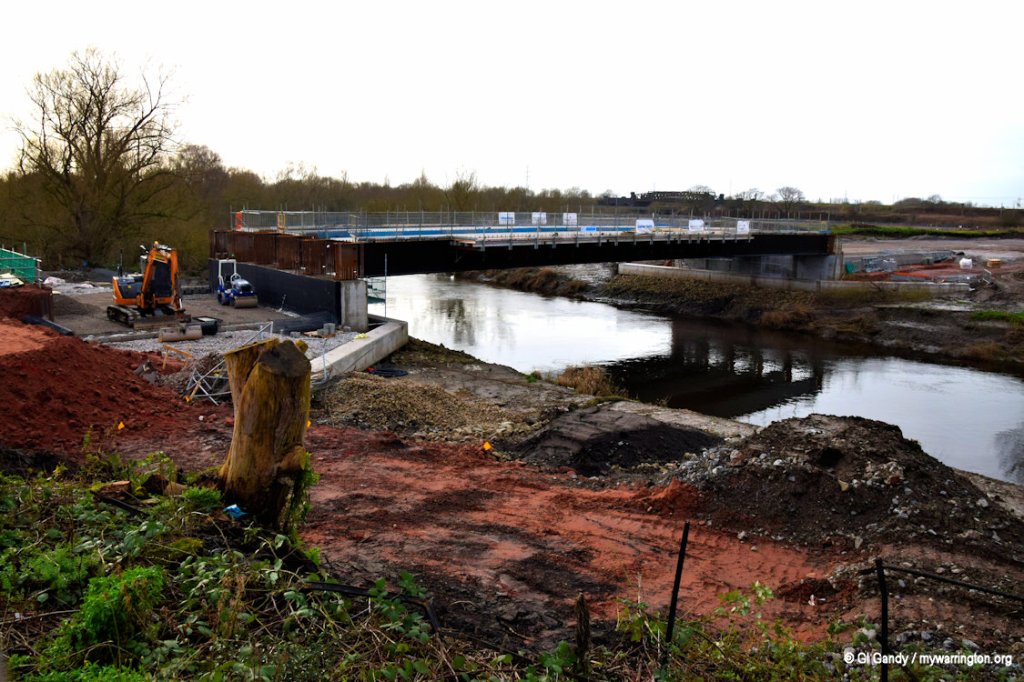
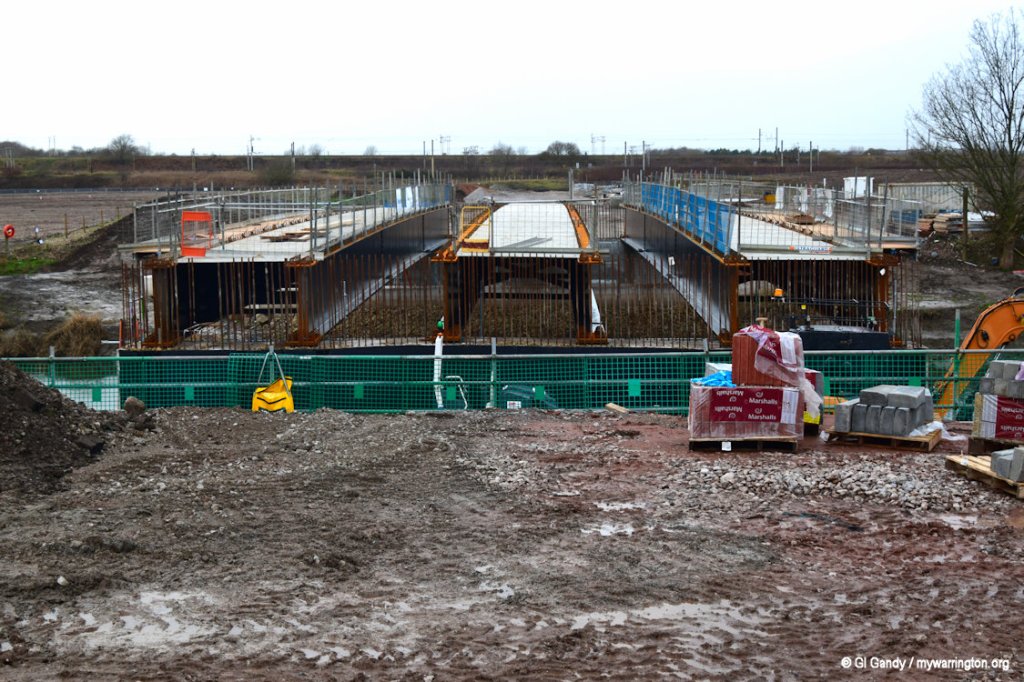
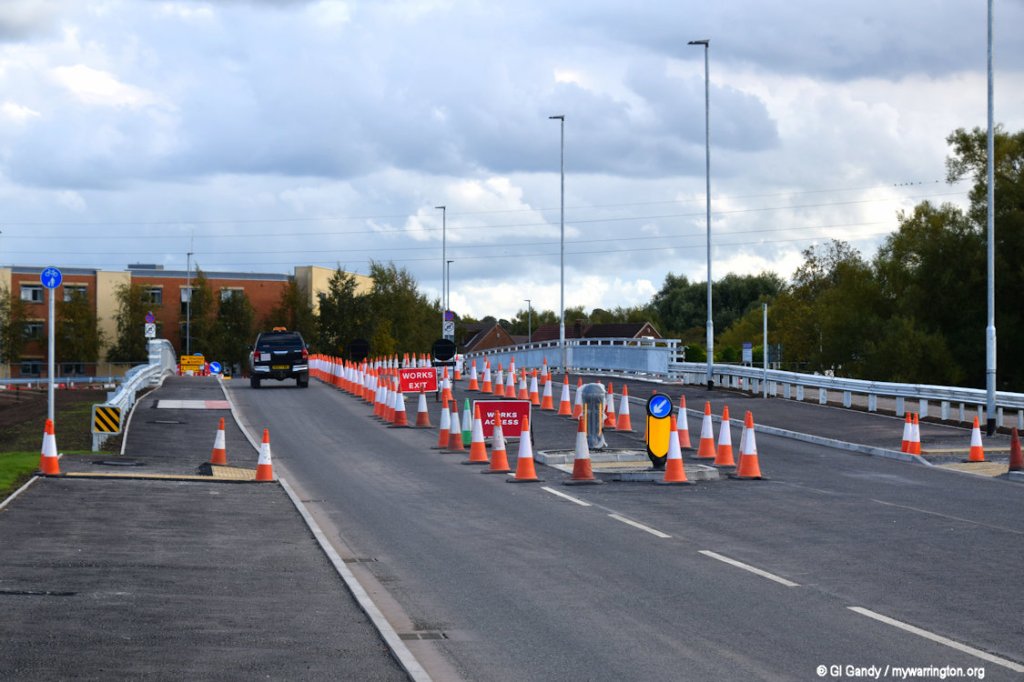
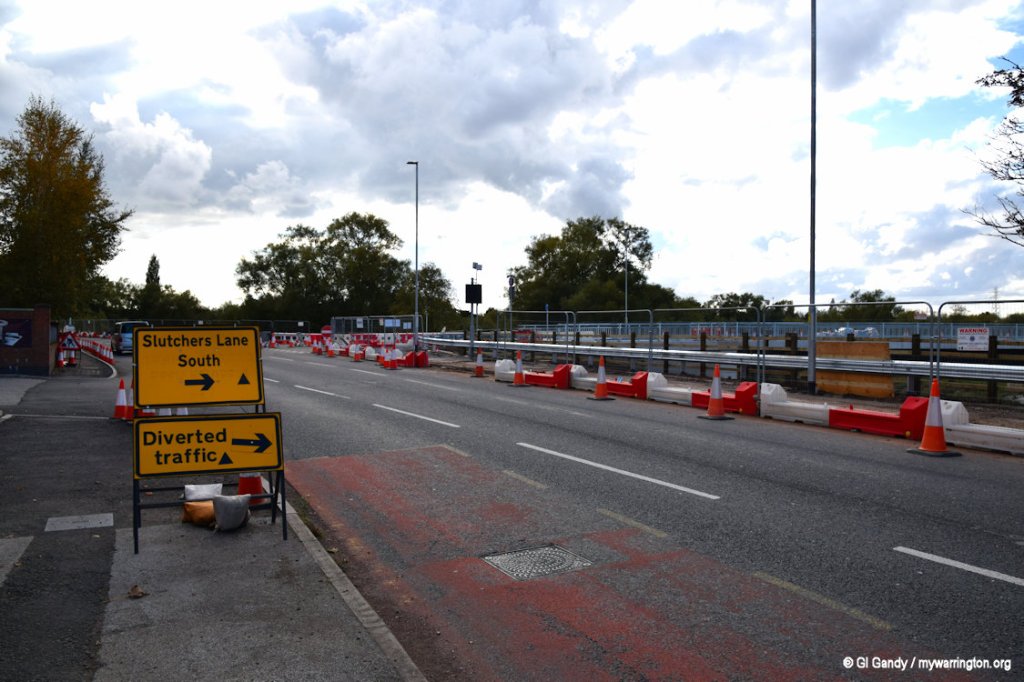
The River Mersey in its current location alongside Chester Road. In the distance on the second image you can see the new link bridge that takes traffic via Slutchers Lane to and from Wilson Patten Street in order to by-pass Bridge Foot.
Wilderspool Park
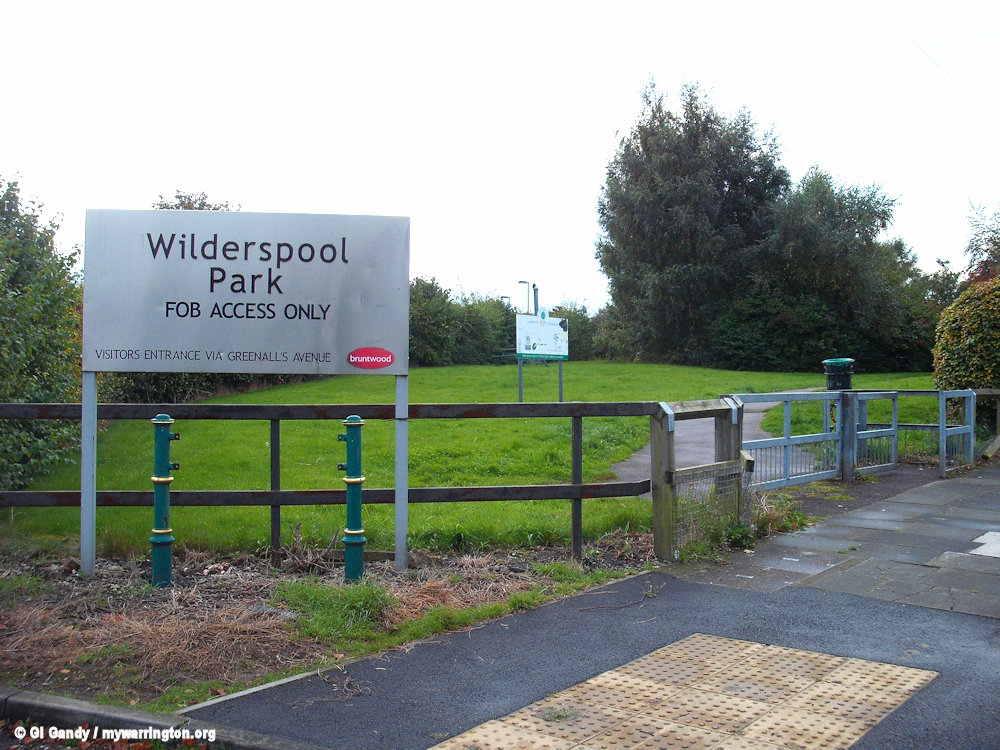
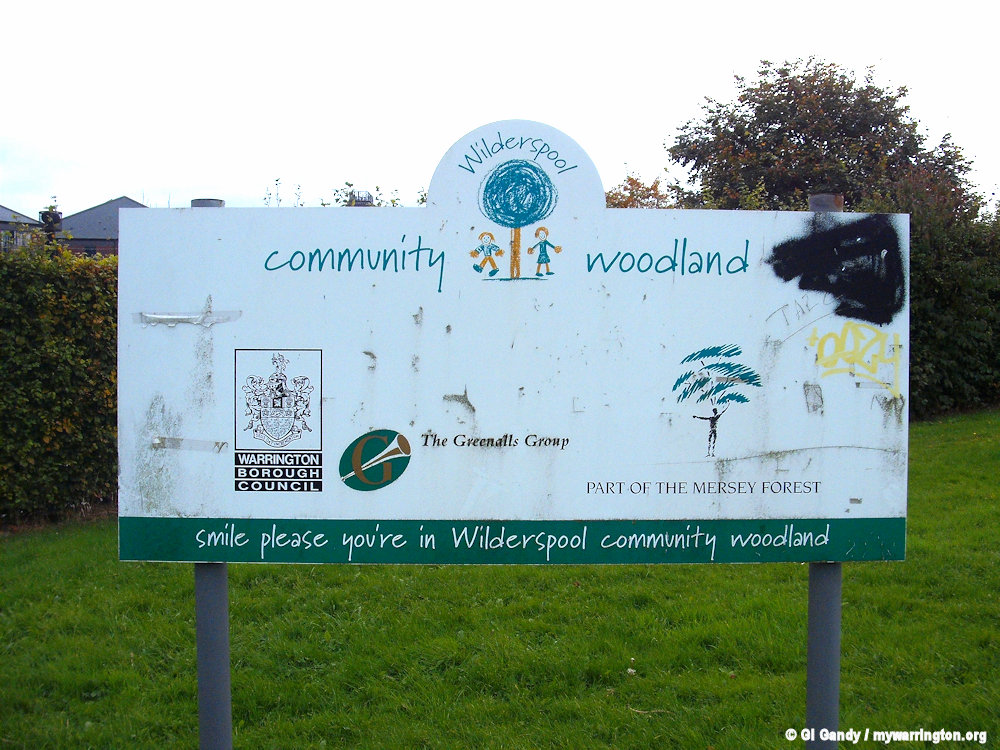
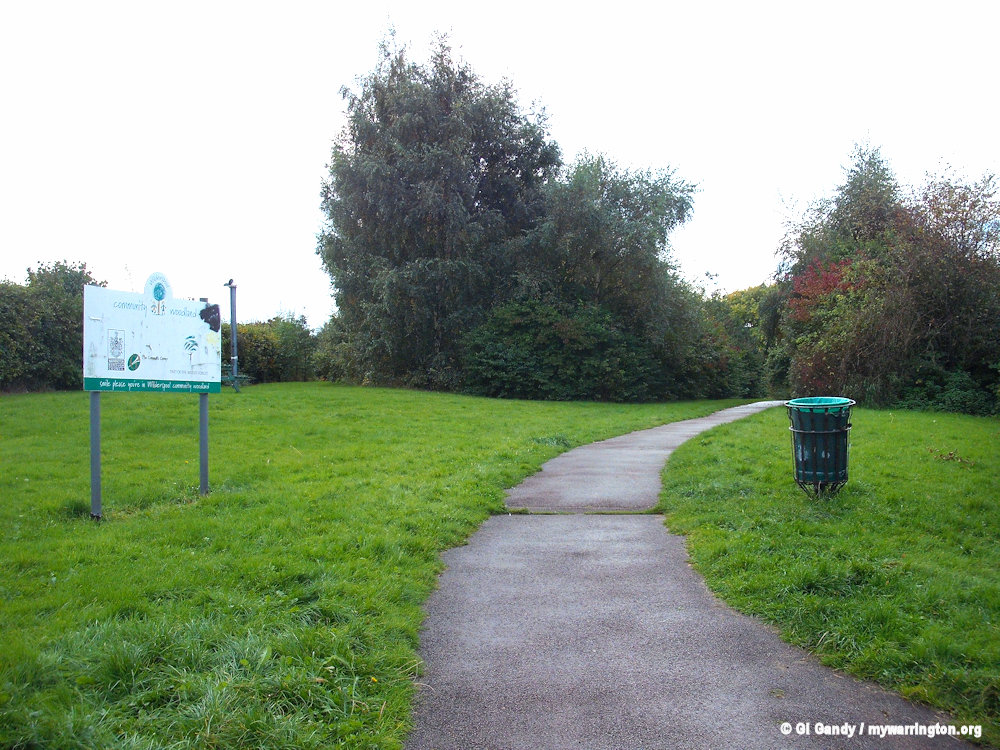
Another green space in the district is Wilderspool Park which is accessed from either Greenall’s Avenue, Gainsborough Road and Landseer Avenue.
St James Business Centre
St James Business Centre on Wilderspool Causeway was previously known as St James Court. But back in time it started out as Bennett’s Shirt and Pyjama factory which later became Burton the Tailor.
The photos here were all taken on 15 October 2012.
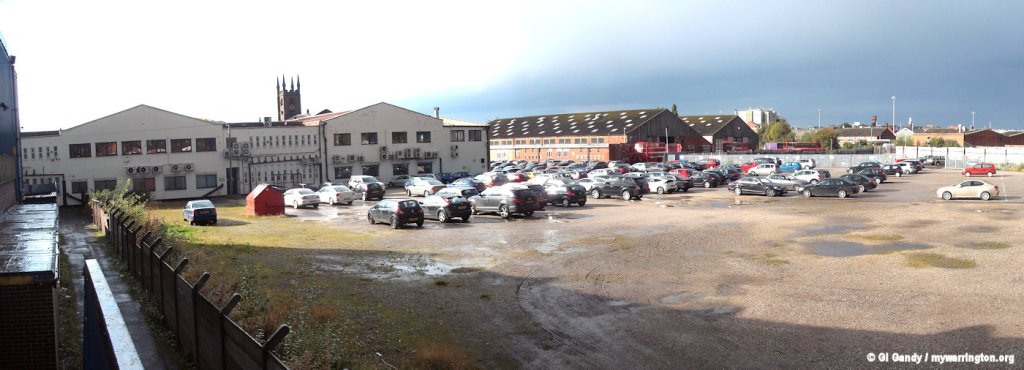
The rear of the building alongside St James Church with the former bus depot to the right. Photo taken from Wilderspool Stadium.
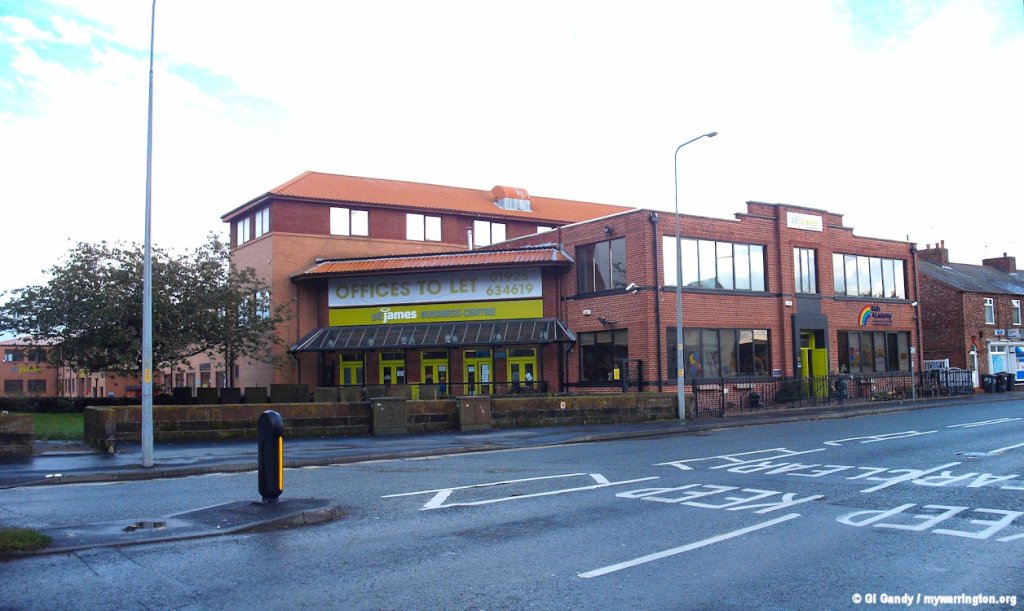
St James Business Centre on Wilderspool Causeway.
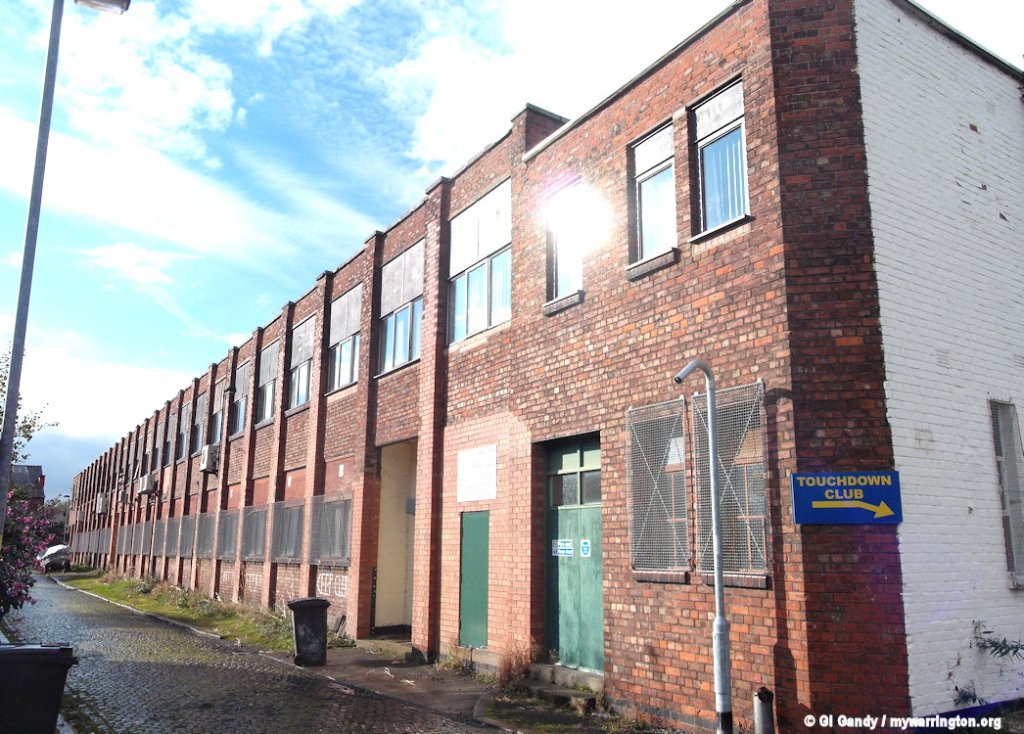
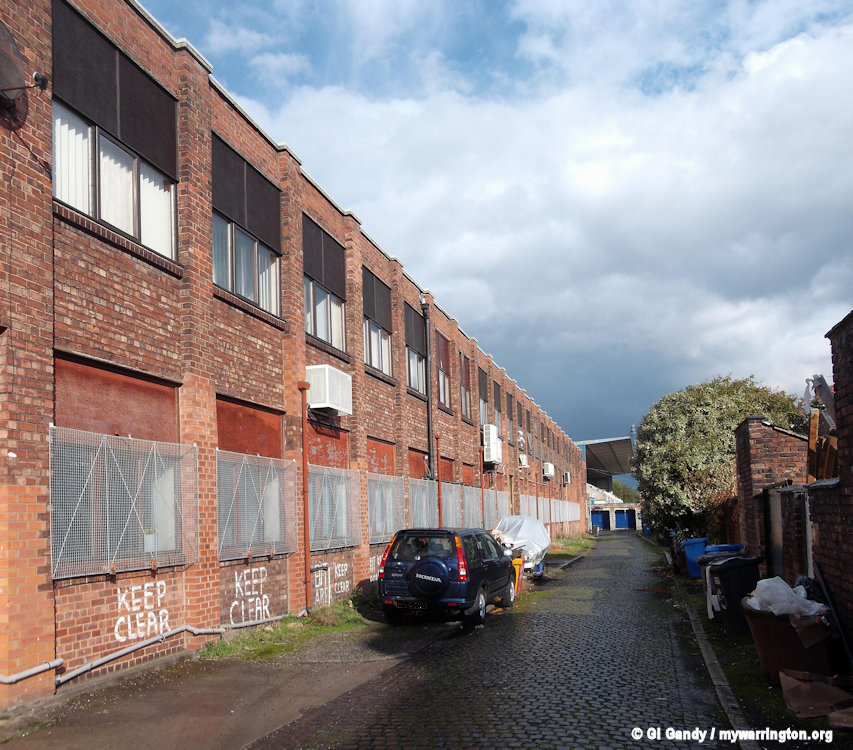
The side of St James Business Centre when it was still called St James Court.
A Final Walkabout
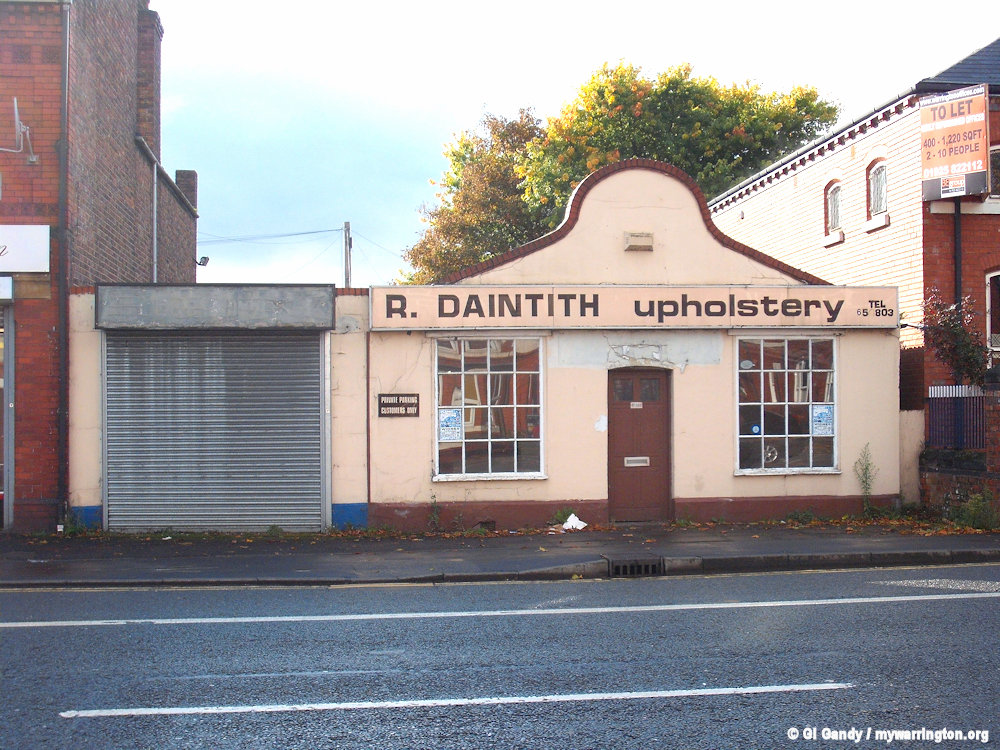
R. Daintith Upholstery was the final occupant of this building on the day of my photo. Prior to this it was Mr Banes the bookkeeper in the early 1900s and H & J Gee signwriters in the 1920s
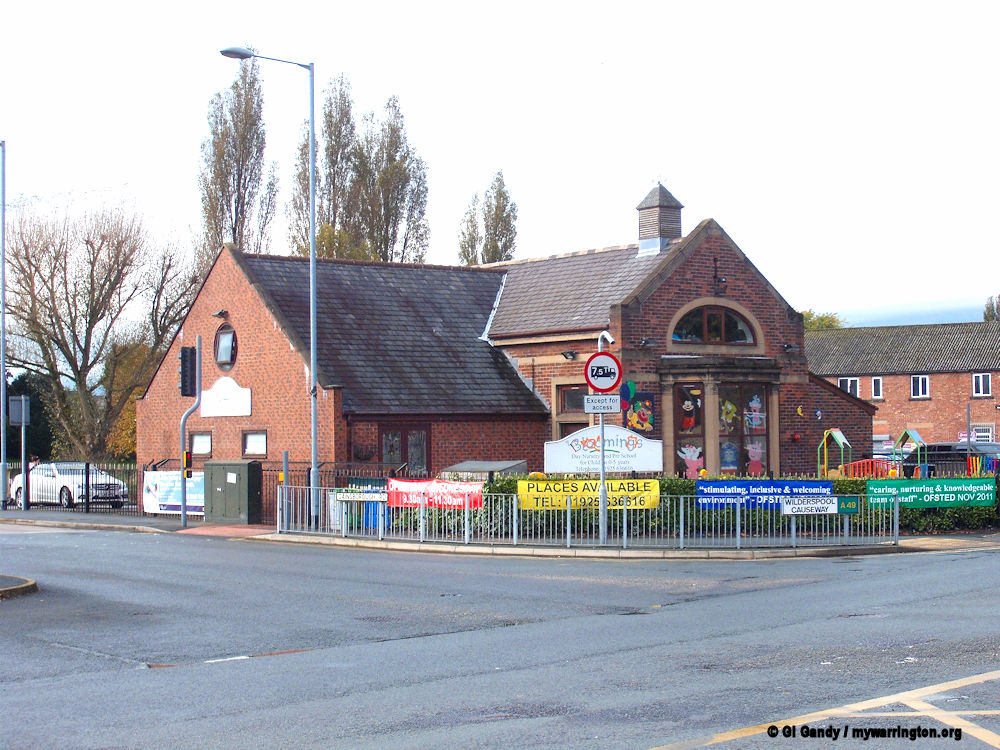
Bloomings Day Nursery occupied this building at the junction of Wilderspool Causeway and Gainsborough Road. It was originally an electricity sub-station until conversion into the nursery in the 1990s. In 2025 it is Little Angels Daycare.
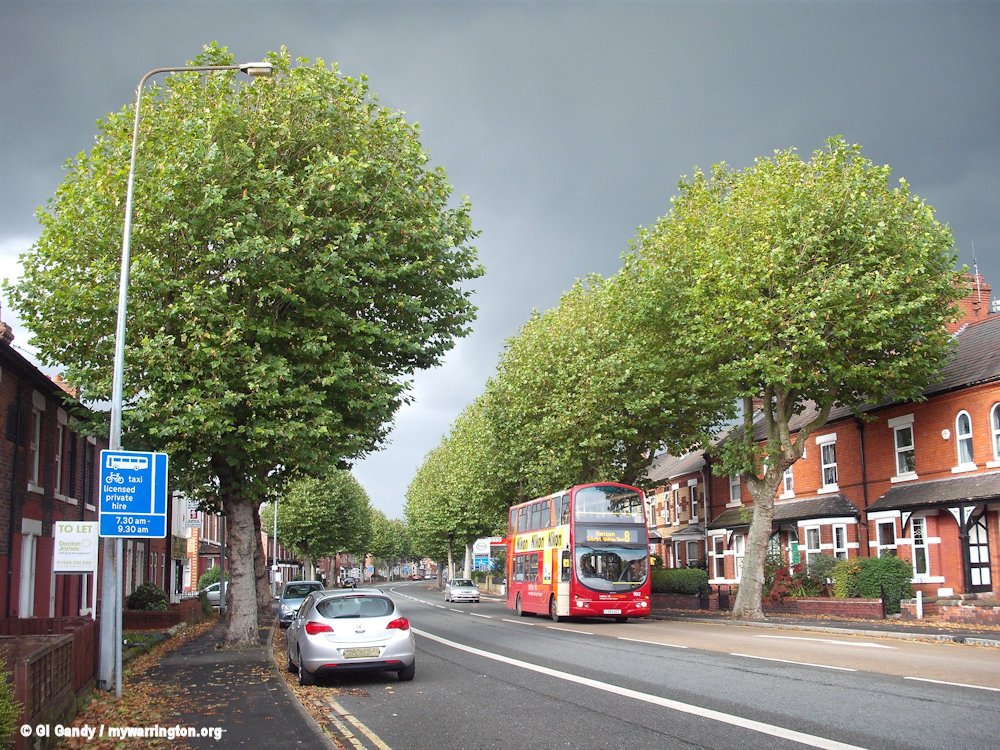
Wilderspool Causeway is an old thoroughfare that played its part in the Civil War when parliamentary troops marched along here to Stockton Heath in the 1643.
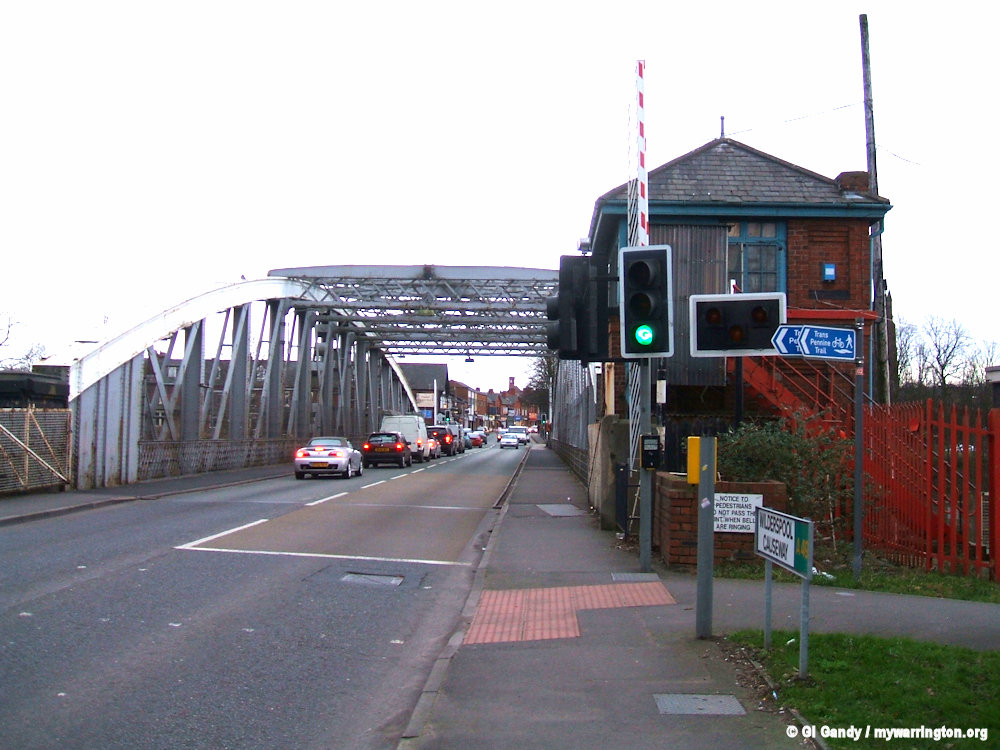
The swing bridge over the Manchester Ship Canal has been there since the canal opened in 1894. It is not very popular with motorists when the ships are passing.
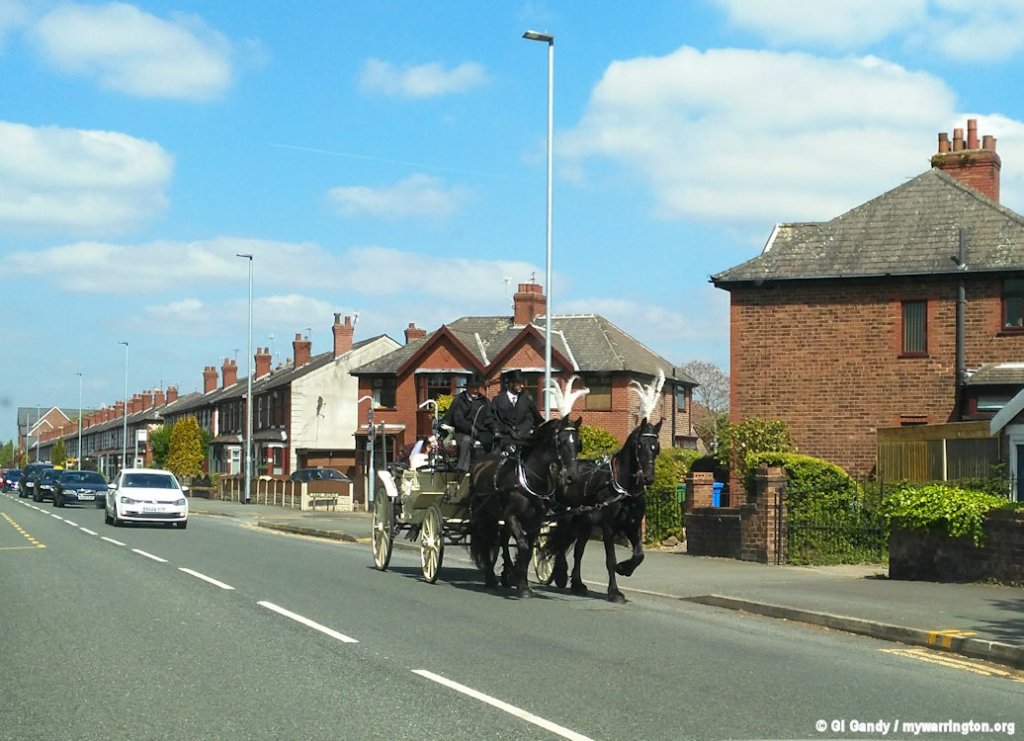
I do hope the happy couple had a great day on 9 May 2017.
 mywarrington

